

Newsletter
Keep yourself update with our current news for Juwai IQI

Juwai IQI Insight October 2026: In-House AI Innovation Drives Practical PropTech Solutions
In-House Talent Turns AI Into Practical ToolsJuwai IQI is strengthening its focus on artificial intelligence by turning internal business challenges into practical technology solutions.This month, IQI brought together 30 in-house teams for an AI Hackathon, giving employees the opportunity to develop tools that could improve everyday operations across the business. The initiative builds on IQI’s existing AI capabilities, including its AI Task Force, proprietary AI-powered apps and portals, and a hybrid approach that combines frontier models with locally hosted open-source systems.The projects created during the Hackathon focused on real operational needs. These included an AI Call Simulator for sales training, a Market Report Dashboard for market intelligence, an AI-driven Subsale Transaction System, and a Lead Management System for sales operations. Culture and Speed Shape AI AdoptionA key lesson from the Hackathon was that successful AI adoption depends not only on technology, but also on company culture, experimentation and the ability to move quickly.Daniel Ho highlighted the importance of creating an environment where teams can test ideas, learn from failure and iterate rapidly. The Hackathon was open beyond technical specialists, allowing employees from different functions to participate and build useful AI applications. At least two Hackathon projects are expected to be implemented, demonstrating how internal innovation can move quickly from experimentation to practical deployment. Non-technical participants were also able to create useful products within a single day, showing how AI is lowering the barriers to building business tools. OutlookJuwai IQI’s approach suggests that the next phase of PropTech innovation will increasingly be driven by practical, business-led AI adoption. By empowering teams to build solutions around real operational challenges, AI can support stronger productivity, faster decision-making and improved performance across the property sector.The contents of this article were contributed by Dave Platter, Global PR Director.Download to see insights from other country marketsDownload
5 October

Italy Property Market October 2026: National Growth Plateaus as Sardinia Gains Momentum
Italy’s Housing Market Enters a PlateauItaly’s residential market has shifted from acceleration to a more stable phase. Around 201,600 homes were sold in Q2 2026, representing just 0.1% year-on-year growth, following a 4.4% increase in the first quarter. Performance varied by city, with Naples up 4.2%, Genoa up 2.9%, while Florence fell 8.3%. New-build properties remain the strongest segment, with sales rising 15.6% and accounting for 6.4% of transactions. Meanwhile, mortgages financed 46.6% of purchases, although higher borrowing costs may weigh on demand following the ECB’s latest rate increase. Property values are still holding firm. The national average asking price reached €2,209 per sqm in August, up 4.74% year-on-year, while rents increased 4.38%. However, slower price growth in major cities points to increasing affordability pressure. Sardinia Outperforms on Tourism and International DemandSardinia is experiencing a particularly strong year, supported by tourism and improved international connectivity. Arrivals rose 8.24% in H1 2026, while foreign arrivals increased 11.44%. May overnight stays jumped 26.24%, suggesting a longer and stronger tourism season. The island’s average asking price reached €2,545 per sqm, up 3.84% year-on-year, while Gallura Nord-Est Sardegna, including Costa Smeralda, reached €3,854 per sqm. International interest also remains strong, with Americans accounting for more than 23% of coastal enquiries. OutlookItaly’s wider housing market is likely to remain stable but selective as higher rates affect leveraged domestic buyers. Sardinia, however, should continue to benefit from tourism growth, stronger air connectivity and cash-funded international demand, keeping premium coastal property firmly in focus.The contents of this article were contributed by Giulia Mattana, Head of IQI Sardinia Italy.Download to see insights from other country marketsDownload
5 October
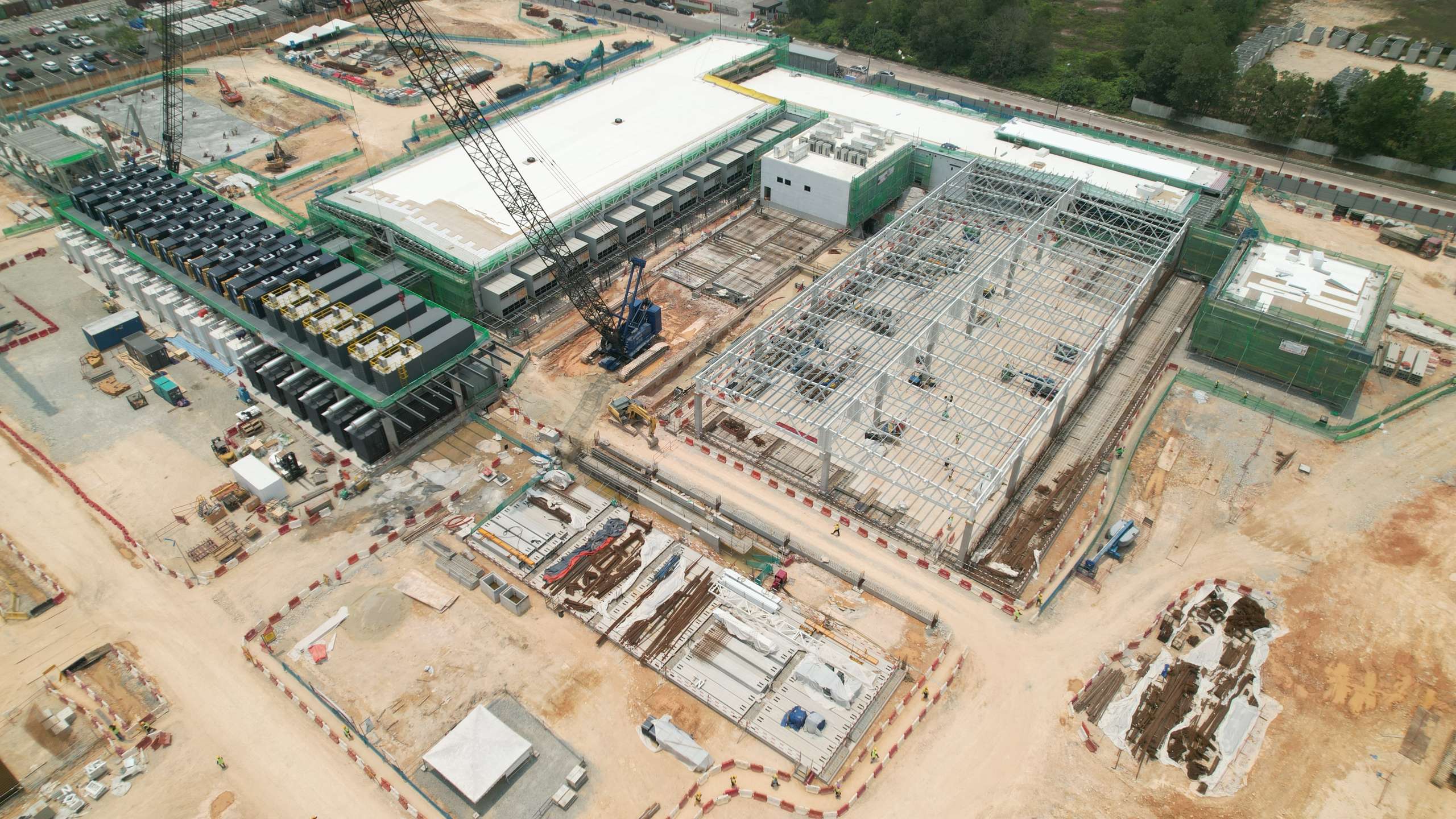
Johor Property Market October 2026: Data Centre Boom Reshapes Industrial Land and Housing
Data Centre Growth Drives Industrial Land DemandJohor’s data centre boom continues to reshape its property landscape, supported by strong investment in digital infrastructure and growing demand for AI-related capacity.The government has restricted approvals for new non-AI data centres since around 2024, with the policy publicly confirmed in February 2026. The move is intended to prioritise limited electricity and water resources for AI-focused projects. At the same time, the 2026 budget allocated around US$490 million for a sovereign AI cloud, adding to approximately US$35.2 billion already committed to infrastructure.This surge in demand has already affected real estate values. Prime industrial land in Johor has roughly doubled in price, reflecting strong competition for strategically located sites suitable for data centre and technology infrastructure development. The infographic on page 1 also highlights Johor’s growing role in Malaysia’s digital economy, alongside the significant infrastructure and resource requirements associated with large-scale data centre development.Infrastructure Benefits Come With Resource PressureWhile data centre investment is strengthening Johor’s industrial market, its impact on nearby residential areas is more complex. Large facilities require significant electricity and water capacity, creating concerns over additional pressure on local utilities. For residential property owners and investors, the key question is whether proximity to expanding digital infrastructure will ultimately enhance property values through stronger economic activity, or create disadvantages where utility strain becomes more pronounced.OutlookJohor’s data centre expansion is likely to remain a major industrial and infrastructure growth driver, particularly as AI investment accelerates. However, future property performance will increasingly depend on infrastructure capacity, resource management and location.For investors, the strongest opportunities are likely to be in areas where digital infrastructure growth can translate into lasting economic and property value without placing excessive pressure on surrounding communities.The contents of this article were contributed by Irhamy Ahmad, Founder and Managing Director of Irhamy Valuers International.Download to see insights from other country marketsDownload
5 October

India Quick Commerce October 2026: Dark Stores Reshape Urban Logistics and Real Estate
Quick Commerce Reshapes Urban ConsumptionIndia’s quick-commerce sector is rapidly changing how urban consumers shop, with delivery platforms expanding well beyond groceries into categories such as electronics, apparel and household products.At the centre of this shift are dark stores — compact fulfilment centres located close to residential areas and designed exclusively for online orders. These facilities typically range from 1,500 to 10,000 sq. ft., allowing operators to fulfil neighbourhood demand within minutes. As of July 2026, India had 5,625 mapped dark stores, representing approximately 13 million sq. ft. of hyperlocal fulfilment space. The country’s current dark-store density stands at around 50 sq. ft. per 1,000 people. Neighbourhood Logistics Becomes a Strategic AssetThe expansion of quick commerce is being supported by India’s young, digitally connected population of more than 1.4 billion consumers, alongside rising incomes and widespread adoption of digital payments. Together, these trends are strengthening demand for convenience and near-instant access to everyday goods. The market is already concentrated among major operators, while the page 2 market overview shows substantial dark-store networks across key states and metropolitan areas. This growing footprint highlights how small, strategically located urban spaces are evolving into valuable last-mile logistics assets.As fast delivery becomes a normal part of everyday consumption, property close to dense residential catchments may become increasingly important to fulfilment operators. OutlookIndia’s quick-commerce expansion is likely to continue strengthening demand for well-located neighbourhood logistics space. For property investors and developers, the opportunity lies in assets that combine high population density, strong connectivity and proximity to consumers, as last-mile delivery becomes an increasingly important part of the urban real estate landscape.The contents of this article were contributed by Manu Bhazin, Head of IQI India.Download to see insights from other country marketsDownload
5 October

Iceland Property Market October 2026: Buyers Gain Leverage as Rates Reach 8%
Buyers Gain Stronger Negotiating PowerIceland’s housing market has become increasingly buyer-friendly, with prices broadly flat in nominal terms and declining in real terms.In July, around 80% of homes sold below asking price, compared with just under 60% in September 2024. The median discount reached 3.1%, equivalent to approximately ISK 2.4 million, while only 6% of homes sold above asking price, down from about 20% two years earlier. The shift reflects softer demand and weaker pricing momentum. Iceland’s national housing price index rose only 0.09% in July and 1.61% over the previous 12 months. After adjusting for inflation, however, prices declined 3.46%, marking the 12th consecutive month of real price falls. Higher Rates Reshape Buyer ActivityFinancing conditions remain a major constraint. The Central Bank of Iceland raised its policy rate to 8.00% on 19 August, its third increase of 2026. Inflation subsequently climbed to 5.6%, with the Bank expecting further near-term pressure before a decline next year. At the same time, first-time buyers accounted for 36% of purchase contracts in the first half of 2026, the highest share in 19 years outside the pandemic period. However, their absolute numbers remain below the 10-year average, suggesting the increased share also reflects reduced activity from other buyers. OutlookIceland’s housing market is likely to remain buyer-oriented and price-sensitive while borrowing costs stay elevated. Greater negotiating power and softer real prices may create opportunities for well-positioned purchasers, but affordability and interest rates will remain key factors shaping transaction activity and near-term market confidence.The contents of this article were contributed by Ásdís Ósk Valsdóttir, Head of IQI Iceland.Download to see insights from other country marketsDownload
5 October

Hong Kong Property Market October 2026: Relocation Demand Drives Rental Growth
Rental Market Strengthens on Relocation DemandHong Kong’s residential leasing market has entered a renewed expansion phase in 2026. The Private Residential Rental Index reached 205.8 in Q2 2026, representing an 18.5% recovery from its Q1 2023 trough of 173.6 and marking the first sustained move above the 200 level. A major driver is the return of expatriate professionals as Hong Kong’s financial sector regains momentum. IPO fundraising reached HKD 285.8 billion in 2025, while HKD 210.2 billion was raised in the first half of 2026. Financial and professional services employment also continued to expand, helping convert stronger business activity into housing demand. Wealth management is providing another source of support. Hong Kong was ranked the world’s largest cross-border wealth centre, with USD 2.95 trillion in cross-border wealth, while financial-services visas and relocation activity also increased. Relocation specialist Dwellworks reported a 20% year-on-year increase in relocation initiations in H1 2026. Location and Budget Shape Leasing DemandRelocating households are focusing on three main factors: office location, international schools and budget. Traditional demand remains strong around Central and nearby districts, while the decentralisation of corporate offices is increasing interest in Kai Tak and Tseung Kwan O. HFamilies are also favouring areas such as Sai Kung and Repulse Bay, particularly where access to international schools and upgraded housing stock improve overall appeal. Housing budgets vary significantly by seniority, with investment-banking allowances ranging from HKD 18,000–30,000 for early-career professionals to HKD 100,000–136,000 for top management. OutlookHong Kong’s rental market is likely to remain supported by financial-sector hiring, wealth management growth and continued international relocation. Demand should remain strongest in well-connected districts that combine workplace accessibility, schooling options and quality residential supply.The contents of this article were contributed by Nelson Li, Head of IQI Hong Kong.Download to see insights from other country marketsDownload
5 October

Greece Property Market October 2026: Tax Changes and Rising Non-Dom Luxury Demand
A Closing Tax Window for International BuyersA significant tax change is approaching for Greece’s residential property market. From 1 July 2027, the property transfer tax for certain non-EU/EEA buyers will rise from 3% to 15%, representing a fivefold increase. For a €500,000 home, the transfer tax would increase from €15,000 to €75,000, while a €1 million purchase would see the tax rise from €30,000 to €150,000. The measure applies specifically to residential purchases by third-country nationals without long-term residence status, while EU/EEA citizens, long-term residents, companies and commercial property remain exempt. This creates a clear time-sensitive opportunity for eligible international buyers to complete purchases before the new rate takes effect and retain the current 3% transfer tax. Non-Dom Demand Supports the Luxury MarketAt the same time, Greece’s Non-Dom regime is strengthening its appeal to internationally mobile high-net-worth individuals. Qualifying residents can pay a flat €100,000 annually on foreign-source income for up to 15 years, while 2026 amendments expanded access to international fund managers. The impact is increasingly visible in prime housing. Non-Dom investors accounted for 21% of Greek luxury home purchases in 2025, up from 17% in 2024, surpassing Golden Visa buyers. Their average luxury property purchase was around €2.33 million. OutlookGreece’s premium property market could continue to benefit from international wealth migration and favourable tax residency incentives. In the near term, the approaching transfer-tax deadline may accelerate purchasing activity among eligible non-EU buyers, while sustained Non-Dom demand should continue supporting prime residential property. The contents of this article were contributed by Nikos Pratikakis, Head of IQI Greece.Download to see insights from other country marketsDownload
5 October

Global Economic Outlook October 2026: Markets Face Renewed Inflation and Higher Capital Costs
Markets Reprice as Commodities Stay VolatileGlobal financial markets are undergoing a major repricing as investors balance resilient growth against renewed inflation risks.Precious metals have seen sharp swings. Gold surged to a record US$5,600 in January, fell below US$4,000 by June and now trades near US$4,350. Silver has also retreated significantly from its January peak of US$121, although it remains more than 50% higher year-on-year. Meanwhile, copper has retained gains of more than 40%, supported by stockpiling and mine-supply disruptions. Energy markets have been equally volatile, with Brent crude moving from the low US$60s in February to above US$120 in April, before returning above US$104 as geopolitical tensions intensified. European gas prices have risen by more than 130%. Despite these pressures, the S&P 500 remains roughly 13% higher for the year and has recorded 27 record closes, highlighting continued confidence in corporate earnings and AI-led growth. Higher Rates Challenge Market OptimismInflation pressures are rebuilding the global risk premium just as major central banks shift away from easing. Futures markets imply an 86%–90% probability of a Federal Reserve rate increase, marking a sharp reversal from the previous easing cycle. At the same time, the US 10-year Treasury yield is near 5%, while the 30-year yield has moved above 5.35%, raising the cost of capital across global markets. OutlookThe global economy remains resilient, but inflation is proving persistent. Investors will need to balance growth opportunities against higher financing costs, commodity volatility and renewed policy tightening. The key question is whether markets can sustain strong valuations while absorbing a structurally higher cost of capital. The contents of this article were contributed by Shan Saeed, IQI Chief Economist.Download to see insights from other country marketsDownload
5 October

