Greece’s real estate market, entering 2026, has completed its post-crisis recovery and is now moving into a phase of sustainable, structurally driven growth.
The country’s appeal to foreign buyers is now centred around relative affordability, improved lifestyle offerings, and a growing depth to the market, moving away from distressed pricing and rapid rebounds.
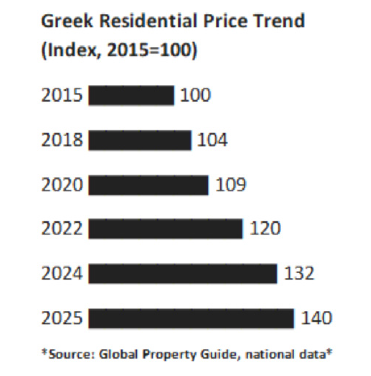
Over the past decade, residential prices have steadily risen, particularly after 2021, with the recovery fuelled by a resurgence in tourism, increased foreign demand, and renewed domestic confidence.
Despite these gains, Greece still offers a discount compared to most Western European markets, maintaining its attraction to international investors.
As the market shifts from catch-up growth to long-term expansion, price increases are expected to slow in 2026, driven by tighter supply, rising construction costs, and a focus on quality housing.
Foreign interest continues to play a key role, with buyers drawn to locations that offer sustainable value rather than short-term incentives.
Athens, particularly its southern suburbs, remains a hotspot for both lifestyle and investment buyers, while Thessaloniki, Crete, and select island destinations are gaining attention as diversified markets.
Supply constraints and Greece’s positive macroeconomic outlook, alongside a resilient tourism sector, limit downside risks, making it a solid long-term investment choice in Europe.