


Ten minutes from the airport sounds like a major selling point. Until a plane passes over your bedroom at 6.15am.
Airports can bring jobs, businesses, better infrastructure and steady rental demand. But being too close to a flight path can also mean aircraft noise, heavier traffic and a property that may be harder to resell.
That is where airport property gets complicated. Being close enough to benefit from the airport economy is not the same as being close enough to suffer from the runway.
So the real question is not how close you are to the airport. It is whether you have bought the economy without buying the runway.
TL;DR
- Airport proximity alone does not drive appreciation. Airport-linked employment does.
- Research finds a U-shaped relationship between distance and house prices. Very close is penalised by noise, very far loses the accessibility benefit. The middle band usually performs best.
- Flight path beats distance. A home 8km out under an approach route can be noisier than one 4km out off the path.
- A Malaysian study around Kuching airport found noise-affected homes sold about 20.8% below comparable homes without noise.
- Five of the six benchmark areas sit inside the RM280,000 to RM560,000 band, where roughly seven in ten Malaysian subsale transactions happen. That is the liquid part of the market.
- Bayan Lepas, Senai and Subang have the strongest cases. Batu Berendam has the weakest, because Melaka airport had only two airlines operating as of July 2026.
Table of contents
- Is Property Near an Airport a Good Investment?
- The 6 Malaysian Airport Markets, Compared
- 1. Sepang and KLIA: the airport economy play
- 2. Subang: strong because it does not depend on the airport
- 3. Penang and Bayan Lepas: the strongest balance
- 4. Kota Kinabalu: Convenience With a Flight-Path Caveat
- 5. Melaka and Batu Berendam: Do Not Buy for the Airport
- 6. Senai and Johor: Airport Plus Industrial Growth
- Which Airport Property Market Suits Your Investment Goal?
- 7 Things to Check Before You Buy
- So, Should You Buy Property Near an Airport?
- FAQs
Is Property Near an Airport a Good Investment?

The usual argument is simple: airports generate economic activity, so nearby property values should benefit. There is some truth to that. Malaysia Airports handled 104.4 million passengers across its 39 domestic airports in 2025, up 11.2% year on year, with KLIA alone accounting for 63.3 million.
But for investors, passenger traffic is only part of the story. Tourists pass through airports. Workers create housing demand. That demand comes from airline crew, ground handlers, freight operators, MRO technicians, engineers, logistics firms and the wider service economy around them.
This is why infrastructure matters. Airports support property markets when they bring jobs, businesses, connectivity and long-term demand into the surrounding area, not simply because more planes are landing nearby.
The three biggest opportunities for property developers are infrastructure, infrastructure and infrastructure.
Kashif Ansari, Co-Founder and Group CEO, Juwai IQI, BusinessToday, December 2025
An airport is infrastructure. But so is the aerospace park, the highway, the rail link and the industrial estate around it, and those tend to matter more to a tenant than the terminal does. The clearest local proof is the RTS Link, where developments near the Johor-Singapore crossing appreciated on the strength of daily commuter demand rather than on the station itself.
Research suggests there is a sweet spot. Property closest to the runway can suffer from aircraft noise, while areas slightly further out may still benefit from accessibility and employment. A Malaysian study near Kuching International Airport even found noise-affected homes sold about 20.8% lower than comparable homes without the same noise exposure.
So the goal is simple: stay close enough to benefit, but far enough to avoid the worst of the noise.
Flight path matters more than kilometres
This is the part many guides overlook, but it can directly affect what you pay and what you can resell for.
A property 7km from an airport can be noisier than one 4km away if it sits directly under a flight path. Runway direction, aircraft routes, altitude and even the building’s soundproofing can matter more than distance alone.
Before buying, open a live flight tracker while standing inside the actual unit. Ten minutes of checking aircraft movements can tell you more than simply looking at the distance to the airport on Google Maps.
The 6 Malaysian Airport Markets, Compared
These six areas may share the same “airport property” label, but they are very different investment markets.
The prices below are based on Brickz.my transaction data. Use them as local benchmarks rather than direct comparisons, as each area has a different property mix and transaction period. The relevant data period is stated for each location.
| Airport | Benchmark area | Median transacted price | Data period | Main risk |
|---|---|---|---|---|
| KLIA, Sepang | Kota Warisan (landed) | RM560,000 (RM278 psf) | Sep 2024 to Aug 2025, 22 transactions | Large land supply, new stock |
| Subang | Ara Damansara | RM499,000 (RM556 psf) | Apr 2025 to Mar 2026, 197 transactions | Higher entry price, noise pockets |
| Penang | Bayan Lepas | RM538,000 (RM518 psf) | Apr 2024 to Mar 2025, 365 transactions | Traffic and close-in flight paths |
| Kota Kinabalu | Kota Kinabalu | RM560,444 (RM350 psf) | Apr 2024 to Mar 2025, 918 transactions | Flight paths sit over housing |
| Melaka | Batu Berendam | RM280,000 (RM209 psf) | Nov 2023 to Oct 2024, 205 transactions | Very limited airport-led demand |
| Senai | Taman Scientex Senai | RM500,000 (RM465 psf) | Nov 2024 to Oct 2025, 29 transactions | Wide spread between projects |
Source: Brickz.my transacted residential data. Periods as stated. Area-level and project-level figures are not directly comparable.
1. Sepang and KLIA: the airport economy play
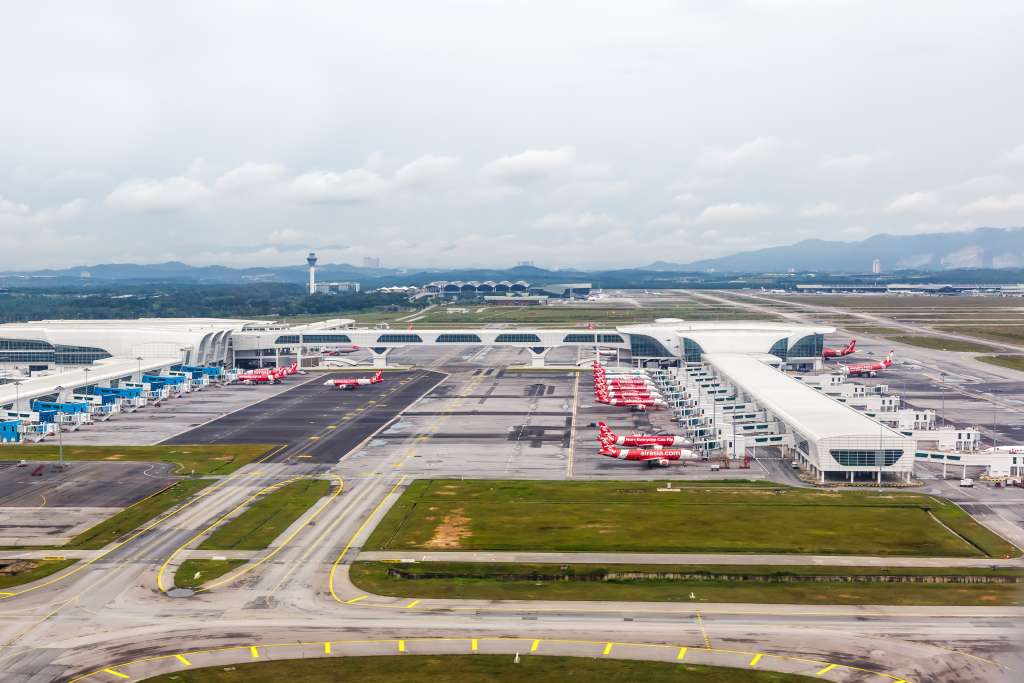
If anywhere in Malaysia truly fits the airport property story, it is Sepang. But the strongest case is not passenger traffic. It is the economic ecosystem being built around KLIA.
KLIA Aeropolis brings together air cargo, aerospace and MICE activity, while Selangor Aero Park spans about 600 acres with a potential GDV of RM2.3 billion. In April 2026, SD Guthrie and MBI Selangor also announced plans for a 2,500-acre aerospace-focused development next to Aeropolis, with an estimated RM20 billion GDV and more than 32,000 jobs projected by 2030.
For property investors, that is the number that matters. Jobs create housing demand. Passenger numbers do not. The main risk is supply, because Sepang still has plenty of developable land and investors need to be selective about which projects can actually attract tenants and hold resale value.
Malaysia is not facing a land shortage. There are still more than 32,000 completed homes unsold.
Kashif Ansari, Co-Founder and Group CEO, Juwai IQI, Utusan Malaysia, July 2026
Sepang has far more developable land than Penang Island or established parts of Petaling Jaya, so new supply can grow faster than tenant demand. Selangor alone recorded 3,745 completed unsold units in Q1 2026.
It does mean project selection matters more here than in most other markets on this list. Buyers comparing entry points across Selangor can also refer to our guides on the cheapest neighbourhoods in Klang Valley and Selangor’s most established neighbourhoods before deciding where to buy.
2. Subang: strong because it does not depend on the airport
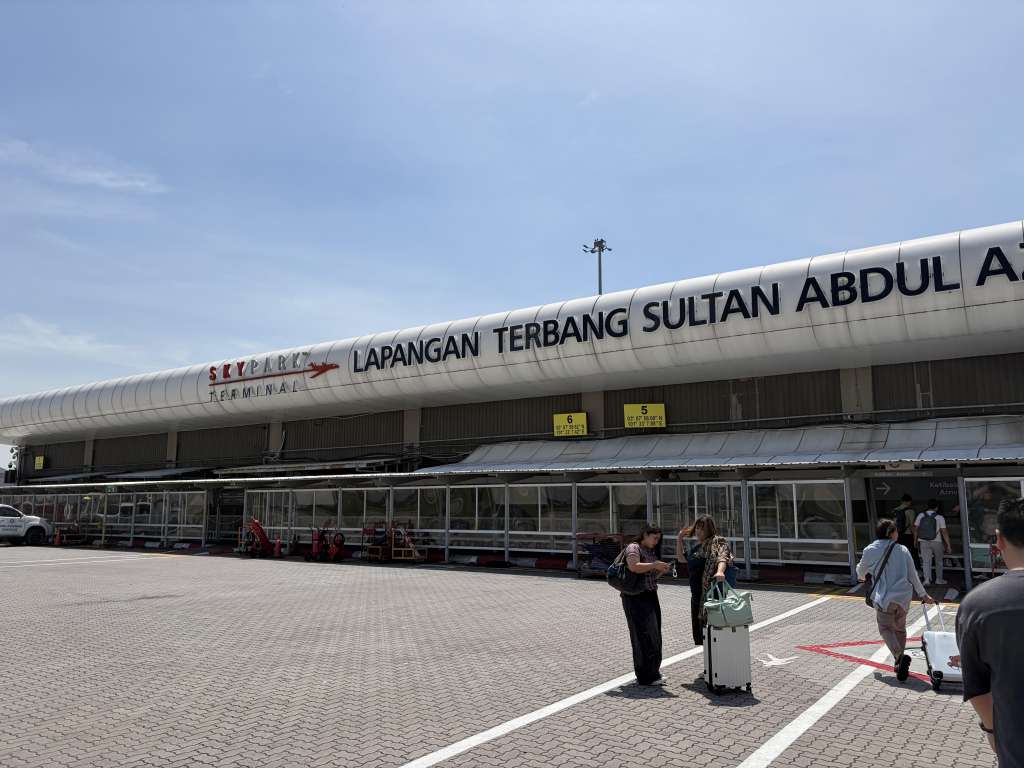
Subang is almost the opposite. Sultan Abdul Aziz Shah Airport sits within a mature urban market surrounded by Ara Damansara, Glenmarie, Subang Jaya and Petaling Jaya.
That gives it a major advantage: housing demand does not depend on the airport. Even if airport activity slowed, people would still live here for the jobs, schools, transport links and established amenities around them.
That is what makes Subang a more resilient airport-linked property market.
Buyers continue to see value in established neighbourhoods with good infrastructure and connectivity.
Kashif Ansari, on IQI’s Q1 2026 Residential Subsale Market Report, June 2026
The aerospace story is a bonus, not the foundation. Under the Subang Airport Regeneration Plan, passenger capacity is targeted to reach 5 million annually by 2028 and 8 million by 2030, while Budget 2026 also highlighted Subang’s strategic role in Malaysia’s aerospace sector.
The trade-offs are higher entry prices, uneven aircraft noise and weaker rail connectivity. The Skypark Link to KL Sentral remains suspended, and the area has no direct LRT or MRT line. For a closer look at local tenant demand, our Damansara rental yield analysis covers Ara Damansara in more detail and our shortlist of high rental potential properties for 2026 includes several in the wider PJ catchment.
3. Penang and Bayan Lepas: the strongest balance
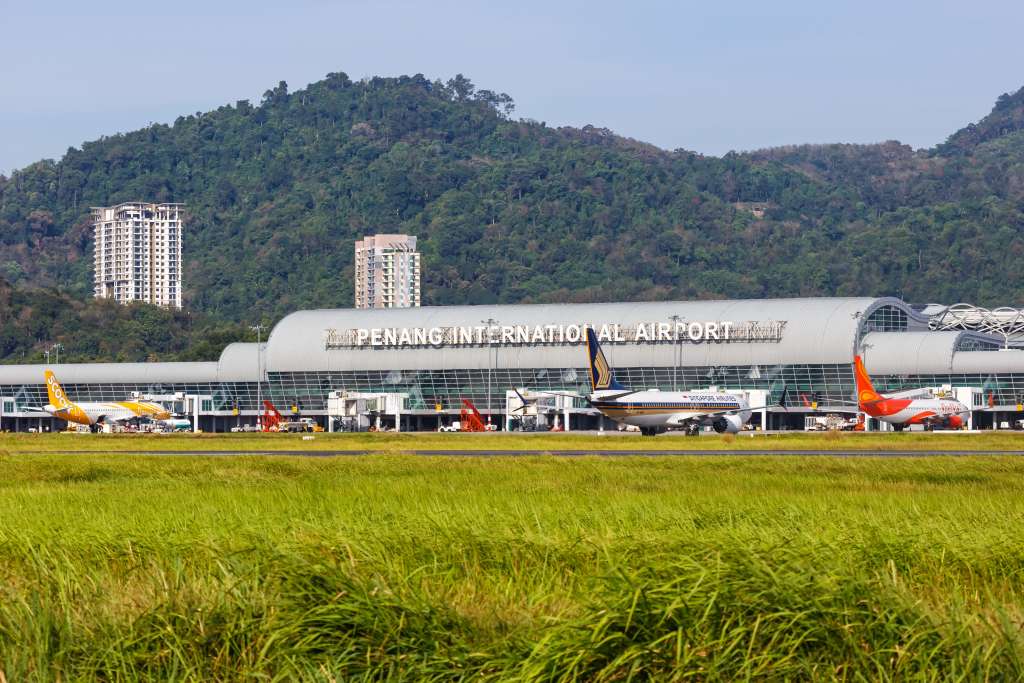
The airport is not why tenants choose Bayan Lepas. Jobs are. The area sits within Penang’s electrical, electronics and R&D ecosystem, creating steady demand from engineers, managers and other professionals. The airport simply strengthens an already-established employment hub.
That advantage is growing. A RM1.55 billion expansion will increase airport capacity from 6.5 million to 12 million passengers, with major works progressing towards completion in 2028. Our Penang market insights also provide a closer look at which parts of the island are seeing stronger buyer and investor activity.
For investors, the key is location within Bayan Lepas itself. The best properties serve the employment catchment without sitting directly under the main flight path. You can compare Bayan Lepas with Batu Kawan and Butterworth in our Penang rental yield guide for 2026.
4. Kota Kinabalu: Convenience With a Flight-Path Caveat
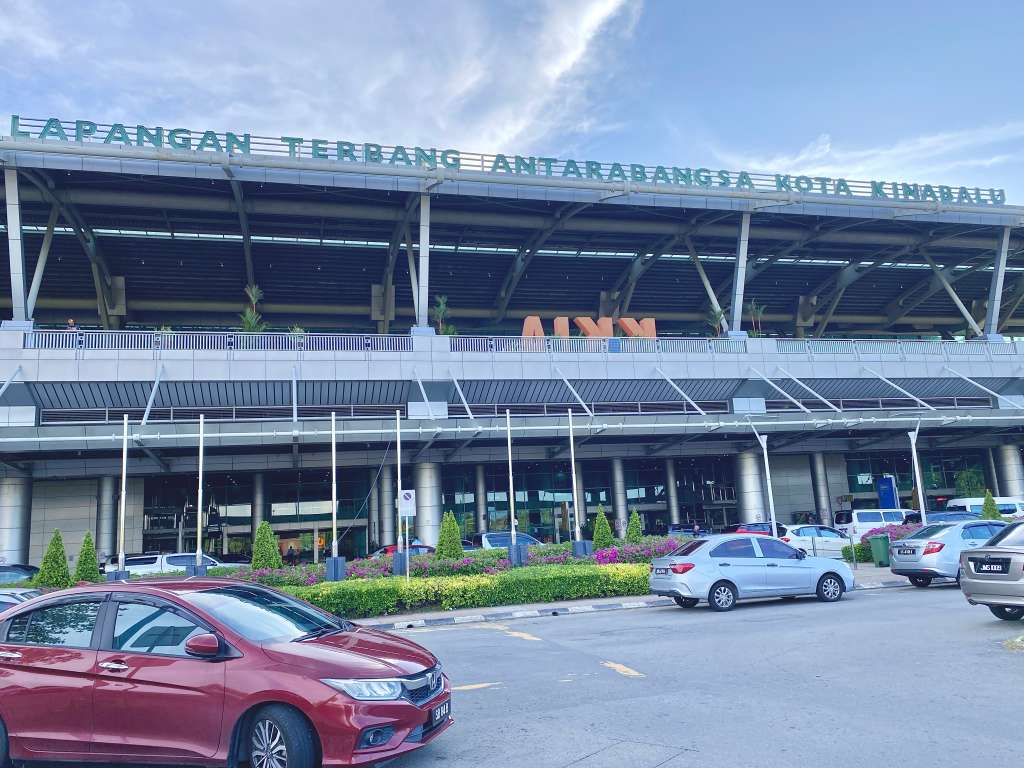
KKIA sits unusually close to Kota Kinabalu city centre, making airport access a genuine advantage. Passenger traffic has also been growing, while the airport is moving towards an expansion from 9 million to 12 million passengers annually.
The trade-off is noise. Flight paths cross established areas such as Kepayan and Tanjung Aru, so two nearby buildings can have very different noise exposure.
For buyers, one viewing is not enough. Visit at different times and check actual flight movements before deciding. For the wider market outlook, see our Sabah property analysis.
5. Melaka and Batu Berendam: Do Not Buy for the Airport
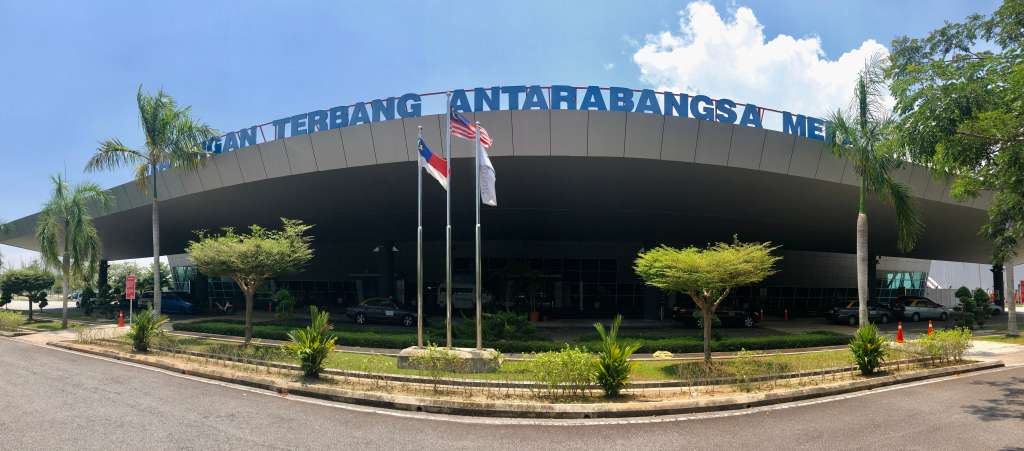
Batu Berendam is a good reminder that an airport does not automatically create property growth.
As of July 2026, Melaka International Airport was still rebuilding its commercial connectivity after flights were suspended in 2023 due to weak demand. Wings Air resumed the Melaka-Pekanbaru route in June 2026, while other routes were still being explored. For now, this is a recovering regional airport, not a major property demand driver.
The investment case is instead about affordability and the local market. Batu Berendam’s median price of around RM280,000 sits within Malaysia’s most active transaction band, while Melaka’s average subsale price rose 10% year on year to RM358,964 in Q1 2026.
There is still an investment case here, but it should be built around the neighbourhood, local jobs and amenities, not the airport.
And if short-term tourist rentals are part of the plan, read our realistic guide to short-term rentals in Malaysia before estimating occupancy and returns.
6. Senai and Johor: Airport Plus Industrial Growth
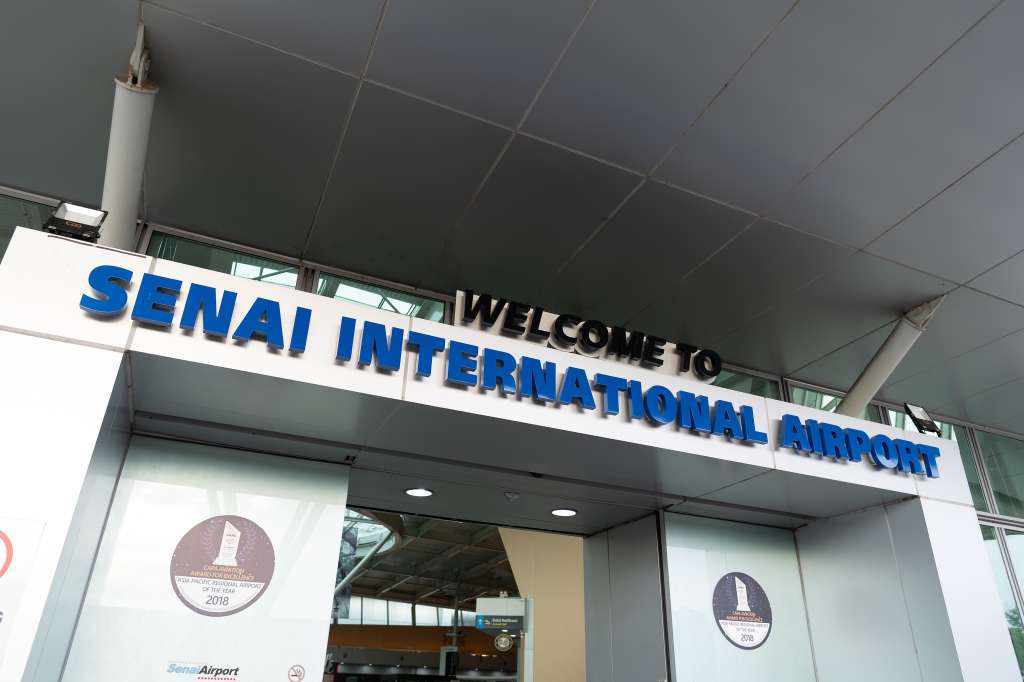
Senai’s strength is that the airport is only one part of a much bigger Johor growth story.
Johor attracted a record RM110 billion in approved investments, while industrial transaction value rose 44% in 2025. The wider Kulai-Senai corridor also benefits from manufacturing, logistics and the coming RTS Link, which are likely to matter more to housing demand than airport traffic itself.
That is why Senai should not be treated purely as an airport investment. The better question is whether the project sits near real jobs, transport links and established demand.
Price differences also show how selective buyers need to be. Taman Senai Jaya recorded a median around RM170,000, while Taman Scientex Senai was around RM500,000. That RM330,000 gap within the same wider area makes one point very clear: the location alone is not the investment. The project is.
For more context, see our guide to new housing developments in Johor.
Want to see what is actually on the market in these areas? Browse live listings around KLIA, Subang, Bayan Lepas and Senai
Which Airport Property Market Suits Your Investment Goal?
| Market | Best suited for |
|---|---|
| Bayan Lepas, Penang | Strongest overall balance of jobs, infrastructure and rental demand |
| Senai and Kulai, Johor | Long-term industrial and cross-border growth |
| Subang and Ara Damansara | Mature, diversified demand with the lowest dependency risk |
| Sepang and KLIA | Direct aviation-economy exposure, longer horizon, project-dependent |
| Kota Kinabalu | Tourism-linked demand and real city accessibility |
| Batu Berendam, Melaka | Affordable local housing, not airport speculation |
Airport markets generally favour practical housing over lifestyle-driven products. Smaller condominiums can work well where demand comes from airline staff, engineers and young professionals, while larger homes suit mature areas like Subang where families support both rental and resale demand.
Be more cautious with serviced apartments marketed mainly for short stays. This is also where oversupply risk can become more obvious.
Foreign buyers have another layer to consider, as state minimum purchase thresholds and the 8% stamp duty can significantly change the numbers. Our guides comparing Malaysia and Singapore property investment and analysing MM2H buyer activity explain how these rules affect foreign buyers in practice.
A simple test helps:
If the airport closed tomorrow, would people still want to live here?
For Bayan Lepas, Subang and much of the Kulai-Senai corridor, the answer is still yes. If the answer is no, you may be investing in the airport story rather than the property itself.
7 Things to Check Before You Buy
- Check the flight path, not just the distance. Use a live flight tracker while standing inside the unit.
- Visit at different times. Flight patterns can change, so one quiet viewing may not reflect daily conditions.
- Close the windows and listen. Good glazing can make a major difference to liveability.
- Know exactly who the tenant is. Identify the companies, industrial parks and employment hubs creating demand.
- Check future airport expansion. More passengers and flights can change today’s noise profile.
- Compare transacted prices nearby. Look at similar homes outside the affected flight path to see whether noise is already priced in.
- Do not pay extra for airport proximity without proof. “Ten minutes from the airport” is a selling point, not a valuation.
Also confirm the leasehold or freehold status and the management fees, which quietly decide whether a headline gross yield survives contact with reality.
So, Should You Buy Property Near an Airport?
Yes, but not because the brochure says “10 minutes to the airport.”
An airport adds value when it brings jobs, infrastructure, businesses and lasting demand. It becomes a risk when a property takes on the noise without gaining enough of those benefits.
That is why Bayan Lepas works through its technology and manufacturing base, Subang through its mature Klang Valley demand, Senai through Johor’s industrial growth, and Sepang through its aviation ecosystem.
The best opportunity usually sits somewhere in between.
Close enough to benefit. Far enough to sleep.
FAQs
Yes, if the area has strong job demand beyond the airport itself. Locations such as Bayan Lepas, Subang and the Senai-Kulai corridor are more resilient because they are supported by established technology, industrial and urban employment hubs, not just passenger traffic.
Yes. Aircraft noise can reduce property values, although the impact varies by location. A Malaysian study near Kuching International Airport found noise-affected homes sold about 20.8% lower than comparable properties, while research on Hong Kong’s Kai Tak Airport found nearby prices rose after aircraft noise disappeared.
There is no single safe distance. Flight path, runway direction, aircraft altitude and building insulation often matter more than kilometres alone. A home 8km away under an approach route can be noisier than one 4km away outside the main flight path.
On current fundamentals, Bayan Lepas in Penang offers the strongest balance, because its technology and manufacturing employment base generates rental demand independently of the airport. Senai in Johor and Subang in Selangor follow, for industrial growth and mature diversified demand respectively.
Is property near an airport good for rental?
Yes, if the area has a strong employment base. Reliable tenants usually come from airline, logistics, engineering and business sectors, not passengers passing through the terminal. The best rental properties are therefore near jobs and transport links, not simply closest to the airport.
Only if the property still makes sense without the airport. Melaka International Airport is still rebuilding commercial connectivity, so Batu Berendam is better viewed as an affordable local housing market than an airport-driven investment. Buy based on local jobs, amenities and demand, not expected airport growth.
Use a live flight tracker such as Flightradar24 while standing inside the unit, then repeat the check at different times of day. Flight paths can change with runway use and wind conditions, so one visit may not show the full noise pattern. Also check with the airport operator or local authority for any planned expansion.
Thinking about buying near KLIA, Subang, Bayan Lepas, KK or Senai?
Do not rely on the brochure alone. An IQI property consultant can compare actual transacted prices, rental demand, employment catchments, noise exposure and oversupply risk for the specific project you are considering.
Talk to a local IQI agent before you pay a premium just for being near the airport.
Continue Reading:
- How to Buy a House in Malaysia 2026: Complete Guide
- NAPIC Q1 2026: What Malaysia’s Property Data Means for Buyers
- Top Rental Yield Areas in Penang 2026
- Buying Property in Klang Valley: The Complete 2026 Guide
- Guide to the Johor Real Estate Market Outlook
- Damansara Rental Yield Guide for Property Investors
- Sabah Property Market: More Than a Tourism Spot
- Where to Invest in Property in 2026: Four Global Markets to Watch
Sources
- Brickz.my, transacted residential price data for Bayan Lepas, Ara Damansara, Kota Kinabalu, Batu Berendam, Kota Warisan and Senai. Periods as stated in the table.
- NAPIC / JPPH, Property Market Report Q1 2026.
- IQI Q1 2026 Residential Subsale Market Report, based on more than 230,000 transactions recorded since 2018.
- Kashif Ansari, Juwai IQI, as quoted in BusinessToday (December 2025), the IQI Q1 2026 subsale report (June 2026), and Utusan Malaysia (July 2026).
- Bank Negara Malaysia, Overnight Policy Rate decision, 7 May 2026.
- Malaysia Airports Holdings Berhad, 2025 full-year passenger traffic statement (January 2026); Penang and Kota Kinabalu expansion updates, 2025 to 2026.
- Penang State Government, PIA expansion work package progress, July 2026.
- Subang Airport Regeneration Plan capacity targets; Budget 2026 aerospace references.
- SD Guthrie Berhad and MBI Selangor, Sepang Estate MoU media release, 28 April 2026.
- Bernama and Melaka State Government, Melaka International Airport route announcements, June 2026.
- Zheng et al., “Airport noise and house prices: A quasi-experimental design study”, Land Use Policy (Kai Tak, Hong Kong).
- Friedt and Cohen, aircraft noise and house price research, Minneapolis-St Paul International Airport.
- “Airport Proximity Effects on Residential Property Values”, Sustainability, 2026.
- “House prices, airport location proximity, air traffic volume and the COVID-19 effect”, Regional Studies, Regional Science.
- “Determining the Impact of Aircraft Noise towards Residential Property Price”, MATEC Web of Conferences (Kuching International Airport).
