


In February 2026, a parliamentary reply sparked headlines across Malaysia: China had emerged as the largest source of MM2H property buyers.
The story was quickly picked up by The Star, New Straits Times, The Sun and the South China Morning Post, while questions were raised in Parliament over whether the programme had become too concentrated in one market.
But the headlines left out an important piece of context. How significant are these Chinese purchases when compared with Malaysia’s overall property market?
That is the question this article answers, using the numbers behind the headlines.
Key Takeaways
- Chinese nationals made 304 of the 744 MM2H property purchases recorded as at 31 December 2025, making China the programme’s largest single buyer market.
- Despite China’s strong share within MM2H, the overall programme remains small compared with Malaysia’s wider property market. The 744 MM2H purchases represent less than 0.3% of Malaysia’s 256,512 residential transactions in 2025 alone.
- Foreign buyers generally operate in a different segment from most local buyers. They cannot purchase low-cost housing, Bumiputera quota units or Malay Reserved Land, and are subject to state minimum purchase prices, including around RM1 million in Kuala Lumpur.
- Foreign demand is concentrated mainly in higher-priced strata and high-rise properties, rather than the affordable housing segment where most Malaysian transactions take place.
- From 1 January 2026, foreign residential buyers face a flat 8% stamp duty, up from 4%, with no special exemption for MM2H participants.
- MM2H provides a renewable long-term stay option, but it does not grant permanent residency or Malaysian citizenship.
Table of contents
What the MM2H China numbers actually say
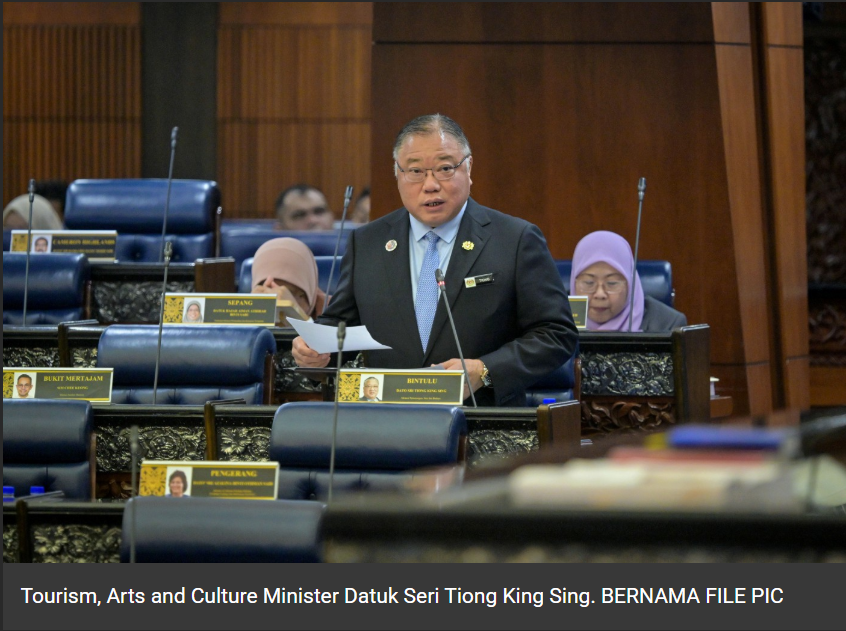
According to Tourism, Arts and Culture Minister Datuk Seri Tiong King Sing, 744 MM2H participants had purchased property in Malaysia as at 31 December 2025, following the programme’s relaunch.
Of the total, Chinese nationals accounted for 304 purchases, the largest share, followed by Taiwan with 91 and Singapore with 63.
| Nationality | Property purchases |
|---|---|
| China | 304 |
| Taiwan | 91 |
| Singapore | 63 |
| United States | 41 |
| United Kingdom | 40 |
| Hong Kong | 34 |
| Australia | 29 |
| Bangladesh | 19 |
| South Korea | 15 |
| Indonesia and Japan | 14 each |
Source: Ministry of Tourism, Arts and Culture, Dewan Rakyat reply, 4 February 2026. Figures as at 31 December 2025.
A further 2,637 participants were still in the process of purchasing property, either finalising their sale and purchase agreements or shortlisting suitable locations.
In March 2026, Tiong also announced that MM2H had approved 3,172 applications in 2025, representing 9,038 participants including dependants and generating an estimated RM3.875 billion in economic value. Of this, around RM1.51 billion came from residential property purchases, while the larger share came from fixed deposits placed with Malaysian banks.
These figures are significant, but they need context. Without comparing them against Malaysia’s overall property market, the numbers can easily appear larger than they really are.
How big is 744 purchases, really?
According to NAPIC, Malaysia recorded 256,512 residential transactions in 2025, worth RM108.27 billion. That figure covers just one year, while the 744 MM2H property purchases were recorded over roughly two years.
In other words, MM2H-linked purchases represent only a very small share of Malaysia’s overall residential market.
| Measure | Figure |
|---|---|
| Malaysian residential transactions, 2025 | 256,512 |
| All MM2H property purchases, Dec 2023 to Dec 2025 | 744 |
| Chinese MM2H purchases, same period | 304 |
| Chinese MM2H purchases as a share of one year’s residential market | about 0.12% |
Put simply, for every 840 residential properties transacted in Malaysia in 2025, only about one was purchased by a Chinese MM2H participant.
Even if the full 2,637-participant purchase pipeline is added to the completed transactions, the combined figure would still represent only around 1.3% of one year’s residential market.
China may lead MM2H, but it does not lead Malaysia’s property market. The distinction is important when interpreting the headline numbers.
Want the full picture of what actually drives the market? Read our breakdown of the NAPIC data.
So why is China so dominant within MM2H?

China’s strong presence within MM2H does not necessarily translate into dominance of Malaysia’s wider property market. Three key factors help explain why Chinese buyers lead the programme.
Promotion has been concentrated in East Asia
Tiong acknowledged in Parliament that MM2H promotional efforts have been more heavily focused on East Asian markets. The ministry has since indicated plans to broaden its outreach, particularly across the Middle East.
This helps explain why Chinese buyers account for such a large share of the programme. Markets that receive greater promotion are naturally more likely to generate stronger applicant numbers.
MM2H attracts financially established applicants
MM2H requires participants to place a fixed deposit in Malaysia and purchase a qualifying property. These requirements naturally appeal to applicants with sufficient liquid capital who are looking for a long-term base in the region.
Chinese and Taiwanese families represent a significant share of this profile, particularly among buyers considering property, education, lifestyle and regional mobility together.
Malaysia offers a relatively easy transition
Malaysia also offers several practical advantages for Chinese families considering relocation. Mandarin is widely spoken in many communities, international schools are well established, healthcare is accessible, and major Chinese cities are within relatively short flying distance.
These factors can make the transition to Malaysia more straightforward compared with destinations such as Australia, Canada or the United Kingdom.
Malaysia has also remained relatively open to foreign property buyers while several other major markets have introduced tighter restrictions. Against this backdrop, Juwai IQI recorded a 52.5% year-on-year increase in international property enquiries, with Kuala Lumpur accounting for 44% of all foreign buyer enquiries.
Does this push up house prices for Malaysians?

This is one of the biggest concerns behind the MM2H headlines, but the national data suggests the impact is limited.
Foreign buyers generally operate in a different segment from most Malaysian homebuyers. They cannot purchase low-cost or medium-cost housing, Bumiputera quota units or Malay Reserved Land, and are typically restricted to strata properties such as condominiums and apartments. Landed property is also more tightly controlled in most states.
Each state also sets a minimum purchase price for foreign buyers. In Kuala Lumpur, the threshold is generally RM1 million, while on Penang Island it is RM1 million for strata properties and RM3 million for landed homes. For more details, see our foreigner’s guide to buying property in Malaysia and guide to foreign land ownership rules.
This matters because Malaysian demand is concentrated much lower down the price range. In Q1 2026, homes priced at RM300,000 and below recorded 27,209 transactions, making them the most active segment in the residential market.
Affordable homes remain the main driver of transaction volume in Malaysia.
Kashif Ansari, Co-Founder and Group CEO, Juwai IQI
In other words, local and foreign buyers are largely shopping in different parts of the market. A foreign buyer subject to a RM1 million minimum is unlikely to compete directly with most Malaysians buying lower-priced homes.
There is another factor to consider. Malaysia continues to carry a residential overhang of more than 30,000 completed unsold units, with condominiums and apartments accounting for a significant share. High-rise properties in the RM500,000 to RM1 million range are among the most oversupplied segments.
Foreign demand can therefore help absorb part of this existing stock rather than simply adding pressure to prices. Our H1 2026 market review looks more closely at how the overhang is changing.
That said, the national picture does not apply equally everywhere. In certain developments or neighbourhoods, concentrated foreign demand can still influence local prices and rental yields. The broader data suggests the impact is limited nationally, but local effects can still occur.
Worried a specific area is being priced out? An IQI agent can pull actual transacted prices for the neighbourhood you are looking at, not headline averages. Browse subsale homes →
Where are these buyers actually buying?
Foreign and MM2H demand is concentrated mainly in three markets, each appealing to a different buyer profile.
Kuala Lumpur remains a key choice for families, professionals and business owners. Areas such as Mont Kiara, Bangsar, Desa ParkCity, KLCC and Bukit Jalil offer access to international schools, healthcare, established Mandarin-speaking communities and strong public transport connections. The city’s RM1 million foreign purchase threshold also aligns closely with the MM2H Gold property requirement. See our guide to the best places to live and invest in Malaysia.
Johor appeals strongly to buyers who value proximity to Singapore. The RTS Link, the Johor-Singapore Special Economic Zone and the Forest City special financial zone are strengthening Johor’s cross-border investment appeal. Our analysis of Johor property prices explores the market in greater detail.
Penang continues to attract lifestyle, retirement and long-stay buyers. Its appeal comes from a combination of healthcare, food, established communities and a slower-paced lifestyle. For investors, see our guide to the top rental yield areas in Penang.
What changed on 1 January 2026?
The MM2H purchase figures above were recorded before a major change in the cost of buying residential property as a foreigner in Malaysia.
From 1 January 2026, non-citizens and foreign-owned companies are subject to a flat 8% stamp duty on residential property transfers, up from the previous 4%. Malaysian citizens continue to pay tiered stamp duty rates of 1% to 4%, while MM2H participants who are neither citizens nor permanent residents do not receive an exemption from the higher foreign-buyer rate.
| Purchase price | Malaysian citizen | Foreign buyer from 2026 |
|---|---|---|
| RM1,000,000 | About RM24,000 | RM80,000 |
| RM2,000,000 | About RM64,000 | RM160,000 |
The difference also extends to the eventual sale of the property. Under Real Property Gains Tax, non-citizens are subject to 30% tax on gains within the first five years of ownership, falling to 10% from the sixth year onwards. Malaysian citizens, by comparison, are generally subject to 0% RPGT from the sixth year.
These changes make the cost of entering and exiting Malaysia’s property market significantly higher for foreign buyers.
As a result, the strong Chinese presence recorded under MM2H up to the end of 2025 may not necessarily continue at the same pace in 2026. The higher transaction costs introduce a new factor that could influence future foreign-buyer demand.
What the industry is saying
The concentration of Chinese buyers within MM2H has also drawn attention across Malaysia’s property industry, where experts have generally offered a more measured view than the headlines suggest.

Siva Shanker, CEO of Estate Agency, Rahim & Co
Siva Shanker has pointed to a basic problem with the debate itself. Malaysia lacks comprehensive data on foreign property ownership, which makes the true impact of Chinese investment difficult to measure accurately. He has also observed that while Chinese buyers are visibly present in the market, the scale is not as large as many assume, and is broadly comparable to interest from British buyers.
Kashif Ansari, Co-Founder and Group CEO, Juwai IQI
Kashif Ansari frames the foreign buyer question as a competitive one rather than a defensive one. He has argued that foreign buyer bans send an unwelcoming signal and make it harder to compete globally for investment, jobs and technology, noting that Malaysia is winning in that market precisely because it has stayed open while others closed. He has also pointed out that economic contributions from foreign residents have grown to more than RM84.2 billion a year.


Datuk Paul Khong, Group Managing Director, Savills Malaysia
Paul Khong has suggested that momentum from projects such as the Johor-Singapore Special Economic Zone could revive Chinese interest in Malaysian property, after a period in which earlier waves of Chinese investment underdelivered against expectations. The Forest City experience is the cautionary example, where capital controls in China left an ambitious project far short of its projections.
Datuk Seri Tiong King Sing, Minister of Tourism, Arts and Culture
Responding to questions in the Dewan Rakyat about the concentration of applicants, Tiong urged that the programme not be politicised, stressing that MM2H is open to applicants worldwide and that participants from Arab countries are also accepted. He acknowledged that promotion has been weighted towards East Asia and committed to broadening it, particularly across the Middle East where participation remains low.

Two things stand out across those views. Nobody credible is arguing that Chinese MM2H buyers are reshaping the Malaysian housing market. The debate is about whether the programme’s applicant mix is diverse enough, which is a policy question rather than an affordability one.
The second is the data gap Siva Shanker identifies. Malaysia does not publish comprehensive foreign ownership statistics, which is precisely why a single parliamentary answer about one visa programme ended up carrying more weight than it should.
For more of Juwai IQI’s outlook on the year ahead, read our CEO’s 2026 Malaysia forecast.
What this means for you
If you are buying a home in Malaysia: MM2H buyers are unlikely to be your main competition, especially in lower-priced segments. Focus on actual transacted prices in your target area rather than national headlines. Our subsale price data shows where prices are really moving.
If you are selling a high-rise above RM1 million: foreign and MM2H buyers remain a relevant target market, particularly in Kuala Lumpur, Johor and Penang. The segment is relatively small, but still active.
If you are an investor: the bigger signal is not which nationality leads MM2H, but where foreign demand is flowing. Much of it is concentrated in higher-priced high-rise properties, a segment where Malaysia already has substantial supply.
If you are following the policy debate: MM2H remains open to applicants worldwide. The government has also indicated plans to diversify its promotional efforts beyond East Asia and attract more participants from other regions.
FAQs
No. Chinese nationals made 304 MM2H property purchases between December 2023 and December 2025, while Malaysia recorded 256,512 residential transactions in 2025 alone. This means Chinese MM2H purchases represented only about 0.12% of one year’s residential market. China leads MM2H, but not Malaysia’s overall property market.
As of 31 December 2025, Chinese nationals had purchased 304 properties under MM2H, the highest among all nationalities. This was out of 744 total MM2H property purchases, followed by Taiwan with 91 and Singapore with 63.
Not broadly. Foreign buyers are restricted from low-cost housing, Bumiputera quota units and Malay Reserved Land, and usually face minimum purchase prices, such as around RM1 million in Kuala Lumpur. While foreign demand can affect prices in specific developments, national data does not show a major impact on Malaysia’s overall housing market.
Foreigners can generally buy strata properties such as condominiums and apartments, subject to each state’s minimum purchase price and approval requirements. They cannot buy low-cost housing, Bumiputera quota units or Malay Reserved Land, while landed property is more restricted.
From 1 January 2026, foreign buyers pay a flat 8% stamp duty on residential property transfers in Malaysia, up from 4%. This means a RM1 million property incurs RM80,000 in stamp duty. MM2H participants who are not Malaysian citizens or permanent residents do not receive an exemption.
No. MM2H grants a long-term social visit pass with a multiple-entry visa, renewable in five-year cycles across the Platinum, Gold, Silver and Special Economic Zone categories. The Malaysian government has repeatedly confirmed the programme has never offered permanent residency or citizenship to participants.
Get the number that actually applies to you
National figures will not tell you what your area is doing. Tell us where you are looking and whether you are buying, selling or investing, and an IQI agent will come back with real transacted prices for that location.
Continue reading:
- MM2H explained: the Silver, Gold, Platinum and SEZ requirements
- The MM2H programme: eligibility and how to apply
- MM2H drives nearly RM1 billion in annual investment
- Juwai IQI’s CEO provides a Malaysia forecast for 2026
- Malaysia’s 2026 outlook for economic and property stability
Sources
- Ministry of Tourism, Arts and Culture, Dewan Rakyat reply by Datuk Seri Tiong King Sing, 4 February 2026, as reported in The Star, “China, Taiwan and Singapore top MM2H property buyers, says Tiong”
- South China Morning Post, “Chinese buyers top the list in Malaysia’s MM2H golden visa scheme”, 4 February 2026
- ExpatGo, “MM2H home purchases on the rise, but misconceptions about the programme persist”, 5 February 2026
- IMI Daily, “Malaysia’s MM2H programme records 744 property purchases since late 2023”, 4 February 2026
- National Property Information Centre (NAPIC), Property Market Report 2025 and Q1 2026 Property Market Status Report, for residential transaction volumes, price bands and overhang figures
- Global Property Guide, “Malaysia’s residential property market analysis 2026”, for stamp duty comparison, MM2H 2025 approval figures and Q1 2026 transaction bands
- The Malaysian Reserve, “Malaysia’s open-door stance drives 50% jump in foreign property interest”, 10 September 2025, for Kashif Ansari’s commentary and the RM84.2 billion figure
- Outbound Investment Group, “Evaluating the impact of China’s investment in Malaysia’s property market”, for commentary from Siva Shanker of Rahim & Co and Datuk Paul Khong of Savills Malaysia
- Lembaga Hasil Dalam Negeri (LHDN) for stamp duty rates under the Stamp Act 1949 and Real Property Gains Tax rates for non-citizens
- Respective state authority guidelines for minimum purchase prices applicable to foreign buyers
- IQI Global, NAPIC Q3 2025 analysis
