

































Newsletter
Keep yourself update with our current news for Juwai IQI

Juwai IQI Newsletter – Real Estate Market – November 2025
The global real estate market showed varied performance in November, with certain regions experiencing growth while others remained steady.Discover in-depth insights on the latest update by reading Novmber 2025's monthly Juwai IQI newsletter.Click here for more!Download Now!
6 November, 2025

Where Investors Get the Most from Low Interest Rates
Written by Dave PLatter, Global PR DirectorThe South China Morning Post last month wrote a fascinating article about how the rate-cutting cycle at the U.S. Federal Reserve affects investors. One of the experts cited in the article by Asia's largest English-language news source was IQI’s own Co-Founder and Group CEO, Kashif Ansari. “The USA, UK, Canada, and the UAE all are in a rates-easing cycle,” he told the Post. “That gives borrowers more buying power as we go into 2026. “Typical mortgage interest rates this month vary from as low as 1.8% in Japan to as much as 6.5% in the USA, with offshore buyers who have no local income typically paying up to 2 percentage points more. For buyers looking at the USA, Mr. Ansari said many investors consider it a good time to purchase, especially if they can pay with cash. The rental market is robust and provides sustained rental yields, and with rates easing, they will be able to refinance later at a lower rate. Regarding the UK, he said, “The UK has a chronic housing shortage and lower interest rates than the United States. That also makes it an attractive rental market, especially if you can purchase a relatively high-yielding property. “ Mr. Ansari said Japan is attractive at the moment because the yen is weak and properties in the major cities deliver high yields. “But foreign investors in Japan should move with speed because some locals are calling for a foreign buyer ban, similar to Korea’s recently announced partial ban.” For more of Mr. Ansari's insights on interest rates, please see the provided table. CountryTypical Prevailing Mortgage Rates* Next Rate Decision Date United States (Fed) ~6.35–6.50% The Fed eased rates by 25 basis points on 18 September. United Kingdom (BoE) ~4.3% (avg effective) The Bank of England kept rates unchanged on 18 September. Canada (BoC) ~3.8–4.2% The Bank of Canada eased rates by 25 basis points on 18 September. Australia (RBA) 5.68% The RBA left the cash rate unchanged at 3.60 per cent on 30 September. Japan (BoJ) ~1.8–2.0% The Bank of Japan left rates unchanged on 19 September. United Arab Emirates (CBUAE) ~4.0–5.5% The CBUAE cut by 25 basis points on 18 September. Singapore (MAS) 2.60% (HDB) / ~2.1–2.3% (bank 2-yr fixed) 2025-10-14 Thailand (BOT) ~5–6% 2025-10-08 Malaysia (BNM) ~3.8–4.5% 2025-11-06 New Zealand (RBNZ) ~4.9–5.3% 2025-10-08 Discover more insights here!Download
31 October, 2025

Global Property Outlook 2025: The Next Investment Frontiers
Written by Taco Heidinga, IQI Global Strategic AdvisorDubai, UAE Dubai remains the Middle East’s haven for cross-border capital. Freehold zones and 99-year leasehold rights ensure clarity for foreign buyers, while off-plan projects and prime districts continue to see strong demand. Yields of 5–7% keep Dubai highly liquid and attractive despite warnings of corrections in oversupplied areas. Tokyo, Japan Foreigners face no ownership restrictions in Japan, and Tokyo is drawing strong global interest. Land prices rose at the fastest pace in 34 years in 2025, underpinned by infrastructure investment and resilient rental demand. Transparency and low borrowing costs reinforce Tokyo’s role as a long-term, stable market. Kuala Lumpur, Malaysia Malaysia recorded some of its biggest bond inflows in over a decade in mid-2025, signaling strong external confidence. Foreigners can purchase above RM1m thresholds (varies by state), with federal territories set at RM1m. Affordable luxury in KL, coupled with a national steel roadmap targeting full decarbonisation by 2050, highlights Malaysia’s appeal for both yield and sustainable growth. Bali, Indonesia Foreigners invest in Bali through PT PMA (company) structures or Hak Pakai (Right-to-Use). Arrivals reached 602,213 in May 2025, with hotel occupancy above 58%, reinforcing rental demand for villas and branded hospitality. Indonesia’s Golden Visa also adds policy support for long-term investors. Strategy for November Blend Dubai’s liquidity, Tokyo’s stability, Kuala Lumpur’s affordable growth, and Bali’s tourism-driven yields. This mix keeps you within clear foreign-buyer frameworks while capturing Asia’s most resilient opportunities for 2025 and beyond. Discover more insights here!Download
31 October, 2025

Malaysia’s Auto Market in 2025: Temporary Dip Amid Long-Term Demand Strength
Written by Irhamy Ahmad, Founder and Managing Director of Irhamy Valuers InternationalMalaysia remains one of Asia’s most car-reliant economies, with 535 vehicles per 1,000 people as of 2020—second only to Japan and well ahead of regional peers like South Korea and Thailand. The country’s Total Industry Volume (TIV) reached a record 816,747 units in 2024, a 2.1% increase year-on-year. As of August 2025, however, total registrations fell to 516,862 units, down 4% compared to the same period last year. Rising consumer costs and tighter credit conditions contributed to the dip, though Malaysia’s overall market fundamentals remain solid thanks to a growing middle class and limited public transport coverage in many areas. Domestic brands Perodua and Proton continue to dominate, together capturing over 60% of national market share with 2024 sales of 358,100 and 147,587 units respectively. Foreign automakers such as Toyota, Honda, and Chery are also holding ground, particularly in the compact and SUV segments. While 2025 may close with slightly lower volumes, the broader trajectory for vehicle demand remains upward. Stable economic growth, rising incomes, and shifting lifestyle needs are expected to keep Malaysia firmly in the fast lane of Asia’s automotive landscape. Discover more insights here!Download
31 October, 2025
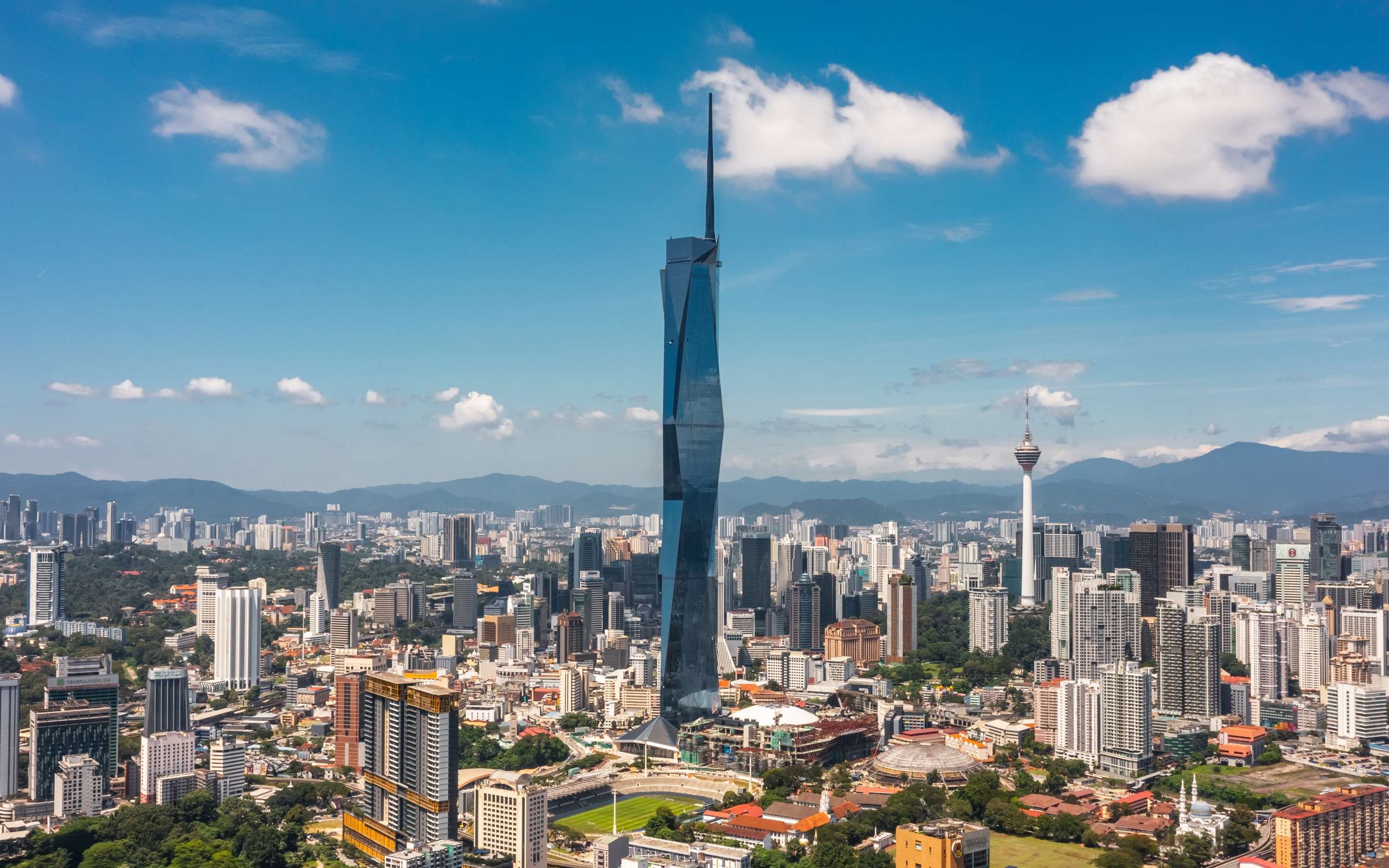
Malaysia’s Property Market in 2025: Stability Shines Amid Global Volatility
Written by Irhamy Ahmad, Founder and Managing Director of Irhamy Valuers InternationalAmid recent volatility in global commodities like gold, Malaysian investors continue to favor residential property as a core, long-term asset. Unlike speculative instruments, housing provides both intrinsic utility and investment value. In 2024, Malaysia recorded its strongest property performance in a decade, with 420,545 transactions totaling RM232.3 billion. While Q1 2025 saw a healthy market correction, demand for landed homes—particularly terraced houses—remains resilient, underscoring a deep cultural and financial preference for tangible assets. Bank Negara Malaysia’s July 2025 rate cut, bringing the OPR down to 2.75%, has further improved affordability. A typical RM500,000 home loan now costs RM70–75 less per month, making ownership more accessible. According to NAPIC, 65.3% of new launches in Q1 2025 were priced below RM500,000, meeting demand for affordable housing. As Malaysians navigate economic uncertainty, homeownership continues to offer both shelter and stability—cementing property’s role as a preferred investment pillar across market cycles. Discover more insights here!Download
31 October, 2025

At the Crossroads: Navigating AI, Politics & a Global Slowdown
Written by Hamid R. Azarmi, Head of Business DevelopmentAs 2025 nears its end, three forces converge: slowing global growth, rising political uncertainty, and AI’s accelerating influence. Navigating this space demands both conviction and flexibility. Growth Deceleration The UN’s mid-2025 outlook projects global GDP growth of 2.4 % in 2025, down from 2.9 % in 2024. Notably, U.S. growth is forecast at 1.6 %, China’s at 4.6 %, and India remains a bright spot at around 6.3 %. Politics Amplifies Risk With key elections upcoming in the U.S., EU, and India, markets are bracing for policy surprises. Capital is shifting toward defensive assets as fiscal space narrows. AI: Engine, but also Concentration Risk AI continues to dominate returns: in 2025, much of the S&P 500’s gain is attributed to AI-linked firms. Global investment in AI infrastructure is rising sharply. While exact figures vary, Big Tech AI capital spending is now measured in hundreds of billions annually, and investors are increasingly cautious about overvaluation. Regulation Becomes a Frontier New laws such as California’s SB 53 and the EU’s AI Act mandate risk management, transparency, and accountability for deployed systems. Firms must now treat compliance as a core strategic constraint. What 2026 May Hold Fiscal and monetary policy cues will be decisive International alignment (or fragmentation) on AI regulation Early signals from election outcomes In this volatile mix, success hinges on adaptability. Diversify across sectors, track regulatory developments, and prepare for markets shaped as much by law and politics as by earnings. Sources: United Nations DESA, Washington Post, European Commission, California Legislative Information. Discover more insights here!Download
31 October, 2025

Global Economic Outlook 2025–26: Fragility Amid Flux — Echoes of the 1970s Resurface
Written by Shan Saeed, IQI Chief Economist The world economy stands at a macroeconomic crossroads—a juncture where fragility and instability remain embedded in the global financial tapestry. The parallels with the 1970s stagflationary decade are striking. Then, as now, the interplay of energy shocks, monetary missteps, and fiscal profligacy created a volatile economic milieu that tested even the most seasoned policymakers. Today, we confront a similar mosaic of monetary dissonance and market ructions unseen in a generation. The monetary-policy innuendos across advanced economies are surfacing with unmistakable clarity: central banks, having over-stimulated liquidity post-pandemic, now risk steering their economies toward sub-par growth trajectories and structurally higher inflation over the next two to three years. Financial repression is quietly becoming the lexicon of the decade. Both equity and fixed-income markets are bracing for seismic adjustments as the specter of a sovereign-debt recalibration looms large. Global debt ratios are hovering near vertiginous levels, while commodity prices—especially in energy and metals—continue their upward ascent, signaling that inflationary undertones remain far from transitory. If one were to meticulously regurgitate the 1970s playbook, the analogies are unmistakable: a world grappling with geopolitical realignments, tariff volatility, and policy contradictions, leaving investors increasingly discombobulated and convoluted in judgment. Key Strategic Questions for Global Investors 1. What will be the epitaph of this economic cycle—renewal or reckoning? 2. How will central banks orchestrate the next phase of inflation management? 3. Why are institutional investors hoarding liquidity, preferring cash as a defensive moat?4. Why has Dubai real estate emerged as a proxy global currency—a tangible hedge against fiat fragility?5. How high could precious metals soar in the next 24 months as monetary credibility erodes?6. Why are central banks aggressively accumulating gold at a record pace?7. Which technology giants will sustain valuation leadership in U.S. equity markets?8. How will China leverage its dominance in rare earths and AI technology to shape the next phase of global economic leadership? Dollar Index Outlook 2025: History Repeats — 1976–1981 Redux As my colleague Otavia Tavi aptly notes, conventional wisdom portrays a rising U.S. dollar as a flight to safety—a liquidity reflex in times of stress. While partially true, history suggests a deeper structural correlation: the dollar’s long-term cycles mirror the relative performance of U.S. assets versus the rest of the world. When the dollar appreciates, U.S. assets dominate global capital flows; when it depreciates, emerging markets ascend. Yet the current macro configuration challenges the orthodoxy. Persistent twin deficits, combined with asset overvaluation and fiscal laxity, render a sustained strong dollar macroeconomically untenable. In essence, the U.S. cannot rectify chronic imbalances through a perpetually appreciating currency—quite the opposite. A weaker dollar increasingly appears to be the implicit, perhaps inevitable, policy choice to restore external balance and avert systemic dislocation. Viewed through that lens, a dollar retracement could well become the catalyst for a structural reconfiguration of global capital flows, as financial gravity gradually tilts from the West toward the Rest. Discover more insights here!Download
31 October, 2025

Canada’s Housing Market: Stability Emerging Amid Affordability Pressures
Written by Yousaf Iqbal, Head of IQI CanadaCanada Canada’s Housing Market in September 2025: Signs of Stability Amid Affordability Pressures In September 2025, Canada’s housing market showed signs of cautious stabilization. National average home prices edged up slightly by 0.2% to C$674,000, though they remained 1.8% lower than the previous year. Sales rose 3.1% month-over-month, buoyed by interest rate cuts and an increase in listings. Yet, affordability continues to be a challenge, with mortgage costs still 35% higher than in 2019. On the rental side, prices declined for the third consecutive month, thanks to an uptick in housing completions, offering modest relief to tenants. While the market is showing early signs of recovery, it remains sensitive to affordability constraints. At the city level, Toronto (GTA) saw a 2.3% rise in home sales and a 9.4% increase in listings in August 2025, expanding supply and making the market more competitive. Prices, however, fell by 5.2% to an average of $1.02 million, as affordability pressures persisted. In Greater Vancouver, September sales were up 1.2% year-on-year, but the sales-to-active listings ratio of 11.3% signalled mild downward price pressure. Meanwhile, Quebec stood out with a 12% year-on-year surge in transactions—the strongest September since 2020—driven by an 18% rise in listings and stable inventory. Prices climbed across all property types, underscoring strong seller conditions in the province. Source by FSMI Discover more country insights here!Download
31 October, 2025

