


As of 3 September 2026, Bank Negara Malaysia (BNM) has maintained the Overnight Policy Rate (OPR) at 2.75%.
The OPR has remained unchanged at this level since 9 July 2025, when BNM reduced the rate by 25 basis points from 3.00% to 2.75%. This means the OPR has now stayed at 2.75% for around 14 months.
At its September meeting, BNM said the current monetary policy stance remains consistent with the goals of continued price stability and sustainable economic growth.
Malaysia’s economy also remains relatively resilient. GDP expanded by 5.7% in the first half of 2026, with BNM expecting full-year growth to reach around 5%.
At the same time, inflation remains contained. During the first seven months of 2026:
- Headline inflation averaged 1.8%
- Core inflation averaged 2.0%
These conditions give BNM room to keep the OPR unchanged while continuing to monitor inflation, domestic demand, and external risks.
The next and final Monetary Policy Committee (MPC) meeting for 2026 is scheduled for 5 November 2026.
What You Should Know About OPR in 2026
1. What is the Overnight Policy Rate (OPR)?
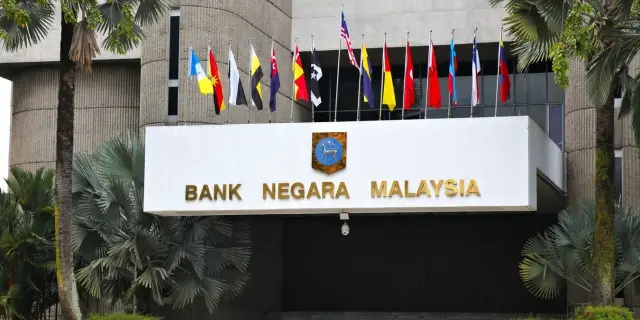
Before we dive deeper, let’s first understand what the OPR actually means.
The Overnight Policy Rate (OPR) is an interest rate set by Bank Negara Malaysia (BNM) that influences the rates at which financial institutions lend funds to one another overnight.
Banks experience varying levels of deposits, withdrawals, and lending activities every day, so their available cash reserves can fluctuate.
A bank facing a cash shortage may borrow from another bank with excess funds to meet its short-term liquidity needs.
The OPR provides a benchmark for these transactions and also plays an important role in influencing borrowing costs across Malaysia’s financial system.
a. Why Is the OPR System in Place?
The OPR is one of BNM’s main tools for managing the economy.
By adjusting or maintaining the OPR, BNM can influence borrowing costs, spending, investment and inflation.
For example, a lower OPR can make borrowing more affordable and encourage spending and investment. A higher OPR can help reduce excessive demand and inflation by making financing more expensive.
However, strong economic growth does not automatically mean BNM needs to increase the OPR.
What matters is whether stronger demand begins to create problems such as persistent inflation, excessive household borrowing, rapidly rising asset prices, or financial instability.
For now, Malaysia’s inflation remains relatively contained despite GDP growth of 5.7% in the first half of 2026.
This is one reason BNM has been able to maintain the OPR at 2.75%.
2. What Does OPR Mean to Home Buyers and Businesses?

For homebuyers and businesses, the September OPR decision mainly means financing conditions remain relatively stable.
There is no new rate cut, but there is also no increase in borrowing costs caused by an OPR hike.
a. When the OPR increases:
- Borrowing costs generally become higher.
- Floating-rate housing loan repayments may increase.
- Businesses may face higher financing costs.
- Loan affordability can become tighter for some borrowers.
b. When the OPR decreases:
- Borrowing costs generally become lower.
- Monthly repayments on affected floating-rate loans may decline.
- Financing becomes more affordable.
- Lower borrowing costs can support household spending, property purchases and business investment.
c. When the OPR remains unchanged, like the current 2.75%:
- Borrowers generally face more stable financing conditions.
- Existing floating-rate borrowers are less likely to see an OPR-driven change in repayments.
- Homebuyers have greater certainty when planning their monthly commitments.
The current environment is also supported by Malaysia’s resilient economy, stable labour market and ongoing investment activity.
However, BNM continues to monitor risks such as higher global commodity prices, geopolitical tensions, and inflationary pressures.
3. How Does OPR Affect Your Housing Loan?

For homeowners and property buyers, changes in the OPR can eventually affect the cost of servicing a floating-rate housing loan.
a. Your monthly installment may change
When borrowing rates rise, homeowners with floating-rate loans may need to pay higher monthly installments.
When borrowing rates decrease, the opposite may happen, reducing monthly repayment commitments.
With the OPR currently maintained at 2.75%, borrowers are not facing a fresh OPR-driven increase following the September 2026 meeting.
b. Your repayment period may be affected
Depending on the bank and the terms of your housing loan, a change in interest rates may affect either your monthly repayment amount, effective repayment period, or both.
This is particularly relevant for floating-rate housing loans, where borrowing costs can move when benchmark rates change.
To illustrate how a 0.25 percentage-point difference in loan interest rates can affect monthly repayments:
| Loan Amount | At 3.00% p.a. | At 2.75% p.a. | Estimated Monthly Savings |
|---|---|---|---|
| RM500,000 | RM1,924 | RM1,855 | RM69 |
| RM600,000 | RM2,309 | RM2,226 | RM83 |
| RM700,000 | RM2,694 | RM2,597 | RM97 |
The illustration assumes a 35-year loan term and is provided for comparison purposes only. The OPR is not the same as your actual housing loan interest rate. Actual rates, repayments and loan terms vary between banks and borrowers.
For context, Malaysia’s lowest-ever OPR was 1.75%, introduced in July 2020 during the COVID-19 pandemic. It remained at that level until May 2022.
4. Will the OPR Stay at 2.75%?
For now, there appears to be limited pressure for BNM to change the OPR immediately.
Malaysia recorded stronger economic growth of 5.7% in the first half of 2026, while headline and core inflation remained relatively contained at 1.8% and 2.0%, respectively, during the first seven months.
Several economists and research houses therefore expect BNM to keep the OPR at 2.75% for the remainder of 2026, including at the final MPC meeting in November.
Some economists believe the current rate could even remain in place into 2027 if inflation stays manageable and domestic demand grows at a sustainable pace.
However, this is not guaranteed.
Pressure for an OPR increase could become stronger if:
- inflation rises persistently;
- wage and household spending pressures accelerate;
- household borrowing increases rapidly;
- property prices rise excessively; or
- the ringgit comes under sustained pressure.
On the other hand, a major slowdown in global trade or economic growth could change the outlook in the opposite direction.
BNM has made it clear that future decisions will continue to depend on the balance between economic growth and inflation.
5. Is This a Good Time To Buy a Home?

The current 2.75% OPR provides a relatively stable financing environment for homebuyers, but that does not automatically mean everyone should rush to purchase a property.
Unlike July 2025, buyers are not receiving a fresh rate cut today. The advantage now is greater certainty because the OPR has remained unchanged for around 14 months.
Malaysia’s economy is also growing at a healthy pace, while inflation remains contained. This gives homebuyers a more stable environment when planning long-term financial commitments.
For buyers purchasing a property for their own stay or as a long-term investment, the current environment can be favorable if your income is stable and the monthly repayment remains comfortably within your budget.
However, the OPR should never be the only reason to buy.
You should also consider your:
- monthly income and existing commitments;
- emergency savings;
- property location and future demand;
- down payment and upfront costs; and
- ability to continue servicing the loan if interest rates eventually increase.
Overall, an OPR of 2.75% provides Malaysian homebuyers with greater financing stability, but the best time to buy is still when the property fits both your needs and your long-term financial capacity.
Frequently Asked Questions (FAQs)
As of 3 September 2026, Bank Negara Malaysia has maintained the Overnight Policy Rate (OPR) at 2.75%. The rate has remained unchanged since 9 July 2025, when it was reduced from 3.00%.
The next and final Bank Negara Malaysia Monetary Policy Committee meeting for 2026 is scheduled for 5 November 2026. BNM will decide whether to maintain, increase, or reduce the OPR based on inflation, economic growth, and other financial conditions.
BNM considers the current rate appropriate for supporting sustainable economic growth while maintaining price stability. Malaysia’s GDP grew 5.7% in the first half of 2026, while headline and core inflation remained relatively contained at 1.8% and 2.0%, respectively, during the first seven months.
Several economists and research houses expect the OPR to remain at 2.75% for the remainder of 2026, including at the November MPC meeting. However, this is not guaranteed, as BNM will continue monitoring inflation, domestic demand, global economic conditions, and financial risks.
The OPR can influence banks’ lending rates, particularly for floating-rate housing loans. If borrowing rates rise, monthly repayments may increase, while lower rates can reduce repayments. Since the OPR is currently unchanged, borrowers are generally not facing a new OPR-driven increase in monthly installments.
Not necessarily. The OPR is an important benchmark, but each bank determines its own lending rates based on funding costs, borrower risk, loan packages, and other factors. Fixed-rate loans are also generally unaffected by short-term OPR movements, while floating-rate loans are more sensitive to changes in benchmark rates.
A 2.75% OPR provides a relatively stable financing environment, helping buyers plan their monthly commitments with greater certainty. However, buyers should still consider their income, existing debts, down payment, emergency savings, property location, and ability to handle higher repayments if interest rates increase in the future.
It’s high time we started investing, so if you’re interested in connecting with property industry experts, drop us your details and we will connect you as soon as possible!
Continue reading:
