


Haze season is here again and this time, the smoke is not just outside your window. It is already inside your living room.
Look outside today and you will probably see it: that flat grey wash where the skyline used to be. Dozens of Department of Environment monitoring stations across Malaysia have been sitting in the “Unhealthy” band for days now, and Johor’s stations. Larkin, Pasir Gudang, Batu Pahat, Segamat, Tangkak are usually among the first on the Peninsula to climb when the smoke arrives.
Most haze advice tells you the same two things. Wear a mask. Stay indoors.
But here is the part nobody mentions: staying indoors only works if indoors is actually clean.
And in most Malaysian homes, it is not.
So instead of asking which mask to buy, ask a better question one that is actually about your property:
How well does my home hold air out?
That is something you can inspect, and something you can fix.
Here is your checklist
- 1. Seal the Envelope First (The Step Everyone Skips)
- 2. Your Aircon Is Not an Air Purifier
- 3. Size Your Air Purifier Properly (Most People Get This Wrong)
- 4. Build One Clean Room
- 5. Stop Adding Particles Indoors
- 6. Small Routine Changes, Real Difference
- 7. Check the Numbers, Not the View
- What About Air-Purifying Plants?
- Buying or Renting This Season? Use the Haze
- FAQ
1. Seal the Envelope First (The Step Everyone Skips)
This is the highest-impact, lowest-cost thing you can do and almost nobody does it.
Think about it this way: running an air purifier in a leaky house is like running your aircon with the front door wide open. You are paying to filter air that keeps getting replaced.
Walk through your home and check these, in order of how badly they usually leak:
- The gap under your main door — Terrace and landed homes very often have a gap wide enough to see daylight through. A stick-on door sweep costs under RM30 at any hardware shop. Biggest win in most homes.
- Grille doors and air wells — Many households leave the main door open with the grille door shut for ventilation. During haze, that is simply an open window.
- Window seals — Rubber gaskets on casement and sliding windows harden and shrink over the years. Run your hand along the frame. If you feel air moving, foam weatherstripping tape solves it in an afternoon.
- Louvre windows — Common in older Johor homes and bathrooms. They do not seal, by design. Treat those rooms as semi-outdoor and do not waste a purifier on them.
- Aircon pipe penetrations — That hole drilled through your wall for the refrigerant and drain pipes? Often left with crumbling putty, or nothing at all. Check every unit in the house.
- Exhaust fans — Kitchen and bathroom fans without backdraft dampers let air flow both ways when switched off.
Total cost to fix most of these: under RM200. Total time: one weekend.
2. Your Aircon Is Not an Air Purifier
Let us clear up the biggest misconception first.
Many homeowners assume that running the aircon cleans the air. It does not but the reason why is actually reassuring.
The standard wall-mounted split unit in most Malaysian homes recirculates indoor air. It does not pull air in from outside. That is genuinely good news during haze: switching on your aircon is not dragging smoke into your bedroom.
But the mesh filter behind the front panel? That is designed to catch dust and protect the coil. Against PM2.5 the fine particulate that makes haze harmful it does very little.
What to do:
- Keep the aircon running and windows shut during high-API hours. Recirculation works in your favour.
- Wash the mesh filters more often than usual. They clog faster during haze and your cooling suffers.
- Got a ducted or centralised system with a fresh-air intake? Find out how to switch it to recirculate. Ask your building management.
- In a newer development with MVHR or fresh-air ventilation? Ask what filter grade is fitted, and when it was last changed.
The simple version: your aircon gives you a sealed, cool, recirculating room. A purifier is what actually removes the particles. You want both working together.
3. Size Your Air Purifier Properly (Most People Get This Wrong)
Here is why so many people believe purifiers “do not work”: they bought one that was far too small for the room, ran it for a week, and gave up.
The number that matters is CADR – Clean Air Delivery Rate, measured in m³/h.
Ignore the “suitable for up to X sq ft” claim printed on the box. Those figures are calculated on generous assumptions and rarely deliver the five air changes per hour you actually want during haze.
A workable rule for Malaysian ceiling heights (around 2.7m):
CADR needed ≈ room area in m² × 13
| Space | Approx. size | Target CADR |
|---|---|---|
| Small bedroom | 12 m² (130 sq ft) | ~160 m³/h |
| Master bedroom | 18 m² (195 sq ft) | ~240 m³/h |
| Living + dining, open plan | 35 m² (375 sq ft) | ~460 m³/h |
| Whole open-plan condo | 70 m² (750 sq ft) | ~900 m³/h |
Before you check out that shopping cart:
- Look for True HEPA, ideally H13 or above. “HEPA-type”, “HEPA-like” and “99% filtration” with no particle size stated are marketing terms, not specifications.
- Open-plan layouts count as one room. Most newer Malaysian condos have a combined living-dining-kitchen. You cannot size for the sofa corner alone.
- Check filter price and local availability first. Replacement filters for grey-import models can cost a third of the machine and take weeks to ship. Ask the seller before you buy, not after.
- Running cost is lower than you think. A typical unit draws 30–60W on medium, roughly RM5 to RM15 a month running continuously, depending on your tariff band. Check current TNB tarrif here
- Noise matters. A purifier too loud to sleep next to is a purifier that gets switched off at 11pm.
4. Build One Clean Room
Trying to filter your entire home is expensive, and it usually fails.
The strategy that actually works and this is what building scientists recommend is simple: pick one room and make it excellent.
The master bedroom is the natural choice. You spend eight hours a night there, it is small enough to filter properly, and it is easy to seal.
- Keep the door closed
- Run a correctly sized purifier together with the aircon
- Seal that room’s window gaps and aircon penetration properly, even if you skip the rest of the house
- Got young children or elderly parents at home? Their room comes first, not yours
One properly sealed, properly filtered room beats four half-measures every time.
5. Stop Adding Particles Indoors
During a haze episode, your indoor PM2.5 baseline is already elevated. Anything you burn or fry inside stacks right on top of it.
- Wok cooking and deep frying — Significant fine particulate. Hood on high, and consider simpler cooking on the worst days if your kitchen is open-plan.
- Incense, joss sticks and joss paper — Burn outdoors and away from windows and air intakes where you can. Worth noting that late August through September often overlaps with prayer periods when household burning increases.
- Mosquito coils — A major indoor PM source. Switch to a plug-in vaporiser or a net during haze weeks.
- Scented candles and diffusers — These do not clean anything. Fragrance masks the smell of smoke while the particles stay exactly where they were.
6. Small Routine Changes, Real Difference
Things you can start doing today, at zero cost:
- Bring the laundry indoors. Clothes dried on the balcony or in the drying yard come back smelling of smoke and carrying deposited particulate.
- Mop, do not sweep. Sweeping lifts settled particles back into the air. Damp mopping and a HEPA vacuum remove them.
- Shoes off at the door. Already standard in most Malaysian homes it matters more than usual right now.
- Wipe down window sills, grilles and gate rails. This is where deposition is heaviest.
- Change your car cabin filter. Not a home item, but same logic and most people have never replaced theirs.
7. Check the Numbers, Not the View
Here is something most people get wrong: visibility is a poor guide to air quality.
Humidity, lighting and time of day all change how hazy the air looks compared to how much PM2.5 is actually in it. Some of the worst readings come on days that look deceptively clear.
Use the real data instead:
- APIMS / MyEQMS portal — the Department of Environment’s hourly readings, station by station. Check the station nearest you, not the state average. DOE APIMS portal
- MyIPU app — the same DOE data on your phone, updated hourly.
The API bands:
| Reading | Category |
|---|---|
| 0–50 | Good |
| 51–100 | Moderate |
| 101–200 | Unhealthy |
| 201–300 | Very Unhealthy |
| 300+ | Hazardous |
Schools close at 200.
One important detail: the API is calculated on a 24-hour running average of the dominant pollutant. That means it lags. When conditions worsen sharply in the afternoon, the number has not caught up yet — and after rain clears the air, the reading stays high for a while. Read the trend, not just today’s figure.
For health guidance during high-API days, follow the Ministry of Health’s advisories.
What About Air-Purifying Plants?
Every haze season, the same list makes the rounds on WhatsApp. Snake plant. Peace lily. Spider plant. “NASA-approved air purifying plants.”
We are going to be direct here, because it matters: houseplants do essentially nothing against haze.

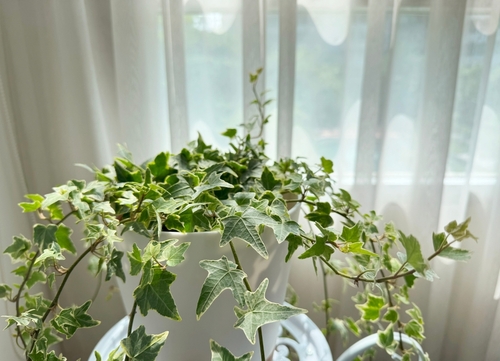
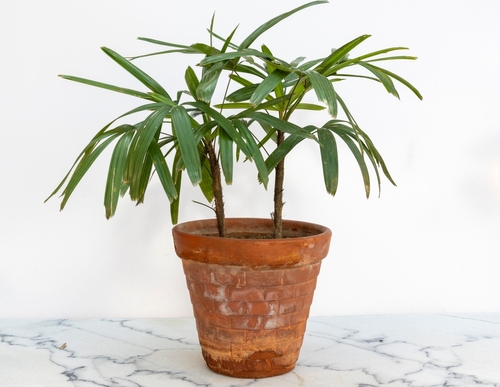
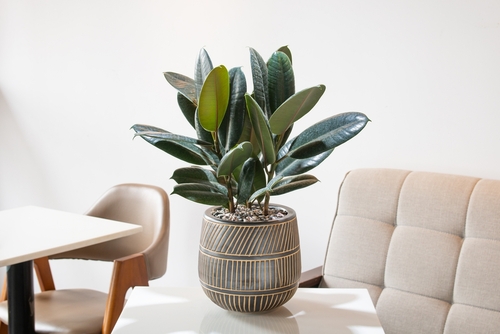
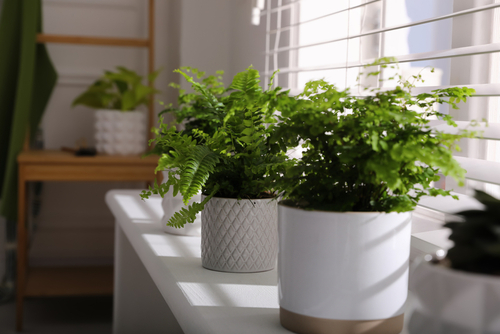
The study everyone quotes is a NASA experiment from 1989. It measured the removal of volatile organic compounds inside small sealed laboratory chambers not fine particulate, and nothing like a real room. When later researchers scaled those findings to actual buildings, they calculated you would need somewhere between 10 and 1,000 plants per square metre to match the air exchange one open window already provides.
Haze is PM2.5. Plants do not filter it.
There is a second reason to be careful in our climate: Malaysian indoor humidity is already high. Cluster a lot of plants and damp soil indoors and you may push it higher trading one indoor air problem for a mold problem.
Keep your plants. They are good for the room and good for you. Just do not count them as air quality equipment. Read the research made by NASA about Plant
Buying or Renting This Season? Use the Haze
Here is an angle most buyers never think of: haze season is one of the best times to view a property.
Why? Because the building’s weaknesses are on full display.
Check during the viewing:
- Gap under the main door and around the frame
- Window type and seal condition intact casements and sliders beat louvres
- Whether aircon wall penetrations are properly sealed
- Ceiling height and layout high ceilings and open-plan mean more volume to filter
- Orientation and exposure to prevailing wind
- Condo: does the building have a fresh-air system? What filtration grade? How often does management change it?
- Landed: air well design, rear kitchen enclosure, and how the house was meant to ventilate
Ask the agent or management:
- Has this unit or block had haze-related complaints before?
- Which DOE station is nearest, and what does it typically read in August and September?
- Any peatland or known open-burning hotspots nearby? Johor’s DOE has focused enforcement patrols on peatland areas including Muar, and industrial zones around Pengerang and Pasir Gudang.
And here is the bonus: a well-sealed home is cheaper to cool, quieter, and easier to keep clean. Haze performance is really just a visible symptom of overall build quality which makes it a surprisingly good proxy for how carefully the unit was put together.
FAQ
Yes, substantially but only if the rest of the home is reasonably sealed. Closed windows in a house with a big gap under the main door still let air in steadily. Seal the leaks first, then closing windows does real work.
Yes. Standard wall-mounted split units recirculate indoor air rather than drawing it from outside, so running them does not bring smoke in. Just wash the filters more often. If you have a centralised system with a fresh-air intake, switch it to recirculate.
Most household units draw 30–60W on medium. Running continuously, that is roughly RM10 to RM25 a month depending on your tariff band. Filter replacement is usually the bigger recurring cost check filter prices and local availability before buying the machine.
No. The research behind that claim tested VOC removal in sealed lab chambers, not fine particulate in real rooms, and it does not scale to household conditions. Haze is PM2.5, which plants do not filter.
The bedroom of the most vulnerable person in the household young children, elderly parents, or anyone with asthma or a respiratory condition. Otherwise, the master bedroom, where you spend the most continuous hours.
Neither wins automatically. Condos are smaller and easier to seal and filter, but building-level fresh-air systems can work against you if unfiltered. Landed homes have more volume and more openings, but you control every one of them. Build quality matters more than property type.
The Bottom Line
Haze in Malaysia is seasonal and reasonably predictable. It follows the Southwest Monsoon window, and July to September is the reliable peak.
That predictability is an advantage. It means haze readiness belongs on your annual home maintenance calendar right next to servicing the aircon and checking the water tank instead of being treated as an emergency every single year.
Start with the seals. They cost the least and do the most. Add one correctly sized purifier for a room you can genuinely keep clean. Skip the plants. Watch the API numbers, not the view outside your window.
And if you are house-hunting this season? Use the conditions to your advantage. How a home handles haze tells you a great deal about how it was built.
Looking for a home that is built properly not just priced attractively? Speak to one of our real estate professionals about what to look for in your area.
Continue reading:
