


| TLDR eSPA is Malaysia’s mandatory digital Sale and Purchase Agreement, effective 1 January 2026. Homebuyers now sign property contracts online through HIMS using iDsaya for identity verification, making transactions faster, safer, and fully paperless under KPKT supervision. |
Buying a house in Malaysia has traditionally involved stacks of paperwork, endless signatures, and multiple trips to a lawyer’s office. That chapter is now coming to an end.
As of 1 January 2026, Malaysia has made the electronic Sale and Purchase Agreement (eSPA) mandatory for new housing transactions under the Housing Integrated Management System (HIMS), managed by the Ministry of Housing and Local Government (KPKT).
If you’re planning to buy a newly launched property, whether it’s a condominium in Kuala Lumpur, a townhouse in Penang, or a landed home in Johor, understanding how the eSPA works is now essential. The good news? The new system is designed to make the property purchase process faster, more secure, and more transparent while helping to reduce the risks associated with hidden clauses, misplaced documents, and fraudulent practices.
This guide explains eSPA, HIMS, and iDSaya in a clear and practical way, so every Malaysian homebuyer can understand what is changing before signing their next property agreement.
Key Takeways
- eSPA is now mandatory. Effective 1 January 2026, all Sale and Purchase Agreements (SPAs) for new residential properties governed by the Housing Development Act (HDA) must be executed digitally through HIMS. Traditional paper-based SPAs are no longer accepted by KPKT.
- iDSaya is your digital identity. Before signing an eSPA, you’ll need to install the iDSaya mobile app and complete an electronic Know Your Customer (eKYC) verification. Think of it as your digital version of a MyKad.
- Faster, safer, and tamper-proof. eSPAs are automatically generated, standardised, and digitally stamped, helping to prevent fraud, eliminate hidden changes, and speed up the property transaction process.
- Lawyers are still essential. eSPA does not replace your lawyer. You will still need legal advice to review the terms, conduct due diligence, and ensure your interests are protected. Your lawyer will also act as a digital witness during the signing process.
- Designed for off-plan and new launch properties first. The mandate currently applies to residential units under construction that are governed by the Housing Development Act (HDA). Subsale transactions in the secondary market still follow the traditional process for now.
Table of contents
- What Is eSPA in Malaysia?
- Why Malaysia Is Moving From Paper SPA to Digital SPA
- How eSpa Works Through HIMS and iDsaya
- Who Needs to Use eSPA (And What to Prepare)
- Benefits and Risks Homebuyers Should Know
- What eSPA Means for Malaysia’s Property Market
- Your Next Move in the eSPA Era
- Frequently Asked Questions (FAQs)
What Is eSPA in Malaysia?

The electronic Sale and Purchase Agreement (eSPA) is the official digital version of the standard property contract you sign when buying a home from a developer in Malaysia. Instead of printing, signing, and physically delivering a paper SPA, the entire document is now generated, signed, stamped, and stored online through KPKT’s Housing Integrated Management System (HIMS).
eSPA was first introduced as a pilot in 2024, but it became mandatory on 1 January 2026. Since then, KPKT no longer accepts physical signatures for new residential SPAs under the Housing Development Act 1966 (Act 118).
The eSPA carries the same legal weight as a traditional paper SPA. It is supported by Malaysia’s Digital Signature Act 1997 and uses public key infrastructure (PKI), the same type of security technology used to protect online banking and government systems.
Why Malaysia Is Moving From Paper SPA to Digital SPA
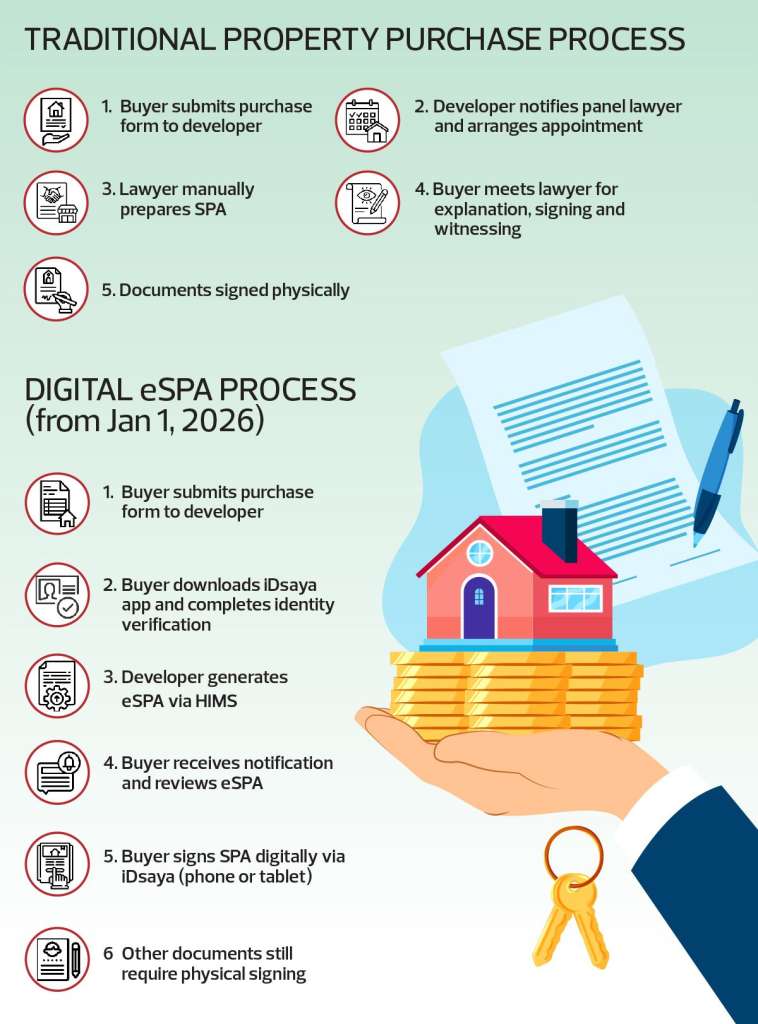
Source: The Edge Malaysia
Malaysia’s shift to digital property contracts did not happen overnight. It is part of a broader effort under the Madani Housing Reforms, which aim to improve transparency, strengthen buyer protection, and address long-standing issues in the housing sector such as abandoned projects, misuse of developer funds, hidden contract terms, and delayed project delivery.
Here are the key reasons behind the move:
1. Reducing fraud and document tampering
Paper contracts can be altered, lost, or forged. By contrast, a digitally signed eSPA is stored securely within HIMS and includes a tamper-resistant audit trail, making unauthorised changes far more difficult.
2. Standardising property contracts nationwide
In the past, developers and law firms could interpret standard SPA templates differently. The eSPA ensures all contracts follow a single format approved by KPKT, providing greater consistency and clarity for homebuyers.
3. Improving oversight and monitoring
HIMS gives KPKT greater visibility into housing transactions, project progress, and developer compliance. This allows regulators to identify potential issues earlier and take action when necessary.
4. Speeding up the property buying process
Coordinating physical signing sessions between buyers, developers, lawyers, and witnesses often took weeks. With digital signing, the process can be completed much faster, reducing delays and administrative work.
5. Strengthening protection against abandoned projects
Together with mandatory Housing Development Account (HDA) audits and the National Housing Data Bank (TEDUH), the eSPA forms part of a broader system designed to identify risks earlier and better protect homebuyers.
For a deeper look at how these reforms work together, read our guide on Malaysia’s 2026 property reforms and the government’s goal of achieving zero abandoned housing projects by 2030.
How eSpa Works Through HIMS and iDsaya
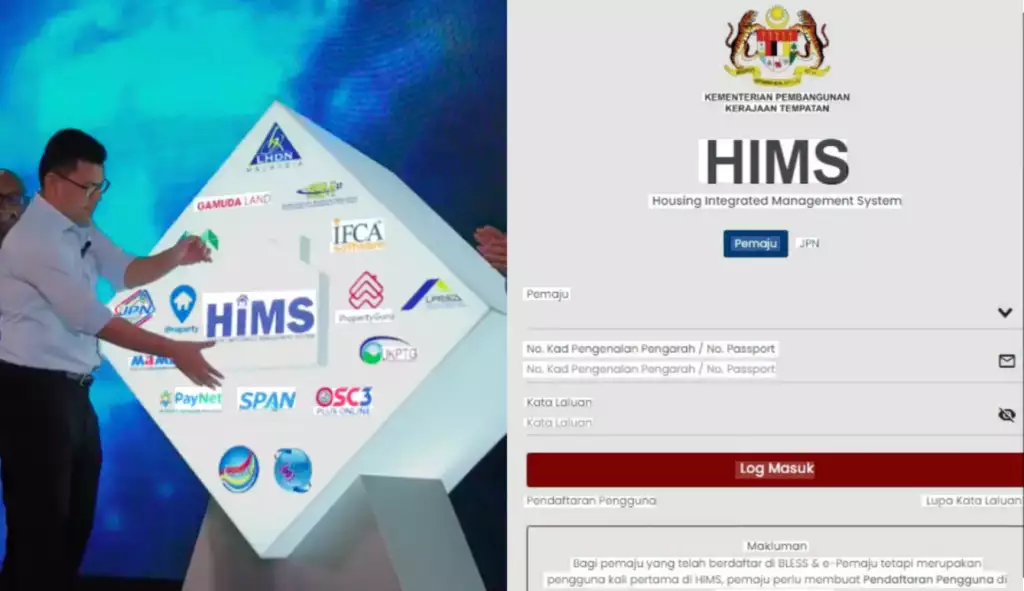
Source: MyMalaysiaProp
Two systems work hand in hand to make eSPA possible: HIMS, the main platform, and iDSaya, your digital identity.
HIMS (Housing Integrated Management System)
HIMS is KPKT’s central online platform for managing the entire housing industry. It handles licensing of private housing developers, advertising and sales permits, real-time updates on the status of housing projects, and the generation of online eSPAs. HIMS has been operational since 31 January 2022, but its eSPA module only became mandatory in 2026.
iDSaya

iDsaya is the government-approved digital identity app, launched by Malaysia’s national authorities. Think of iDsaya as your digital passport or NRIC online. In the physical world, to verify your identity, you show your MyKad. In the online world, it’s hard to prove you are who you say you are. That is where iDsaya comes in.
It uses biometrics and public key infrastructure (PKI) to create a verified digital ID that allows you to sign legal documents securely without using a traditional password.
The eSPA Signing Process: Step by Step
- Download iDsaya from the App Store or Google Play and complete the eKYC verification (biometric scan + IC verification).
- Receive an email invite from HIMS once your developer has uploaded your eSPA draft.
- Review the draft eSPA carefully (ideally with your lawyer) and approve it on the HIMS portal.
- Generate your Digital Certificate PIN through the HIMS email link.
- Sign the eSPA using your IC number, your Digital Certificate PIN, and a TOTP (Time-based One-Time Password) generated by iDsaya.
- Wait for the signing sequence to be completed. The standard order is: Buyer → Buyer’s witness → Landowner → Landowner’s witness → Developer → Developer’s witness.
- Complete e-stamping. the developer applies for digital stamping, and once duty is paid, the eSPA is officially executed and legally binding.
If you’d like a more detailed walkthrough, check out our step-by-step guide to the iDSaya app and the eSPA signing process.
Who Needs to Use eSPA (And What to Prepare)

Who Must Use eSPA?
eSPA is mandatory for:
- Buyers of new residential properties under construction that are governed by the Housing Development Act (HDA).
- Developers, landowners, and witnesses involved in HDA-regulated housing transactions.
- Lawyers acting for buyers in these transactions, as they will sign digitally as witnesses.
Who Is Not Yet Required to Use eSPA?
eSPA is not yet required for:
- Subsale buyers, where the property is bought from another individual instead of directly from a developer.
- Commercial property buyers, as non-residential transactions are currently outside the HDA’s scope.
- Completed residential units sold by developers, as the current mandate focuses mainly on units under construction.
Always check with your lawyer or property agent to confirm whether your purchase falls under the eSPA requirement, as KPKT may expand its scope in the future.
What Buyers Should Prepare Before Signing Digitally
Before signing your eSPA, make sure you have:
A working smartphone
You will need it to install the iDSaya app and complete biometric verification, such as fingerprint or facial recognition.
A valid MyKad
This is required for eKYC identity verification.
A registered email address
HIMS will use your email to send signing invitations, notifications, and your Digital Certificate PIN.
A stable internet connection
A weak connection may cause delays or timeouts during the signing process.
An appointed lawyer
Engage a conveyancing lawyer early. They will help review the eSPA terms and act as your witness.
Your financial documents
Prepare your loan offer letter, deposit confirmation, and down payment funds, just like in a traditional SPA process.
Time to review the document carefully
Even though the process is digital and faster, the eSPA is still a legally binding contract. Do not rush through it.
Benefits and Risks Homebuyers Should Know

Benefits of eSPA for Homebuyers
- Better protection and transparency – eSPAs are generated from a KPKT-approved template, reducing the risk of hidden clauses or unauthorised changes.
- Faster property transactions – Digital signing removes the need for physical paperwork, helping multiple parties complete the process more quickly.
- Secure and tamper-resistant records – Every action is recorded with timestamps, and digital signatures, creating a clear audit trail.
- Greater visibility into housing projects – Through HIMS and TEDUH, buyers can access information on project progress and developer status.
- Less paperwork and greater convenience – A fully digital process administrative work and improves overall efficiency.
Risks and Things Buyers Should Still Check
- A Lawyer is still important – eSPA does not replace legal advice. Your lawyer should review the agreement and act as your witness.
- Stay alert to scams and phising attempts – Only access official HIMS and iDSaya platforms. Never share your Digital Certificate PIN or TOTP codes.
- Review the agreement carefully – Check important details such as payment schedules, vacant possession dates, and defect liability periods before signing.
- Verify the developer’s credentials – Only KPKT-licensed developers can issue eSPAs through HIMS. Be cautious of any requests to sign documents outside the system.
- Understand your data and digital responsibilities – As the process becomes more digital, buyers should stay informed about data security and protect their login credentials and personal information.
What eSPA Means for Malaysia’s Property Market
The introduction of eSPA is more than a digital upgrade. It changes how Malaysians buy property by making the process more transparent, standardised, and easier to monitor.
Here’s what this could mean for the market:
- Stronger investor confidence
With eSPA, HIMS oversight, and HDA audits, Malaysia is sending a clearer message that buyer protection and transparency matter. - Better protection against abandoned projects
Real-time monitoring can help regulators identifyrisky developers earlier and support the government’s goal of reducing abandoned housing projects. - A more consistent buyer experience
Whether you buy in Kuala Lumpur, Kuching, or Kota Bharu. the eSPA process follows the same digital system. - Higher pressure on developers to modernise
Developers will need to adapt to HIMS requirements, digital documentation, and stricter compliance standards. - A bigger role for informed agents
Agents who understand eSPA, HIMS, iDsaya, and digital due diligence will be more valuable to buyers. - More stable long-term market confidence
Better transparency may reduce uncertainty and help buyers make more confident property decisions. - For homebuyers, the key takeaway is simple: eSPA gives you more transparency and protection, but you still need to stay informed, review every detail, and work with the right professionals. For more on how the broader Madani Housing Reforms are reshaping property in Malaysia, read our analysis on transparency, digital buyer protection, and the 2026 market outlook.
For homebuyers, the key takeaway is simple: eSPA gives you more transparency and protection, but you still need to stay informed, review every detail, and work with the right professionals. For more on how the broader Madani Housing Reforms are reshaping property in Malaysia, read our analysis on transparency, digital buyer protection, and the 2026 market outlook.
Your Next Move in the eSPA Era
The launch of mandatory eSPA on 1 January 2026 marks a major milestone in Malaysia’s property market. For decades, homebuyers relied on paper documents, physical signatures, and manual processes. Today, that process is becoming fully digital.
With HIMS providing real-time oversight, iDSaya verifying identities, and eSPA standardising contracts, buying a home in Malaysia is now faster, more secure, and more transparent. You’re not just signing a contract. You’re entering a more transparent and secure system designed to protect one of the biggest financial decisions of your life.
That said, technology is not a replacement for due diligence. Work with a qualified lawyer, get guidance from a knowledgeable agent, and take time to understand the agreement before you tap “sign.” eSPA makes the process smoother, but the responsibility to review carefully still belongs to you.
Welcome to the future of homebuying in Malaysia.
Frequently Asked Questions (FAQs)
eSPA (electronic Sale and Purchase Agreement) is Malaysia’s mandatory digital property contract for new residential properties under the Housing Development Act (HDA). Introduced on 1 January 2026, it replaces paper-based SPAs and is generated, signed, stamped, and stored online through the Housing Integrated Management System (HIMS).
No. eSPA is currently mandatory only for new residential properties under construction that are governed by the Housing Development Act (HDA). It does not yet apply to subsale properties, commercial properties, or completed homes sold by individual owners.
To sign an eSPA, you must first download the iDSaya app, complete eKYC verification, and sign digitally through HIMS using your Digital Certificate PIN and TOTP code. The process includes document review, digital signing, witness verification, and e-stamping.
Yes. eSPA has the same legal effect as a traditional paper SPA. It is supported by Malaysia’s Digital Signature Act 1997 and uses secure digital signature technology to ensure the agreement is legally binding and tamper-resistant.
Yes. eSPA does not replace your lawyer. A lawyer is still needed to review the agreement, advise you on the terms, conduct due diligence, and act as a witness during the signing process.
eSPA offers faster transactions, better protection against fraud, secure digital storage, standardised contracts, and greater transparency throughout the homebuying process.
Ready to buy your first home? Speak to an IQI property consultant today and get expert guidance on finding the right property, understanding the buying process, and making informed decisions with confidence.
Continue Reading:
- What Is iDsaya? Malaysia Government’s Digital ID & Guide to eSPA Signing
- 5 New Malaysian Property Reforms for Zero Abandoned Homes
- Malaysia Property Market Transforms with Madani Reforms and Digital Buyer Protection
Reference
- Cheang & Ariff. (2026, April). Mandatory digital execution of e-SPA under Malaysia’s HIMS from 1 January 2026.
- Muhammad Shah. (2026, May 13). Malaysia eSPA 2026: Faster property contracts and lower risks. PropertyGuru Malaysia.
- MyMalaysiaProp. (2026, January 6). HIMS eSPA Malaysia: Complete guide to digital housing sale and purchase agreements.
- Pos Digicert. (2025, November 20). Launch of eSPA with digital signature and e-stamping.
- The Star. (2025, November 21). Tech boost for home buyers.
- Wong, K. W. (2026, February 12). Know your stuff: Electronic sales and purchase agreement (eSPA). The Edge Malaysia.
- Sime Darby Property, S P Setia, Paramount Property, Gamuda Land — Developer eSPA implementation pages.
