


With conflict reshaping the Middle East and Gulf cities under fire for the first time, a growing wave of professionals, retirees, and families are exploring Malaysia’s MM2H programme as a pathway to residency, safety, and property investment. Here’s what international investors need to know.
Key Takeaways
- Malaysia is strengthening its position as a safe-haven destination for foreign investors looking for stability, long-term residency and property investment opportunities.
- MM2H remains a major gateway for foreign buyers, with 5,972 approved participants as of August 2025, including 2,134 principal applicants and 3,838 dependents. Chinese nationals made up the largest group.
- The revamped MM2H programme is more structured and closely monitored, with immigration-related approvals handled through the Ministry of Home Affairs and the Immigration Department.
- Stronger screening may improve investor confidence, as stricter checks help protect Malaysia’s residency programme and keep it attractive to serious long-term applicants.
- Rising interest from the Middle East and Asia could support Malaysian property demand, especially in locations popular with foreign residents, retirees and long-stay families.
Why Malaysia Is a Safe Haven for Property Investors in 2026
The Middle East Crisis and the Rise of MM2H: How Conflict Moves Capital
When geopolitical tensions escalate, capital moves. On 28 February 2026, coordinated US-Israeli airstrikes on Iran triggered a full-scale regional war. Iran retaliated with missile and drone barrages against Israel, US military bases, and allied nations across the Persian Gulf. For the first time, Gulf capital cities came under direct fire.
Residential areas in Bahrain’s Manama, airports in Abu Dhabi, oil fields in Kuwait and Saudi Arabia, and even Qatar and Oman were hit.
The economic fallout has been just as disruptive. Oil surged toward US$120 per barrel. Qatar and Kuwait declared force majeure on energy contracts. The Strait of Hormuz, which carries roughly 20% of global oil supply, has been effectively disrupted.
The UN Security Council adopted Resolution 2817, condemning the attacks and demanding cessation.
The pattern is familiar. The Russian capital moved to Dubai and Southeast Asia after the Ukraine invasion. Chinese investors diversified into Australia and Malaysia as their domestic market slowed.
Now the same dynamic is emerging from the Gulf, and a growing number of professionals, retirees, and families are asking:
Where is safe now?
For many, the answer is Malaysia.
Neutral Ground: What Makes Malaysia the Right Destination for MM2H Applicants
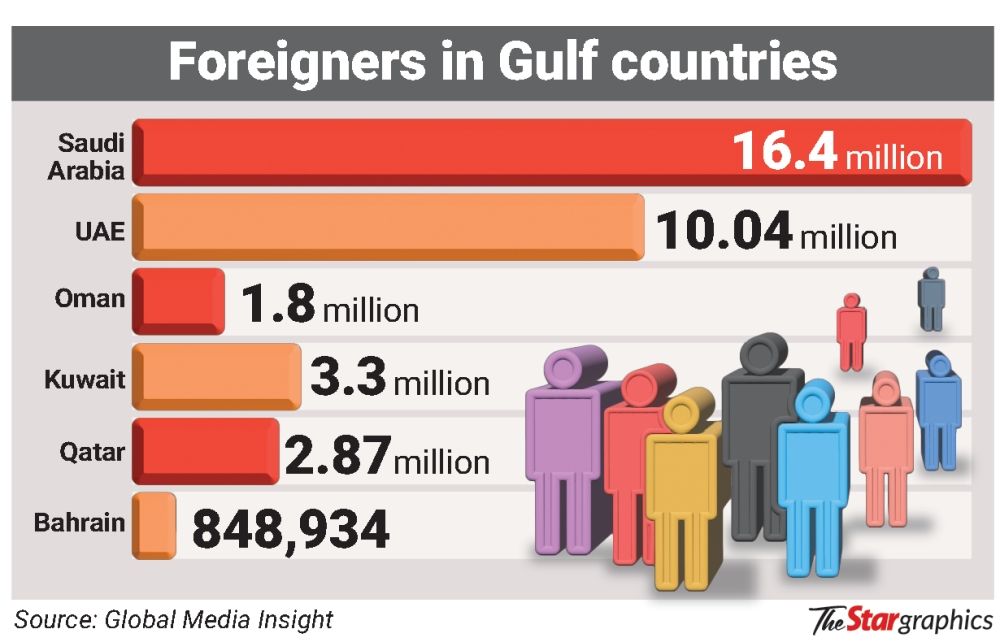
Malaysia is increasingly viewed as a geopolitically neutral country, and that perception is now translating into real enquiries. Anthony Liew, president of Malaysia’s MM2H Consultants Association, confirmed in a report published by The Star on 16 March 2026 that interest from Gulf citizens is rising. The enquiries are coming from Saudi Arabia, the UAE, Kuwait, Bahrain, and Qatar.
What the Industry Is Saying

According to Liew, the potential applicants are predominantly working professionals, retirees, and parents seeking educational opportunities for their children. Applications have not yet surged as prospective applicants are still verifying documents, but the direction of travel is unmistakable. The enquiry pipeline is building.

Juwai IQI co-founder and Group CEO Kashif Ansari confirmed this shift. Malaysia, he said, is a natural destination for those in the Middle East, given its safe haven status and distance from the conflict. He noted that there is already evidence of Middle Eastern buyers turning their attention to Malaysia, and that outside the Middle East, it is rare to find attractive, multilingual markets that also offer halal food and access to Islamic finance

In the same report by The Star, Sunway University economics professor Dr Yeah Kim Leng noted that Malaysia has long had a small but growing Middle Eastern expatriate community. He said this gives the country a comparative advantage over Thailand and Singapore in attracting this demographic, particularly if regional turbulence persists.
Source: The Star, More Middle East interest in MM2H
Why Malaysia? Six Reasons It Stands Out
Malaysia’s appeal is not based on a single factor. It is the combination that makes it stand out for Gulf citizens specifically:
1. Geopolitical Neutrality
Malaysia hosts no foreign military bases and has maintained diplomatic neutrality in the US-Iran and Israel-Palestine conflicts. For Gulf nationals whose cities were struck because of their proximity to US installations, this is not a theoretical benefit. It is a direct safety factor.
2. Muslim-Majority Country with Cultural Familiarity
Malaysia is one of the few economically developed, politically stable nations where Gulf nationals can find a genuinely familiar environment. Halal food is universally available, Islamic schools operate alongside international curricula, and daily life reflects Islamic values. This makes the transition far smoother than relocating to Western alternatives.
3. World-Class Islamic Finance Infrastructure
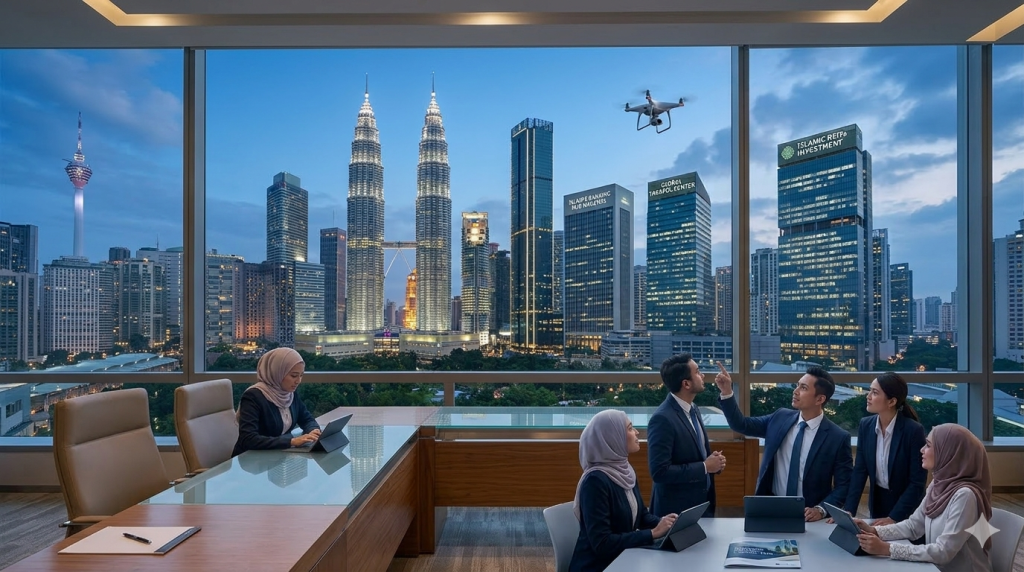
Malaysia is a global hub for Shariah-compliant banking, takaful (Islamic insurance), and Islamic real estate investment trusts (REITs). Gulf investors can structure property acquisitions, mortgages, and savings entirely within a Shariah-compliant framework, which very few relocation destinations can offer. The global Shariah-compliant real estate market is valued at approximately US$12.5 billion, with Malaysia ranking second only to Saudi Arabia in fund assets. This existing infrastructure makes the country uniquely positioned to absorb a wave of Gulf capital seeking both safety and compliance.
4. Competitive Property Prices and Healthy Yields
Property in Kuala Lumpur’s prime areas ranges from approximately €3,000 to €5,000 per square metre, with rental yields of 4.5% to 6%. Compared to Dubai or Singapore, Malaysia offers significantly more value per dollar. The Malaysian ringgit remains favourable against the US dollar and Gulf currencies, adding an extra layer of purchasing power for foreign buyers entering the market now.
5. Established Middle Eastern Expat Community
According to The Star’s report, Malaysia already has a small but growing expatriate community from the Middle East. This existing community provides a social and cultural foundation for newcomers, from Arabic-speaking neighbourhoods to established business networks. It is a practical advantage that competing destinations like Thailand and Singapore do not yet offer at the same scale.
6. Government Backing and Visit Malaysia 2026
The Ministry of Tourism, Arts and Culture has identified the Middle East as a priority tourism market for 2026. The MM2H programme alone has generated RM3.87 billion (approximately US$870 million) for the national economy as of last year, and the government is actively promoting the country to Gulf audiences through Visit Malaysia 2026.
From MM2H Visa to Property Keys: How Residency Becomes Investment
The Malaysia My Second Home programme is what transforms interest in Malaysia into actual property investment. It is the mechanism that connects residency with real estate, and it is increasingly well-suited to what Gulf investors are looking for.
What Is MM2H?
MM2H is a government-backed long-term residency initiative offering foreign nationals a renewable social visit pass of 5 to 20 years. Launched in 2002 and significantly reformed over the past two years, it now operates under a clear tiered framework with four categories: Platinum, Gold, Silver, and Special Economic Zone (SEZ).
Key requirements and benefits include:
- Applicants must be aged 25 and above for Silver, Gold and Platinum categories, or aged 21 and above for the SEZ/SFZ category.
- Tax exemption on foreign-sourced income remitted to Malaysia.
- Tax-free interest on the mandatory fixed deposit.
- Inclusion of family members (spouse, unmarried children up to 34, disabled children of any age, and parents or parents-in-law on both sides).
- Multi-entry travel privileges.
- Access to Malaysia’s healthcare and education systems.
- Applicants need comprehensive medical insurance with a minimum coverage of RM80,000 and must pass a medical fitness check.
Since July 2024, all MM2H applications must be submitted through a MOTAC-licensed agent. Self-direct applications are no longer accepted. MOTAC sets professional fees for agents at RM40,000 to RM70,000 for the main applicant, excluding medical checks, insurance premiums, visa stamping fees and standard property purchase costs. Applicants should verify that any agent they engage holds a current licence issued under the MM2H 3.0 framework before submitting an application.
MM2H Tiers at a Glance
| Tier | Visa Duration | Fixed Deposit (USD) | Min Property Purchase | Property Required |
| Platinum | 20 years | USD 1,000,000 | RM 2,000,000 | Yes (directorships, shareholding) |
| Gold | 15 years | USD 500,000 | RM 1,000,000 | No |
| Silver | 5 years | USD 150,000 | RM 600,000 | No |
| SEZ / SFZ | 5 to 10 years | USD 65,000 (under 50) / USD 32,000 (50+) | RM 500,000 (Forest city developer only) | Limited |
Sources: MOTAC official guidelines; Bratu Capital (June 2026); Hudson McKenzie (May 2026); Rumavi (July 2026). State-level foreign buyer minimums may override these thresholds where higher.
Important: work rights vary by tier
Only Platinum tier holders can work in Malaysia, serve as company directors and hold shareholdings. Silver and Gold holders do not have employment rights in Malaysia. This is a critical distinction for Gulf professionals considering active business operations from Malaysia. Under all previous MM2H frameworks, work and business activities were prohibited entirely. The 2026 Platinum tier changes this for the first time.
Note: Participants under 50 must spend 90 cumulative days per year in Malaysia (shareable with dependents). Those 50+ have no minimum stay requirement.
How MM2H Connects to Property
This is the critical link. Under the current framework, all mainland MM2H tiers require a compulsory property purchase. This transforms the programme from a simple residency visa into a residency-plus-investment pathway, making MM2H especially relevant to investors, not just retirees or lifestyle migrants.
How it works: Each state sets its own foreign property threshold, so the minimum purchase value can vary by location. In Kuala Lumpur, it is generally RM1 million, while prime Selangor zones can reach RM2 million.
For Silver, Gold and Platinum MM2H tiers, the property must be bought within 12 months of visa endorsement. For the SEZ pathway, the property must be purchased from a Forest City developer before visa endorsement.
MM2H properties are also subject to a 10-year sale restriction, unless the participant upgrades to a higher-value property or ends their MM2H participation. Existing Malaysian property bought more than two years before visa endorsement cannot be used to trigger fixed deposit withdrawal.
The fixed deposit bridge: participants can withdraw up to 50% of their fixed deposit upon visa endorsement and immediately after completing a qualifying property purchase, education payment or medical expense. The remaining 50% must stay locked for the duration of the visa. Withdrawal is on a reimbursement basis and requires a formal application through MOTAC. The fixed deposit earns tax-exempt interest.
For Gulf investors, the Shariah-compliant angle matters. Malaysian banks offer Islamic home financing products, including murabaha and diminishing musharakah structures, that comply fully with Shariah principles. This means Gulf nationals can finance their MM2H property purchases without compromising their financial values, using familiar instruments within one of the world’s most developed Islamic banking ecosystems.
Alternative route: Sarawak S-MM2H
For investors who prefer a more flexible entry without a mandatory property purchase, Sarawak runs its own S-MM2H programme independently from the mainland scheme. It requires applicants to demonstrate RM500,000 in liquid funds and sufficient income, but does not mandate a property purchase. The trade-off is that S-MM2H only covers residency in Sarawak, not Peninsular Malaysia, and uses its own income-based criteria rather than the tiered fixed-deposit system.
The Investment Case
For Gulf investors comparing Malaysia to other destinations, the numbers are worth examining. Malaysia’s GDP growth is forecast at 4.0 to 4.5% for 2026, with inflation contained at 1.3 to 2.0%. The Overnight Policy Rate has held at 2.75% since May 2023, translating to effective mortgage rates of 3.95 to 4.50%. Combined with rental yields of 4.5 to 6% in prime KL areas, this creates a stable, income-generating investment environment.
Dr Yeah Kim Leng projected that large property developers may begin offering customised housing projects if Gulf emigration to Malaysia gains momentum. This could open a new market segment tailored to Middle Eastern preferences, and for early movers, it represents a window before demand fully materialises.
Programme Momentum and Security Reforms
As of August 2025, the revamped MM2H programme had approved 5,972 participants, including 2,134 principal applicants and 3,838 dependents. Chinese nationals formed the largest group, followed by applicants from Taiwan, Hong Kong, Singapore and the United States.
Security checks have also become stricter. MOTAC, the Ministry of Tourism, Arts and Culture Malaysia, has integrated its database with the Immigration Department’s MyIMMS system to support background checks for applications and renewals. Some applicants may also be called for police vetting interviews.
For Gulf applicants, this may add more processing time, but it also strengthens the programme’s credibility and long-term stability.
What Investors Should Watch
While the opportunity is real, international investors should go in with eyes open:
Stamp duty for foreign buyers. From 1 January 2026, non-citizens (excluding permanent residents) pay a flat 8% stamp duty on residential property transfers. This is a significant increase from the previous 4% rate and adds materially to upfront transaction costs.
Processing timeline. Applications typically take 2 to 6 months from initial preparation through to visa endorsement, depending on individual circumstances and document verification. For Gulf applicants, additional time may be needed given regional disruptions to government services.
Global competition. Economist Geoffrey Williams cautioned that the MM2H programme may appear less competitive compared to some other global visa schemes in the short term, and that Malaysia needs to offer benefits beyond the residence visa to truly stand out. However, he acknowledged that in the long term, Malaysia will remain attractive to those from conflict zones.
State-level variation. Property minimum thresholds, foreign ownership rules, and available housing stock vary significantly by state. Kuala Lumpur and Penang offer the most developed expat ecosystems, while Johor provides the most affordable entry point, particularly through the Forest City SEZ pathway. Working with experienced local advisors is essential to match your budget and lifestyle preferences to the right location.
Connecting the Dots
The three-part logic is straightforward:
Conflict creates capital movement. The 2026 Iran war has shattered the Gulf’s image as an insulated safe haven. Citizens of Saudi Arabia, the UAE, Kuwait, Bahrain, and Qatar are actively seeking to relocate wealth and secure second residencies in stable countries.
Malaysia is uniquely positioned to receive that capital. Its combination of geopolitical neutrality, cultural and religious familiarity, world-class Islamic finance infrastructure, and competitive cost of living is unmatched by any other destination in the region.
MM2H is the mechanism that turns residency into investment. The programme’s compulsory property purchase requirement creates a direct pipeline from foreign residency applications to Malaysian real estate, benefiting both the investor and the national economy.
Anthony Liew’s advice to the government is simple: spread awareness about Malaysia and MM2H directly to Gulf audiences. The demand signal is already there. The gap is information and process, not interest.
For international property investors, whether from the Gulf or elsewhere, the convergence of a geopolitical crisis, a reformed residency programme, and a stable property market with healthy yields creates a moment worth paying attention to. The safe haven trade has reached Malaysian shores. MM2H is how it will flow into property.
Disclaimer: This article is for informational purposes only and does not constitute financial, legal, or immigration advice. Prospective MM2H applicants should consult licensed MM2H agents and qualified professionals before making decisions. Programme requirements and regulations are subject to change.
FAQs
MM2H, or Malaysia My Second Home, is a long-term residency programme for eligible foreigners who want to live in Malaysia. The current framework includes Silver, Gold, Platinum and SEZ/SFZ categories, with minimum age requirements of 25 and above for Silver, Gold and Platinum, and 21 and above for SEZ/SFZ.
Yes. The MM2H programme is open to citizens of all countries that have diplomatic relations with Malaysia. There are no restrictions based on nationality, religion, or ethnicity.
Yes. MM2H participants must buy a qualifying property after approval. The property must be held for 10 years, unless they upgrade to a higher-value property or end their MM2H participation.
The minimum property value depends on the MM2H category. Based on the revamped framework, the minimum is RM600,000 for Silver, RM1 million for Gold and RM2 million for Platinum. The SEZ/SFZ pathway has separate requirements based on the approved special zone.
Yes. Malaysia is one of the world’s leading Islamic finance hubs. Malaysian banks offer Shariah-compliant home financing, including structures such as murabaha and diminishing musharakah, which may suit Gulf investors.
MM2H participants receive tax exemption on approved foreign funds or income, including their fixed deposit, under the programme’s official benefits. Applicants should still seek tax advice for personal income, business income or country-specific tax obligations.
No. MM2H participants aged below 50 must stay in Malaysia for 90 cumulative days per year. Participants aged 50 and above do not have this minimum stay requirement under the current guideline.
As of August 2025, the revamped MM2H programme approved 5,972 participants, including 2,134 main applicants and 3,838 dependents. Chinese nationals were the largest group, followed by applicants from Taiwan, Hong Kong, Singapore and the United States.
Ready to Explore MM2H and Malaysian Property? Speak with IQI’s advisory team for a personalised MM2H eligibility assessment and property consultation. Available in English, Arabic, Mandarin, and Bahasa Malaysia.
Continue reading:
- The Malaysia My Second Home Programme (MM2H): A Comprehensive Guide
- What Is Foreign Home Ownership Rules in Malaysia?
- Malaysia’s 2026 Outlook: Roadmap for Economic and Property Stability
- Reformed MM2H Programme Drives Nearly RM1 Billion Annual Investments
Sources:
- “More Middle East interest in MM2H,” The Star, 16 March 2026, by Tarrence Tan & Gerard Gimino;
- MOTAC
- ACLED
- Bloomberg
- Al Jazeera
- UN Security Council
- IFN Investor
- MM2H official guidelines
- Zagdim Overseas. (2026, June 10). Malaysia’s MM2H Programme: Security Vetting Reported as Embedded; 5,972 Approved Under the Revamped Framework. https://zagdim.com/en/news/malaysia-mm2h-security-vetting/
- Hartamas International. (2026, June 5). MM2H Malaysia 2026 Explained: The 3 Groups Winning the Most From the New Rules. https://international.hartamas.com/malaysia-mm2h-2026-explained/
- Rumavi. (2026, July). MM2H Malaysia 2026: Silver, Gold & Platinum Reality Check. https://rumavi.com/en/property-guides/malaysia-mm2h-program-2026-requirements-property-rules-and-application-guide
- Bratu Capital. (2026, June). Malaysia MM2H Requirements 2026: Visa Tiers, Costs & Rules. https://bratucapital.com/post/mm2h-requirements-2026-what-has-changed
- Hudson McKenzie. (2026, May 5). MM2H Malaysia 2026: Requirements, Categories & How to Apply. https://www.hudsonmckenzie.com/insights/malaysia-my-second-home-mm2h-requirements-guide
