


Version: BM
| TL;DR: Langkawi has moved beyond post-pandemic recovery and entered a more mature, performance-driven phase. While entry prices are no longer at their lowest, stable tourism demand, limited supply, and strong short-term rental potential continue to position the island as a strategic income-focused property market in 2026. |
Most people see Langkawi as a weekend escape filled with beaches, duty-free shopping and cable car views.
But what if the real opportunity in Langkawi is not tourism, but cash flow?
While many investors continue to focus on Klang Valley condominiums and city-centre yields, Langkawi has quietly evolved into a tourism-backed income market.
Yes! It is no longer operating in recovery mode. It is operating in a performance phase.
In 2025 and 2026, prices have normalised from post-pandemic lows, yet demand stability and short-term rental strength are reshaping how serious investors evaluate the island.
Key Takeaways:
- Langkawi has moved into a maturing market phase (2025–2026), with prime areas such as Pantai Cenang exceeding RM1,000 psf, signalling a shift from “buy cheap” to yield optimisation.
- Short-term rental remains the key driver, with peak-season occupancy reaching 80%–90%, supported by international events and expanding direct flight connectivity.
- As a UNESCO Global Geopark, Langkawi operates under controlled development, reducing oversupply risk and strengthening long-term pricing resilience.
- Local investors benefit from access to Malay Reserve land without minimum price thresholds, creating stronger margin flexibility compared to foreign entry levels typically around RM1 million.
Investing in Langkawi Property 2026:
- 1. Why Langkawi Continues to Attract Investors
- 2. Infrastructure Development That Changes the Investment Landscape
- 3. Five Most Consistent Locations for Short-Term Rental
- 4. Property Price Movement in Langkawi (2020–2026)
- 5. Monthly STR Investment Performance Overview
- 6. Median Price Trend (Houses & Condominiums)
- 7. Analysis by Property Type
- 8. Advantage of Local Investors
- Conclusion
- FAQs
1. Why Langkawi Continues to Attract Investors
Langkawi’s designation as a UNESCO Global Geopark is more than symbolic recognition. It imposes environmental preservation standards that limit uncontrolled development.
In investment terms, this reduces the risk of oversupply and protects long-term destination value.
Unlike resort markets that expand aggressively and dilute their appeal, Langkawi’s development pace remains measured. This structural constraint supports long-term demand sustainability.
Although tourism markets typically experience seasonal fluctuations, Langkawi maintains relatively consistent visitor traffic year-round.
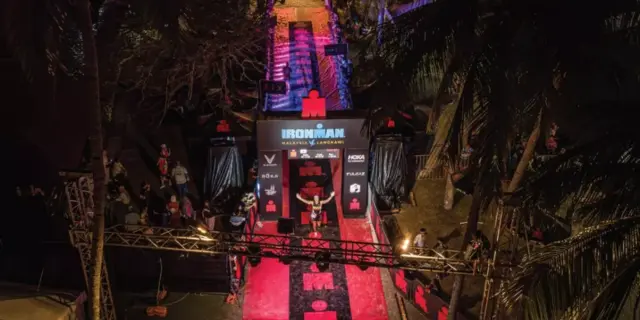
Campaigns such as “Langkawi Special Deals” and recurring international events, including Ironman and LIMA, help maintain occupancy levels even during softer periods.
At the same time, the island is increasingly attracting higher-income travellers. Direct connectivity from cities such as Dubai, Bengaluru and Singapore has broadened its international visitor base.
This segment tends to favour private villas, well-designed homestays and experiential accommodation over conventional hotel rooms. That shift in traveller preference directly supports stronger daily rental rates in the STR segment.
2. Infrastructure Development That Changes the Investment Landscape
Langkawi’s progress today is not just about new attractions. The real shift is in the infrastructure that strengthens its long-term investment appeal.
Healthcare expansion at Hospital Sultanah Maliha may not sound exciting, but it changes how the island is evaluated. For some visitor segments, healthcare access is a deciding factor:
• Digital nomads staying for weeks
• Foreign retirees relocating seasonally
• Families travelling with children or elderly parents
These groups need more than scenery. They need reassurance. And reassurance translates into longer stays and more stable rental demand.
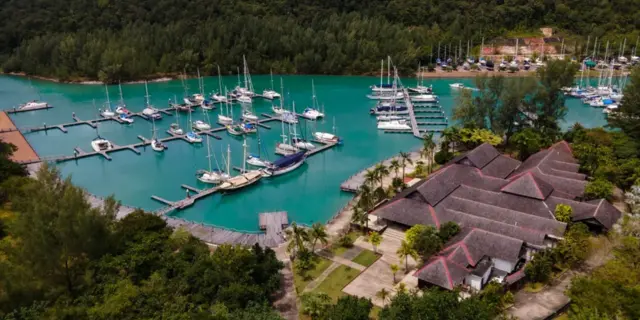
In Perdana Quay and Pulau Rebak, boutique resorts and marina projects are reshaping perception. When higher-end operators enter a zone, the visitor profile changes. Higher-spending guests naturally support stronger nightly rates.
Even road and bridge upgrades in Pantai Kok and Ulu Melaka matter. In the STR market, small advantages compound:
• Easier access improves first impressions
• Better impressions strengthen reviews
• Stronger reviews increase visibility
• Greater visibility supports occupancy
Infrastructure does not just beautify the island. It strengthens the numbers behind it.
3. Five Most Consistent Locations for Short-Term Rental
Not every part of Langkawi performs the same. In short-term rental investment, micro-location determines whether a unit commands premium rates or competes on discounts.
1. Pantai Cenang
Pantai Cenang remains the most dominant zone. It records the highest demand with consistently strong occupancy throughout the year. Studio units and serviced apartments here frequently achieve premium nightly rates, especially during peak seasons.
2. Pantai Tengah
Pantai Tengah appeals to travellers seeking a quieter and more private environment. It is popular among European visitors and families, making it suitable for mid-sized units positioned with a more exclusive concept.
3. Padang Matsirat
Padang Matsirat benefits from its location near the airport. Many travellers choose this area for their first or last night before departure, which helps sustain steady rental demand.
4. Kuah
Kuah serves as Langkawi’s commercial centre. Its proximity to the jetty and duty-free shopping areas makes it relevant for business travellers and short-stay guests prioritising location convenience.
Padang Matsirat benefits from its location near the airport. Many travellers choose this area for their first or last night before departure, which helps sustain steady rental demand.
5. Ulu Melaka
Ulu Melaka is emerging as a trending location. Private pool villas surrounded by paddy fields and modern kampung-style settings are increasingly sought after by travellers looking for unique experiences.
4. Property Price Movement in Langkawi (2020–2026)
Langkawi’s property market over the past five years reflects a full tourism and pricing cycle, from contraction to recovery and eventual stabilisation.
- 2020: The COVID-19 pandemic disrupted global travel, and Langkawi was no exception. Tourism activity stalled, transaction volume dropped sharply, and median property prices declined amid widespread uncertainty.
- 2021: Recovery began when Langkawi was selected as a pilot destination for Malaysia’s travel bubble initiative. Domestic tourism returned first, helping to stabilise occupancy levels and gradually restore investor confidence.
- 2022: With borders fully reopened, the revenge travel surge drove a sharp increase in short-term rental demand. Investor sentiment strengthened, and pricing momentum accelerated alongside improved tourism flow.
- 2023: The market shifted from rebound to consolidation. Price growth became more controlled and sustainable, reflecting improving fundamentals rather than speculative excitement.
- 2024: Stability defined the year. Prime zones tightened supply, and investor focus began shifting toward performance and yield optimisation rather than discount acquisition.
- 2025: In established areas such as Pantai Cenang, prices crossed RM1,000 per square foot. This marks a clear transition into market maturity, where entry is driven by strategic positioning rather than bargain hunting.
- 2026: As Langkawi prepares for Visit Malaysia 2026 and benefits from expanding international travel routes, demand stability is expected to continue. The market is entering a performance-driven stage where pricing resilience depends on location quality and rental fundamentals.
5. Monthly STR Investment Performance Overview
Langkawi’s STR market operates on a predictable seasonal cycle driven by international travel and regional holidays. Investors who understand this rhythm can optimise pricing, occupancy and maintenance strategy more effectively.
The table below outlines estimated monthly performance trends based on tourism patterns from 2023 to 2025.
| Month | Season Status | Estimated Occupancy | Average Daily Rate | Pre-year-end momentum |
|---|---|---|---|---|
| January | Peak | 75–85% | High | European winter travellers |
| February | Peak | 80–90% | Very High | Chinese New Year & LIMA (if scheduled) |
| March | Shoulder | 60–70% | Moderate | Domestic school holidays |
| April | Low | 40–50% | Promotional | Suitable for maintenance |
| May | Low | 35–45% | Low | Target digital nomads (monthly stays) |
| June | Shoulder | 65–75% | Moderate-High | Malaysian school holidays |
| July | Shoulder | 55–65% | Moderate | Middle East summer travellers |
| August | Peak | 70–80% | High | European summer season |
| September | Low | 35–45% | Low | Rainy season promotions |
| October | Shoulder | 50–60% | Moderate | Pre year-end momentum |
| November | Peak | 70–80% | High | International arrivals increase |
| December | Peak | 85–95% | Maximum | School holidays & Christmas |
The data shows predictable seasonality, with premium rates during peak months and tactical repositioning during softer periods.
This performance pattern also aligns with the broader property price trajectory observed between 2020 and 2025.
6. Median Price Trend (Houses & Condominiums)
Langkawi’s price movement between 2020 and 2025 reflects a full market cycle, from contraction to recovery and eventual expansion.
The table below summarises median price changes and market sentiment across the period.
| Year | Median Price (RM) | YoY Change | Market Status |
|---|---|---|---|
| 2020 | 285,000 | -8.5% | Pandemic contraction |
| 2021 | 298,000 | +4.5% | Early recovery |
| 2022 | 335,000 | +12.4% | Revenge travel surge |
| 2023 | 368,000 | +9.8% | Stable growth |
| 2024 | 395,000 | +7.3% | Market maturity |
| 2025 (Est.) | 425,000 | +7.6% | Expansion phase |
Overall, the strongest growth occurred during the 2022 rebound, while subsequent years have seen stabilised, more sustainable appreciation.
7. Analysis by Property Type
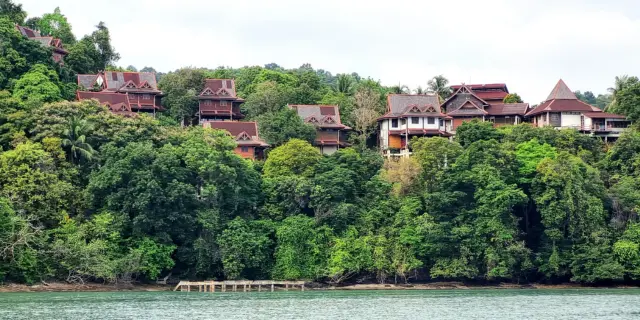
Investment performance in Langkawi is highly dependent on asset selection. Different property types cater to different rental strategies, capital requirements and risk profiles.
Below is a comparative overview by segment:
a) Single-storey terrace houses priced between RM280,000 and RM350,000 in Kuah and Ulu Melaka are suitable for budget homestays and local rental demand.
b) Apartments and condominiums ranging from RM380,000 to RM650,000 in Pantai Tengah and Kuah remain popular for STR due to ease of management and consistent occupancy.
c) Luxury serviced residences in Pantai Cenang target high-income international travellers. While entry prices are higher, premium daily rates can generate competitive returns.
d) Malay Reserve land in areas such as Padang Matsirat allows local investors to build private pool villas with stronger long-term profit margins due to lower land acquisition costs.
8. Advantage of Local Investors
Langkawi’s land ownership structure provides a significant advantage to Malay and Bumiputera investors who can acquire Malay Reserve land at lower prices without minimum purchase thresholds.
Foreign investors are generally subject to minimum price requirements starting around RM1 million and are restricted to certain property categories.
From a strategic standpoint, local investors enjoy greater flexibility in exploring homestay, chalet and villa concepts.
Conclusion
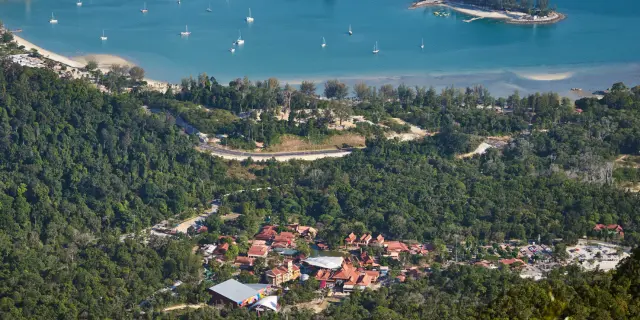
Langkawi in 2026 is no longer just a holiday destination!
It has evolved into a productive asset that combines lifestyle value with attractive cashflow potential.
With the right strategy, correct location selection and professional management, property investment in Langkawi can be both rewarding and sustainable.
FAQs
Yes, provided the property is owned and managed by a Malay individual or a Malay-owned company. Compliance with state land regulations and local council guidelines is required before operating any short-term rental activity.
No. The market is shifting toward experience-driven stays such as private pool villas and scenic countryside units. Demand remains strong for one-bedroom couple units and larger family homes, particularly during peak travel seasons.
Maintenance costs due to coastal climate exposure. Salt air accelerates corrosion, which means exterior paint, metal fittings and air-conditioning systems require more regular upkeep compared to inland properties.
A reserve of 10–15 percent of monthly rental income is advisable. This helps cover periodic repainting, furniture replacement and mechanical servicing to maintain guest satisfaction and five-star review standards.
Property management firms typically charge 20–30 percent of gross rental income. In return, they handle marketing on Airbnb and Booking platforms, guest communication, cleaning coordination and check-in logistics, allowing investors to operate remotely.
Location, accessibility and compliance. Properties near key tourist zones with easy access and proper short-term rental permissions typically perform best.
Rental yield varies by location and property type. Well-positioned STR units in prime areas can achieve higher gross yields compared to long-term rentals, especially during peak seasons. However, actual returns depend on occupancy rate, pricing strategy and management efficiency.
Considering Langkawi as your next investment destination?
Speak to an IQI property specialist to evaluate suitable zones, compare entry pricing and assess STR income potential before making any commitment.
Continue Reading:
