


Malaysia is accelerating its transformation into a regional logistics powerhouse through a growing rail-linked trade corridor connecting key ports, inland logistics hubs, and international freight networks. As cargo volumes continue rising, the country’s infrastructure strategy is increasingly focused on improving efficiency, reducing transportation costs, and strengthening cross-border trade connectivity.
Building a National Logistics Landbridge
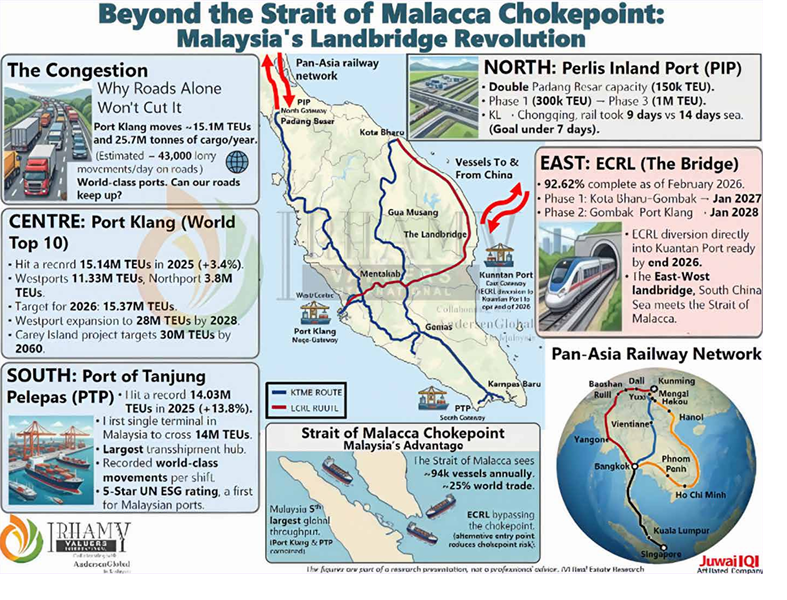
At the centre of this strategy is a logistics corridor linking Perlis Inland Port (PIP), Port Klang, Port of Tanjung Pelepas (PTP), and the East Coast Rail Link (ECRL). Together, these projects form a nationwide network designed to move cargo more efficiently between Malaysia’s northern, southern, eastern, and western gateways.
The goal is to reduce reliance on road transportation and strengthen Malaysia’s position as a regional trade hub by improving rail-based freight movement across the country.
Strengthening Regional and International Trade
Malaysia’s logistics ambitions extend beyond domestic connectivity. Through integration with the Pan-Asian Railway Network, cargo can move from Malaysia through Thailand and into China more efficiently. The ASEAN Express rail service has already demonstrated the potential of faster freight movement, significantly reducing transit times compared to traditional sea routes.
The country’s major ports continue to play a critical role in this growth. Port Klang and Port of Tanjung Pelepas collectively handle tens of millions of containers annually, reinforcing Malaysia’s importance within global supply chains and regional trade flows.
Logistics Becomes a Long-Term Growth Sector
Growing trade volumes, infrastructure investment, and stronger regional connectivity are expected to support long-term expansion within Malaysia’s logistics sector. Industry projections indicate continued growth as businesses seek more efficient supply chains and alternative transportation routes across Southeast Asia.
As rail, port, and inland logistics infrastructure become increasingly integrated, Malaysia is positioning itself to capture a larger share of regional trade and logistics activity in the years ahead.
Outlook
Malaysia’s logistics sector is entering a period of significant transformation, supported by major infrastructure projects and growing regional trade demand. With the ECRL, Perlis Inland Port, and broader rail connectivity initiatives moving forward, the country is strengthening its role as a strategic gateway between ASEAN and China. While last-mile connectivity remains an important challenge, the long-term outlook for Malaysia’s logistics and trade ecosystem remains positive.
