


| TL;DR – Commercial titles are generally safer than residential for Airbnb. – Budget at least RM20,000 for a proper setup. – Aim for a break-even period of around 12 to 18 months. – Automate access and check-ins so you can keep your day job. – Register your business and check local council rules early. |
If you own a spare room, a dual-key unit, or you are seriously looking at a second property in Kuala Lumpur, Airbnb has probably crossed your mind more than once. The idea sounds simple. List the unit, accept bookings, earn extra income. But heading into 2026, especially with Visit Malaysia 2026 coming up, short-term rental is no longer a casual hobby. It is a small business.
I am writing this as someone who has advised property investors through multiple cycles, from pre-Airbnb days to the current regulated environment. This guide is meant for side hustlers. People who want better returns from property without quitting their full-time job, and without stepping into legal or cash flow traps.
Starting a short-term rental business in Malaysia
- What short-term rental really means in Malaysia today
- Market insight for short-term rental in Malaysia
- Choosing the right property without future headaches
- Regulation is no longer optional
- Understanding the real numbers and break-even point
- Listing strategy that works in real life
- The subletting question many people are afraid to ask
- Why 2026 is a unique window
- Final thoughts from an advisor’s perspective
- FAQs
- Ready to start your STR side-hustle without the headache?
What short-term rental really means in Malaysia today
In Malaysia, short-term rental refers to renting out a fully furnished residential unit for a short stay, usually by the night or week. Think of it as a hotel unit without hotel staff. This is very different from a traditional one or two year tenancy.
Many people still confuse urban Airbnb units with homestays. Under Malaysian rules, a homestay registered with MOTAC involves the host living with guests, usually in a kampung or rural setting. Most city Airbnbs fall under what regulators now call Short-Term Residential Accommodation, or STRA. This distinction matters because local councils and management bodies treat them very differently.
Market insight for short-term rental in Malaysia
Malaysia’s short-term rental market is recovering strongly and 2026 is expected to be one of the busiest years in a decade. Tourism campaigns, digital nomads, cross-border travel and major infrastructure projects are all feeding demand.
Kuala Lumpur remains the most liquid market. Units with good views, modern interiors and facilities like infinity pools continue to perform well, especially near KLCC, Bukit Bintang and Bangsar South. Penang attracts higher spending guests, but enforcement in residential condos is stricter and many buildings no longer allow daily stays. Selangor benefits from longer stays driven by digital nomads, especially in Petaling Jaya and Cyberjaya. Johor is seeing renewed interest due to Singaporean weekend travellers and the RTS Link.
To ground this in numbers, here is a realistic snapshot of average Airbnb pricing trends heading into 2026. These are market averages, not best-case scenarios.
| Location | Typical Unit | Average Nightly Rate | Average Occupancy | Monthly Gross Potential |
|---|---|---|---|---|
| Kuala Lumpur (City) | 1 to 2 bedroom condo | RM260 to RM320 | 55 to 65 percent | RM4,500 to RM6,200 |
| Penang (Island) | Heritage or sea view unit | RM300 to RM380 | 50 to 60 percent | RM4,500 to RM6,800 |
| Selangor (PJ Cyberjaya) | Studio to 1 bedroom | RM180 to RM240 | 45 to 55 percent | RM2,800 to RM3,800 |
| Johor Bahru | Landed or large condo | RM220 to RM300 | 50 to 65 percent | RM3,500 to RM5,500 |
These numbers already factor in realistic vacancy, not full calendar bookings. Anyone selling you projections based on 80 to 90 percent occupancy is either inexperienced or overly optimistic.
Choosing the right property without future headaches
The property you choose determines how smooth or stressful your Airbnb journey will be. New projects with commercial titles such as SOHO or SOVO are generally safer for short-term rental. They are designed for flexible use and less likely to face sudden bans.
New Projects in Kuala Lumpur

divine klcc

lunar seputeh @ old klang road

sutera suites @ kl city
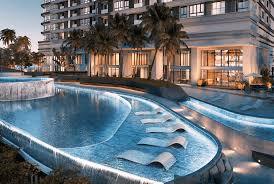
bangsar hill park @ bangsar

golden crown residence

parkside residence

oaka residence @ bukit jalil

the arden @ bandar sri damansara

ekotitiwangsa @ titiwangsa

tangen residence
For subsale residential condos, never assume Airbnb is allowed. Only proceed if the Management Corporation already allows short stays and this is written into the house rules. Verbal assurances from agents or guards are not enough.
Landed homes, especially bungalows and large terraces, are emerging as strong performers for 2026. They attract families and group travellers and are not subject to strata management bans. For side hustlers with access to such properties, this segment offers less regulatory friction and higher booking value per stay.
Regulation is no longer optional
Running an Airbnb quietly is no longer realistic. Enforcement has increased, and neighbours are far more vocal than before.
You will need to register a business with SSM, either as a sole proprietor or a company. You should also check with your local council such as DBKL, MBPJ or MBPP on whether a lodging or business permit is required. Requirements vary by area and are evolving.
Some states, including Selangor, are discussing limits on how many days a year a unit can be rented short term. While not uniformly enforced yet, this is something serious operators must monitor going into 2026.
State-Specific Requirements for Airbnb (2026 Update)
| States | Requirement |
|---|---|
| Kuala Lumpur | Generally friendly for Commercial-titled properties. Local council (DBKL) requires a business license. Watch out for JMBs in purely residential towers passing “Special Resolutions” to ban STR. |
| Penang | The strictest. Residential-titled high-rises on the island have a de facto ban. Only commercial titles (SOHO/SOVO/Service Apartments) are allowed, and even then, you must pay an annual fee (RM250–RM500) to the JMB/MC. |
| Selangor | MBPJ and MBSA have introduced “Limited Stay” rules in some areas (e.g., maximum 180 days of rental per year). |
| Sabah | Requires a “Lodging House License” for many urban areas in KK. |
Understanding the real numbers and break-even point
Side hustlers often underestimate setup costs. A poorly furnished unit will struggle to compete, no matter how good the location is.
For a standard two bedroom unit, a realistic initial setup looks like this.
| Item | Estimated Cost (RM) | Notes |
| Furniture & Decor | RM 12,000 – RM 18,000 | Quality matters for “Insta-worthy” photos. |
| Kitchen & Appliances | RM 3,000 | Fridge, microwave, kettle, basic utensils. |
| Smart Lock & CCTV | RM 1,500 | Essential for remote management (Side-hustle must!). |
| Legal & Business Reg | RM 500 – RM 1,000 | SSM registration, PBT license fees, insurance. |
| Professional Photos | RM 500 | Do not skip this. Your listing lives or dies by photos. |
| Total Startup Capital | RM 17,500 – RM 24,000 | Assumes property is already renovated/painted. |
*this cost only if your property has already comes with appliances
The Break-Even Calculation
Sample Scenario: 2BR in Kuala Lumpur (2026)
- Average Daily Rate (ADR): RM 280
- Occupancy Rate: 60% (18 nights)
- Gross Revenue: RM 5,040
- Monthly Expenses:
- Loan Installment: RM 2,200
- Maintenance + Sinking Fund: RM 350
- Utilities + High-Speed WiFi: RM 400
- Cleaning (paid by guest, but keep RM200 buffer for deep cleans): RM 200
- Platform Fees (Airbnb 3% + Booking.com ~15%): RM 450
- Monthly Net Profit: RM 1,440
The Result:
Realistically, aim for 14 to 18 months to recover your initial furniture investment.
Listing strategy that works in real life
Relying only on Airbnb is a mistake. Different platforms attract different guests. Airbnb works well for younger travellers and Western markets. Booking.com brings in guests who prefer hotel-like experiences and often book longer stays. Trip.com is increasingly important for Chinese travellers and will matter even more during Visit Malaysia 2026.
Direct booking tools such as WhatsApp follow-ups help you retain repeat guests and reduce platform fees. Over time, this improves your net yield without raising prices.
The subletting question many people are afraid to ask
Yes, you can Airbnb a property you do not own, including your parents’ house or a rented bungalow. But only if you have written consent. Your tenancy agreement must clearly allow subletting for short stays. Without this clause, a landlord can terminate the agreement the moment they find your listing online, and you risk losing your deposit.
This is one of the most common and costly mistakes I see among first-time hosts.
Why 2026 is a unique window
Several national initiatives are converging at the same time. Visit Malaysia 2026 is expected to drive family and group travel. The DE Rantau programme continues to bring digital nomads who prefer monthly stays. MM2H participants often need short-term accommodation when they first arrive before committing to a long lease.
Well positioned hosts who understand these segments and price accordingly will have a clear advantage.
Final thoughts from an advisor’s perspective
Short-term rental in Malaysia is no longer a wild west. It is a regulated, competitive and increasingly professional space. For side hustlers, this is actually good news. Those who plan properly, run clean numbers and stay compliant can still achieve solid returns with manageable risk.
Treat your Airbnb like a business, not a side experiment. When done right, it can fund your next property, your children’s education, or simply give you financial breathing room without burning out.
FAQs
Yes. Under the Strata Management Act 2013, a Joint Management Body or Management Corporation can restrict short-term rental through a special resolution passed at an AGM.
Yes. Income from short-term rental is considered business income. Keep receipts for furniture, repairs and utilities as these are deductible.
If your guests are non-Malaysians, there is a RM10 per room/night Tourism Tax. However, as of 2026, major platforms like Airbnb and Booking.com automatically collect and remit this to the Royal Malaysian Customs Department for you. You only need to worry about this if you take direct/offline bookings.
No. Most standard home or fire insurance policies in Malaysia specifically exclude “commercial use” or “short-term lodging.” If a guest accidentally starts a fire, your claim could be rejected.
– The Fix: Look for Short-Stay Insurance (e.g., Allianz or MSIG sometimes offer add-ons) or “Landlord Insurance” that explicitly covers guest-caused damage and liability.
– Reddit Wisdom: “Don’t rely solely on Airbnb’s AirCover. It’s a protection program, not a legal insurance policy. Get your own local third-party liability cover.”
This is a huge point of confusion.
– Section 4(d): Passive rental income (you just provide the house).
– Section 4(a): Business income (you provide “hotel-like” services like cleaning, breakfast, or tour guiding). For most side-hustlers providing cleaning and amenities, LHDN (Inland Revenue Board) may view it as Business Income. Keep every receipt for furniture, WiFi, and repairs—these are tax-deductible.
1. Screening: Stop using “Instant Book.” Check guest reviews. If they have even one mention of “loud,” decline.
2. Noise Monitors: Install a device like Minut. It doesn’t record conversations (privacy-safe) but alerts your phone if decibel levels exceed a limit.
3. The “Peace Offering”: Give your neighbor your phone number. Tell them: “Please call me first before the guard house. I will fix it in 10 minutes.”
Ready to start your STR side-hustle without the headache?
Finding a property that is actually Airbnb-friendly in 2026 is harder than it looks. Between JMB restrictions and changing state laws, you need an expert eye to spot the real winners.
We specialize in identifying high-yield properties in KL, Penang, and Johor that are legally cleared for short-term rentals. Let us do the heavy lifting—from property sourcing to legal checks.
We’ll reach out to help you find your first (or next) profitable investment property.
Related article:
- Is it Illegal to Run an Airbnb Service in Malaysia? We Have The Answer, Plus A Game-Changing Airbnb Hack
- How Festive Seasons Affect Malaysia’s Short-Term Rental Market
- Using AirBnB for Real Estate Investment In Malaysia
References:
- Airbnb. (2024). The host’s guide to the Malaysian market.
- Kementerian Perumahan dan Kerajaan Tempatan. (2025). National Short-Term Residential Accommodation framework.
- Malaysia Digital Economy Corporation. (2025). DE Rantau certified nomad-ready hubs list.
- Tourism Malaysia. (2026). Visit Malaysia 2026 strategic marketing plan and tourist arrival targets.
