



Global Market Insights - Malaysia
Malaysia enters the second half of 2026 with the strongest economic momentum in years and a property market moving in two directions at once. Growth is running ahead of forecast, financing costs have been flat for over a year, and prices are still climbing. At the same time, transaction volumes have thinned and unsold completed stock has risen for six consecutive quarters. For an investor, that combination is not a contradiction. It is leverage. This guide sets out what the current data actually says, what it costs a foreign buyer to enter this market in 2026 after January's stamp duty change, and where the numbers still support a return.
Table of contents
- What Will You Learn From This Country Investment Guide?
- What Makes Malaysia an Attractive Investment Destination?
- How is the Economy in Malaysia Performing Right Now?
- What's Happening in the Malaysia Property Market in 2026?
- How Much Can You Earn from Property Investment in Malaysia?
- Where Are the Best Places to Invest in Malaysia Right Now?
- What Do Our Local Experts Say About the Market?
- Can Foreigners Buy Property in Malaysia? What Are the Rules?
- What Does It Actually Cost a Foreigner to Buy in 2026?
- Do You Need MM2H to Buy Property in Malaysia?
- Tools, Tips & FAQs for Foreign Buyers
- Frequently Asked Questions
Key takeaway
- Malaysia's economy grew 5.7% in the first half of 2026, well ahead of the 4.5% recorded a year earlier, with Bank Negara Malaysia now guiding full-year growth to around 5%.
- Financing conditions are predictable: the Overnight Policy Rate has held at 2.75% since July 2025 and was maintained again at the September 2026 policy meeting.
- Urban corridors in Kuala Lumpur, Johor Bahru and Penang deliver gross rental yields of roughly 5% to 6%.
- Johor is the outperformer. Residential prices there rose 5.3% against a national average of 0.7%, driven by the RTS Link and the Johor-Singapore Special Economic Zone.
- Completed unsold stock now exceeds 52,000 units nationwide. This is a buyer's market in the primary segment and the single best source of negotiating leverage for a serious buyer.
- Entry costs for foreigners rose in January 2026. A flat stamp duty of up to 8% now applies to residential transfers by non-citizens.
What Will You Learn From This Country Investment Guide?
This guide gives you the current position, not last year's. You will find:
Malaysia's economic performance through H1 2026, including GDP, inflation, employment and interest rates.
H1 2026 property transaction data from the National Property Information Centre, released in September 2026.
Realistic gross rental yields by location and asset type, with the tax drag a foreign buyer actually carries.
A state-by-state table of minimum purchase prices for foreign buyers.
A complete cost breakdown for a foreign purchase under the 2026 stamp duty regime, with a worked example.
MM2H tier requirements and whether you need the visa in order to buy.
Where our on-the-ground specialists see the strongest risk-adjusted opportunity right now.
What Makes Malaysia an Attractive Investment Destination?
Malaysia's appeal rests on a small number of durable structural advantages. Each of these is measurable, and each has been checked against the most recent official release.
A. Strong and Accelerating Growth
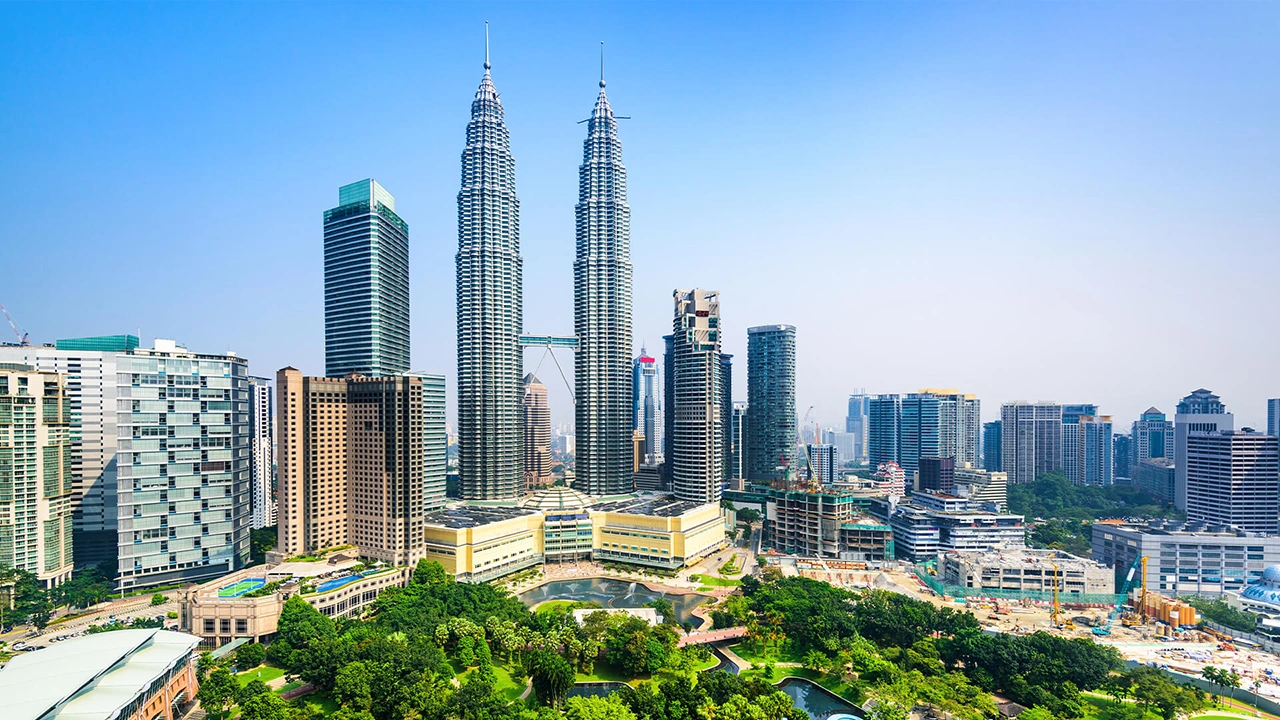
Malaysia is not only stable in 2026 but also outperforming. The economy expanded 6.0% year-on-year in Q2 2026, up from 5.4% in Q1 and ahead of the 5.8% advance estimate. That brought first-half growth to 5.7%, against 4.5% in the same period of 2025. Bank Negara Malaysia has retained its official 4% to 5% forecast range while indicating full-year growth is likely to land around 5%.
The composition matters as much as the headline. Growth was broad-based, with every major sector except agriculture expanding. Manufacturing accelerated on demand for electrical and electronic goods tied to the AI semiconductor cycle, services remained firm, and household consumption held up on steady income growth.
B. Low, Predictable Inflation
Headline inflation registered 1.9% in Q2 2026, up from 1.6% in Q1, while core inflation moderated to 1.9% from 2.1%. Bank Negara projects headline inflation to average between 1.5% and 2.5% in 2026, with targeted fuel subsidies and stable demand limiting the pass-through of global cost pressures.
For a long-term investor, the relevant point is the band, not the point estimate. Malaysian inflation has stayed inside a narrow, policy-managed range for years. That predictability is what allows a rental yield calculation to survive contact with reality.
C. Healthy Labour Market
Malaysia's unemployment rate held at 3.0% in July 2026, unchanged for four consecutive months, with 520,300 people unemployed out of a labor force of approximately 17.37 million. Total employment stood at roughly 16.85 million, and the labor force participation rate remained at about 70.9%.
Employment strength is the engine underneath rental demand. A tenant base with stable income is what converts a gross yield on paper into collected rent.
D. Competitive Currency
The ringgit has traded in a comparatively narrow band through 2026, moving between roughly RM3.92 and RM4.09 against the US dollar and sitting near RM4.05 to RM4.07 in mid-September 2026. Bank Negara described the ringgit as broadly stable against major trading partners in Q2 2026.
E. Clear Ownership Framework
Foreigners can purchase most strata residential and commercial property in Malaysia, subject to a minimum price threshold set by each state and to written consent from the state authority. Contracts are available in English, the conveyancing process is well established, and the professional ecosystem of agents, valuers, and solicitors is mature.
What changed in 2026 is the cost, not the right. From 1 January 2026, non-citizen buyers pay a materially higher stamp duty on the transfer instrument. Ownership is still straightforward. It is simply more expensive at entry than it was in 2025, and any model built on last year's numbers will overstate your return.
F. Predictable Financing Costs
The Overnight Policy Rate has stood at 2.75% since 9 July 2025 and was maintained again at the Monetary Policy Committee meeting on 3 September 2026, the fifth hold of the year. Economists broadly expect a further hold at the final 2026 meeting on 5 November, with some flagging the possibility of a 25 basis point increase in 2027 if major central banks resume tightening.
A benchmark rate that has not moved in fourteen months is a genuine advantage for a leveraged buyer. It means a mortgage stress-test built today is unlikely to be invalidated by a policy surprise next quarter.
How is the Economy in Malaysia Performing Right Now?
A. GDP Growth
| Period | GDP Growth (YoY) |
|---|---|
| Q1 2026 | 5.4% |
| Q2 2026 | 6.0% |
| H1 2026 | 5.7% |
| H1 2025 (comparison) | 4.5% |
| Full-year 2026 (BNM guidance) | ~5%, within a 4%–5% forecast range |
Metric 1
Metric 2
Metric 3
Metric 4
Metric 5
On a quarter-on-quarter seasonally adjusted basis, the economy grew 2.5% in Q2 2026 after a marginal 0.03% contraction in Q1. Exports climbed 17% year-on-year, driven by electrical and electronics products, services, and a rebound in liquefied natural gas.
B. Inflation
Headline inflation was 1.9% in Q2 2026 (Q1 2026: 1.6%). Core inflation moderated to 1.9% from 2.1%. The 2026 full-year forecast range is 1.5% to 2.5%.
Bank Negara's September policy statement noted that inflation has edged lower in recent months but is expected to remain elevated relative to recent history, given the lagged pass-through of energy costs.
C. Employment
| Indicator | July 2026 |
|---|---|
| Unemployment rate | 3.0% |
| Unemployed persons | 520,300 |
| Total employment | ~16.85 million |
| Labour force | ~17.37 million |
| Labour force participation rate | ~70.9% |
| Youth unemployment (15–24) | 10.2% |
Metric 1
Metric 2
Metric 3
Metric 4
Metric 5
Metric 6
D. Interest Rates
| Current OPR | 2.75% |
|---|---|
| Unchanged since | 9 July 2025 |
| Most recent decision | Maintained, 3 September 2026 |
| Statutory Reserve Requirement | 1.00% |
| Next MPC meeting | 5 November 2026 |
Metric 1
Metric 2
Metric 3
Metric 4
E. Population and Demographics
Malaysia's population reached 34.4 million in 2026, up from 34.2 million in 2025, a growth rate of 0.5%. The citizen population rose to 31.0 million. Median age has climbed to 31.7 years, and twelve states are now classified as ageing.
By state, Selangor holds the largest share of the population at 21.7%, followed by Johor at 12.3% and Sabah at 11.0%.
That distribution is a useful sanity check on any investment thesis. Selangor and Johor are where the people are, which is why they are also where the transaction depth is.
What's Happening in the Malaysia Property Market in 2026?
A. National Momentum
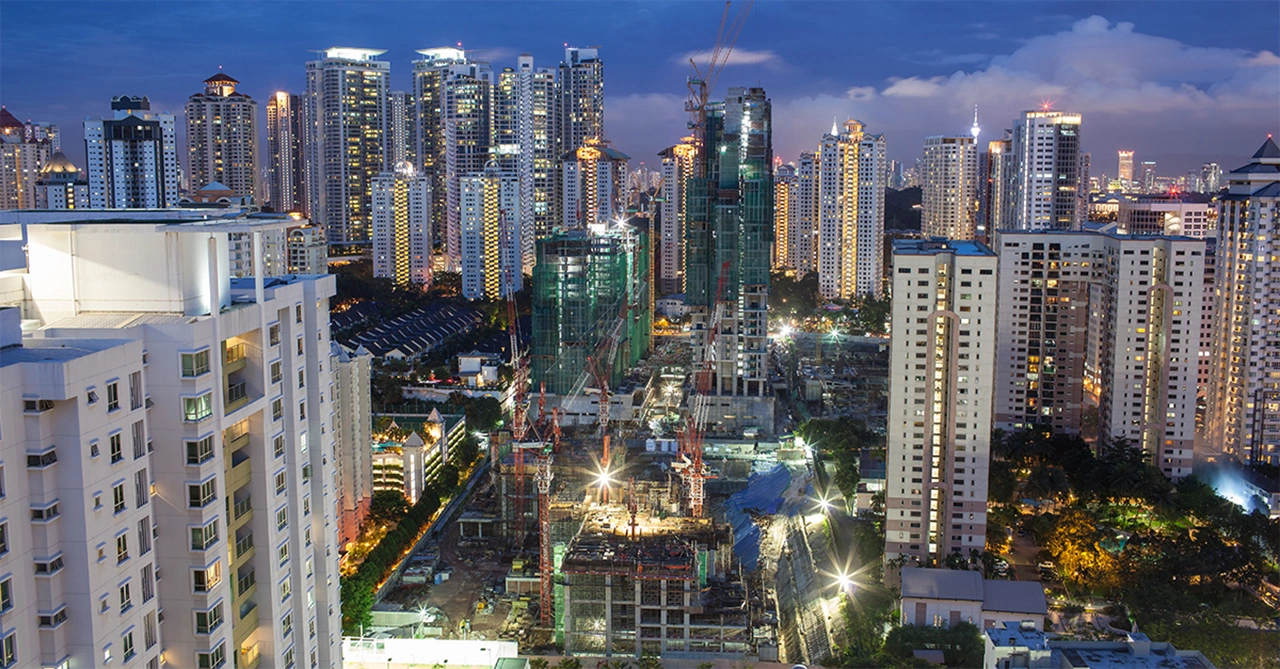
Malaysia recorded 187,320 property transactions worth RM105.12 billion in the first half of 2026, against 196,232 transactions worth RM107.68 billion in the same period of 2025. NAPIC characterized the market as resilient, citing stable prices, continued construction activity and growth in several subsectors.
Read those two lines together, and the pattern is clear. Volume fell around 4.5%, but value fell only around 2.4%. Fewer deals are being done, and the deals that close are larger.
B. Prices Are Still Rising, But Gently
From the most recent detailed quarterly data:
| Indicator | Q1 2026 | Change |
|---|---|---|
| Malaysian House Price Index | 235.2 points | +1.7% YoY |
| National average house price | RM507,533 | — |
| Average subsale price | RM545,059 | +4.8% YoY |
| Terraced houses | — | +2.2% YoY |
| Semi-detached | — | +2.2% YoY |
| High-rise units | — | +1.3% YoY |
| Detached houses | — | −0.7% YoY |
Metric 1
Metric 2
Metric 3
Metric 4
Metric 5
Metric 6
Metric 7
Landed stock is outperforming high-rise. That divergence has held for several quarters and is the single most useful signal in the table for anyone choosing asset type.
C. Where Demand Actually Sits
The most active price band in Q1 2026 was RM300,000 and below, with 27,209 transactions, more than half of all residential deals in the quarter. Roughly seven in ten subsale purchases involved homes priced at RM500,000 or below.
This matters to foreign buyers in a specific, undiscussed way. The deepest, most liquid part of the Malaysian market sits below the price floor most states set for foreign ownership. A foreign buyer is structurally confined to the thinner, slower-moving top of the market. Plan your exit accordingly.
D. The Overhang Is the Real Story
| Overhang Category | Q1 2026 | Change |
|---|---|---|
| Residential overhang | 32,801 units / RM16.37 billion | +7.6% QoQ, +39.5% YoY |
| Serviced apartment overhang | 19,263 units / RM16.52 billion | — |
| Combined completed unsold stock | >52,000 units | Sixth consecutive quarterly rise |
Metric 1
Metric 2
Metric 3
One detail deserves attention. Unsold unit count rose 7.6% quarter-on-quarter while the total value of that stock fell 7.7%. The overhang is accumulating in cheaper product, and developers are trimming asking prices to move it.
For a financing-ready buyer, completed unsold stock is the strongest negotiating position available in this market. These are finished units a developer is paying to hold.
E. Kuala Lumpur Deep Dive
Kuala Lumpur's average subsale price crossed RM1 million in Q1 2026, making it decisively the most expensive market in the country.
On the rental side, IQI transaction data shows that rents in central Kuala Lumpur have stabilized in the RM4,500 to RM5,000 range since the second half of 2024 and are expected to hold at that level through 2026. Rents in those inner-city postcodes peaked at RM6,454 in H1 2024, a 58% year-on-year jump, before settling back. The two-year average sits at RM5,300.
F. Key market tables
Table A: H1 2026 national snapshot IQI Global
| Indicator | H1 2026 | H1 2025 |
|---|---|---|
| Total transactions | 187,320 | 196,232 |
| Total transaction value | RM105.12 billion | RM107.68 billion |
| Residential share of transactions (Q1 2026) | 58.8% | — |
| Average subsale price (Q1 2026) | RM545,059 | RM520,000 (approx.) |
| Malaysian House Price Index (Q1 2026) | 235.2 (+1.7%) | — |
| Residential overhang (Q1 2026) | 32,801 units | 23,515 units |
Metric 1
Metric 2
Metric 3
Metric 4
Metric 5
Metric 6
Table B: Residential pipeline, historical context IQI Global
| Quarter | Completions | New Starts | New Planned Supply |
|---|---|---|---|
| Q1 2025 | 7,168 | 21,391 | 11,024 |
| Q2 2024 | 24,404 | 20,164 | 29,481 |
| Q3 2024 | 23,749 | 32,233 | 32,103 |
| Q4 2024 | 26,814 | 32,448 | 27,853 |
| Q1 2025 | 9,329 | 28,344 | 8,342 |
Metric 1
Metric 2
Metric 3
Metric 4
Metric 5
How Much Can You Earn from Property Investment in Malaysia?
Gross rental yields in well-located Malaysian urban corridors typically run 5% to 6%. The table below is illustrative and should be stress-tested against live comparables for any specific property.
| Location & asset | Purchase price | Monthly rent | Gross yield |
|---|---|---|---|
| KL city fringe 1-bed condo near LRT | RM450,000 | RM2,300 | 6.1% |
| KL mature suburb 3-bed condo (Mont Kiara corridor) | RM850,000 | RM3,800 | 5.4% |
| Johor Bahru 2-bed near RTS | RM500,000 | RM2,500 | 6.0% |
| Penang island 2-bed in growth node | RM500,000 | RM2,700 | 5.0% |
| Penang mainland (Batu Kawan) 2-bed | RM350,000 | RM1,600 | 5.5% |
Metric 1
Metric 2
Metric 3
Metric 4
Metric 5
The Number That Changes the Answer
Gross yield is not what a foreign buyer earns. Three items sit between the headline and the reality:
Entry cost. Under the 2026 regime, stamp duty alone can add up to 8% of the purchase price. On an RM1 million condo that is RM80,000 before legal fees and consent costs.
Holding cost. Maintenance fees, sinking fund, quit rent, assessment and vacancy.
Exit cost. Real Property Gains Tax at 30% for the first five years of ownership for non-citizens.
A 6% gross yield on a property held three years and sold is a very different investment from the same 6% held ten years.
New Projects in Malaysia




Where Are the Best Places to Invest in Malaysia Right Now?
A. Kuala Lumpur Core & City-Fringe
Kuala Lumpur retains the deepest rental market in the country and the most reliable tenant base. Target transit-oriented developments within genuine walking distance of MRT and LRT stations, and established lifestyle catchments with proven absorption.
The caution for 2026 is that KL's average subsale price has crossed RM1 million while high-rise price growth trails landed at 1.3%. Kuala Lumpur remains the liquidity play. It is no longer the growth play.
B. Johor: The RTS Link and JS-SEZ Corridor
Johor is the clearest outperformer in the Malaysian market. Two structural catalysts are driving it, and neither is speculative anymore.
The RTS Link. The Johor Bahru–Singapore Rapid Transit System connects Bukit Chagar to Woodlands North with a journey time of roughly five minutes and co-located immigration at both ends. Physical construction is substantially complete, with the project in system installation and integration testing through the end of 2026. Transport Minister Anthony Loke has confirmed a January 2027 launch, with costs remaining within the original estimates.
The Johor-Singapore Special Economic Zone. Established on 7 January 2025, the JS-SEZ is a bilateral agreement rather than a unilateral Malaysian initiative, distinguishing it from Iskandar Malaysia. Its incentive package includes a special corporate tax rate of 5% for up to 15 years for qualifying high-value activities, a 100% investment tax allowance on qualifying capital expenditure, stamp duty exemptions on commercial property transactions, and a flat 15% personal income tax rate for eligible knowledge workers for 10 years.
Johor residential prices rose 5.3% year-on-year, compared with a national average of 0.7%, according to NAPIC's most recent annual data. Johor also holds 12.3% of Malaysia's population, second only to Selangor.
Focus on walkable catchments near Bukit Chagar and established townships with functioning amenities. Treat Medini, Puteri Harbor, and Forest City with caution. Those submarkets carry structural oversupply that the JS-SEZ narrative does not automatically resolve.
C. Penang Island & Batu Kawan
Penang is effectively two markets. The island carries George Town's heritage core, the north-coast lifestyle belt and the Bayan Lepas industrial and airport zone, with prices running materially above the mainland. Seberang Perai, and Batu Kawan in particular, is where affordable new stock and the highest yields sit, supported by the Penang Science Park expansion and continued semiconductor and electronics investment.
For foreign buyers, Penang carries an important constraint: the island's landed threshold is among the highest in the country. Strata is the realistic route.
D. Klang Valley Select Pockets
A wide overhang exists across the Klang Valley, concentrated in high-rise stock. That does not make the whole region uninvestable, but it does mean product selection carries more weight here than location alone. Premium enclaves and transit-oriented developments with demonstrated absorption continue to transact well.
Selangor also carries the highest foreign buyer threshold in Malaysia at RM2 million across its main zones, which puts most of the state out of reach for foreign buyers regardless of merit.
What Do Our Local Experts Say About the Market?
Market analysis from leading real estate technology group Juwai IQI provides a granular look into the demographic and transactional shifts shaping Malaysia's property landscape. According to local market experts, while the overall picture is positive, successful investment strategies in 2025 will be those that recognize the nuanced trends shaping different segments and locations.

Muhazrol Muhamad, GVP and Head of Bumiputra Segment at Juwai IQI, provides a high-level overview: "Malaysia's property market reached a decade-high in 2024. While Q1 2025 saw a slight cooldown, with transactions down 5.6% in volume and 12.9% in value, this appears more like a breather than a downturn. Demand is softening in the sub-RM500k segments, while the RM500k-RM1 million and above RM1 million categories showed resilience, indicating sustained buying power among higher-income groups."

Kashif Ansari, Co-Founder and Group CEO of Juwai IQI, reinforces that terrace homes and affordable properties remain the bedrock of the market.
On Johor: Ansari has identified Johor as Malaysia's top property investment hotspot for 2026, noting that Johor's residential property prices rose 5.3% in NAPIC's latest annual data against a national average of 0.7%. In his assessment, that level of outperformance is drawing buyers and establishing the state as a leading destination for property investment in 2026.
On the Kuala Lumpur rental market: Ansari has cautioned that the 2024 spike in central KL rents reflected a shift in the mix of properties transacted rather than a uniform rise across all units, with a number of high-end rentals pulling the average upward. That is a useful corrective for any investor underwriting a KL yield off headline averages.
Ansari further notes that large-scale infrastructure projects are key drivers. For instance, homes near new public transport stations are expected to command a price premium of up to 10%.
A deep analysis of over 127,000 transactions by Juwai IQI reveals a significant trend: younger Malaysians are overwhelmingly choosing vertical living.
"Gen Z are buying into the skyline, while Millennials and Gen X keep their feet on the ground," says Ansari. He explains that lifestyle and affordability are the primary drivers.
"Units are often more affordable for first-time buyers. They are easier to maintain, and they often come with facilities like gyms, pools, and security that young families value."
An analysis of over 127,000 transactions by Juwai IQI found that younger Malaysian buyers overwhelmingly favour vertical living.
| Generation | Units (condo / apartment) | Landed |
|---|---|---|
| Gen Z | 84% | 16% |
| Millennials | 75% | 25% |
| Gen X | 75% | 25% |
| Boomers | 77% | 23% |
| Builders | 93% | 7% |
Metric 1
Metric 2
Metric 3
Metric 4
Metric 5
Juwai IQI points to two key markets showing exceptional performance. In the high-rise segment, Johor has emerged as the clear outperformer. This success is not accidental; it is directly tied to significant infrastructure investment, the economic buzz surrounding the upcoming RTS Link, and strong pre-launch sales from savvy developers tapping into this growing demand.
Meanwhile, if there is one indicator proving the fundamental economic strength of the nation's capital, it is the Kuala Lumpur rental market. While national rental rates have stabilized, KL's market has continued to surge forward, acting as a barometer for regional economic health.
As Ansari explains, "The rental market acts as a leading indicator of regional economic strength. The rental growth in Kuala Lumpur reflects expanding job opportunities and foreign investment, reinforcing its role as the nation's largest growth engine."
This outperformance is stark when compared to other regions:
| Location | Avg. Rent (Q1 2025) | Quarter-on-Quarter Change | Year-on-Year Change |
|---|---|---|---|
| Kuala Lumpur | RM2,901 | +1.9% | +6.1% |
| Malaysia | RM2,020 | -1.6% | +5.2% |
| Selangor | RM1,822 | -0.9% | -3.1% |
Metric 1
Metric 2
Metric 3
Even the luxury rental segment in KL (the top 10% of the market) remains resilient, with an average rent of RM5,295 in Q1 2025. This indicates unwavering demand from high-income professionals and the expatriate community.
Can Foreigners Buy Property in Malaysia? What Are the Rules?
Yes. Foreigners can legally own most freehold and leasehold residential property in Malaysia, provided the purchase price meets or exceeds the minimum threshold set by the relevant state, the property is not in a restricted category, and written state authority consent is obtained for the transfer.
Minimum Purchase Price by State
There is no single national threshold. Under Economic Planning Unit guidelines each state sets its own floor, and several have revised upward in recent years.
| State / Federal Territory | Strata minimum | Landed minimum | Notes |
|---|---|---|---|
| Kuala Lumpur | RM1,000,000 | RM1,000,000 | Same threshold for all property types |
| Putrajaya | RM1,000,000 | RM1,000,000 | Very limited residential stock |
| Labuan | RM1,000,000 | RM1,000,000 | Federal Territory framework |
| Selangor (Zones 1 & 2) | RM2,000,000 | RM2,000,000 | Highest in Malaysia. Covers Petaling, Gombak, Hulu Langat, Sepang, Klang. Foreigners restricted to strata and landed strata |
| Selangor (Zone 3) | RM1,000,000 | RM1,000,000 | Hulu Selangor, Sabak Bernam |
| Penang Island | RM1,000,000 | RM3,000,000 | Landed largely inaccessible in practice. State levy applies |
| Penang Mainland | RM500,000 | RM1,000,000 | Seberang Perai. Materially lower than island |
| Johor | RM1,000,000 | RM2,000,000 | Designated Iskandar zones may differ |
| Negeri Sembilan | RM650,000 | RM1,000,000 | Customary land excluded |
| Melaka | RM500,000 | RM1,000,000 | Among the lowest peninsular thresholds |
| Perak | RM1,000,000 | RM1,000,000 | Revised upward from RM500,000 |
| Pahang | RM1,000,000 | RM1,000,000 | Includes Cameron Highlands |
| Kedah | RM600,000 | RM600,000 | Langkawi may differ |
| Sabah | RM600,000 | RM1,000,000 | Sabah Land Ordinance, separate consent process |
| Sarawak | RM500,000–600,000 | RM500,000–600,000 | Sarawak Land Code. Varies by division |
Metric 1
Metric 2
Metric 3
Metric 4
Metric 5
Metric 6
Metric 7
Metric 8
Metric 9
Metric 10
Metric 11
Metric 12
Metric 13
Metric 14
Metric 15
What Foreigners Cannot Buy
Properties on Malay Reserved Land
Units under the Bumiputera quota within a development
Low and medium-cost housing as defined by the relevant state
Agricultural land in most states
Landed property in states that restrict foreign ownership to strata and landed-strata titles, most notably Selangor
Threshold Mechanics You Need to Know
The minimum is enforced against the price stated in the Sale and Purchase Agreement or the official JPPH valuation, whichever is higher. A negotiated discount that drops the transacted price below the state floor can invalidate consent. Raise this with your solicitor before signing.
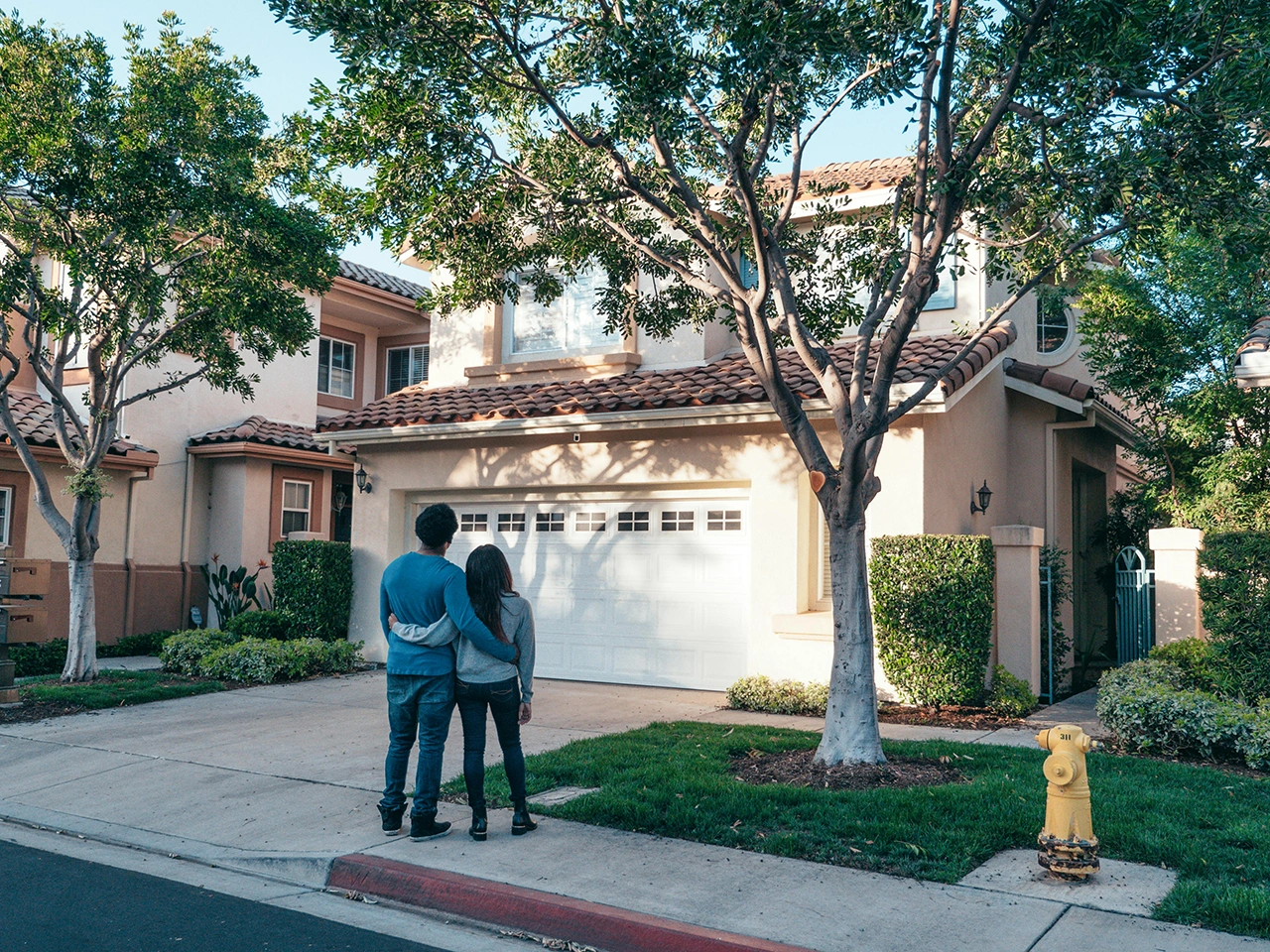
What Does It Actually Cost a Foreigner to Buy in 2026?
The 2026 Stamp Duty Change
Under Budget 2026, tabled on 10 October 2025, the government introduced a flat stamp duty rate of between 4% and 8% on the instrument of transfer for residential property acquired by non-citizens and foreign companies, replacing the flat 4% rate previously applied to foreign buyers. Malaysian permanent residents are excluded and continue on the tiered citizen scale. Commercial and industrial property is unaffected.
The measure took effect for instruments executed on or after 1 January 2026, and is widely reported as implemented at a flat 8%.
The trigger is when the transfer instrument is executed, not when the sale was agreed. Buyers who signed in late 2025 and complete in 2026 are affected.
By contrast, Malaysian first-time buyers retain a full stamp duty exemption on both the transfer instrument and the loan agreement for residential property priced up to RM500,000, extended until 31 December 2027.
Worked Example: RM1,000,000 Condominium
| Cost item | Foreign buyer | Malaysian citizen (tiered) |
|---|---|---|
| Transfer stamp duty | RM80,000 (at 8%) | RM24,000 |
| Loan agreement stamp duty (0.5%) | ~RM3,500 (on 70% margin) | ~RM4,500 (on 90% margin) |
| Legal fees (transfer + loan) | ~RM12,000–16,000 | ~RM12,000–16,000 |
| State consent fee | ~RM5,000–30,000, state-dependent | Not applicable |
| Indicative total entry cost | ~RM100,000–130,000 (10–13%) | ~RM40,000–45,000 (4–4.5%) |
Metric 1
Metric 2
Metric 3
Metric 4
Metric 5
Financing
Malaysian banks lend to non-residents, typically at a margin of finance up to 70% of value, against up to 90% for citizens. Expect a more documentation-intensive process, requirements around proof of offshore income, and pricing at a premium to resident rates.
Exit Cost: Real Property Gains Tax
RPGT is charged on the gain, not the sale price, under the Real Property Gains Tax Act 1976. Budget 2026 made no change to the rates, which have been stable since 1 January 2022.
Three points a foreign seller must plan around:
There is no 0% band for foreigners. The floor is 10%, permanently.
The 30% rate runs for a full five years, two years longer than for citizens.
A retention sum applies at completion. The buyer's solicitor withholds a percentage of the consideration against the RPGT liability, at a higher rate for foreign sellers than for citizens. Filing is due within 60 days of disposal, and late filing attracts a penalty. [VERIFY] Confirm current retention percentages with LHDN.
The practical implication is straightforward. A foreign investor buying at an 8% entry cost and facing 30% RPGT on exit needs a holding period of at least six years for the numbers to work in most scenarios. Malaysian property in 2026 is a long-hold market for foreign capital. Anyone modelling a three-year flip should run that model again with these two numbers in it.
Do You Need MM2H to Buy Property in Malaysia?
No. You do not need a Malaysia My Second Home visa to buy property. MM2H is a long-stay residency pass, not a purchase requirement. Any foreigner meeting the state price threshold and obtaining consent can buy.
The relationship runs the other way: MM2H requires you to buy. Every mainland tier now mandates a qualifying residential property purchase, generally within twelve months of visa endorsement, held for a minimum period.
MM2H Tiers
| Item/Tier | Silver | Gold | Platinum |
|---|---|---|---|
| Fixed deposit | USD 150,000 | USD 500,000 | USD 1,000,000 |
| Minimum property purchase | RM600,000 | RM1,000,000 | RM2,000,000 |
| Visa validity | 5 years, renewable | 15 years, renewable | 20 years, renewable |
| Participation fee | RM1,000 | RM3,000 | RM200,000 |
| Minimum age | 25 | 25 | 25 |
| Work / business rights | No | No | Yes |
Metric 1
Metric 2
Metric 3
Metric 4
Metric 5
Metric 6
A separate Special Economic Zone tier carries reduced fixed deposit requirements, a lower minimum age, a 10-year renewable term and property purchase restricted to designated zones and approved developers.
Important interaction: where the state minimum exceeds the MM2H tier minimum, the state threshold governs. A Silver-tier applicant cannot buy a RM600,000 property in Kuala Lumpur, because KL's floor is RM1 million.
Tools, Tips & FAQs for Foreign Buyers
Pre-Purchase Checklist
Verify title type and tenure, and confirm strata title has been issued or is in process
Confirm the property sits above your state's foreign buyer threshold on both SPA price and JPPH valuation
Check whether the unit falls under a Bumiputera quota within the development
Review maintenance fee and sinking fund history, not just the current rate
Assess developer track record on delivery and defect rectification
Obtain in-principle financing before committing, given the 70% margin ceiling
Have a solicitor review the SPA and state consent conditions before any payment
Investment Discipline
Prioritise transit-oriented locations. The RTS Link and existing MRT and LRT networks are the clearest vacancy-risk mitigants in the country
Target 5% to 6% gross yield in urban condos near transit, then stress-test for two months of vacancy per year
Consider completed unsold stock. With over 52,000 finished units unsold nationwide, a financing-ready buyer has real negotiating leverage
Model your exit before you buy. Calculate RPGT at your intended holding period and add it to your entry costs
Track OPR, CPI and NAPIC quarterly releases to time entry
Tools (click to explore!)
Frequently Asked Questions
A. Is now a good time to invest in Malaysian property?
Conditions in 2026 favour a selective buyer rather than a broad one. Prices are rising modestly at 1.7% year-on-year, financing costs are stable at a 2.75% OPR, and the economy grew 5.7% in the first half of the year. At the same time, transaction volumes have thinned and completed unsold stock exceeds 52,000 units. That combination gives a prepared buyer negotiating power that did not exist two years ago. It also means a poorly chosen unit will be slow to exit.
B. Can foreigners buy property in Malaysia?
Yes. Foreigners can own most strata residential and commercial property, provided the price meets the state minimum (commonly RM1 million, ranging from approximately RM500,000 to RM2 million depending on state and property type), the property is not in a restricted category such as Malay Reserved Land or Bumiputera-quota stock, and written state authority consent is obtained.
C. What is the minimum price for a foreigner to buy property in Malaysia?
It varies by state. Kuala Lumpur, Putrajaya, Labuan, Johor (strata), Perak and Pahang are commonly set at RM1,000,000. Selangor is the highest at RM2,000,000 across its main zones. Melaka and Penang mainland are among the lowest at approximately RM500,000. Thresholds are set administratively and revised periodically, so confirm the current figure for your specific state and property type before committing.
D. How much stamp duty do foreigners pay on property in Malaysia in 2026?
Under Budget 2026, non-citizens and foreign companies pay a flat stamp duty on the instrument of transfer for residential property, replacing the tiered rate that applies to citizens. The measure took effect for instruments executed on or after 1 January 2026 and Malaysian permanent residents are excluded. Confirm the operative rate with your solicitor, as it is materially higher than the 4% that applied through 2025.
E. What is RPGT and how does it affect foreign sellers?
Real Property Gains Tax is charged on the profit from a property disposal. Foreign sellers pay 30% for the first five years of ownership and 10% from the sixth year onwards. Unlike Malaysian citizens, foreigners never reach a 0% band. Filing is due within 60 days of disposal and the buyer's solicitor retains a portion of the sale proceeds against the liability.
F. Do I need MM2H to buy property in Malaysia?
No. MM2H is a residency pass, not a purchase requirement. However, all mainland MM2H tiers now require applicants to buy qualifying Malaysian residential property, generally within twelve months of visa endorsement. Where the state minimum price exceeds the MM2H tier minimum, the state threshold applies.
G. When does the Johor Bahru–Singapore RTS Link open?
The RTS Link is scheduled to begin passenger service in January 2027. Physical construction is substantially complete and the project is in system installation and integration testing through the end of 2026. The line connects Bukit Chagar in Johor Bahru to Woodlands North in Singapore with a journey time of approximately five minutes and co-located immigration facilities at both stations.
H. What property types are most in demand in Malaysia in 2026?
Homes priced at RM300,000 and below dominate volume, accounting for 27,209 transactions in Q1 2026, more than half of all residential deals. Terraced houses and semi-detached homes led price growth at 2.2% each, ahead of high-rise at 1.3%. For foreign buyers constrained by state minimums, urban strata units above the threshold in transit-connected locations capture the strongest rental demand.
I. Are property prices in Kuala Lumpur still affordable?
Kuala Lumpur's average subsale price crossed RM1 million in Q1 2026, making it Malaysia's most expensive market. Against regional capitals such as Singapore and Hong Kong it remains competitive on both price per square foot and rental yield. Against the rest of Malaysia, where the national average house price is RM507,533, it is a premium market and should be underwritten as one.
J. What is the current interest rate in Malaysia?
Bank Negara Malaysia's Overnight Policy Rate has stood at 2.75% since 9 July 2025 and was maintained at the 3 September 2026 Monetary Policy Committee meeting. The final MPC meeting of 2026 is scheduled for 5 November.
Need help to get started
Let our agents help you find the ideal land for you
Disclaimer:
The information provided is for general market insight only and does not constitute financial, investment, tax, or legal advice. IQI does not solicit or compel any purchase or investment. Property values and rental returns may fluctuate; please conduct your own due diligence and consult licensed professionals before making any decisions.
References & Citations
- Monetary Policy Statement: Overnight Policy Rate maintained at 2.75 per cent – Bank Negara Malaysia (September 3, 2026)
- Current population estimates, 2026 – Department of Statistics Malaysia (July 31, 2026)
- Labour force statistics, Malaysia, July 2026 – Department of Statistics Malaysia (September 12, 2026)
- Labour force survey report, first quarter 2026 – Department of Statistics Malaysia (May 12, 2026)
- Malaysia OPR 2026: Remains at 2.75% for 14 consecutive months – IQI Global (September 14, 2026)
- NAPIC Q1 2026: What Malaysia's property data means for buyers – IQI Global (July 17, 2026)
- Malaysia property market H1 2026 review: Opportunities for agents, investors and homebuyers – IQI Global (July 27, 2026)
- Top rental yield areas in Penang 2026 – IQI Global (July 13, 2026)
- Stamp duty waiver extended to 2027: What every first-time homebuyer should know – IQI Global (December 15, 2025)
- Johor-Singapore Special Economic Zone – Invest Johor (February 4, 2026)
- Johor named Malaysia's top property investment hotspot for 2026. – Business Today (March 17, 2026)
- Central KL rents steady since H2 2024 – Free Malaysia Today (April 22, 2026)
- More than 80% of Gen Z buy condos, while older Malaysians still favour landed homes – Kopi and Property (Juwai IQI release) (September 3, 2025)
- Press release: Q2 2026 gross domestic product – Malaysia Ministry of Finance (August 14, 2026)
- RTS Link on track for January 2027 opening; costs stable – Malaysia Ministry of Transport (April 3, 2026)
- National MM2H requirements – Malaysia My Second Home Centre
- Property market report, first half 2026 – National Property Information Centre (September 10, 2026)
- Malaysia's economy grows 6 per cent in Q2, beats advance estimate – New Straits Times (August 14, 2026)
- PwC's statement: Budget 2026 – PricewaterhouseCoopers Malaysia (October 10, 2025)
- Johor-Singapore Special Economic Zone – PricewaterhouseCoopers Malaysia
- Budget 2026: Stamp duty exemption extended for first-time homebuyers – The Star (October 10, 2025)
Share on
Want to discuss further?
Other Countries









Why Do Smart Investors Choose IQI as Their Real Estate Partner?
Get your financial planning right by using our simple mortgage loan calculator to find out estimates of monthly instalments, applicable interest rates and the principal amount that best suit your financial capacity
Exclusive market insights
powered by on-ground teams in 30+ countries
Data-driven strategies
using our proprietary IQI Atlas system for returns, yields, and forecasting
Award-winning agents
trained to serve local and international investors with integrity and expertise
Secure investment processes
with verified partners, legal guidance, and full transparency
Diverse project portfolios
across residential, commercial, and international markets

