


| TL;DR Vietnam’s real estate market in 2025 is a hotbed of opportunity, fueled by strong economic growth, massive foreign investment, and new government reforms making it easier for foreigners to buy. While prices in Hanoi are surging and Ho Chi Minh City is stabilizing, complexities around foreign ownership laws and potential market risks remain. Success requires understanding the unique dynamics of each city and navigating the legal landscape with expert guidance. |
Are you considering investing in Vietnam’s booming property market but feeling lost, like you’re in a maze of endless info loops? You see headlines about Vietnam’s attractive prices and hear it’s a top spot in Southeast Asia, but you’re worried about making any costly mistakes or getting tangled in red tape.
This guide is designed to be your strategic roadmap, lead you through the maze to decode the critical 2025 legal changes and outline a straightforward, step-by-step process to help you invest with confidence.
Key Takeaways
- Booming Market with Strong Fundamentals: Vietnam’s economy is projected to grow by 6.5% to 8% in 2025, driven by a young population, rapid urbanization, and significant foreign direct investment (FDI) from the “China+1” strategy.
- Foreigners Can Buy, But with Rules: Yes, you can buy property as a foreigner. However, you own it on a 50-year renewable lease, not forever. There are also limits: you can’t own more than 30% of the units in a condo building.
- Two Cities, Two Stories: Hanoi’s apartment prices are skyrocketing (up 29.6% year-on-year), while Ho Chi Minh City’s market is stabilizing after a price correction, offering different kinds of opportunities for investors.
- New Laws are a Game-Changer: The new Land and Housing Laws, effective in 2025, are making the market more transparent and accessible, especially for overseas Vietnamese, which is expected to boost demand.
Table of contents
- 1. Why is Everyone Talking About Vietnam’s Real Estate Market in 2025?
- 2. What are the Property Prices for Vietnam City
- 3. Can a Foreigner Actually Buy Property in Vietnam?
- 4. How Do You Buy Property in Vietnam?
- 5. What are the Biggest Risks of Investing in Vietnam Real Estate?
- 6. What are the Main Taxes and Fees When Buying?
- 7. Frequently Asked Questions (FAQs)
1. Why is Everyone Talking About Vietnam’s Real Estate Market in 2025?
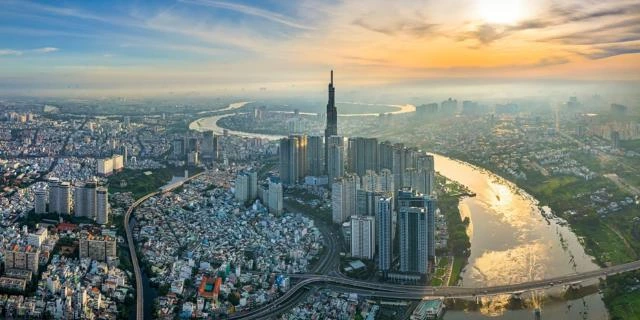
It seems like you can’t browse an investment forum or read a finance article without seeing something about Vietnam. There’s a good reason for all the buzz, and it boils down to a powerful mix of growth, strategic importance, and modernization that creates FOMO (Fear of Missing Out) among savvy investors.
First, Vietnam’s economic growth is simply phenomenal. After expanding by over 7% in 2024, top institutions, such as the World Bank, are forecasting another strong year in 2025. These numbers indicate a rapidly growing middle class with more money to spend on better housing, which, in turn, fuels the property market.
Then there’s the “China+1” strategy, which has turned Vietnam into a global manufacturing darling. For example, imagine a big company like Samsung making all its phones in one country. If something goes wrong there, like a trade war or a pandemic, production stops. The “China+1” strategy is like them deciding to build a second major factory in a promising and stable country like Vietnam to keep business safe.
This shift brings a flood of foreign direct investment, jobs, and housing demand near industrial hubs. In fact, high-tech products now account for over 50% of Vietnam’s total exports, a massive jump from just 8% in 2010.
Finally, Vietnam is investing heavily in its future with massive infrastructure projects. We’re talking about the new Long Thanh International Airport near Ho Chi Minh City, designed to handle 100 million passengers a year, and new metro lines that are making it easier to live in the suburbs and commute to the city. This opens up new areas for more affordable, modern housing developments.
2. What are the Property Prices for Vietnam City
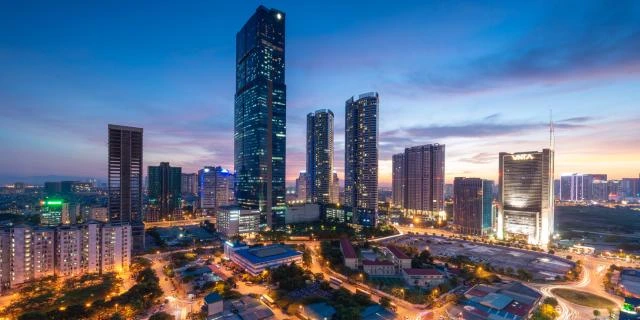
When you look at Vietnam property, you’re really looking at two main characters: the historic, rapidly appreciating capital of Hanoi, and the bustling, massive economic engine of Ho Chi Minh City (HCMC). Each city tells a different story in 2025, and understanding their differences is key.
Hanoi’s market is what experts are calling “red-hot”. Prices are climbing at a breathtaking pace, partly due to strong demand and partly to improved confidence from new, clearer laws. In contrast, HCMC’s market is more like a giant taking a breath. After a period of rapid growth, it’s now stabilizing and going through a “price recalibration,” which could present excellent buying opportunities before the next wave.
Here’s a simple side-by-side look to help you see the key differences:
a. Hanoi vs. HCMC Property Market Snapshot (2025)
| Metric | Hanoi | Ho Chi Minh City (HCMC) |
|---|---|---|
| Avg. Apartment Price (per sqm) | ~US$2,865 – $3,000 | ~US$3,316 – $4,691 |
| Y-o-Y Price Growth | Soaring (+22% to +33%) | Stabilizing (+1.5%) |
| Market Trend | “Red-hot,” strong demand | Price recalibration, gradual recovery |
| Gross Rental Yield (Avg.) | ~3.11% | ~3.34% |
So, what does this all mean for you? If you’re looking for rapid capital gains and can handle a fast-moving market, Hanoi might be your play. If you prefer finding value in a more stable, mature market with slightly higher rental yields, HCMC could be the perfect fit.
3. Can a Foreigner Actually Buy Property in Vietnam?

This is the golden question, and the answer is clear: yes, but with some fundamental rules. Thanks to Vietnam’s relaxed foreign ownership laws over the years, the door is open to international investors. But you need to know precisely what you’re stepping into.
Here’s the breakdown in the simplest terms:
- It’s a Lease, Not a Purchase: This is the most essential concept to grasp. When you buy a condo or house, you’re not buying the land forever. Think of it like a very, very long-term rental from the government. You get a 50-year leasehold. During that time, you can live in it, rent it out, sell it, or pass it on in your will. After 50 years, you can apply to renew it once for another 50 years.
- The 30% Condo Rule: To prevent foreign investors from buying up entire buildings, the government has set a cap on foreign ownership. In any single condominium building, no more than 30% of the total units may be owned by foreigners.
- The 250 House Rule: If you’re interested in landed property, like a villa or a townhouse, there’s another rule. In any given administrative area (about the size of a ward or neighborhood), a maximum of 250 such houses can be owned by foreigners.
- No-Go Zones: For national security reasons, certain areas are off-limits for foreign ownership. Your real estate agent and lawyer should immediately be able to tell you if a property falls into one of these zones.
Navigating these rules can be tricky. A global real estate network with local experts on the ground can make all the difference. The team at IQI Global, with its vast network of over 60,000 agents, specializes in guiding international investors through Vietnam’s property landscape. Contact us to connect with a local expert who can clarify these regulations for your specific situation.
4. How Do You Buy Property in Vietnam?
So you’ve found a potential property and are ready to move forward. The process of buying a house in Vietnam for a foreigner might seem confusing, but it’s manageable if you follow a clear set of steps. Rushing is your enemy; diligence is your best friend.
- Find a Reputable Agent & Lawyer: This is non-negotiable. Don’t try to do it all yourself. You need a trusted local real estate agent to find good properties and a bilingual lawyer who specializes in property transactions for foreigners to protect you from any legal traps.
- Carry Out Due Diligence (The “Pink Book” Check): Before any money changes hands, your lawyer must verify the property’s ownership certificate, known as the “Pink Book” or “Sổ Hồng”. They will check that the seller actually owns it, that the property is approved for foreign ownership, and that there are no legal claims against it.
- Sign the Reservation Agreement & Pay a Deposit: Once you’re confident, you’ll sign a reservation agreement and pay a small deposit to take the property off the market. For new “off-plan” properties, the maximum initial deposit is capped at 5% by a new law.
- Sign the Sales and Purchase Agreement (SPA): This is the primary, legally binding contract. Your lawyer should review it thoroughly to ensure all terms, including the price and payment schedule, are correct before you sign it in front of a notary.
- Make Payments & Secure Financing: You will make payments in installments as outlined in your SPA. Getting real estate financing options in Vietnam can be tough for non-residents, so many international buyers pay with cash.
- Receive Your “Pink Book” (Ownership Certificate): After the final payment is made and the property is handed over, your lawyer will submit the paperwork to get the “Pink Book” updated with your name. Congratulations, you are now the official owner of the property for the next 50 years!
Finding trustworthy professionals is step one. IQI Global‘s tech-driven platform and extensive network of trained ‘Warriors’ offer a one-stop solution, connecting you with vetted agents and comprehensive services from brokerage to property management, streamlining your buying journey.
5. What are the Biggest Risks of Investing in Vietnam Real Estate?
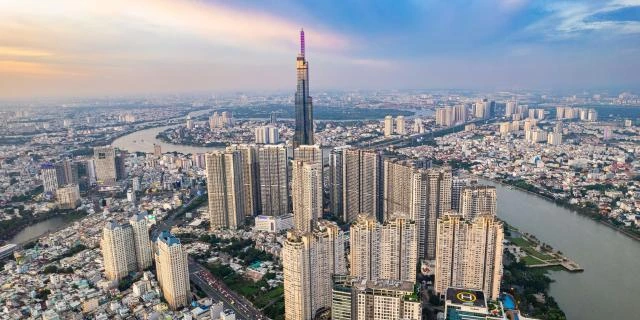
Every great opportunity comes with risks, and it’s crucial to go in with your eyes wide open. A balanced view builds trust and prepares you for the challenges.
Risk 1: The Real Estate Bubble in Vietnam Concern
With prices in cities like Hanoi rising so quickly, many are asking whether the market is overheating. The concern is genuine enough that even Vietnam’s Prime Minister, Pham Minh Chinh, famously asked, “So many people need houses, but with prices so high, who can afford them?”. The government is walking a tightrope between controlling prices through credit limits and fueling economic growth, creating uncertainty.
Risk 2: Developer Reliability & Red Tape
Not all developers are created equal. There have been stories of projects facing long delays or not being completed at all, especially with smaller, less-established companies. It’s one of the most significant risks of investing in Vietnam’s real estate market. Sticking to reputable giants like Vinhomes or Novaland, or a real estate company like IQI, is a crucial safety measure for getting a thorough background check on a developer.
Risk 3: US Tariffs & Global Headwinds
The global economy can be unpredictable. There is an ongoing “wait-and-see” approach in the market regarding potential US reciprocal tariffs, which could impact Vietnam’s export-driven economy. While Vietnam has shown remarkable resilience, it’s not entirely immune to global economic shifts.
6. What are the Main Taxes and Fees When Buying?
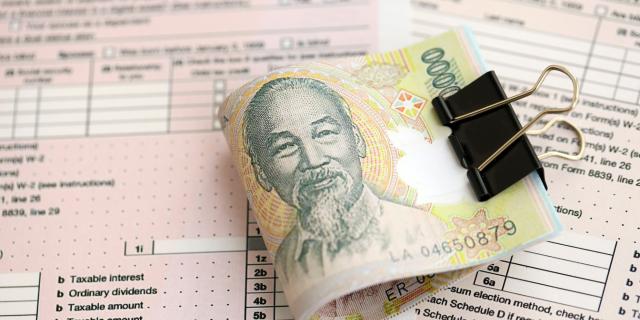
Budgeting correctly means looking beyond the sticker price. Fortunately, transaction costs in Vietnam are pretty reasonable compared to those in other countries in the region. When you buy a property, here’s a simple checklist of the main expenses to expect:
- Value Added Tax (VAT): 10% of the property value, but this only applies to new properties you buy directly from a developer.
- Registration Tax: 0.5% of the property value. This is a one-time fee to register your name on the official title of ownership.
- Maintenance Fee (“Sinking Fund”): 2% of the pre-tax property price. This is a one-time payment into a fund for future major repairs and upkeep of the building’s common areas.
- Notary & Legal Fees: These fees are usually relatively small and vary depending on the lawyer and the deal’s complexity.
If you plan to rent out your property, the income tax is straightforward. Any rental income above about US$4,000 per year is taxed with a 5% Personal Income Tax and a 5% VAT.

So, what’s the final verdict on Vietnam real estate in 2025? It’s a market of compelling contrasts, offering explosive economic growth and tangible risks in equal measure.
Success hinges not just on entering the market, but on navigating its unique leasehold system and complex dynamics with diligence and expert guidance. For the well-prepared investor, Vietnam remains one of Asia’s most exciting growth stories.
Feeling ready to explore the possibilities, but want a guide you can trust? The journey into a new market is always easier with a team that knows the terrain. IQI Global‘s unique blend of powerful technology and a vast network of over 60,000 local, on-the-ground professionals is designed to give you a decisive advantage.
Whether you’re exploring your first condo in Ho Chi Minh City or analyzing industrial opportunities, we provide the clarity and support you need. Contact us today to start your investment journey with confidence.
7. Frequently Asked Questions (FAQs)
What is the minimum investment required to buy property in Vietnam?
The government sets no official minimum investment amount. The price depends entirely on the property and location, with apartments in smaller cities available for much less than a luxury condo in Ho Chi Minh City’s District 1.
Are mortgage rates in Vietnam low for foreigners in 2025?
While some Vietnamese banks are offering the lowest mortgage rates in a decade to locals, it remains tough for non-resident foreigners to secure a mortgage. Most international buyers use cash or secure financing from a global bank in their home country.
Will Vietnam’s new 2025 Land Law make it easier to invest?
Yes, the new laws are a significant step forward. They are designed to improve transparency, streamline the approval process, and provide greater clarity for investors, which is expected to boost overall market confidence and activity.
Is Da Nang a better place to invest for rental income than Hanoi?
It depends on your goals. Da Nang, a coastal city, is a tourism hotspot, with strong potential for short-term vacation rentals, though yields are currently lower (around 2.34%). Hanoi offers more stable, long-term rental demand from expats and locals, with yields around 3.11%.
What is the “pink book” in Vietnam, and why is it so important?
The “pink book” (Sổ Hồng) is the official Certificate of Land Use Rights and Ownership. It is the most critical document proving you are the legal owner of the property. Verifying its authenticity is a crucial step in the buying process.
Can I get permanent residency in Vietnam if I buy a house?
No, buying property in Vietnam does not grant you permanent residency or a long-term visa. Residency is tied to other factors, such as having a work permit, running a business, or having family ties in the country.
Besides condos, what other real estate sectors are growing in Vietnam?
The industrial and logistics sector is booming due to the “China+1” manufacturing shift. There is high demand for modern factories, warehouses, and industrial park land, making it another attractive area for foreign investment.
Ready to invest in Vietnam? Don’t navigate the market alone. Connect with IQI Global’s local experts for trusted guidance, exclusive access to prime properties, and a seamless journey to successful ownership.
Continue Reading
- Why Malaysia’s Tourism Boom is Creating Prime Investment Opportunities in 2025
- Earn in SGD With Your Property: Why Investing in the Johor-Singapore SEZ is a Smart Move!
- Auction Home vs. Blacklisted: Key Differences to Know Before Buying Property
Reference
- Delmendo, L. C. (2025, July 14). Vietnam’s residential property market analysis 2025. Global Property Guide. retrieved from
https://www.globalpropertyguide.com/asia/vietnam/price-history - Finch, S. (2025, June 16). Vietnam housing market poised for growth despite tariff challenges. Property Guru. retrieved from
https://www.asiapropertyawards.com/en/vietnam-housing-market-poised-for-growth-despite-tariff-challenges/ - Hiep, L. H. (2025, October 3). Is Vietnam headed for a property market crisis? Fullcrum. retrieved from
https://fulcrum.sg/is-vietnam-headed-for-a-property-market-crisis/ - Invest Asian. (2025, August 26). Investing in Vietnam property: The ultimate guide. retrieved from
https://www.investasian.com/country-guides/invest-vietnam-property/ - Knight Frank. (2025, June 22). Eyes on Vietnam: The quiet giant of Asian real estate is waking up. The Investor. retrieved from
https://theinvestor.vn/eyes-on-vietnam-the-quiet-giant-of-asian-real-estate-is-waking-up-d16085.html - Kumar, K. (2025, July 9). Property investment in Vietnam: Foreigner’s guide (2025). Global Property Guide. retrieved from
https://www.globalpropertyguide.com/asia/vietnam/buying-guide - Le, T. (2025, Q2). Broad legal & administrative reforms sustain momentum despite headwinds, Market Brief | Q2 2025. JLL Vietnam Property Intelligence Centre (VPIC). retrieved from
https://www.jll.com/en-sea/insights/vietnam-property-market-brief - Mordor Intelligence. (2025, June 26). Vietnam residential real estate market analysis – trends, forecast, size & industry growth report (2025 – 2030). retrieved from
https://www.mordorintelligence.com/industry-reports/residential-real-estate-market-in-vietnam - Nguyen, L. (2025, September 19). Buying property in Vietnam: A complete guide for foreigners (2025 update). Viettonkin Consulting. retrieved from
https://viettonkinconsulting.com/real-estate/buying-property-in-vietnam/ - Singh, S. (2025, March 26). Vietnam real estate market 2025: A prime investment destination in Southeast Asia. Vietnam Briefing. retrieved from
https://www.vietnam-briefing.com/news/vietnam-real-estate-market-2025-prime-investment-destination-southeast-asia.html/ - Svaiko, G. (2024, November 21). Buying property in Vietnam as a foreigner. Wise. retrieved from
https://wise.com/gb/blog/buying-property-in-vietnam
