


| TL;DR Malaysia is revolutionizing its real estate sector with 5 major property initiatives in 2026 under the “Madani Housing Reforms.” The ultimate goal is to achieve zero abandoned projects by 2030. Key reforms include the introduction of the Real Property Development Bill (protecting commercial buyers), the mandatory use of Electronic Sale & Purchase Agreements (e-SPA), and real-time digital tracking via the HIMS and TEDUH systems. With stricter HDA audits of developer funds and continued affordability incentives such as the Housing Credit Guarantee Scheme (SJKP), the market is shifting toward a safer, tech-driven, and more transparent environment for all homebuyers. |
Have you ever scrolled through property listings, dreaming of your new home, only to have a nagging voice in the back of your head ask, “What if the developer runs away with my money?” It’s a valid fear. For years, the nightmare of “sick” or abandoned projects has haunted Malaysian homebuyers. But here is the good news: 2026 is shaping up to be the turning point.
The government has declared an all-out war on abandoned projects with a bold “Zero Abandonment by 2030” goal. With new digital laws, transparent tracking systems, and stricter audits, the days of flying blind are over.
In this guide, we will break down the 5 major reforms designed to protect your wallet and your peace of mind.
Key Takeaways:
- Zero Abandonment Goal: The government aims to eliminate abandoned housing projects by 2030 through incentives and strict reforms.
- Digital Transparency: New systems such as HIMS and e-SPA will digitize contract and tracking processes, making it harder for funds to be misappropriated.
- Better Protection: Laws are expanding to protect commercial property buyers and to enforce stricter audits of developers’ bank accounts.
- Affordability First: Initiatives such as the Housing Credit Guarantee Scheme (SJKP) and stamp duty exemptions continue to support first-time buyers in 2026.
What You Should Know About New Property Reforms in 2026
1. What Are the 5 New Property Reforms in Malaysia 2026?
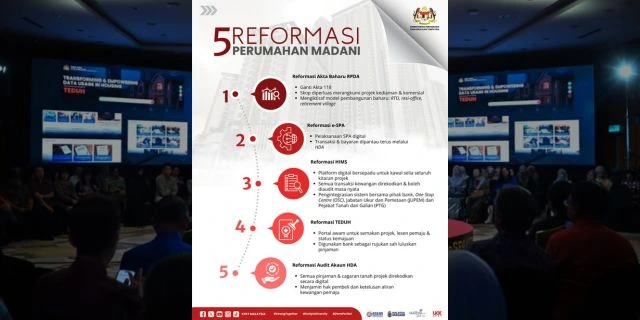
If you think property laws are boring, think again! These changes directly affect your bank account safety. The Ministry of Housing and Local Government (KPKT) is rolling out what they call the Madani Housing Reforms. These aren’t just minor tweaks but a massive upgrade to the housing market’s software.
Let’s look at the 5 big changes arriving to keep you safe.
- Real Property Development Bill: A proposed new law expected to replace existing acts. The big win here? It finally extends protection to commercial property buyers (such as those buying SoHo or office units), who previously had a narrower legal safety net than residential buyers.
- Electronic Sale & Purchase Agreement (e-SPA): Say goodbye to stacks of paper. This moves the signing process online, making it secure, traceable, and tamper-proof.
- Housing Integrated Management System (HIMS): The digital backbone. It allows the government to monitor a project from start to finish in real-time.
- National Housing Data Bank (TEDUH): A portal where you can check a developer’s track record before you pay a deposit.
- Housing Development Account (HDA) Audits: Crucial. It gives authorities the power to review and even freeze developer accounts if they suspect your funds aren’t being used for construction.
Want to sign e-SPA, but don’t know what to do? You might want to read this article!
>> What is iDsaya? Malaysia Government’s Digital ID & Guide to eSPA Signing <<
You might think it’s not relevant to you. Let me give you an example to explain why this matters:
Let’s say Amir bought a house in 2020. He signed a paper contract, paid his deposit, and hoped for the best. When the developer encountered cash-flow issues, Amir didn’t learn of them until construction completely stopped. He was left in the dark.
Now, meet Sara, who plans to buy in 2026. Sara checks the TEDUH system to see her developer’s track record. She signs an e-SPA, which is instantly logged in the HIMS system. If the developer attempts to misuse the construction funds, the new HDA Audits can flag the issue early and freeze the account to protect the remaining funds. Sara has data on her side; Amir only had hope.
For navigating these high-tech changes, it helps to have a guide who speaks the language of data. IQI Global is a PropTech leader that blends traditional real estate with advanced technology.
With our IQI Atlas SuperApp and a network of 65,000+ agents, we prioritize transparency and data to help you navigate these new digital systems with confidence.
If you want a team that is already future-proofed, join IQI Global today!
2. Why Is Malaysia Targeting Zero Abandoned Housing Projects by 2030?
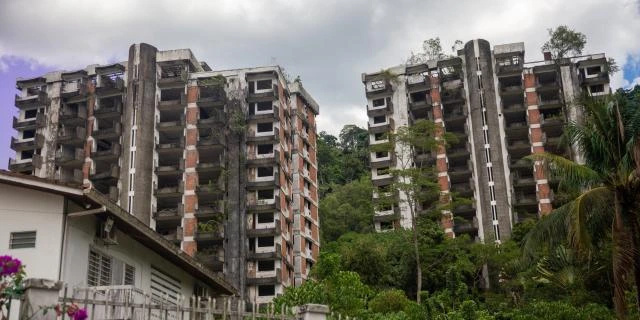
The target is ambitious: Zero abandoned projects by 2030. But why now?
The reality is that “sick” projects hurt everyone. They trap homebuyers in debt for homes they can’t live in and scare away foreign investors. As of late 2025, the “Sick and Abandoned Private Housing Project Task Force” (TFST) had already revived more than 1,200 projects, but prevention is better than cure.
a. The New Strategy: Build-Then-Sell (BTS)
To hit that zero target, the government is pushing developers toward a Build-Then-Sell 10:90 concept. This means you pay 10% down, and you don’t pay the rest until the house is fully completed. This shifts the risk from you to the developer.
Developers who adopt this safer model will likely receive special incentives under the 13th Malaysia Plan. It’s a win-win: you get a guaranteed house, and developers get government perks.
3. How Will the Budget 2026 Initiatives Help Your Wallet?

Safety is great, but affordability is king. The Budget 2026, tabled by Prime Minister Datuk Seri Anwar Ibrahim, aims to keep homes reachable for the rakyat.
Here is a simple checklist of the financial perks you can use:
- ✅ Stamp Duty Waiver: First-time buyers get a full exemption on stamp duty for homes up to RM500,000 (Extended to Dec 2027).
- ✅ Guaranteed Loans: The Housing Credit Guarantee Scheme (SJKP) has been topped up to RM20 billion. This helps gig workers (such as Grab drivers or freelancers) who lack traditional pay stubs access loans.
- ✅ Youth Housing: The Youth Housing Financing Scheme is extended to 2026, offering up to RM1 million in financing for young civil servants.
a. A Note for Foreign Buyers:
If you are a foreign investor, note that the stamp duty on foreign ownership is set to increase from approximately 4% to 8%. While this is a hike, it helps ensure the market remains stable and prioritizes locals, though it may slightly cool high-end speculation.
4. What Data Technology Is Improving Property Market Transparency?
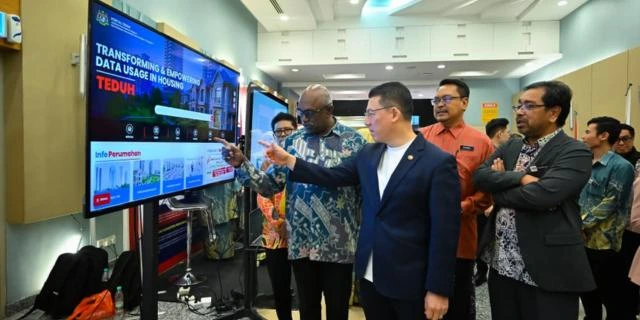
In the past, determining whether a developer was reliable was like finding a needle in a haystack. You had to rely on word-of-mouth. In 2026, transparency is going digital.
The National Housing Data Bank (TEDUH) is being upgraded. It’s essentially a “blacklist checker,” and a project tracker rolled into one. You can log on, search for a project, and see if it’s delayed (“sick”) or abandoned.
Combined with HIMS, the entire supply chain, from the moment a developer applies for a license to the moment you get your keys, is recorded online. This significantly reduces the chance of “double-booking” units or developers hiding delays.
a. Old Way vs. New Way (2026)
| Feature | The Old Way (Pre-2025) | The New Way (2026 onwards) |
|---|---|---|
| Agreement | Manual paper contracts (hard to track) | e-SPA (Digital, secure, instant) |
| Money Safety | Hard to verify where money went | HDA Audits (Regulators track funds) |
| Project Status | “Wait and see” / Drive by the site | TEDUH Portal (Online real-time status) |
| Protection | Mostly residential only | Includes Commercial units too |
When dealing with such a tech-driven market, you want an agency that moves fast. IQI Global is known for our high-tech approach, using data analytics to match buyers with the right properties across 35+ countries. Whether you are a local buyer or a global investor needing clarity on the Malaysian market, IQI’s tech ecosystem keeps you one step ahead. Contact us to find your safe haven.

2026 marks a definitive turning point for Malaysian real estate. The shift toward full transparency through systems such as HIMS, TEDUH, and e-SPA restores vital trust in the market.
With the bold goal of zero abandoned projects by 2030 and legal protections finally extending to commercial units, the “Madani Housing Reforms” ensure that homeownership is no longer an unreachable dream.
This new ecosystem prioritizes safety and accountability, creating the perfect environment for you to confidently secure your future home.
5. Frequently Asked Questions (FAQs)
What is the main goal of the Madani Housing Reforms in 2026?
The main goal is to create a more transparent, efficient, and trustworthy housing market, with a specific target of achieving “zero abandoned projects” by 2030.
How does the electronic Sale & Purchase Agreement (e-SPA) help me?
The e-SPA protects you by digitalizing the contract. This prevents tampering, enables remote signing, and ensures the government has an instant record of your purchase to prevent fraud.
Will house prices drop because of these new regulations?
Likely not. Prices are expected to remain stable or rise slightly, driven by the “quality” focus. However, the compliance costs for developers might prevent prices from dropping significantly.
Can foreign investors still buy property in Malaysia in 2026?
Yes, but be aware that the stamp duty for foreign buyers is proposed to increase to 8% to prioritize local ownership and stabilize the market.
What should I check on the TEDUH portal?
You should use TEDUH to check your developer’s background, see if they have any past abandoned projects, and view the real-time progress of the housing project you are interested in.
Is it safe to buy “under construction” property now?
It is becoming much safer due to stricter HDA audits and monitoring. However, pursuing “Build-Then-Sell” projects remains the safest option, as you only pay full price upon completion.
Who can apply for the SJKP Housing Credit Guarantee Scheme?
This scheme is designed for people without fixed-income documents, such as freelancers, gig-economy workers (such as e-hailing drivers), and independent business owners.
Continue Reading
- What Is iDsaya? Malaysia Government’s Digital ID & Guide to eSPA Signing
- Claim Your Tax Reliefs When Filing Your Taxes! | List of Personal Income Tax Relief 2026 Malaysia
- How to File Income Tax in Malaysia in 2026? (Full Guide)
Reference
- Bernama. (2025, September 23). TFST Revives Sick, Abandoned Housing Projects Worth RM121.44 Billion. Retrieved from
https://www.bernama.com/en/general/news.php?id=2470345 - Chew, R. (2025, December 30). Cover Story: Cautious nod for Malaysia’s housing sector overhaul. The Edge Malaysia. Retrieved from
https://theedgemalaysia.com/node/786316 - Poh, R. (2026, January 13). Prominent land deals on the cards in 2026. The Edge. Retrieved from
https://theedgemalaysia.com/node/788166 - Raine & Horne. (n.d.). Budget 2026 Malaysia: Impact on real estate & housing. Retrieved from
https://raineandhorne.com.my/budget-2026-malaysia-real-estate-housing/ - The Sun. (2025, September 12). No more abandoned housing projects by 2030. Retrieved from
https://thesun.my/news/malaysia-news/no-more-abandoned-housing-projects-by-2030-bf14885576/
