


Version: BM
| TLDR: Bandar Malaysia is a proposed RM140 billion redevelopment that could become one of the largest urban transformation projects in Kuala Lumpur. With its transport-led masterplan and phased development approach, it is positioned as more than a typical project. The key question is whether it can function as a new KL growth corridor that supports long-term expansion and connectivity |
Large urban projects often begin as plans on paper before they gradually reshape the city around them. At first, many people are unsure what they will become. Over time, some of these developments change how areas function, how people move, and where businesses grow.
Now, attention is turning to Bandar Malaysia. With an estimated value of RM140 billion, it is positioned as one of the largest redevelopment plans in the capital.
For many Malaysians, the name is familiar but still unclear. Is it simply another mega project, or could it influence where and how Kuala Lumpur grows next?
Key Take Aways
- Bandar Malaysia is a RM140 billion redevelopment on the former Sungai Besi site
- The masterplan focuses on transit-oriented design and phased development
- It is structurally larger than TRX and different from KL Sentral and Mid Valley
- Surrounding areas may benefit gradually if connectivity improves
- Execution and transport delivery will determine whether it becomes a true growth corridor
Understanding Bandar Malaysia: Key Areas We Explore
- What Is Bandar Malaysia and Why Does It Matter?
- The Strategic Location and Connectivity Edge
- How Bandar Malaysia Compares to Other KL Mega Projects
- What Could Drive Long-Term Growth?
- Potential Impact on Surrounding Property Markets
- Key Risks and Considerations
- So, Is This Kuala Lumpur’s Next Growth Corridor?
- FAQ
What Is Bandar Malaysia and Why Does It Matter?
Bandar Malaysia is a large-scale redevelopment of the former Sungai Besi airbase site, covering one of the last major land parcels within central Kuala Lumpur. It is positioned as one of the most ambitious urban transformation plans in Malaysia.
According to recent official updates, redevelopment is expected to begin in phases from end 2026, guided by smart city planning and transit-oriented design. The Bandar Malaysia masterplan is planned as a mixed-use district that combines residential, commercial, and transport components within the wider Klang Valley.
This scale is significant. In a city like Kuala Lumpur, where most prime land has already been developed, large, connected sites are hard to find. Projects of this size allow planners to think beyond single buildings and plan how a whole district links with the rest of the city.
To understand Bandar Malaysia, we must look at its bigger role. It is not just a new development, but a long-term plan that may influence how Kuala Lumpur expands in the years ahead.
The Strategic Location and Connectivity Edge
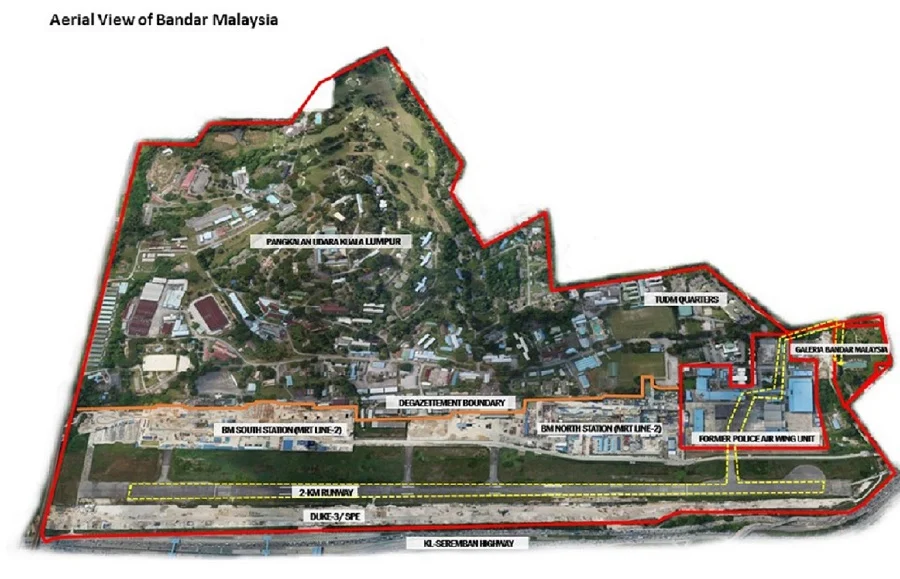
Source: News Straight Times
One of the main strengths of Bandar Malaysia is its location. The site is on the former Sungai Besi area, located between existing city centres and major roads. This means it is close to key business areas while still having enough space for large-scale planning.
From a connectivity perspective, the area is linked to major highways such as the Sungai Besi Expressway, Maju Expressway, and the Kuala Lumpur–Seremban Expressway. Its proximity to KL Sentral and Tun Razak Exchange also places it within the wider network of the Klang Valley.
This matters because location alone does not create growth. Good connectivity does. When roads, rail lines, and buildings are planned together, it becomes easier for people to move around, and business activity can grow more smoothly.
Instead of depending on one crowded city centre, a well-connected area can help spread growth across different parts of the city. This is how a wider growth corridor can form over time.
In simple terms, the right location gives a project visibility. The right connectivity gives it a function. For Bandar Malaysia, the advantage lies in having both.
How Bandar Malaysia Compares to Other KL Mega Projects
To see what Bandar Malaysia could turn into, we can look at other big projects in Kuala Lumpur. Each one played a different role. Comparing them is not about saying they are the same, but about understanding how cities grow step by step.
Think of it this way: some projects build a new room in the house. Others extend the entire house.
1. Compared to Tun Razak Exchange
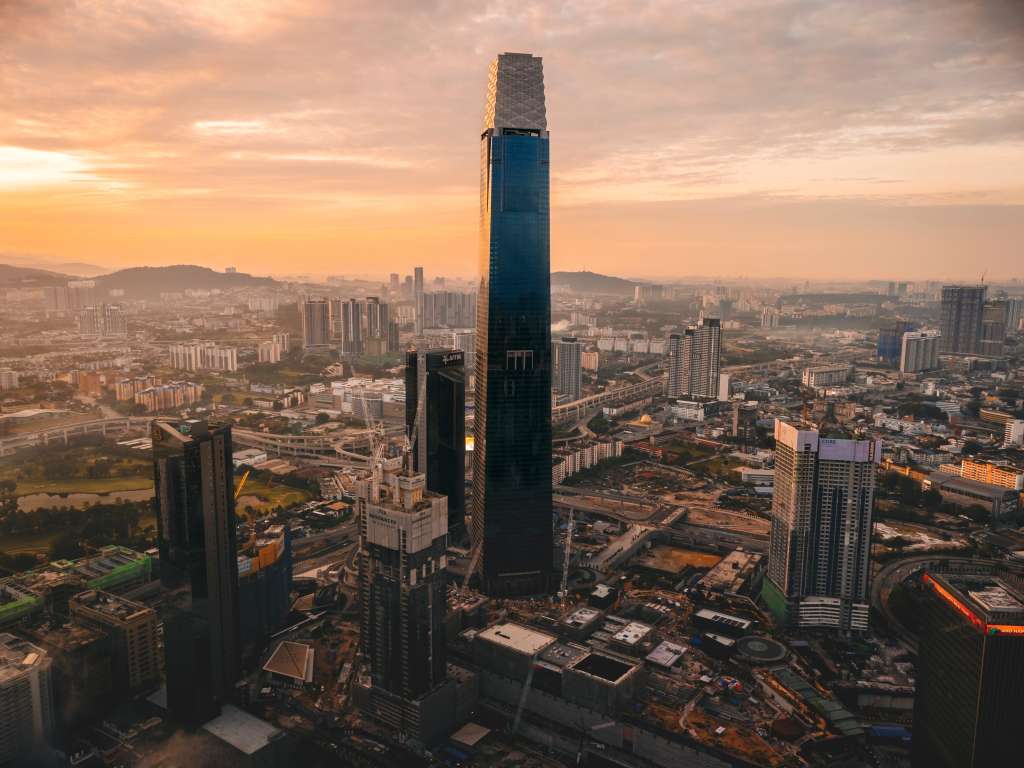
TRX was built as a financial centre. Its goal was clear — to create a focused business district. Over time, offices, retail, and public spaces came together, and that part of Kuala Lumpur became more active.
Bandar Malaysia is planned on a much larger piece of land. If TRX is like building a strong new room in the city, Bandar Malaysia is more like planning a whole new wing. It includes homes, offices, and transport links together under one masterplan. The aim is not just to create a business district, but to support wider city growth.
2. Compared to Kl Sentral
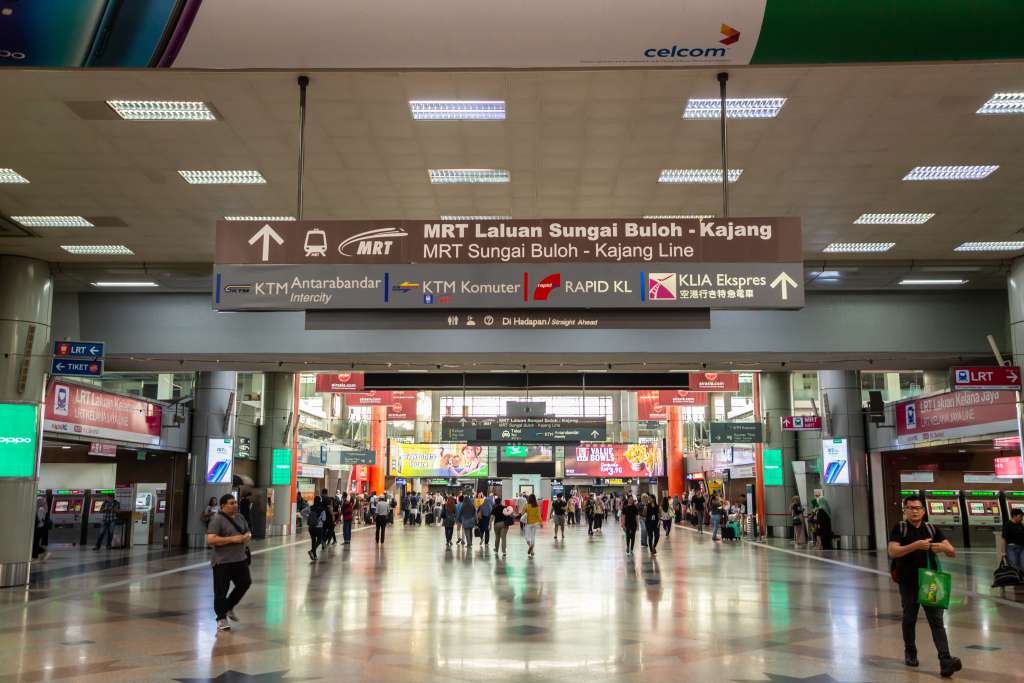
KL Sentral grew because of transport. When trains, offices, hotels, and retail were built together, it became one of the busiest areas in the city. Good connectivity brought people, and people brought activity.
Bandar Malaysia also focuses on connectivity. The difference is that KL Sentral improved an existing transport hub, while Bandar Malaysia has the chance to design a new district from the beginning. It is like starting with an empty field instead of renovating an old building.
3. Where Bandar Malaysia Stands Today
Unlike TRX and KL Sentral, which are already active and established, Bandar Malaysia is still in the early redevelopment stage. Its impact will not happen overnight.
In simple terms, it is still at the blueprint stage. The true test will be how well the plans are carried out and how smoothly transport and development come together over time.
This comparison shows one thing clearly: Bandar Malaysia is not trying to replace TRX or KL Sentral. Instead, it could become the next layer of growth in Kuala Lumpur’s expansion.
What Could Drive Long-Term Growth?
For a project this large, growth will not happen because of one big announcement. It will depend on how different parts are delivered over time.
First, transport connectivity will be important. Official updates highlight that Bandar Malaysia is planned around transit-oriented design. In simple terms, when trains, roads, homes, and offices are planned together, areas become easier to access. In many parts of Kuala Lumpur, locations near major transport hubs such as KL Sentral and Tun Razak Exchange saw activity increase gradually as connectivity improved.
Second, phased development matters. Large projects like TRX did not grow overnight. They developed in stages. Each completed phase built more confidence. Bandar Malaysia is expected to follow a similar phased approach, with redevelopment targeted from end 2026, based on recent national media reports.
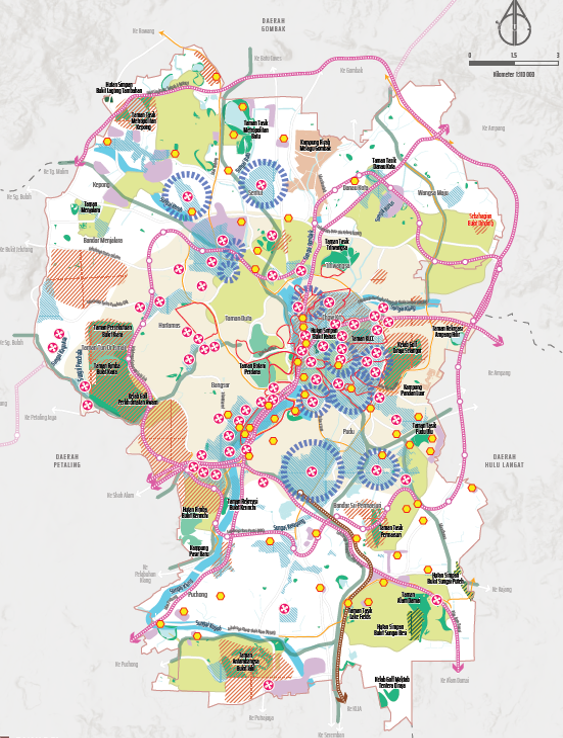
Source: DBKL
Third, integration with the wider Klang Valley will influence demand. According to the Kuala Lumpur Structure Plan 2040 by DBKL, future urban growth is guided by better transport links and balanced development across the city. A district grows stronger when it connects naturally with surrounding centres rather than standing alone.
In simple terms, long-term growth depends on delivery. If infrastructure, planning, and development move together step by step, Bandar Malaysia has the structure to evolve into a meaningful KL growth corridor over time.
Potential Impact on Surrounding Property Markets
Large projects usually affect nearby areas first. If Bandar Malaysia moves forward as planned, areas such as Sungai Besi, Bandar Tasik Selatan, Salak South, and Kuchai Lama could slowly gain more attention.
When transport improves, people find it easier to travel. When travel becomes easier, more people are willing to live or work nearby. This does not mean property prices will rise quickly. Growth linked to infrastructure usually happens step by step.
We saw similar patterns around KL Sentral and Tun Razak Exchange. As those areas became more connected and active, nearby locations also became more attractive over time.
However, this depends on delivery and execution. If transport links and development phases are completed smoothly, nearby areas may benefit. If progress slows down, the impact may take longer.
In simple terms, better connectivity can support steady demand. But real change happens gradually, not overnight.
Key Risks and Considerations
Large projects like Bandar Malaysia take many years to complete. While the plan is ambitious, the outcome depends on how well each phase is delivered.
First, execution matters. Redevelopment is expected to move forward in phases, which means progress will happen step by step. If transport works or approvals face delays, momentum may slow. Large projects rarely move all at once.
Second, market conditions can change. Property markets go through cycles. If new supply enters during a slower period, demand may take longer to adjust. This is common in major redevelopment zones and does not remove long-term potential, but it affects short-term pace.
Third, connectivity must be delivered as planned. Since the masterplan focuses on transit-oriented design, strong rail and road links are central. Without proper transport integration, the idea of a growth corridor becomes harder to realise.
In simple terms, the vision is large, but delivery determines impact. Big plans bring opportunity, but they also require steady coordination, funding, and time.
So, Is This Kuala Lumpur’s Next Growth Corridor?
Bandar Malaysia has the scale, location, and planning direction to support long-term urban growth. With its RM140 billion masterplan and focus on transport integration, it is structured differently from typical standalone developments.
But becoming a true growth corridor is not about size alone. It depends on how well infrastructure is delivered, how phases are executed, and how naturally the district connects with the rest of Kuala Lumpur.
In simple terms, Bandar Malaysia is not competing with existing centres. It is positioned to support the city’s next stage of expansion. Whether it fully becomes Kuala Lumpur’s next growth corridor will depend less on headlines and more on consistent execution over the coming years.
For now, it remains a long-term story worth understanding and watching as the city continues to evolve.
FAQ
Recent official updates indicate that redevelopment is expected to begin in phases from end 2026. However, large projects of this scale are usually delivered step by step over several years. The timeline marks the beginning of phased development, not full completion.
Bandar Malaysia sits on one of the last large land parcels within central Kuala Lumpur. Its size allows planners to design transport, residential, and commercial components together under one masterplan. If executed properly, it could support the city’s next stage of expansion rather than simply adding more buildings into already crowded areas.
Improved connectivity and new development often bring more attention to nearby areas such as Sungai Besi and Bandar Tasik Selatan. However, property growth linked to infrastructure usually happens gradually. The actual impact will depend on how smoothly transport integration and phased development are delivered.
Tun Razak Exchange (TRX) was developed mainly as a financial district. Bandar Malaysia is broader in scope. It combines residential, commercial, and transport planning across a much larger site. While TRX created a focused business hub, Bandar Malaysia is positioned to support wider urban expansion.
It has structural strengths such as scale, location, and transport-focused planning. However, long-term investment potential depends on execution, market timing, and connectivity delivery. As with all large redevelopment zones, outcomes will unfold gradually rather than immediately.
Planning your next property move? Reach out to IQI to assess how long-term growth corridors like Bandar Malaysia may fit into your strategy.
References:
- Bernama (2025). Bandar Malaysia redevelopment to begin end 2026.
https://bernama.com/en/news.php?id=2394800 - The Star (2025). Bandar Malaysia project to begin end 2026, says ministry.
https://www.thestar.com.my/news/nation/2025/11/13/bandar-malaysia-project-to-begin-end-2026-says-ministry - Malay Mail (2025). Bandar Malaysia redevelopment to begin end 2026 with smart city, transit-oriented design. https://www.malaymail.com/news/malaysia/2025/11/13/bandar-malaysia-redevelopment-to-begin-end-2026-with-smart-city-transit-oriented-design/198225
- Dewan Bandaraya Kuala Lumpur (DBKL). Pelan Struktur Kuala Lumpur 2040 (PSKL 2040).
https://ppkl.dbkl.gov.my/en/pskl2040/ - New Straits Times (2020). Bandar Malaysia to start over with 12 world-class towers worth RM10 billion in 2021.
https://www.nst.com.my/property/2020/09/626299/bandar-malaysia-start-over-12-world-class-towers-worth-rm10-billion-2021
