Iceland’s housing market is moving through a more stable phase in 2026, with prices still rising but at a slower pace than before.
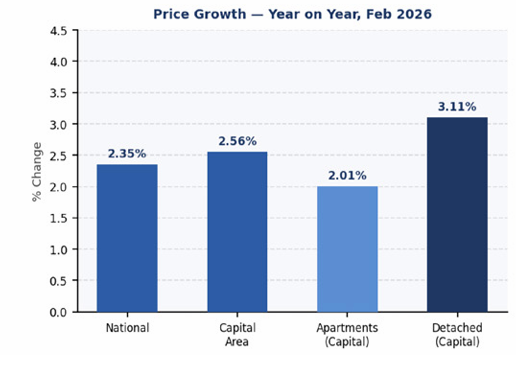
National house prices increased 2.35% year-on-year to February 2026, while prices in the capital area rose 2.56%. This is lower than the 4% to 5% growth recorded in 2025, showing that stronger supply is helping to balance demand.
More Supply Enters the Market
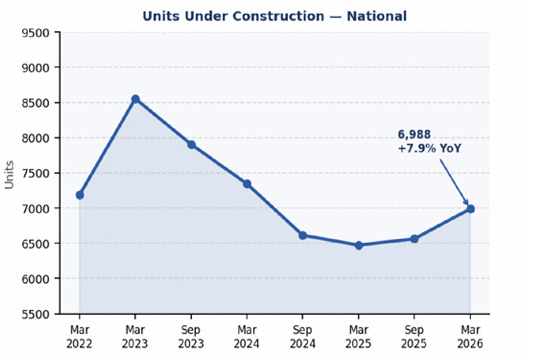
Iceland’s construction pipeline is growing again. There are currently 6,988 units under construction, up 7.9% year-on-year.
New project starts between September 2025 and March 2026 reached 1,754 units, the highest level since 2022. Completed but unoccupied units also increased to 1,409, nearly double the previous year.
This shows that developer confidence is returning, but the larger supply pipeline is also helping to keep price growth under control.
Inflation and Rates Still Weigh on Buyers
Inflation remains one of the biggest challenges for Iceland’s housing market. Inflation stood at 5.4% year-on-year in March 2026, while the Central Bank policy rate remained high at 7.5%.
With around 62% of Icelandic mortgages inflation-indexed, ownership costs are closely tied to inflation. Until inflation moves closer to target, transaction activity may remain limited
Outlook
Iceland’s housing market is likely to remain in a holding pattern in the near term. Price growth may stay moderate while borrowing costs remain high, but the market could recover more strongly once inflation eases and interest rate cuts begin.
For buyers and investors, the key signal to watch is rate relief. Once financing becomes more affordable, tighter future supply and lower borrowing costs could support stronger price growth again.