

Find your dream property with us
We'll connect you to experts who will help you find the best property in the market.

ทำไมถึงเลือกเรา?
รับคำแนะนำจากผู้เชี่ยวชาญที่ดีที่สุดในอุตสาหกรรมอสังหาริมทรัพย์
ยอดรวมของทรัพย์สินที่ขายได้ในปี 2023 (RM)
12 พันล้าน
รางวัลตัวแทนที่พัฒนาโดยนักพัฒนา
รางวัล StarProperty ปี 2022 & 2023
จำนวนตัวแทนทั่วโลก
60K
คำรับรอง
ฟังจากผู้ซื้อที่พึงพอใจของเรา

Work out your mortgage
Estimate your monthly repayments before you commit to a property
เครื่องคำนวณสินเชื่อบ้านใช้สำหรับอ้างอิงเท่านั้น จำนวนจริงอาจแตกต่าง
การชำระเงินรายเดือน
ส่งผลลัพธ์เครื่องคิดเลขสินเชื่อบ้านให้ฉัน
เรียนรู้
ข้อมูลเชิงลึกตลาด
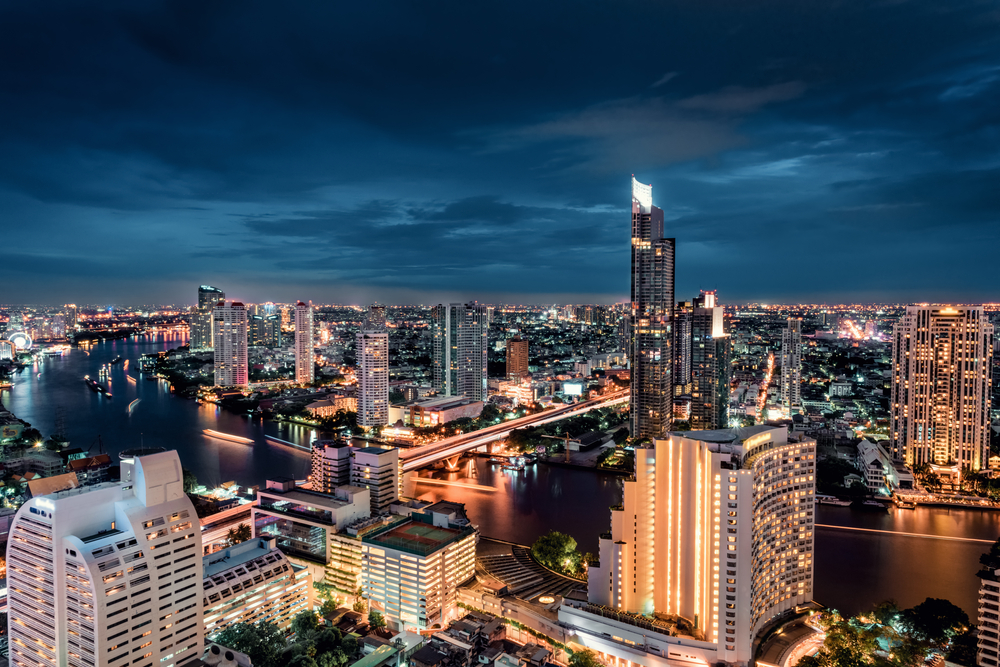 Chinese buyers prefer Thailand over Singapore
Singapore is a popular investment destination for wealthy Chinese from the mainland and Hong Kong, but the city-state is too expensive for most cross-border buyers, according to Juwai IQI Group CEO and Co-founder Kashif Ansari. Singapore is the third-most-expensive city in Asia at US$14,373 per square meter (after Hong Kong and Tokyo), according to data from Juwai IQI’s partner Global Property Guide. That is why Thailand, Malaysia, and Vietnam lead the list of top Southeast Asian destinations for Chinese buyers of overseas residential property. Key factors include Thailand’s appealing lifestyle, affordable luxury property prices, beach second home destinations such as Pattaya and Koh Samui, and proximity to China. Thailand is also the top tourist destination for Chinese travelers. Read more: ReTalk Asia Want expert advice in real estate investment? Drop your details below and learn how to get the most out of your investment! [hubspot type=form portal=5699703 id=2380afe3-ad4c-4cfa-9abf-d3947e377bf2]
อ่านต่อ
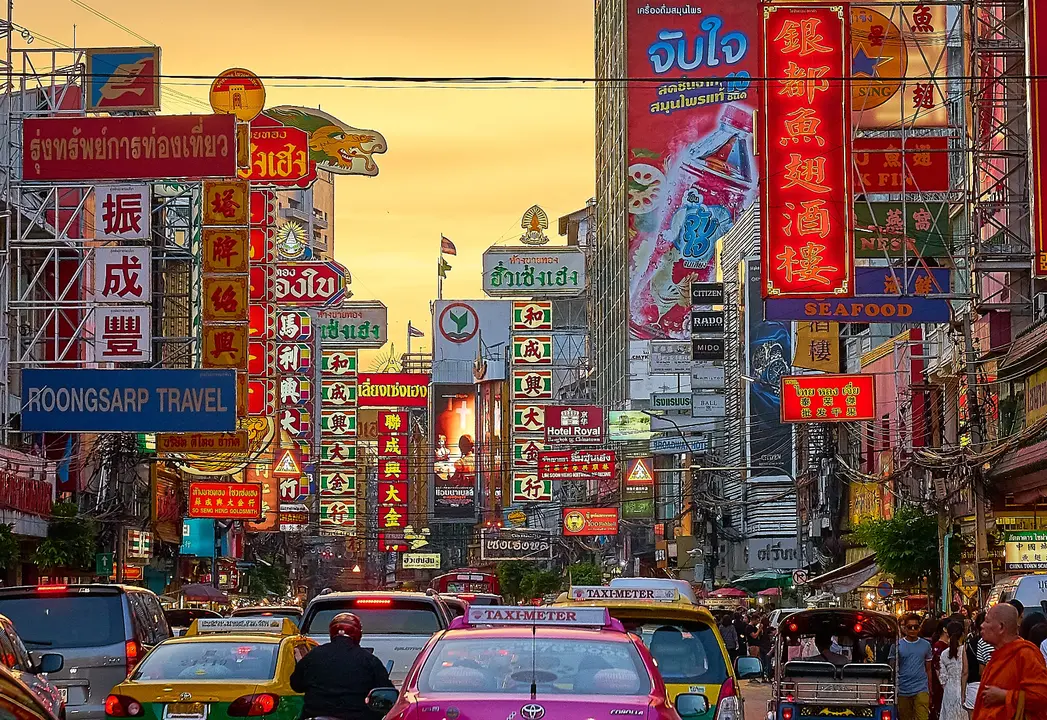 5 Reasons Why You Should Invest in Thailand in 2026
By Mandy Chen Why should you invest in Thailand? Located in the heart of South East Asia with a population of over 69 million people, Thailand is regarded as the second largest growing economic market and serves as a gateway connecting SEA to the rest of the world. Thailand’s capital Bangkok is the largest city in ASEAN, with a population of more than 9 million. The GDP per Capita in Thailand was last recorded at USD 6,361 in 2018, which is equivalent to 50% of the world’s average. Thailand ranked No.2 in ASEAN in terms of GDP in 2018 and has attracted huge sums of investment from countries such as China, Japan and Korea. With the influx of foreigners into Thailand, property is one of the top choices to consider. We’ve listed down some of the reasons why you should invest in Thailand’s real estate! >> Get a free consultation on where to invest in Thailand from a professional property agent. << Tourist hotspot Known as “the Spain of the East”, Thailand has always been one of the most popular spots for holidaymakers and investors. Its capacity to attract tourists isn’t limited to the appeal of its stunning beaches, vibrant lifestyle and unlimited shopping choices. The charm of Thailand’s beautiful destinations continuously attracts tourists to Bangkok, Phuket, Chiang Mai, Pattaya and other beautiful cities and tropical destinations, making it a significantly beneficial investor hotspot for investors to sell and rent real estate in Thailand. Last year, Thailand welcomed a record-breaking number of more than 35 million visitors from all over the world, maintaining its position as Asia’s most visited tourist destination. High-demand areas for foreigners in Thailand are the beach resorts such as Phuket and Pattaya, the city of Bangkok and Chiang Mai, the country´s second-largest city. With the expanding tourism industry, we are seeing tremendous growth in demand for short-term rental contracts and holiday homes, in particular for those close to BTS stations. The Bangkok River is considered a royal status landmark and is popular amongst both locals and foreigners. Numerous retirees and second homeowners, in particular, choose to invest here to enjoy the scenic views from luxury condominiums located by the riverside. The river is home to a number of Bangkok’s tourist destinations, including the Grand Palace, Wat Phra Kaew Temple, ICON SIAM and Asiatique mall, as well as 5-star hotels including Mandarin Oriental and the Four Seasons. Transportation infrastructure The Thailand real estate market is expected to grow by 6 to 8 percent. The government plans to further enhance the transportation infrastructure (Mass Rapid Transit for both BTS Skytrain and MRT Subway) in Bangkok and notwithstanding a USD 45 Billion investment to develop the Eastern Economic Corridor. This is in time with the recent influx of foreign investors entering Bangkok and Pattaya, especially from China. Property prices & capital appreciation Generally, properties in China, Singapore and Hong Kong are higher in cost as compared to the real estate in Thailand. Thailand’s property market also ranks as one of Asia’s most popular amongst Chinese investors. According to recent data from the online Chinese real estate portal Juwai.com, Thailand was the most popular country in the world when it comes to inquiries from potential real estate buyers in 2018 — climbing up from the sixth spot in 2016. Thailand was the fourth most popular country for real estate investment with $2.3 billion coming in from Chinese sources. Bangkok is positioned for huge growth at the property sector, attracting overseas investments and regional headquarters keen to tap into the city’s economic potential. As a result of high property demand, prices on islands such as Pattaya, Phuket or Hua Hin have gone up. Property prices have even doubled in certain areas of downtown Bangkok like Ratchathewi and Thonglor since 2013. According to CBRE Thailand, properties close to mass rapid transport such as MRT and BTS will likely continue to surge in price due to the high demand from local and foreign home buyers coupled with the scarcity of good sites in central Bangkok. Properties located closer to a BTS Skytrain station will be worth a premium as high as double or triple that of a similar property which isn’t. The same goes for those condominiums located next to the MRT subway line, but not as much when compared to a BTS station. A condominium unit that’s located 100 meters from a central mass transit station is unlikely to be sold for below 200,000 baht per square meter. When a condo building is located more than a kilometer away from a mass transport station, the price can be reduced by as much as half. >> Get a free consultation on where to invest in Thailand from a professional property agent. << Investment in freehold properties In Thailand, local quota caps at 51% and foreigners are allowed to purchase and own freehold condominiums up to 49% of the total number of units in the project, unlike countries like Cambodia and Vietnam where foreigners can only purchase leasehold properties up to certain years. Upon purchase, foreign buyers receive the same title deed as a Thai owner would. Hence, buying a freehold condominium is the ideal option for those who are looking for a long-term investment with 100% ownership. Friendlier Thailand law Thailand is a friendly country when it comes to foreign investments, unlike most countries where foreigners may be required to pay additional property tax. In terms of taxes and fees, the buyer acquisition cost for off the plan is only at 1% of the property price – i.e. transfer fees, juristic fees (i.e. one year of the maintenance fee in advance), management fees and sinking fund with no foreign stamp duty or legal fees involved. Recent contracts are written in both Thai and English. Besides the attractive tax structure for foreign buyers, it is relatively easy for property owners to sell their Thai home. You can sell to anyone be it a local or a foreigner, there is no restriction and no seller stamp duty or any minimum investment period, which is another reason why so many foreign investors favour Thailand in comparison to investing in traditional markets such as London, Australia or Singapore, where there are often additional foreign stamp duty, taxes, and fees to purchase or sell a property. This competitive tax structure coupled with the comparatively low entry price point makes it attractive for foreigners to enter the Thai property market. Hence this made Thailand become one of the top choices amongst real estate investors worldwide. On the surface, Thailand is one of the most popular holiday destinations in the world. The swathes of white sandy beaches, the developed tourism industry, its rich culture and not forgetting its food reputation are factors for the Kingdom acquiring this claim. But scratch a bit deeper and there are significant other economical reasons why Thailand is the best place for property investment. If you wish to invest in the many opportunities in Thailand, simply register with us, and our IQI agents will contact you as soon as possible. Did you know we also have an office in the heart of Thailand? Drop by and say hi! [hubspot type=form portal=5699703 id=2380afe3-ad4c-4cfa-9abf-d3947e377bf2]
อ่านต่อ
 Juwai IQI launches IQI Samui, its Fourth office in Thailand
Juwai IQI today announced the launch of IQI Samui, its fourth IQI real estate agency office in Thailand. Juwai IQI Group Co-Founder and CEO Kashif Ansari said Koh Samui is Thailand’s second largest island with offering some of the world’s most luxurious beaches and jungles that make it one of the most beautiful places in the world. Even though Koh Samui offers beautiful place in the world, excellent international airport, fast internet and less congested, but the real estate prices are still relatively affordable. “We are confident that Koh Samui will do very well with property buyers in the post-Covid era.” “This is exactly the kind of destination that attracts people who are exhausted by lockdowns or who simply want to live and work in paradise for a few months at a time. We are launching on the island at just the right time. We will help grow the market from the Covid-imposed slow down to a very, very bright future.” Juwai IQI Co-Founder and Group Managing Director Daniel Ho said, Koh Samui office will join their existing offices in Bangkok and Phuket to give their network a complete coverage in Thailand’s most important markets. “The Koh Samui office will focus on serving the local market, the short-term rental market, local developers, and international property buyers seeking the home of their dreams.” He also announced that Tanya Kunintarasombat will serve as Head of IQI Samui and Chalerm Anusarn as Vice President – the very experienced local experts in the property market to lead the team at IQI Samui. “Tanya and Chalerm are two of the best operators in the area, and we’re delighted to have them join us. By combining their local expertise and relationships with our technology and international reach, we will make IQI Samui a great success.” Tanya Kunintarasombat also expressed his enthusiasm to join the IQI global agent network, and stated that it creates huge opportunities for the team. “IQI can give us access to one of the world’s largest agent networks, Asia’s most powerful real estate marketing portals, the Atlas super-app, and a global network of buyers and developers. With IQI, we can offer developers in Koh Samui an end-to-end solution to property marketing and sales to both local and international buyers.” “Real estate is a global business today, which has made technology vital to success. IQI helps us surmount both these challenges with its global network and advanced real estate technology. We believe that in five years Koh Samui will climb the ranks to the top five destinations for foreign property investment.” Juwai IQI now operates in 20 countries and there are more than 30,000 real estate agents in its network. Follow the latest updates and news on IQI Samui’s Facebook Page. IQI Global makes its mark on the world, one country at a time - and we're not stopping anytime soon. Make the right decision to invest with us, with our lineup of property experts today! [hubspot type=form portal=5699703 id=2380afe3-ad4c-4cfa-9abf-d3947e377bf2]
อ่านต่อ
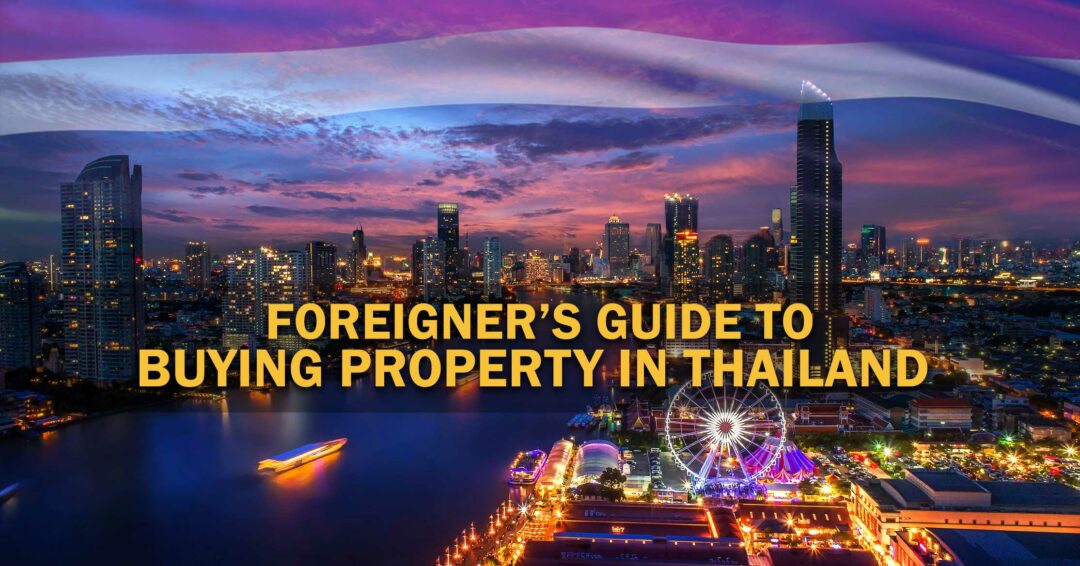 Buying Real Estate in Thailand: A guide for foreign investors
Buying Real Estate in Thailand: A guide for foreign investors By Mandy Chen When buying or investing in real estate in another country, there may be different regulations and requirements for foreigners. It is important to research and excavate all information and documents needed. The following will extensively explain some of the point expats and foreigners should consider when investing in Thailand. 1. Can Foreigners Buy Property in Thailand? Foreigners are not allowed to own land in Thailand by law. If interested in buying property in Thailand, a foreign investor has two options: either can be a 30-year leasehold or purchase the property through a limited company. To set up a Thai Limited Company, foreigners cannot hold half or more than half of the company's shares. Therefore at least 51% of the company has to be owned by Thai shareholders. Foreigners can lease the land for 30 years in Thailand and are subject to renewal thereafter. Houses, townhouses, and detached houses are described as ‘landed' in Thailand law, hence a foreigner is not able to own one or any of these without assistance from a Thai national. Due to the legal restrictions mentioned above, most foreigners choose to simply buy a condominium or apartment in Thailand. However, a foreigner can only purchase a condominium in his/her own name, as long as at least 51% of the building is owned by Thai owners. In other words, the condominium units owned by foreigners cannot exceed 49% of the total space of the development. 2. Finance Options for Property Investment In general, foreigners find it difficult to secure financing from Thai banks. Currently, there are 2 banks (UOB and ICBC) that could provide financing. You can contact UOB or ICBC in Thailand, to which the bank will coordinate with their head office to proceed with the transferring of funds into your bank account in Thailand with the directive of buying property in Thailand. Note that the lending criteria can be quite strict. Hence it would be better for you to consider buying real estate with cash or getting a refinancing of your existing property in your own country. If the property is going to be under a foreigner's name, the money has to come from overseas instead. Even if you work in Thailand or receive a loan from a Thai bank, you are required to bring the fund in from abroad and the loan will end up being in a foreign currency. 3. Down Payment & Additional Expenses For foreigners the deposit required for off the plan (under construction) makes up for about 20 to 30% of the purchase price; thereafter they are not required to pay anything till completion. If it is a completed project, 10% to 20% of the deposit required. This will then be deducted from the total purchase price. If you fail to settle the payment, the seller or developer will then retains the deposit. Should the seller fail to keep up their side of the bargain, the deposit is refundable. Insure that these conditions are written in the terms of the agreement and retain a receipt of the transaction. There will be a statutory protection option available for buyers under the Escrow Act, where the developer (off plan) cannot forfeit the above said deposit in the event the developer goes bankrupt. Other buying expenses will include transfer fee & taxes, the sinking fund (one-off) and advance juristic fee (i.e. maintenance fees one year in advance) 4. Transfer of Funds To purchase a property, foreigners need to bring funds into Thailand by either transferring funds into a bank account in Thailand, selling traveller's cheques, a foreign credit card or withdrawing funds from a non-Resident Baht Account or foreign currency deposit account(FCD); Foreign currencies MUST be transferred into Thailand as foreign currency and exchanged into Thai Baht by a local bank in Thailand. There no limit to the amount you can transfer into Thailand. Foreigners are required to remit at least USD 20,000.00 into Thailand per transfer to receive a FOREX Transfer Form from the Bank. This form will be needed to transfer the unit under foreign ownership and also remit money back out of Thailand if so needed in the future. Read Also Why Choose Malaysia as Your Second Home for 2019 Foreigner's Guide to Buying Property in Malaysia Top Four Property Investment Tips 5. Documents Required when Buying Thai Property A copy of the buyer's passport will be required. Foreigners can sign the Sale and Purchase agreement in Thai or English. For foreigners to be eligible to purchase a property, they must present proof to the Department of Lands that the funds have been remitted from overseas in foreign currency. Without such proof, the Department of Lands will not register the transfer of ownership to the foreign buyer. 6. No Restriction when Buying and Selling Foreigners can buy any Thailand property for an off plan or in a secondary market. There are generally no restrictions to resale. You can sell to anyone, be it locals or foreigners. If you buy off plan, you are allowed to do a one-time transfer of rights to another purchaser prior to completion; with some minimal administration charges by the developer. Hence, it's not necessary to wait until construction is complete before offloading your property. 7. Investment Visa Foreigners who transfer funds into Thailand to purchase a property valued over THB10 million can apply for a one-year investment visa. 8. Location The cities of Bangkok and Chiang Mai are in high-demand amongst foreign investors. The country's the islands, for instance Phuket and Pattaya are popular for holiday homes; beach resorts and retirement destinations. Foreigners can buy freehold condominiums or apartments in Bangkok. Properties located closer to the BTS Skytrain station are usually worth a premium as high as double or triple that of a similar property elsewhere. Condominiums located next to the MRT subway line also go for a premium, albeit not as much when compared to those nearby the BTS station. A condo unit that's located 100 meters from a central mass transit station is unlikely to be sold for below 200,000 baht per square meter. When a condo building is located 500 meters away or above a mass transport station, the price premium is reduced by as much as half. It vanishes altogether for property more than a kilometre away. Foreigners can only buy landed properties outside of Bangkok, such as Chiangmai, Phuket, Pattaya or Hua Hin; but based on a 30 year lease. 9. Property Tax and Stamp Duty* When transferring property, there's a 2% fee based on its government appraised value (which should be lower than the price you paid for it). Typically, half of that fee is paid by the buyer and the other half by the seller. Stamp duty of 0.5% based on selling price must also be paid upon transferring any real estate in Thailand. Stamp duty is usually paid by the seller. However, if a property is sold within 5 years of being acquired, a “Specific Business Tax” of 3.3% is payable instead. Should a specific business tax be required, the stamp duty does not need to be paid. This tax is normally paid by the seller. If the property is sold after 5 years, the specific business tax will be exempted. There is no capital gain tax in Thailand but instead a withholding tax (Income tax) at approximately 2% or less based on the government appraised value, should you wish to sell the property. If you choose to rent out your property in Thailand, rental income taxes are extremely low as there are many deductions. Your exact amount of tax payable will depend on any deductions allowed. More often than not though, rental tax isn't greater than 5% and sometimes far less. Check with your property agents and they will be able to assist on this. If you are looking to find the best properties and investment opportunities in Thailand, simply register with us, and our IQI agents will contact you as soon as possible. * The property tax and the foreign buying guide are subject to change. It is always advisable to check with the local property agents or lawyers for the latest updates.
อ่านต่อ

