0%*
Buyer Agent Fee
The seller pays agent commission, not you.

Greetings! I am JIQI. 👋
How may I assist you today? 😊
Please choose one of the following options:

JIQI can make mistakes. Always verify listings and prices with an IQI agent before making any property decisions.
For First-Time Buyers
Get matched with a dedicated buyer agent who guides you from budget to keys, no pressure, just clear next steps.
Get Matched with a Buyer AgentWhy Buy With IQI
We shortlist listings that match what you can actually afford, not just what's listed.
Understand loan eligibility, down payments, and government schemes before you commit.
From viewing to the sale and purchase agreement, your buyer agent stays with you.
How It Works
Tell us your budget, must-haves, and timeline.
Your buyer agent narrows down homes that actually fit.
Understand loan eligibility and government schemes.
Your agent stays with you through to signing and handover.
Buyer Agent Fee
The seller pays agent commission, not you.
Loan-to-Value
Available for eligible first-time buyers.
Stamp Duty Exemption
May apply under current first-time-buyer schemes.
First Response
A buyer agent reaches out within a day of enquiry.
Two numbers matter most: how much of your income goes to the mortgage, and how much of your total debt banks will allow.
Instalment-to-Income
Keep your monthly instalment within this share of your income.
Debt Service Ratio Ceiling
Most banks cap your total commitments, including the new loan, here.
Example at RM5,000/mo
A rough price range this income level can typically support.
Try It Yourself
Check what your monthly repayments could look like before you talk to a buyer agent.
Try It Yourself
Enter your income and commitments to see a realistic price range.
What To Expect
Check your credit and work out what you can afford.
Get a letter showing how much you can borrow.
Compare properties in your target area.
Negotiate and sign a Letter of Offer with a booking fee.
Your lawyer verifies title and runs the required searches.
Review and sign the Sale and Purchase Agreement.
Final valuation and stamp duty payment.
Settle the balance, transfer title, and get your keys.
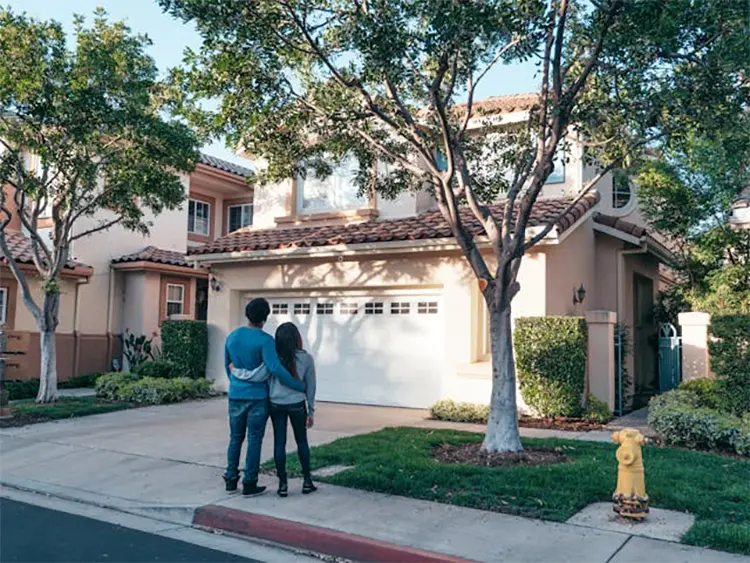
Budget For It
Most first-time buyers should set aside 10% to 18% of the property price for the upfront costs below.
Down Payment
The bulk of your upfront cost.
10%*
Stamp Duty
May be exempt for eligible first-time buyers.
0%*
Legal Fees
On the first RM500,000 of the price.
1-1.25%*
Valuation & Inspection
A one-off fee paid to the valuer.
RM300-600*
Mortgage Insurance
Of your loan amount, if required by your bank.
0.3-0.7%*
Contingency & Renovation
A buffer for move-in costs and touch-ups.
10-15%*
Real Buyers, Real Experiences
No. In Malaysia, the seller pays the agent's commission, so working with a buyer agent costs you nothing.
It depends on your budget and location, but most buyers get their first curated shortlist within a few days of consultation.
Yes. Your buyer agent can walk you through loan eligibility, down payments, and government schemes before you commit to anything.
That's fine. Tell us roughly what you earn and save, and your buyer agent will help you work out a realistic range.
Schemes like Skim Rumah Pertamaku (My First Home) offer up to 110% financing for eligible buyers aged 18 to 35, which can cover the price and some closing costs.
As a rough guide, keep your monthly instalment within 30% to 40% of your income. On a RM5,000 monthly salary, that points to a home priced roughly RM300,000 to RM450,000.
For a typical subsale purchase, expect 3 to 6 months from offer to keys, driven mostly by the legal and loan approval process.
From the IQI Blog
 First-Time Home Buyer Guide Malaysia 2026: From Savings to Keys
Okay, real talk. Most first-time buyers in Malaysia don't lose their dream house at the viewing. They lose it at the bank. The seller says yes, you're already planning where the sofa goes, and then the bank approves a loan way smaller than you expected. Suddenly you need another RM40,000 in cash. From where? That's not bad luck. That's just skipping the prep. So this first-time home buyer guide for Malaysia goes in the order things actually happen: your money first, your loan second, the house third. Settle the duit before you fall in love with a unit. TL;DR Save 10% of the house price as your deposit, plus another 3% to 5% for fees. Banks check your DSR, basically how much of your gaji already goes to paying debts. Keep it under 60% to 70%. First home up to RM500,000? You pay zero stamp duty (a government tax on property paperwork) until 31 December 2027. Bank Negara kept the OPR (the base rate that moves loan interest) at 2.75% in September 2026, so loan rates have been steady. Get a loan pre-approval from 2 or 3 banks before you go viewing. It tells you your real budget. Are You Ready to Buy Your First Home? Before you start scrolling listings at 2am, do a quick vibe check. If most of these are a yes, you're good to go. Your deposit is saved. You have 10% of the price set aside, plus extra for fees. No deposit, no deal. You know your number. Your future monthly loan payment is around one-third of your salary or less. Your income is steady. Banks like stable jobs. Just switched jobs last month or income up and down? Might need to wait a bit. You have a backup fund. Three to six months of living costs that you won't touch, even after you buy. You're done with renting. You know what you want, and you'd rather pay for something that's yours. Not there yet? That's okay lah. The sections below show you exactly what to fix first.. How Much House Can I Afford? Start simple: what you earn, what you owe, and how much cash you have. In that order. Be honest with your monthly commitments. Car loan, PTPTN, personal loan, credit card, insurance, plus what you actually spend on makan, petrol and Shopee. Then pop your numbers into this calculator for a quick idea of how much the bank might lend you. What is DSR, in plain English? DSR stands for Debt Service Ratio. It's the bank's way of asking: out of every RM100 you earn, how much already goes to paying debts? The formula looks like this: DSR = (total monthly debt payments ÷ gross monthly salary) × 100 "Gross" just means your salary before EPF, SOCSO and tax are taken out. A quick DSR example Say your gross salary is RM6,000. You pay RM1,000 for your car and RM500 for PTPTN and your credit card. That's RM1,500 in debts already. Add a RM1,800 house loan and your total becomes RM3,300. RM3,300 divided by RM6,000 is 55%. Steady, most banks are okay with that. Go above 70% and approvals get really tough, especially if your salary is on the lower side. Check your own DSR here before you walk into any bank: Estimates for guidance only. Actual figures depend on the bank's assessment, current rates, and your full financial profile. Want a shortcut based on your salary? See how much home loan you can get with your salary, or go deeper on how DSR affects your home loan. How Much Cash Do You Need Upfront? Everyone talks about the deposit. But it's usually the other costs that catch people off guard. For your first house, prepare for: 10% deposit. For a first home, banks usually lend up to 90% of the price. This is called the margin of financing. You cover the other 10%. Lawyer fees for two documents: the SPA (the sale contract between you and the seller) and the loan agreement (the contract between you and the bank). Stamp duty, a government tax on those documents. First-timers often get this waived, more on that below. Valuation fee (the bank's check on what the house is really worth), plus small admin and search costs. Renovation, basic furniture and moving costs. Easy rule: on top of the deposit, keep another 3% to 5% of the house price for all of the above. What a RM450,000 first home really costs upfront Example: a Malaysian first-time buyer, RM450,000 subsale (secondhand) home, bank loan of 90%, SPA signed in 2026. ItemEstimated amountDeposit (10%)RM45,000Stamp duty on the transfer (MOT)RM0 (exempt, would be RM8,000)Stamp duty on the loan agreementRM0 (exempt, would be RM2,025)Lawyer fee, SPAAround RM5,600Lawyer fee, loan agreementAround RM5,000Valuation, admin and searchesRM1,500 to RM2,500Total cash neededAround RM57,000 to RM58,000 MOT, by the way, is the Memorandum of Transfer: the document that officially moves the house into your name. The first-timer exemption saves this buyer about RM10,000 in stamp duty. Lawyer fees follow a fixed government scale, but confirm the exact amount with your lawyer. Now compare a RM600,000 home, which is above the RM500,000 exemption limit. The transfer tax becomes RM12,000, and the loan agreement adds RM2,700. That's RM14,700 in stamp duty alone, plus a RM60,000 deposit. Ouch. One more thing. Don't pour every last ringgit into the house. Keep three to six months of living costs untouched after you get the keys. Water heaters die, jobs change, and year one of owning a home always brings surprises. See every sneaky cost in our list of hidden fees first-home buyers should know, or work out your fees with the property transaction fees calculator. How long will it take to save your deposit? Put in your target house price and how much you can save each month. The calculator tells you when you'll be ready. Numbers making your head spin? You don't have to figure out your first home alone. An IQI agent checks your budget with you, shortlists homes you can actually afford, and guides you from loan to keys. Free, and no pressure. Talk to a local IQI agent and buy with confidence Or browse now: subsale homes and new launches. Which First-Home Schemes Can Help You Save? Malaysia actually has quite a lot of help for first-time buyers. Most people just don't know about it. The ones worth checking in 2026: Zero stamp duty for first-timers: Malaysians buying their first home up to RM500,000 pay no stamp duty on the transfer or the loan agreement, for SPAs signed until 31 December 2027 (Budget 2026). First Home Mortgage Guarantee Programme (First Home MGP): run by Cagamas SRP through selected banks. Eligible first-timers can borrow up to 110% of the price, meaning the loan can also cover some of your fees. Bank approval still needed. SJKP (Skim Jaminan Kredit Perumahan): a government guarantee for freelancers, gig workers and anyone without a normal payslip. Basically, the government vouches for you so the bank can say yes. Budget 2026 doubled it to RM20 billion. PR1MA, Residensi Wilayah, Rumah Selangorku and other state schemes: homes priced below market, based on your income and where you live. EPF Akaun Sejahtera (Account 2): you can withdraw from here to help buy your first home, following EPF's rules. Wait, what happened to the My First Home Scheme? Lots of people still search for this one. The original My First Home Scheme (Skim Rumah Pertamaku or SRP) stopped taking new applications in April 2023. Today, its job is done by the First Home MGP, plus SJKP if you don't have a fixed payslip. Just ask your bank which ones they offer. Scheme rules can change every Budget, so double-check the latest terms before you set your price range. One scheme could push your budget from RM380,000 to RM500,000, and that changes everything. Compare all your options in our first-home schemes guide, the B40 and M40 housing schemes, and how to own a Residensi Wilayah (RUMAWIP) home. How Do You Make the Bank Say Yes? Banks check your money habits long before you apply. They do this through CCRIS and CTOS. Think of them as your financial report card. CCRIS is Bank Negara's record of your loans and repayments. CTOS is a private credit report that can also show things like old disputes or legal cases. Pull both reports early and look out for these red flags: Late or missed payments in the last 12 months Credit cards almost maxed out Too many loans running at the same time That loan you were a guarantor for and totally forgot about Old disputes or unpaid debts still showing Fix these six to twelve months before you apply if you can. Pay on time, bring card balances down, and clear the small loans. Then hold the line. Don't take a new car loan or a big ansuran plan while you're house hunting. A RM900 monthly car payment can cut over RM100,000 from what the bank will lend you. Not worth it. Why do banks reject first home loans? Usually it's one of these: Your DSR is too high once the new house loan is added Late payments or bad records on CCRIS or CTOS Your income is too new, irregular, or hard to prove The bank thinks the property is risky, like a short leasehold or a weak location The bank values the house lower than the price you agreed Fix what you can first, and apply to more than one bank so one rejection doesn't stop the whole plan. Should You Get Pre-Approval Before Viewing? Confirm yes. And do it with two or three banks, not one. Pre-approval means the bank gives you an early estimate of how much it's willing to lend, before you've picked a house. Loan packages differ in more than just the interest rate. Compare: The interest rate and how it moves when the OPR changes How much of the price they'll finance for someone like you Tenure, meaning how long you'll pay. Usually 30 to 35 years Flexi features that let you put extra money in and take it out later Lock-in period, the time you'll pay a penalty if you settle or switch banks early Processing fees, insurance requirements and any free legal fee deals Term loan, semi-flexi or flexi loan? Loan typeHow it worksBest forTerm loanSame payment every month. You can pay extra, but can't take it back out.Makan gaji folks who like things simple, often at a slightly lower rateSemi-flexiExtra payments cut your interest. Taking money out usually needs a request.People who pay extra once in a whileFlexiLinked to a current account. Extra cash cuts interest and you can withdraw it any time, usually with a small monthly fee.Freelancers, side hustlers, or anyone with spare cash to park Most Malaysian home loans are floating, which means your rate goes up or down with the OPR. Fixed-rate loans exist, but they're rarer and usually only fixed for a few years. Compare flexi, semi-flexi and fixed loans and check the latest house loan interest rates. Documents to prepare for pre-approval MyKad Last three to six months of payslips Last three to six months of bank statements EPF statement EA form, or your latest BE form with the LHDN payment receipt A letter from your employer confirming your job Business registration and accounts, if you're self-employed Pre-approval isn't the final yes. But it gives you a real budget and makes sellers take you seriously. Sellers prefer buyers who already have the bank on their side. What Kind of Home Actually Fits Your Life? A house can be super aesthetic and still be wrong for you. Before viewing, split your wishlist into two. Must-haves first: Location, and how long your commute really takes in jam How many bedrooms and bathrooms you actually need Parking, and whether the bay is officially yours Near LRT, MRT, or a highway you'll actually use Schools, clinics, groceries and your daily kopi spot Freehold (yours forever) or leasehold (yours for a set number of years, often 99). See the difference Then the nice-to-haves: a bigger balcony, a study room, a nice view, fancy fittings, an infinity pool for the 'gram. Splitting the two lists stops you from paying RM60,000 extra for a view you'll stop noticing in three months. Subsale or New Launch for Your First Home? Subsale means a secondhand home someone already owns. New launch means buying from a developer, often before the building is finished. FactorSubsaleNew launchCash upfrontHigher, 10% deposit is standardLower, developers often cover some feesMove-in timeAround 3 to 6 monthsOften 2 to 4 years if still being builtWhat you're buyingThe real unit, seen with your own eyesA plan, a showroom and a promiseNeighbourhoodAlready lived-in, easy to checkDepends on what gets built laterCondition riskWear and tear, older wiring and pipesDeveloper must fix defects for a set periodPrice checkCompare with what nearby units sold forDeveloper's price and rebates Need a place to live now? Subsale usually wins. Need more time to save? A new launch buys you that time. How Should You Research and View Properties? Listings are for shortlisting. Not for deciding. Use them to compare prices, sizes, layouts and maintenance fees in an area. Then go and see the unit in person. Photos don't show low ceilings, noisy corridors, the afternoon heat, how long the lift takes, or the smell from the rubbish chute. A viewing does. This is also where a licensed agent helps a lot. Asking prices tell you what sellers want. Transacted prices tell you what buyers actually paid. An agent who works the area every day knows both, and knows which units have been stuck unsold for months. A registered agent or negotiator (licensed by BOVAEP, the board that regulates property agents) can help you: Shortlist homes that match your approved budget, not your dream budget See what similar units in the same area actually sold for Arrange viewings and read how motivated the seller is Negotiate the price and terms for you Handle the timeline between booking, SPA, lawyer and bank How Much Should You Offer? Base your offer on facts, not on the asking price. Check these before you name a number: What similar units nearby sold for, ideally in the same block How long the unit has been on the market Its condition, and how much you'll spend fixing it How much the bank has agreed to lend you Your own max price, decided before you get emotional Write that max price down. The number you set while calm is the only one you can trust once you're attached to the place. Once the seller accepts, you usually pay an earnest deposit of around 2% to 3% (a small "I'm serious" payment), then top up to 10% when you sign the SPA. Read the booking form properly, especially what happens to your money if the bank rejects your loan. What will the monthly payment feel like? Do the maths before you sign. A RM450,000 home with a 90% loan over 35 years at 4.2% interest is about RM1,842 a month. Make it 30 years and it goes up to about RM1,981, but you save years of interest. Try your own numbers: Estimates for guidance only. Actual figures depend on the bank's assessment, current rates, and your full financial profile. What Happens After Your Offer Is Accepted? Nobody really explains this part, so here's the rough timeline: StageWhat happensTypical timingBookingYou pay the earnest deposit and sign the booking formDay 0Loan applicationFull application sent, bank sends a valuer to check the houseWeek 1 to 3SPA signingYou top up to 10% and lawyers take overWithin 14 to 21 days of bookingLoan paperworkLoan agreement signed and stampedWeek 4 to 6TransferMOT submitted; leasehold homes also need state approvalVaries, leasehold takes longerPayout and keysBank pays the seller, you get the keysAround month 3 to 6 Two things to watch. First, the bank's valuation. If the bank says the house is worth less than your agreed price, it only lends based on the lower number, and you have to top up the difference in cash. This is the most common last-minute shock for subsale buyers. Second, do a final check before completion. Make sure the unit is in the condition you agreed, the fittings are still there, and old bills are paid. Want the full process for any buyer, not just first-timers? Read our step-by-step guide to buying property in Malaysia. What Does It Cost After You Get the Keys? Owning a home isn't a one-time payment. It's a monthly thing. Budget for: Your monthly loan payment Maintenance fee and sinking fund for condos and apartments (sinking fund is savings for big future repairs, like lifts or repainting) Cukai tanah (quit rent, a yearly land tax) and cukai pintu (assessment tax, paid to the local council) Fire insurance, plus MRTA or MLTA Utilities, internet and Indah Water where it applies Repairs, servicing and replacing things that break Quick explainer on MRTA vs MLTA. Both pay off your home loan if something happens to you. MRTA is cheaper and usually paid once, but the coverage shrinks as your loan goes down and it's tied to that bank. MLTA costs more, but the coverage stays fixed and can move with you if you switch banks. Start a small repair fund from month one. People who struggle as homeowners usually only budgeted until the day they got the keys. What Do First-Time Buyers Wish They Knew? Ask anyone one year into their first home and you'll hear the same lessons. Learn them now, not the hard way. Location beats everything. You can renovate a kitchen. You can't move your house away from a jammed road. Visit more than once. Go on a weekday evening and a weekend morning. Sometimes it feels like two different places. Be honest about fixer-uppers. A cheap unit that needs work only saves money if you have the time, budget and patience. Everything takes longer than planned. Loans, renos and handovers all run late, so don't give notice on your rental too early. Water problems are never small. Check for stains, damp walls and weak water pressure, and fix leaks fast. Maintenance is a habit. Servicing the aircond and clearing drains costs way less than fixing what you ignored. Know when to call a pro. Wiring, plumbing and structural work are not DIY weekend projects. Landed homes come with outdoor work. Garden, gutters, gate and exterior paint are now your job. Want to hear it straight from real buyers? Read these first-home buyer stories, or weigh up renting forever vs buying a house. Property Jargon Buster: What Do These Terms Mean? TermWhat it actually meansDSR (Debt Service Ratio)How much of your salary already goes to paying debts. Lower is better.Margin of financingHow much of the house price the bank will lend. Usually 90% for your first two homes.SPA (Sale and Purchase Agreement)The official sale contract between you and the seller or developer.MOT (Memorandum of Transfer)The document that moves the house into your name.Stamp dutyA government tax on the MOT and loan agreement. Waived for first homes up to RM500,000 until end-2027.Earnest depositA small "I'm serious" payment (2% to 3%) when your offer is accepted.ValuationThe bank's check on what the house is really worth. It lends based on this.CCRIS and CTOSYour financial report cards. They show your loans and how well you've paid them.OPR (Overnight Policy Rate)Bank Negara's base rate. When it moves, most home loan rates move too.TenureHow many years you take to pay off the loan. Longer means lower monthly payments but more interest.Lock-in periodThe early years where you pay a penalty if you settle or switch banks.Subsale vs new launchSecondhand home vs buying fresh from a developer.Freehold vs leaseholdYours forever vs yours for a fixed number of years, often 99.Sinking fundMonthly savings collected for big future repairs in condos and apartments.MRTA vs MLTAInsurance that pays off your loan if something happens to you. MRTA is cheaper; MLTA is more flexible. First home and not sure where to start? Our IQI agents will help you set a realistic budget, find the right schemes and get your loan sorted. Drop your details below and we'll take it from there. [custom_blog_form] Continue reading: Buying Property in Malaysia: A Step-by-Step Guide (2026) First-Home Schemes in Malaysia Hidden Fees First-Home Buyers Should Know Latest House Loan Interest Rates How Much Home Loan Can You Get With Your Salary? First-Home Buyer Stories
Continue Reading
 Affordable Housing Programmes in Malaysia: 10 Schemes to Know
“According to Bank Negara Malaysia, the benchmark price for an affordable home in Malaysia is around RM282,000 based on average household income.” Amelia is 30, works in store manager in Kota Damansara, and has been renting for years.With living costs rising and property prices creeping up, she keeps asking the same question as many Malaysians: Is there any realistic way I can own a home without drowning in debt? The good news is, yes, but only if you know how to use the right government schemes and financing programmes that are still active and relevant in 2026. This guide puts everything in one place, in simple language, so you do not have to open 10 different websites. 2026 snapshot – what has changed? Compared to 2024 and 2025, a few big things have shifted: New focus on affordable units under RM300k – RM400k through Program Residensi Rakyat (PRR), PPR and Rumah Mesra Rakyat (RMR), with hundreds of new projects funded under Budget 2025 and Budget 2026. Stronger financing support for buyers without payslips through Skim Jaminan Kredit Perumahan (SJKP) and the i-Biaya umbrella, especially for gig workers, self employed and B40 M40 families. Stamp duty waivers for first home buyers are extended until 2027, which reduces upfront cost for homes up to RM1 million. Under the 13th Malaysia Plan (2026 to 2035), the government targets one million affordable homes, with hundreds of thousands already completed or under construction by 2025. In short, there is more help than ever, but the schemes are confusing. So let us break them down properly. How to use this guide This list focuses on nationwide programmes plus a few important state or city schemes that most buyers actually ask about. Quick overview: ProgrammeBest forTypical price range*PR1MA Homes & RTOM40, some B40, own stay± RM100k – RM400k (iMoney)Residensi Wilayah & Residensi MADANIKL & Federal Territories residents± RM63k – RM300k+ (residensiwilayah.jwp.gov.my)PPR & PRRB40 renters who want low cost homes± RM30k – RM42k sale, RM124 rent (kpkt.gov.my)Rumah Mesra Rakyat (RMR SPNB)Lower income with own landFrom ± RM75k after subsidy (spnb.com.my)Skim Rumah Pertamaku (SRP)First home buyers needing up to 100–110% financingHomes up to RM500k (PropertyGuru Malaysia)Skim Jaminan Kredit Perumahan (SJKP)Buyers without payslips or fixed incomeHomes up to RM500k (PEPS Ventures Learning Resources)BSN MyHome / MyHome i (linked to SJKP)BSN customers who want 100% type financingRM100k – RM500k typical (BSN Malaysia)Rumah SelangorkuSelangor residents± RM42k – RM250k (iMoney)E-Perumahan DBKLLow to medium income families in KLLow and medium low cost units (IQI Global)PPAM (Perumahan Penjawat Awam Malaysia)Government servants nationwide± RM90k – RM300k (iMoney) *Price ranges are indicative and can vary by location and project. Always confirm on the official portal or with the bank before you decide. All About Affordable Housing Programmes in Malaysia2026 snapshot – what has changed?How to use this guide1. PR1MA Homes and PR1MA Rent-To-Own (RTO)2. Residensi Wilayah & Residensi MADANI (Federal Territories)3. Program Perumahan Rakyat (PPR) & Program Residensi Rakyat (PRR)4. Rumah Mesra Rakyat (RMR) by SPNB5. Skim Rumah Pertamaku (SRP) under i-Biaya6. Skim Jaminan Kredit Perumahan (SJKP)7. BSN MyHome and MyHome-i (linked to SJKP)8. Rumah Selangorku (State Affordable Housing)9. E-Perumahan DBKL (Public Housing under DBKL)10. Perumahan Penjawat Awam Malaysia (PPAM)Other schemes and incentives you should not ignoreWhere to Find Affordable Housing in MalaysiaSo which scheme should you apply for?Final check before you applyFAQ: Affordable Housing Programmes in Malaysia 1. PR1MA Homes and PR1MA Rent-To-Own (RTO) What it offers PR1MA is one of the best known federal affordable housing programmes. It provides apartments and landed homes at below market price, mainly for middle income Malaysians (M40) with some coverage for upper B40. In recent years PR1MA also focuses on Rent-To-Own (RTO) in collaboration with i-Biaya, where you rent first, then buy later at a pre agreed price after a fixed period. Who is it for Malaysian citizen, age 21 and above Single or married Individual or combined household income roughly RM2,500 to RM15,000 First or second home only Property type and price Apartments and landed homes, often in growing townships Commonly RM100k to RM400k, sometimes slightly higher for larger units in good locations Why buyers like it Prices lower than similar private projects nearby Some projects near public transport and mature townships Ability to combine with SJKP or SRP financing under i-Biaya for higher margin of finance Things to watch out for 10 year moratorium on sub sale in many projects, so it really suits own stay buyers, not short term flippers Popular projects can be oversubscribed, balloting is competitive Where to check Official PR1MA portal for latest projects, pricing and campaigns 2. Residensi Wilayah & Residensi MADANI (Federal Territories) Previously known as RUMAWIP, this programme has been rebranded as Residensi Wilayah and complemented by Residensi MADANI. Both focus on Federal Territories (Kuala Lumpur, Putrajaya and Labuan). What it offers Stratified apartments, usually with 3 bedrooms and 2 bathrooms Built ups around 800 square feet and above Units are priced below market, targeted at residents and workers in Federal Territories Who is it for General Residensi Wilayah criteria: Malaysian citizen Age 21 and above Born, living or working in Federal Territories Household income not more than RM10,000 (single) or RM15,000 (married) Usually must not own more than one property in KL Residensi MADANI targets similar income groups but may have slightly different income limits and age floor at 18 years, check the official site for each project. Property price Older RUMAWIP units used to start from around RM63k, up to RM300k Newer Residensi Wilayah projects in prime areas can be higher but still below surrounding market price Pros Good for own stay buyers who work in KL, but cannot afford normal condo prices Locations often close to LRT MRT or established neighbourhoods Cons Usually must be owner occupied, renting out is restricted for a number of years Strong competition for popular projects, you may need to try several rounds 3. Program Perumahan Rakyat (PPR) & Program Residensi Rakyat (PRR) These are the core low cost programmes under KPKT for B40 families. What they offer PPR has two main formats: PPR Disewa – rent a flat at a highly subsidised rate PPR Dimiliki – buy the unit at a controlled low price PRR is a newer programme that upgrades the concept with better design and facilities while keeping prices low Typical features of PPR units: Around 700 sq ft, 3 bedrooms, 2 bathrooms, living and kitchen Flats usually 5 to 25 storeys in urban areas, or landed terraces in some semi urban locations Price and rental PPR sale units often around RM30k – RM42k depending on region PPR rental around RM124 per month (excluding maintenance) Who is it for B40 households in squatter areas or overcrowded housing Low income families usually earning below RM1,500 – RM2,500 monthly, criteria differ by state and project Pros One of the cheapest paths to home ownership in Malaysia Ideal for families who simply want a safe, basic home Cons Strict eligibility and priority selection Locations can be far from your workplace or less connected Facilities and maintenance standards can vary 4. Rumah Mesra Rakyat (RMR) by SPNB RMR is ideal for families who have land but no proper house, especially in semi urban or rural areas. What it offers A single storey detached house (typically 3 rooms, 2 bathrooms) built on your own or family land SPNB manages the design and construction Government subsidises part of the construction cost, reducing your loan amount Who is it for Typical criteria: Malaysian citizen, usually 18 years and above Household income around RM750 to RM5,000 Do not own a house, or current house is dilapidated Own suitable land, free from heavy encumbrances Land size commonly 3,000 sq ft or more Price House cost roughly from RM75,000 upward, with government subsidy around RM20,000 in many batches You repay the balance through long term instalments Pros Lets rural and small town families upgrade from wooden or unsafe homes into proper brick houses Monthly instalments usually comparable to renting a basic house Cons You must already have land or access to land Approval depends on budget allocations and yearly quotas 5. Skim Rumah Pertamaku (SRP) under i-Biaya SRP, also called My First Home Scheme, is a financing programme that helps first time buyers get up to 100 percent or 110 percent financing, so you do not need a big 10 percent deposit. What it offers Up to 100 – 110 percent home loan from participating banks Can cover property price plus entry costs like legal fees and insurance, subject to bank policy Works with both completed and under construction homes, including some affordable housing projects Who is it for General criteria: Malaysian citizen First home buyer Salaried or self employed Individual or joint application Combined gross monthly income generally up to RM5,000 (individual) or RM10,000 (joint) Property price usually up to RM500,000 Pros Main benefit is no need for 10 percent downpayment Good for young families with stable income but low savings Cons Higher loan amount means higher monthly instalment and interest over time You still need to pass the bank’s credit scoring and debt service ratio 6. Skim Jaminan Kredit Perumahan (SJKP) SJKP is a government guarantee scheme that makes it easier for people without regular payslips to get a home loan, for example gig workers, small business owners and self employed. What it offers A government guarantee that covers part of your housing loan Financing up to RM500,000 with tenure up to 35 years, sometimes with two generation loans allowed Supports several banks and Islamic financial institutions Who is it for From MOF and SJKP guidelines: Malaysian citizen, 18 years and above First residential home to live in, new or subsale or auction For both fixed income and non fixed income earners (including self employed, gig work, small business) Main applicant income ceiling typically around RM11,000 per month No serious negative CCRIS or CTOS record Pros One of the most important schemes in 2026 for Malaysians who cannot show formal payslips Can be combined with PR1MA units or other affordable projects Cons Not automatic approval, the bank still checks your cash flow and commitments Some banks may ask for extra documents, such as bank statements or business proofs 7. BSN MyHome and MyHome-i (linked to SJKP) Bank Simpanan Nasional (BSN) offers several MyHome and MyHome-i packages, some of which are linked to SJKP and target first time or lower income buyers, including those under Program Perumahan Rakyat. What they offer BSN MyHome (Hartanah Kediaman) and MyHome-i (Islamic) for residential properties Financing margin up to about 95 – 100 percent plus possible coverage for MRTA MRTT and legal fees, subject to package Special versions for PPR buyers and SJKP MADANI linked financing for irregular income earners Who is it for Malaysian citizen, age 21 and above, not exceeding 70 at end of tenure Regular or irregular income earners, depending on scheme Some packages are specific for first home, others allow refinancing Pros BSN is one of the main partner banks for government housing schemes You can sometimes get up to 100 percent style financing plus support from SJKP or SRP Cons Terms differ by package, you really need to speak to BSN or an agent who understands the details Youth only schemes have changed over the years, so do not rely on outdated info from 2016–2020 articles 8. Rumah Selangorku (State Affordable Housing) If you work or live in Selangor, Rumah Selangorku is still one of the most important state programmes. What it offers Several categories of low and medium cost apartments and houses Different unit types and sizes, usually priced between RM42,000 and RM250,000 for eligible categories Who is it for Common criteria: Malaysian citizens who are residents or workers in Selangor Household income typically RM3,000 – RM10,000, depending on house category Must not already own property in Selangor Selection often based on a merit system, and cancellations can get you blacklisted for a period Pros Very attractive for young families working in Klang Valley but priced out of normal market projects Many projects are in growing townships Cons Restrictions on resale and renting out for the first few years Application can be competitive and waiting time may be long 9. E-Perumahan DBKL (Public Housing under DBKL) E-Perumahan DBKL covers public housing managed by Kuala Lumpur City Hall, including both rental and ownership options for low and medium low income households in KL. What it offers Public housing flats with 1 to 3 bedroom layouts Rental units for very low income families Options to purchase selected units later at controlled prices Some medium low cost projects in areas like Gombak 2, Seri Tioman and others Who is it for From DBKL information: Malaysian citizens who live or work in Kuala Lumpur Priority for low income married couples For low cost homes, household income ceiling often around RM3,000 For medium low cost homes, income ceiling around RM4,000 Pros Good stepping stone if you want to stay within city limits but cannot afford private housing Option to convert from tenant to owner in some projects Cons Unit sizes are basic, usually smaller than many newer condos Supply is limited compared to demand, and location choices may not suit everyone 10. Perumahan Penjawat Awam Malaysia (PPAM) If you are a civil servant, PPAM is a key affordable housing option that many people still overlook. What it offers Apartments or landed homes at below market prices, often with decent sizes and facilities Prices typically around RM90,000 to RM300,000 depending on project and location Who is it for Malaysian citizens who are federal or state civil servants, local authority staff or employees of statutory bodies Monthly income usually below RM10,000, with some flexibility depending on project Pros Tailored for government staff who want to own a home near their posting Usually more comfortable than typical low cost housing Cons Only for civil servants, not the general public Project locations may be limited, depending on where you are posted Other schemes and incentives you should not ignore Even if you do not qualify for the schemes above, 2025 and 2026 still offer strong support for first time buyers: Stamp duty exemptions (i-Miliki and related incentives) 100 percent exemption on MOT and loan agreements for first homes up to RM500,000 75 percent exemption for homes RM500,001 to RM1 million Extended until end 2027 under Budget 2026 Personal income tax relief on housing loan interest Relief up to RM7,000 per year for homes priced RM500,000 and below, RM5,000 for homes between RM500,001 and RM750,000, from YA 2025 to 2027 State affordable housing Many states, such as Johor, Penang and Perak, run their own Rumah Mampu Milik programmes with specific rules on residency and income. Where to Find Affordable Housing in Malaysia Knowing the right programme is only the first step you also need to know where to search and apply. Start with the official TEDUH portal by KPKT, which serves as a central platform to browse housing projects by location, type and price, along with project status and application guidelines. For federal affordable homes, visit the PR1MA portal, which lists available projects and eligibility details for Malaysians aged 21 and above with incomes typically between RM2,500 and RM15,000. If you are looking in Kuala Lumpur, Putrajaya or Labuan, the Residensi Wilayah portal provides information on active projects, pricing, unit sizes and application access. Low-income households seeking PPR units can refer to the TEDUH portal and KPKT channels. PPR remains one of the most affordable options, with rentals from RM124 per month and ownership units generally priced between RM35,000 and RM42,000. If you own land but cannot afford to build, consider Rumah Mesra Rakyat (RMR) under SPNB, which supports lower-income households in constructing homes on their own land. For Selangor residents, the Rumah Selangorku portal under LPHS is the main platform for applications, project listings and status tracking. In Kuala Lumpur, e-Perumahan DBKL manages applications for public housing, including PA and PPR rental units. Civil servants can apply through the PPAM portal, which is specifically designed for public-sector housing. For financing support, check SJKP and First Home MGP via participating banks. These schemes help eligible buyers, including first-time and self-employed applicants, secure higher-margin financing. Before applying, always confirm that the portal is official, the project is still open, and your eligibility matches the latest requirements. So which scheme should you apply for? If you think like a normal Malaysian buyer in 2026, these are the usual paths: Fresh grad or young couple in Klang Valley, no savings for depositLook at PR1MA, Residensi Wilayah, and SRP or SJKP financing. Gig worker or business owner without payslipFocus on SJKP-backed loans and banks like BSN MyHome-i (SJKP MADANI). Family with own kampung land but old wooden houseConsider Rumah Mesra Rakyat (RMR) by SPNB. Civil servantShortlist PPAM first, then combine with SRP or SJKP if needed. Very low income family renting in cityPPR Disewa or PPR Dimiliki are still the main starting points. Final check before you apply Before you submit any application in 2026, do two things: Confirm the latest criteria on the official portalRules like income ceiling, age limit and property price cap can change slightly every year or every budget cycle. Talk to a professional real estate negotiator or mortgage advisorMany buyers actually qualify for more than one scheme. Choosing the right combination of property type, location and financing is what really determines whether you can hold the property comfortably for 10 to 20 years. If you want someone to help you compare these programmes based on your income, debts and target area, you can always speak to an IQI agent. They can: Check your loan eligibility with different banks Match you with PR1MA, Residensi Wilayah, PPAM or private projects that fit your budget Guide you step by step from booking until key collection Owning a home in Malaysia is still possible in 2026. The key is not to chase every scheme, but to pick one or two programmes that truly match your income, lifestyle and long term plan. FAQ: Affordable Housing Programmes in Malaysia What is affordable housing in Malaysia? Affordable housing in Malaysia refers to homes priced below normal market prices and designed for eligible Malaysians, especially first-time buyers, B40 households, M40 households, civil servants and lower-income families.These homes are usually offered through federal, state or agency-led programmes such as PR1MA, PPR, Rumah Selangorku, Residensi Wilayah, PPAM and Rumah Mesra Rakyat. Who can apply for affordable housing in Malaysia? Eligibility depends on the programme. In general, applicants must be Malaysian citizens, meet the minimum age requirement, fall within the income limit, and not already own a home or not own more than the allowed number of properties.Some schemes are for first-time buyers, while others are designed for specific groups such as low-income households, Selangor residents or civil servants. Where can I apply for affordable housing in Malaysia? You can apply through official government or agency portals such as TEDUH, PR1MA, Residensi Wilayah, Rumah Selangorku, e-Perumahan DBKL, PPAM and SPNB.Before submitting any application, make sure the portal is official, the project is still open, and the eligibility requirements match your income, location and home ownership status. What is the best affordable housing programme for first-time buyers? For first-time buyers, PR1MA, Residensi Wilayah, Rumah Selangorku and selected state affordable housing schemes are usually good starting points.If the main challenge is financing rather than finding a house, buyers can also check SJKP or First Home MGP through participating banks. Can I choose any location when applying for affordable housing? Not always. Some programmes may require applicants to live, work or have a connection to the state or area where the housing project is located.For example, state-based programmes such as Rumah Selangorku usually prioritise eligible applicants who meet the state’s specific requirements. Why was my affordable housing application rejected? Common reasons include not meeting the income requirement, already owning a property, incomplete documents, applying for the wrong scheme, poor credit profile, or the project being fully subscribed.If your application is rejected, review the eligibility criteria carefully and check whether another programme is more suitable for your income level and location. Too many to choose from in finding the home of your dreams? Seek us out to assist you in the perfect affordable housing meant just for you. Our professional team will help you make the right choice, so leave your details below, and we will contact you soon! [custom_blog_form] Continue reading: PPR & PPRT Malaysia 2026: Affordable Housing That Builds Hope and Dignity 4 Essential Agent Fees When Selling a House in Malaysia 2026 The Beginner’s Guide to Property Investment in Malaysia
Continue Reading
 Can PTPTN Debt Actually Stop You from Getting a Home Loan?
Version: BM TLDR: You can still buy a house while owing PTPTN. However, under certain circumstances, your loan repayment may affect your mortgage eligibility — especially debt-to-service ratio. With smart financial planning and the right strategy, many Malaysians have managed to secure home loans despite having an active PTPTN balance. But you’ll need to improve your credit health and reduce liabilities before applying for a mortgage. Here’s how. Key Takeaways: PTPTN Loan Affects Borrowing Power: Your monthly PTPTN loan repayment affects your debt-to-service ratio, which plays a significant role in determining your home loan eligibility. Government Schemes Can Help: Initiatives like the My First Home Scheme can provide opportunities for first-time buyers, even with an existing PTPTN loan. Strategic Financial Planning is Crucial: Reducing your debt, improving your credit score, and saving for a larger down payment can improve your chances of securing a mortgage. Consulting a Financial Advisor is Essential: Before committing to a property, seek expert advice to understand your borrowing capacity and available mortgage options. PTPTN Debt: A Barrier to Homeownership?So, Can I Still Buy a House While Still Owing PTPTN? How Much Does PTPTN Debt Impact Home Loan Approval?But When Is the Right Time to Buy a House if I Have PTPTN Debt? Where Can I Buy a House While Repaying PTPTN? Why Is It Difficult (But Not Impossible) to Buy a House with PTPTN Debt? How Can I Increase Your Chances of Getting a Home Loan With PTPTN Debt? Conclusion Frequently Asked Questions (FAQ's) So, Can I Still Buy a House While Still Owing PTPTN? Yes. The idea that you must be debt-free to own property is actually a myth. Many Malaysians have successfully purchased homes while still repaying their PTPTN loan. So, who qualifies? The short answer: anyone with a stable income and manageable debt obligations. Banks assess home loan applicants based on overall financial health—not just whether you have a PTPTN loan. If you’re consistently repaying your PTPTN loan without arrears and your monthly commitments don’t exceed a certain percentage of your income, you're very much in the running. But here’s the real issue: a PTPTN loan still considered a liability. That means your monthly payment toward PTPTN will count against your affordability when a bank calculates your Debt Service Ratio (DSR). How Much Does PTPTN Debt Impact Home Loan Approval? The main impact of having an active PTPTN loan is on your DSR, a formula banks use to decide how much of a home loan you can afford. If your DSR is too high due to PTPTN repayments (alongside any other debts like credit cards or car loans), your chances of loan approval drop—or the amount you're approved for gets reduced. It’s also worth noting: your PTPTN repayment history affects your CCRIS record. Late or missed payments can negatively impact your credit score, making banks less likely to approve your housing loan. If you've defaulted or have arrears, your name may even be blacklisted from financing until the account is settled or restructured. But When Is the Right Time to Buy a House if I Have PTPTN Debt? Timing is everything. You don’t need to fully settle your PTPTN loan before buying a house, but you should be in a financially stable position. That means: Your PTPTN repayments are consistent and not in arrears. Your income is stable and sufficient to cover a mortgage. Your other financial commitments are minimal and, or well-managed. If you're just starting your career and your PTPTN repayment is eating into a big chunk of your monthly salary, it might be better to wait, reduce other debts, or increase your income before applying for a housing loan. However, if your income has increased, your DSR is healthy, and you have savings for a deposit, then it might be the right time—even if you still owe PTPTN. Where Can I Buy a House While Repaying PTPTN? The location of your property doesn’t directly affect your eligibility, but it does affect affordability. For instance, buying a high-end condo in the city will naturally require a higher loan amount, pushing your DSR even higher. Many PTPTN borrowers opt for more affordable homes in suburban or developing areas where property prices are lower. This not only increases the chance of loan approval but also lowers your monthly repayments and overall financial risk. And remember: some government housing initiatives are available only for specific types of properties or price ranges, often located in more accessible or suburban areas. Why Is It Difficult (But Not Impossible) to Buy a House with PTPTN Debt? Let’s be real: a PTPTN loan is not the biggest financial burden, but it’s still considered a commitment by banks. Here’s why it can complicate your home-buying journey: It reduces your DSR capacity. Even a small PTPTN monthly payment limits how much banks are willing to lend you. It can hurt your CCRIS record. If you’re behind on payments, you might be flagged in the system, and that can lead to loan rejection. According to our agent AJ Anand, the team lead from IQI Elite, Some banks may reject you outright if your PTPTN loan is in default or if you’re blacklisted due to long-term arrears." In other words, the issue isn’t having the PTPTN loan, it’s how well you manage it. View this post on Instagram A post shared by IQI (@iqiglobal) How Can I Increase Your Chances of Getting a Home Loan With PTPTN Debt? If you’re serious about buying a house while still repaying PTPTN, here’s what you can do to improve your chances: Make sure your PTPTN account is in good standing. If you're in arrears, consider settling them or applying for a restructuring plan. Reduce your DSR. You can do this by clearing other short-term debts like personal loans or credit cards. Save for a bigger down payment. The more you pay upfront, the less you’ll need to borrow—making banks more comfortable approving your loan. Take advantage of government schemes. Programs like Skim Rumah Pertamaku (SRP) are designed to help first-time homebuyers with low income and high commitments. Talk to a mortgage advisor. They can help you assess your borrowing power realistically and recommend the right banks or home schemes based on your financial profile. Conclusion Having PTPTN debt doesn’t mean you can’t own a home—it just means you'll need to be more strategic and financially prepared. Banks don’t mind lending to borrowers with debt, as long as it’s well-managed and doesn’t exceed your affordability threshold. So if you’re dreaming of owning a home while still repaying your PTPTN loan, don’t give up. Clean up your CCRIS, reduce your DSR, explore available housing schemes, and start planning. With the right steps, your dream home may be closer than you think. Frequently Asked Questions (FAQ's) 1. Can I buy a house if I still owe PTPTN? Yes, as long as your loan is not in default and your DSR is within the bank’s limit. 2. But will my PTPTN loan affect home loan approval? If you've been making consistent payments and shows good credit behaviour then it won't affect. 3. Do I need to settle my PTPTN before applying for a home loan? Not necessarily — but it helps if your DSR is too high. 4. What if I’m blacklisted by PTPTN? You’ll need to settle or start a repayment plan before banks will consider your home loan. 5. Does paying PTPTN on time help my chances? Yes, consistent payments show good credit behavior and improve your approval chances. If you need help sorting out your PTPTN loan and making the home loan approval process easier, get in touch with our agents today. [custom_blog_form] Continue Reading: What is Debt-To-Service Ratio (DSR) in Malaysia & How It Affects Your Home Loan How Gen Z Can Save Money to Buy a House Before 30 8 Important Tips for a Hassle-Free Home Buying Process
Continue Reading
 Young and Single? Here’s How You Can Afford a Home in Malaysia
Version: BM After covering monthly commitments like paying off loans, car installments, and other living expanses, have you ever stared at your bank balance and wondered, “How on earth will I ever buy a house?”. This is a common struggle for single, unmarried Malaysian who rely on just one income to make ends meet. As a result, many young adults feel that homeownership is expensive and out of reach. But is it truly impossible or do you just need the right strategy and roadmap to start? Home-Buying Guide for Single Malaysians:Review Your Monthly Savings PlanKeep Renting or Dare to Buy? Buying vs. Renting: A Quick Comparison 7 Strategic Ways to Buy Your First Home 5 Common Mistakes Young First-Time Buyers Make Just Take Bold Steps Toward Your First Home Frequently Asked Questions FAQs Review Your Monthly Savings Plan Owning a home is a dream for many young Malaysians, as it’s seen as a symbol of independence, financial stability, and adulthood. But for many single, young adults in Malaysia, the money they have simply isn’t enough. However, it’s not laziness or a lack of interest in owning assets. Young people are constrained by a tough economic climate. The biggest problem? The gap between starting salaries (around RM2,500–RM3,000) and housing prices in major cities which are far beyond reach. Add existing commitments like PTPTN loans and car payments, which damage credit scores and hinder loan approval. Singles face even more challenges due to no dual income and high living costs in cities. To make matters worse, terms like DSR, MRTA, leasehold, and various schemes often cause analysis paralysis. So much to consider that many decided put their dream on pause. Keep Renting or Dare to Buy? So, should single and unmarried Malaysians continue renting or take the leap to buy a property? This is a common financial dilemma among young adults, and the answer depends on your long-term goals. Renting offers flexibility and no long-term commitment but financially… Paying RM1,200 in rent for five years means RM72,000 gone with nothing to show for it. If that same amount went into monthly mortgage payments for a RM300,000 home, you'd be building equity and if the property appreciates 4% annually, it could be worth over RM360,000 in five years. Buying vs. Renting: A Quick Comparison Factor Buying a House Renting a House Stability Own a tangible asset, rent it or live in Lease can end anytime Monthly Costs Loan installments + maintenance Rent only Long-Term Value Property may appreciate No investment return Commitment High (long-term loan) Low and flexible Control of Space Freedom to renovate or sublet Subject to landlord rules Bottom Line: If you can manage mortgage payments and use strategies like renting out a spare room, buying offers long-term investment benefits that renting cannot match. 7 Strategic Ways to Buy Your First Home It’s not easy but it’s far from impossible. Here's your step-by-step: 1. Start with the Right Scale With property prices on the rise, first-time homebuyers should steer clear of multi-level terrace homes in the city, for now. Think smaller: a studio, a two-bedroom apartment, or a well-maintained subsale unit. Remember, your first home is a starting point, not the finish line. 2. Rent Out a Room If your new home has more than one bedroom, rent out another room. Like a client of IQI's Real Estate Agent, Yanie, did. He bought a RM350,000 home, lived in one room, rented out the rest. Rental income covered the monthly mortgage. Over a few years, the house became a solid asset before she even got married. 3. Choose Emerging Locations Don’t be too quick to judge an area and don’t limit yourself to only popular locations. Emerging neighborhoods can offer affordable prices, strong growth potential, and improved infrastructure. Examples: Rawang or Semenyih priced between RM250,000–RM400,000 with good access. 4. Boost Your Loan Eligibility Keep your Debt Service Ratio (DSR) under 70%. Pay off small debts, avoid new credit applications for at least 6 months, and ensure a clean CCRIS record. 5. Utilize Government Schemes Take advantage of schemes like “Skim Rumah Pertamaku” (SRP) offering up to 100% financing and other incentives. Check your eligibility here, as terms apply. 6. Generate Side Income Now’s the time to start earning some side income. Tap into the gig economy and make it work for you. Become a part-time property agent, freelancer, or e-hailing driver. Additional income boosts your financial profile in the eyes of the bank. 7. Start Early and Plan Long-Term Don’t wait for “everything to be perfect” to start. Delaying even a year may cost you tens of thousands more for the same property down the road. 5 Common Mistakes Young First-Time Buyers Make Buying Due to Social Pressure or “FOMO” Buying should be based on long-term planning, not emotional hype. Don’t stretch beyond what you can afford just to keep up with peers. Applying Without Checking Your DSR Jumping into a home loan without knowing your financial standing is risky. High DSR (over 60–70%) leads to rejections and damages your credit record. Use online DSR calculators and reduce debt first. Forgetting Hidden Costs Many focus only on the deposit and overlook additional costs (which can amount to tens of thousands). These include solicitor fees, stamp duty, bank valuation fees, MRTA/MLTA insurance, and transfer fees. Not Understanding Leasehold vs. Freehold Freehold means permanent land ownership. Leasehold is temporary (usually 99 years) and cheaper but may lose value over time or affect loan eligibility. Going It Alone Many young buyers don’t seek professional guidance. A qualified real estate advisor from IQI Global is not just a salesperson. They’re a personal investment consultant who can analyse market trends, negotiate better prices, and assist with loans and legal processes. A bit of expert help can save you tens of thousands. Just Take Bold Steps Toward Your First Home At the end of the day, owning a home at a young age doesn’t have to mean a financial burden. With the right knowledge, financial discipline, and strategy, young people can turn their first home into a valuable long-term investment. The success story of Agent Yanie’s client shows that even with a modest starting salary, owning property is possible if you take that first brave step. Your home isn’t just shelter; it’s an asset that could yield significant returns. Frequently Asked Questions FAQs What’s the minimum income to start considering a home? Around RM2,800–RM3,500 net monthly could be sufficient, depending on your debts and property prices. Is a 10% deposit mandatory? Not necessarily. Schemes like SRP offer 100% financing, though having 3–5% savings is still advisable for emergencies. What’s the risk with “house hacking” (renting out a room)? The main risk is a tenant not paying rent. Always have a rental agreement and savings to cover 3 months of mortgage payments. Subsale vs. new launch: What’s better for first-time buyers? New Projects: Often include rebates, free legal fee promos, and fewer initial repairs. Subsale: You can inspect the actual unit and surroundings—often located in more developed areas. Fastest way to improve high DSR? Pay off the debt with the highest commitment first (like a credit card), and avoid new debt to reduce your CCRIS load. What should I do first if I’m still unsure? Check your CCRIS and CTOS reports. Understand your debts and credit score, then consult a real estate advisor for eligibility guidance. Ready to turn “someday” into “today”? IQI Global advisors are ready to help you. From loan eligibility checks right up to getting the keys to your first home, we have the answers. [custom_blog_form] Continue Reading: Minimum Wage Raised to RM1.7k. But Is It Really Enough to Buy a House? How Gen Z Can Save Money to Buy a House Before 30 5 Smart Ways Malaysians Can Boost Their Income in 2025
Continue Reading
Fill in the form and one of our buyer agents will reach out within 24 hours to understand your budget, must-haves, and timeline.
What happens next?
Connect with our investment team for yield-focused property opportunities.
Start your career as an IQI Real Estate Negotiator, with training and support.
Our international desk handles the cross-border details for you.
Juwai.com, Juwai.asia, IQI, and Juwai IQI are trademarks of Juwai IQI group. All rights are reserved.
© IQI Global 2026
This site is protected by reCAPTCHA and the Google Privacy Policy and Terms of Service apply.
Your privacy matters!
We use cookies. See our Cookie Policy.
Got questions? 😊 I'm JIQI, happy to help!

