

Find your dream property with us
We'll connect you to experts who will help you find the best property in the market.

Why Choose Us?
Receive expert advice from the best in the real estate industry
Total Amount of Properties Sold 2023 (RM)
12 Billion
Developer Preferred Agency Award
StarProperty Award 2022 & 2023
Number of Agents Globally
60K
Testimonials
Hear from our happy buyers

Work out your mortgage
Estimate your monthly repayments before you commit to a property
The mortgage calculator is intended for reference only. Actual amount may vary.
Monthly Payment
Send me the mortgage calculator result
Learn
Market Insights
 7 Reasons Why You Should Study in Dubai!
Dubai offers many different advantages and is a hotspot for foreigners – whether it be for study, work and travel. If you are planning on studying in Dubai, you’ve come to the right place. Here are 7 reasons why you should study in Dubai! 1. An All-English Environment With over 200 nationalities residing in the UAE, Dubai is a melting pot. The openness and inclusive mindset of the Dubai society is the reason why Dubai can offer an all-English environment. According to a report done on non-English speaking countries, among all the nations, English is widely used in Dubai, not only in daily life, but also as a business language in the UAE. It is so commonly used that it is practically the only language spoken by foreigners in the UAE! In Dubai, you can fully immerse yourself in an all-English environment, plus most of the 176 international schools in Dubai use English as their medium of instruction, so you don’t need to worry about language barriers! 2. Easy entry to prestigious institutions: direct transfer to the UK, USA or Australia Dubai has established itself as the largest higher education free zone in the world for years in a row. Therefore, Dubai is a hotspot for international universities to set up branch campuses. The Dubai International Academic City (DIAC) and Dubai Knowledge Park (DKP) are two renowned free zones in Dubai that aim to attract international universities to set up branch campuses in Dubai. These international branch campuses allow its students to obtain the same certificate as universities in the United Kingdom, United States of America and Australia. The 2+2 and 3+1 programmes fuel students' international study plans in the United Kingdom, United States of America and Australia. By enrolling in Dubai, one can transfer to the main campus easily! Heriot-Watt University offers a 2+2 program that allows their students to study in both Dubai and Edinburgh. They can enjoy a different learning experience that will benefit them in the long run. Besides that, after enrolling in the University of Wollongong in Dubai, you can also switch between the Dubai campus and the main campus. This way, students have the chance to experience different kinds of teaching methods freely! 3. Cost-effective studying experience The fees for studying abroad differ between countries. However, studying in Dubai has become the first choice for many international students, thanks to its cost-effective studying plan. In general, the cost of undergraduate study in Dubai is about AED40,000 to AED90,000, while the living cost is about AED30,000 to AED40,000 per annum. As for the postgraduate programme, the tuition fee is billed based on the programme, and the cost is around AED60,000 to AED100,000. However, they can pay the tuition fee in installments over terms. The total price is nearly half of the cost of studying in the United Kingdom and the United States of America! 4. No bank guarantee needed! A bank guarantee is not needed when you apply to study abroad in Dubai. This is great news for middle-class households who hope to send their children to study overseas, as they can pay the tuition fee in installments, thus reducing their financial burden and giving an avenue for more students to study in Dubai. 5. Short application cycle, high chance of obtaining e-Visa Every year, students would wait anxiously for their offer letter, but in Dubai, offer letters are usually issued within 10 working days. The application procedure is much easier than in Europe, and not to mention, the application cycle is much shorter. The student visa adopts the UAE e-Visa as well. They are allowed to enter the country with their printed visa. Besides, there is a 99% approval rate, which is a relatively high figure, and it only takes about two weeks to process. 6. Plenty of job opportunities, no work visa pre-requirement About 95% of Dubai graduates would stay in Dubai to look for a job. As there is no limitation or quota for a work visa in Dubai, employers can apply for a work visa on behalf of the student as soon as they land a job. Employment opportunities are much higher in Dubai compared to other popular studying abroad countries. More than 400 Fortune 500 companies are setting up branches in Dubai! Thanks to Expo 2020 and the 2022 FIFA World Cup, Dubai now has an image as a world-class destination. It provides a chance for international students in Dubai to have practical experience in world-class exhibitions and games. Besides, many Chinese-funded companies are setting up branches in Dubai. There is a great demand for Chinese talents with studying experience in Dubai. 7. Stable government and safe living environment Safety is the most important factor for international students to consider. Dubai is a prosperous and safe city. This is what most Chinese experience in Dubai. Simply put, people wouldn't bother to lock their doors at night - this is the best representation of Dubai's safety! In fact, Dubai has even secured a seat at the top of the Safe Cities Index. There are more than 200 nationalities living in Dubai, and the openness and inclusiveness ensure this melting pot's stability. Source: Oasis Chinese Newspaper Need to find a place in Dubai? Our team of experts in IQI Dubai can help you! Drop your details below and our team will assist you. [hubspot type=form portal=5699703 id=2380afe3-ad4c-4cfa-9abf-d3947e377bf2]
Continue Reading
 A Detailed Guide To Buying Property In Dubai
In Dubai, buying a property whether to live in or as an investment is a multi-faceted process, since there are many ways one can buy a home in Dubai. In this article, we will give you a brief yet informative guide about the types of property and how to buy a house in Dubai. Off Plan Properties Off-plan property is a property before a structure has been constructed on it. Real estate developers usually buy these types of properties and market them to early adopters for further development. Buying off-plan properties is the easiest way to buy property in Dubai; however, it also takes the longest time compared to other methods. First, the buyer needs to submit an application form to the developer; this can be done online. One can also do this via a registered agency. Once the application is approved, the buyer will need to go to the developer’s sales center on an allotted day to select the unit and pay the initial deposit. Then, depending on the level of completion, the buyers go through a waiting period of 2-3 years before they receive the property, receiving time is subject to the schedule of that particular development. Buying from Secondary Markets This is a much faster way to acquire property; however, the process requires more steps and is dependent on the financial capacity of both the buyer and the seller. We will now explain the procedure for all the possibilities Cash buyer and mortgage-free property The buyer has decided to purchase a property, now the buyer and seller must negotiate the terms and sign a property sales contract, also known as a form F, which is required by the Dubai Land Department (DLD). Any additional terms and conditions need to be attached in an addendum. The buyer hands a deposit cheque in the name of the seller. As of the time that this article is written, the deposit is 10 percent of the purchase price. The seller’s broker or a neutral third party will hold the deposit. The cheque will only be cashed if the buyer defaults on the agreement; else, the cheque is returned to the buyer at transfer. A no-objection certificate (NOC) must be obtained from the developer, stating that the seller has paid charges and fees and that the developer has no objection to the sale. Most developers require both the buyer and seller to attend the NOC application procedure. At this time, the seller settles any unpaid fees and the buyer may be required to arrange for future payments. The buyer may also have to give the developer a deposit, which is refunded after the transfer takes place. The buyer presents a copy of the new title deed to the developer. Note that each developer has different NOC deposit and fee requirements, as well as processing times. Be sure to confirm these policies with the developer before applying for a NOC. A NOC usually takes five to seven working days to be issued. Once it is done, the parties are free to transfer ownership of the property. Either parties or their legal representatives, through a valid power of attorney, must attend the transfer. Fees are payable in cash and paid by the parties as agreed. The buyer must bring the following cheques: The full purchase price payable to the seller The buyer’s portion of the transfer fee as agreed between parties plus DLD registration charges. The broker’s commission. When all payments have been made and the trustee verifies all the documents, the information is sent to DLD for approval. Once approved, the trustee has the parties sign the official transfer documents. At last, the original title deed is issued and given to the buyer, along with keys and access cards for the property. Cash buyer and mortgaged property In the case of there being an existing mortgage on the property, the loan must be settled prior to the transfer to the buyer. The seller must request a liability letter from the lender (bank). The liability letter generally has a validity period ranging from 7-15 days; therefore it is important to time the request so that the letter does not expire prior to the transfer date. If the seller cannot settle the mortgage, then the buyer must do it. A cash buyer needs protection against the seller transferring property to another person or changing the terms of the agreement after the buyer pays off the seller’s loan. It is therefore important to “block” the property. Once the liability letter is received, the parties must go to the RT office to “block” the property. The parties must bring the following documents and cheques: Signed form F Liability letter Copy of title deed A cheque for liability letter amount payable to the lender by the buyer A cheque for a 4 percent transfer fee as agreed, plus registration charges payable to the DLD A cheque for the blocking fee payable by the buyer to the DLD A cheque for the seller A cheque for the broker’s commission After the property is blocked, the seller delivers the cheque to the lender (some banks require the buyer to be present as well) After the mortgage is settled, the clearance letter and original title deed are provided to the seller. Once this is done the NOC process starts. Once the NOC is received the parties proceed to the relevant office to transfer the property. Finally, once the cheques are disbursed the buyer takes the original deed. Mortgage buyer and mortgage-free property In the case of a buyer needing financing for a property, a pre-approval letter needs to be obtained to determine the maximum amount the bank is willing to lend (keep in mind that pre-approval letters have an expiration date). The following are required to receive a pre-approval letter: A salary letter from your employer Any salary slips you might have received Bank statements for the last six months Passport copy with both a photo and visa page Copy of your Emirates ID Copy of current credit card statements Proof of address Once the parties have signed the contract and the deposit is handed over, the lender will conduct a valuation or appraisal of the property’s value. The valuation fee is generally paid by the buyer. If the property is valued for at least the purchase price, the bank issues the final offer letter (FOL) to the buyer. The buyer must arrange with the lender to sign the FOL and issues security cheques to the bank, as required. The parties then apply for the NOC. Once it is obtained, the lender schedules the transfer at its preferred RT office. The buyer must bring the following cheques: Contribution of at least 25 percent of the purchase price, as required by the lender and UAE Central Bank regulations, payable to the seller The mortgage registration fee is equivalent to 0.25 percent of the loan amount, plus charges payable to the DLD A cheque for the 4 percent transfer fee as agreed, plus charges payable to the DLD Broker’s commission, if applicable At transfer, the bank brings a cheque payable to the seller for the remaining balance of the purchase price. The mortgage is then registered with the DLD. If it is a conventional loan, the title deed is issued in the name of the buyer. If it is an Islamic (Sharia) loan, the lender is listed as the landlord and the buyer as the tenant. The original title deed will be given to the bank to hold until it is paid in full. Mortgage buyer and mortgaged property In this case, the timing of the application of documents must be kept at the forefront as all documents have varying processing times and expiration dates. Once the buyer and seller sign the agreement, the buyer’s bank conducts the valuation of the property and the FOL is signed. The seller requests a liability letter from the lender. After the issuance of the liability letter, it is sent to the buyer’s bank, which settles the mortgage with the seller’s bank. Once the mortgage is settled and the clearance letter and original title deed have been received, the parties apply for the NOC. When the NOC is ready, the buyer’s lender arranges the transfer. At the transfer, the seller’s existing mortgage is released. The seller must pay a fee for the release. The property transfer documents are signed. The buyer provides the necessary cheques and the buyer’s lender issues a cheque to the seller for the remaining balance of the purchase price. The buyer’s mortgage is registered and the buyer’s lender retains the original title deed until the mortgage is paid in full. For some, buying a property in Dubai may seem like an intimidating procedure considering the number of steps involved. However, you need not feel that way. The DLD and other legislating bodies involved make sure that the process is relatively smooth and fast. Having a trustworthy and efficient agent will remove a lot of the stress for you as well. We hope that you found this article useful and that you are now better prepared to decide how you will be purchasing your Dubai property. Want to know more about properties in Dubai? Talk to us, send a message to ahlan@iqiproperties.com or call us at +(971) 555 198 733 or +(971) 4 352 4748. Liked what you read? Check out this article next: Dubai Diverse Investment Market Be a part of our award-winning team of investors, click here: https://goo.gl/wyMQRG
Continue Reading
 Buying or selling property in Dubai during COVID-19?
COVID-19 changed everything - from the act of grocery shopping to travelling and Dubai's property industry is facing a similar outlook. Ultimately we went from a sense of normalcy to uncharted waters and the state of Dubai's property industry is facing a similar outlook. The fear of the unknown in Dubai's property market The world of the property market can be a stressful experience - seasoned investors, first-time buyers, and for many in Dubai, looking to rent an apartment or condominium are often put off by the fear of the unknown. And the atmosphere was already there before the impact of COVID-19 - forcing everybody to adapt to a new form of reality, altering on a daily basis. What does the data tell us? Up to 50 per cent of buyers are non-residents and a large proportion of Dubai's residential community has not yet directly invested in the property market. However, due to the act of working from home, there was a rise in traffic on researching the topic of owning property - acknowledging its long-term benefits. Before COVID-19, mortgage lenders were very positive. The Central Bank of the United Arab Emirates announced an increase by 5 percentage points, the loan-to-value ratios applicable on mortgages for first-time homebuyers - ensuring houses are affordable without associated inherent risks. Read more; Juwai IQI partners with Pama D’ Globizen to launch IQI India Global tech giants eager to develop Malaysia into regional IT hub So if I wish to buy a property in Dubai? In Q4 2019, Dubai announced growth of two per cent in the private sector - the highest growth in the last seven quarters, with 38,765 new jobs created. With this positive economic growth, the real estate sector has responded well too. For 2020, there is an estimate of 50,000 units - primarily focusing on the new areas of Dubai; Dubai South Dubailand Mohammed bin Rashid City With the rise of units for sale, it shows the market has adapted and matured - perceiving the need to offer properties that are able to fit everyone's budget. How about selling a property in Dubai? If you wish to sell any property in Dubai, the current climate offers a unique opportunity to re-evaluate how to approach your sales and their buyer's needs. As sellers and landlords, you know your properties better than anyone else. For example, 6 months ago a separate space to work may have seemed luxurious - Dubai's real estate market is seeing how people are changing their priorities, by researching the market in-depth and make these critical decisions with even more valuable information to hand. For property developers in Dubai, rethink the strategy. By inputting a consumer specific requirement, it allows the consumer to see through their plan of action in the years to come. [embed]https://www.youtube.com/watch?v=7Q3tv262kco[/embed] As we reached the middle of 2020, the global economic situation may become unstable and continue to create a domino effect on Dubai's climate. With a sense of uncertainty and too much to process, getting the right professional assistance could make a difference. It might help you sell with greater confidence and achieve your objective in a shorter time.
Continue Reading
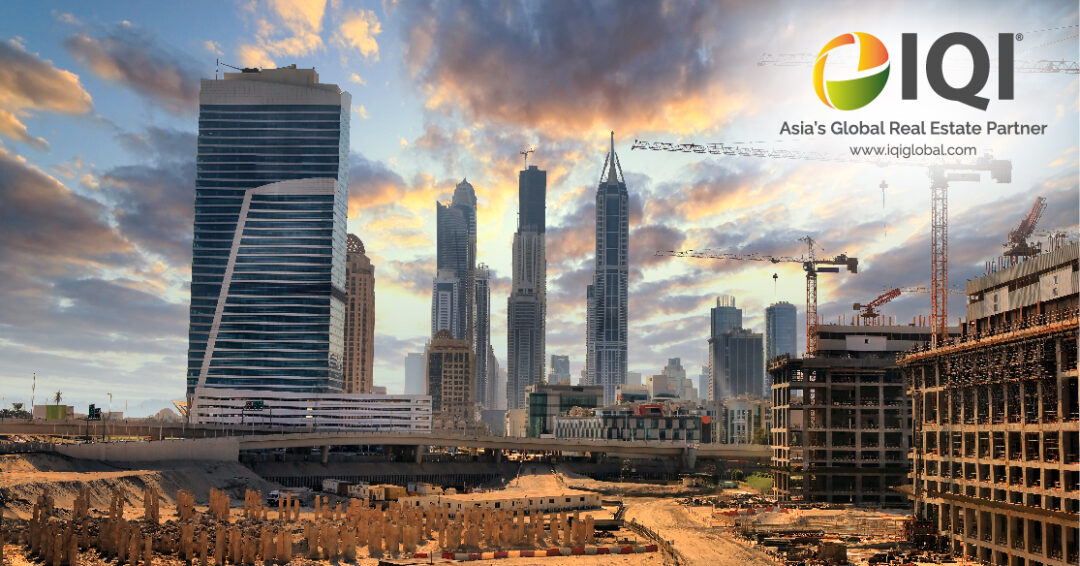 How off-plan sales are dominating Dubai’s Real Estate Market
We all know that off plan sales are pretty popular in the real estate market. However, we were all caught off guard when we found out that off-plan sales dominated Dubai’s real estate market. Off-plan projects now account for approximately 78% of total real estate market transactions in Dubai. Where the total off-plan market for prime residential communities was worth AED 16 billion ($4.6 billion), of which Downtown Dubai accounted for AED 5.8 billion ($1.58 billion), Dubai Creek Harbour for AED 2.9 billion ($789 million), and Mohammed bin Rashid city for AED 2.7 billion ($735 million). There are lots of reasons behind the breakthrough off-plan sales, here are some: The first proposed reason is the convenience of the paying plans offered by off-plan properties. As some of the offered off-plan projects had very attractive payment procedures that could last for 10 years even after moving in the house. The mortgage cap introduced by Emirate’s Central Bank is a second reason to why more people can now afford to buy more. Many commentators believe that the cap, which states that expats need a minimum deposit of 25% and pay 7% percent transaction costs, has cooled the market. Finally, we can’t deny the rapid growth of the real estate market being one of the main causes of this phenomenon. As the high volume of new project launches has resulted in developers offering aggressive low deposit and post-handover payment schemes designed to incentivise buyers which has led to increased off-plan sales. This explains why lower prices are attracting new buyers to the upper end of the market, who may not have been able to afford homes at this level. Overall, cheaper homes and lower deposit requirements were driving investors towards off-plan deals. It is said that median prices for homes have fallen by 20 per cent between November 2015 to April 2017, extending a slump that had begun two years earlier. On the other hand, the rise in the off-plan sales has not affected some developers such as Emaar Properties and Damac Properties reporting higher sales in the first quarter of 2017. Emaar booked deals worth Dh6.05 billion in the first quarter, a 44 per cent year-on-year increase, while Damac sold properties worth Dh2.2bn, up 11 per cent year-on-year. “In theory, buying off-plan allows investors to take advantage of historically low Dubai property prices for a very low cost and a get a foothold in the market but this strategy does not come without risk,” said, Mr Propertyfinder Group’s chief commercial officer, Lukman Hajje. Looking for more places with awesome music? Talk to us, send us a message at ahlan@iqiproperties.com or call us at +(971) 4 352 474 8 or +(971) 55 519 8233 Liked what you read? Check out this article next: VAT- What it means for UAE Be a part of our award-winning team of investors, click here: https://goo.gl/7HGH8H
Continue Reading

