

Negotiator ∙ IQI Indonesia
Muhammad Ghilman Raja

Negotiator ∙ IQI Indonesia
Muhammad Ghilman Raja
About Muhammad Ghilman Raja
Leveraging market knowledge and negotiation skills to deliver exceptional results. Your real estate success is my priority. Ready to make your real estate dreams a reality? Let's chat. Your dream home awaits.
Contact Muhammad Ghilman Raja
Muhammad Ghilman Raja Social Links
No social links available.
My Listings
No listings available at the moment.
Our newly launched projects
Discover the real estate properties in and around Indonesia, Indonesia. Buy apartment units, landed houses, bungalows, commercial office space, shop lots, and sub-sales with 100% confidence at IQI Global.
 Pet-friendly apartment
EleVee Residences
Jl. Jalur Sutera Bar. No.Kav. 20, Panunggangan Tim., Kec. Pinang, Kota Tangerang, Banten 15143, Indonesia
Starting from ₦ 173,075,000
Listed on April 25, 2025

The Umalas Signature
Jl. Bumbak No.156, Kerobokan, Kec. Kuta Utara, Kabupaten Badung, Bali 80361, Indonesia
Starting from ₦ 170,496,288
Listed on December 15, 2021

Sky Stars Luxury Villas
Jl. Nusa Dua, Benoa, Kec. Kuta Sel., Kabupaten Badung, Bali 80361, Indonesia
Starting from ₦ 353,268,308
Listed on December 9, 2021

Lavaya Residence and Resort
Jl. Telaga Waja No.5, Tj. Benoa, Kec. Kuta Sel., Kabupaten Badung, Bali 80361, Indonesia
Starting from ₦ 518,895,348
Listed on December 9, 2021
Mortgage Calculator
Calculate your estimated month repayment and plan your monthly expenses well.
The mortgage calculator is intended for reference only. Actual amount may vary.
Monthly Payment
Send me the mortgage calculator result

Home Loan Eligibility Calculator
Calculate your potential loan amount and assess your home buying affordability.

Rental Yield
Calculate the potential rental yield and evaluate a property's investment performance.

Down Payment Saving Plan
Create a structured savings plan and determine how much to save monthly for your down payment plan.

Malaysian Property Transaction Fees Calculator
Estimate the total transaction fees and budget accurately for your Malaysian property purchase.
IQI blog & news
Articles specifically curated for your daily digest of local and global real estate news.

TL;DR LHDN refunded RM9.35 billion to over 3 million taxpayers in the first half of 2025 alone. That money can go straight toward your 10% home down payment. First-time buyers of homes up to RM500,000 get 100% stamp duty exemption until 31 December 2027, saving you roughly RM11,000 in upfront costs. A new tax relief of up to RM7,000 per year on home loan interest (for SPAs signed from 2025 to 2027) means buying now actually pays you back at tax time for three consecutive years. Stack your tax refund with EPF Account 2 withdrawal and stamp duty savings, and you could cover most or all of your upfront costs on a home under RM500,000. Every year between March and May, millions of Malaysians file their taxes through LHDN's e-Filing portal. And every year, a good chunk of those filers discover they have overpaid their PCB (Monthly Tax Deduction) and are owed money back. For most people, the refund hits the bank account and disappears into daily expenses within a week. Groceries, a holiday, a gadget. But what if you redirected that refund toward the single biggest purchase of your life? Your tax refund can be the seed money that makes homeownership real. Not someday. This year. This guide walks you through exactly how to do it, step by step, using strategies that are specific to the Malaysian tax and property system in 2026. Turn Your LHDN Tax Refund Into a Home Down PaymentTL;DRHow Much Could Your Tax Refund Actually Be?Why Your Tax Refund Is Perfect for a Down PaymentStep-by-Step: Turning Your Tax Refund Into a Down PaymentThe Tax Relief That Pays You Back After You BuyWhat Does This Look Like With Real Numbers?Can You Buy a House With Zero Down Payment?How Much Can You Actually Borrow?Common Mistakes to AvoidYour Tax Refund Action Plan (Month by Month)Check Your Home Loan EligibilityFrequently Asked Questions How Much Could Your Tax Refund Actually Be? If your employer has been deducting PCB throughout the year and you claimed all your eligible tax reliefs (lifestyle, medical, EPF, insurance, education), there is a real chance your actual tax liability is lower than what was already deducted. That difference is your refund. LHDN does not publish an "average refund per individual" figure. But the scale tells the story. In the first half of 2025, LHDN returned RM9.35 billion across more than 3 million taxpayers. The government paid out RM22.45 billion in total tax refunds for the full year of 2025, which was the highest amount in five years. Even a refund of RM2,000 to RM5,000 can move the needle when you combine it with the right strategy. Curious how far your salary can stretch for a home loan? Check how much home loan you can get based on your salary. Why Your Tax Refund Is Perfect for a Down Payment Your tax refund is essentially forced savings. It is money you earned but never saw in your monthly budget. That makes it psychologically easier to redirect, because you were never counting on it for rent or food. Here is why it works so well for a down payment specifically. The standard down payment in Malaysia is 10% of the property price. On a RM400,000 home, that is RM40,000. On a RM300,000 home, RM30,000. Those numbers feel massive when you are saving RM500 a month. But a RM3,000 tax refund deposited into a dedicated down payment fund every year for three years is already RM9,000, before interest. The real magic happens when you stack your refund with other money you are entitled to but may not be using. More on that below. Step-by-Step: Turning Your Tax Refund Into a Down Payment Step 1: Maximise your tax reliefs before you file Your refund size depends on how many reliefs you claim. Many Malaysians leave money on the table because they do not keep receipts or do not know what qualifies. For YA 2025 (filed in 2026), key reliefs include RM9,000 automatic personal relief, up to RM4,000 for EPF contributions, up to RM3,000 for life insurance or takaful, up to RM2,500 for lifestyle expenses (books, gadgets, internet), up to RM8,000 for SSPN deposits, and medical expenses for parents up to RM8,000. Claim everything you are entitled to. The difference between a RM500 refund and a RM3,000 refund is often just a few receipts you forgot to keep. Need a walkthrough? See our full list of personal income tax reliefs for 2026. Step 2: Open a dedicated "down payment" savings account Do not let the refund land in your regular spending account. Open a separate high-yield savings account or a fixed deposit and label it "home fund." The moment LHDN processes your refund (typically within 30 working days of e-Filing), transfer it immediately. This is the single most important behavioural change. Money that stays visible in your daily account gets spent. Step 3: Use the calculator to set your target Before you can plan, you need a number. Use the calculator below to figure out exactly how much you need to save, how long it will take, and what your monthly contribution should be. Estimates for guidance only. Actual figures depend on the bank's assessment, current rates, and your full financial profile. Step 4: Stack your refund with EPF Account 2 This is where many first-time buyers unlock a breakthrough they did not expect. EPF allows you to withdraw from Account 2 to fund a home purchase. This covers down payments, stamp duty, and even monthly loan instalments through the Flexible Housing Withdrawal scheme. The minimum balance required is just RM500 in Account 2. For first-time buyers, this falls under Category 1, which covers the down payment plus an additional 10% for stamp duty and legal fees. So your equation becomes: tax refund + EPF Account 2 withdrawal + personal savings = down payment covered. Want the full breakdown on EPF housing withdrawal? Read our step-by-step EPF Account 2 withdrawal guide. Step 5: Claim the stamp duty exemption to keep more cash If you are a first-time Malaysian buyer purchasing a home priced at RM500,000 or below, you qualify for a 100% stamp duty exemption on both the Memorandum of Transfer (MOT) and the loan agreement. This exemption has been extended under Budget 2026 until 31 December 2027. On a RM500,000 home, this saves you approximately RM11,000 in fees that would otherwise eat into your cash reserves on top of the down payment. That RM11,000 you do not have to pay? It stays in your pocket. Which means your tax refund stretches even further. Understand how this exemption works in detail. Read our stamp duty exemption guide for 2027. The Tax Relief That Pays You Back After You Buy Here is the part most people miss entirely. Under Budget 2025, the government introduced a new income tax relief on home loan interest payments for first-time buyers. If your SPA is signed between 1 January 2025 and 31 December 2027, you can claim up to RM7,000 per year in tax relief on the interest portion of your home loan for homes priced up to RM500,000. For homes priced between RM500,001 and RM750,000, the cap is RM5,000 per year. This relief is claimable for three consecutive years starting from the year you first pay the housing loan interest. Think about what this means in practice. You use your 2025 tax refund to help fund the down payment. You buy the house. Then for the next three years, your home loan interest reduces your taxable income, which generates even bigger refunds that help you manage the new mortgage. Your refund funds the house. The house funds bigger refunds. It is a virtuous cycle. Two conditions to note: the property must be for your own residence (not rented out), and homes above RM750,000 do not qualify for this relief. What Does This Look Like With Real Numbers? Let us walk through a worked example for a first-time buyer earning RM5,000 per month (RM60,000 per year) eyeing a RM400,000 apartment. ItemAmount (RM)Down payment (10%)40,000Estimated tax refund (YA 2025)2,800EPF Account 2 withdrawal (estimated)25,000Stamp duty savings (100% exemption)~9,000 savedPersonal savings needed~12,200Annual tax relief on loan interest (3 years)Up to 7,000/year Without the refund, the EPF withdrawal, and the stamp duty exemption, you would need to save RM49,000 or more in cash. With these three tools combined, the gap drops to around RM12,200 in personal savings. And for the next three years, the home loan interest relief puts up to RM7,000 back into your tax calculation annually, which translates to real ringgit savings depending on your tax bracket. Can You Buy a House With Zero Down Payment? For some buyers, yes. Government schemes like SJKP (Skim Jaminan Kredit Perumahan) provide 100% financing for eligible first-time buyers. Certain developers also offer zero-entry or rebate packages that effectively absorb the deposit. But "zero down payment" does not mean zero cost. Legal fees, valuation fees, and moving expenses still apply. Your tax refund can cover those. Explore all your options. Read our guide on buying a house in Malaysia without a down payment. How Much Can You Actually Borrow? Your down payment is only half the equation. The other half is your loan eligibility. Banks assess your Debt Service Ratio (DSR) and credit score before approving a mortgage. Use the calculator below to see where you stand. Estimates for guidance only. Actual figures depend on the bank's assessment, current rates, and your full financial profile. Want to understand the financial jargon before you walk into the bank? Read our guide to financial terms every home buyer should know. Common Mistakes to Avoid Spending the refund before it arrives. Do not mentally allocate your refund to a holiday or gadget. The moment you file your taxes, set the expectation that any refund goes into your home fund. Not claiming all reliefs. Every unclaimed receipt is money you are giving back to LHDN. Start a digital folder on your phone today and photograph every qualifying receipt for the rest of the year. Ignoring the SPA deadline. The home loan interest tax relief and stamp duty exemption both require SPAs signed by 31 December 2027. If you plan to buy, the clock is ticking. Draining EPF without thinking about retirement. EPF withdrawal is powerful, but it reduces your retirement savings. Withdraw strategically, not emotionally. Use it for the down payment, but do not empty the account. Forgetting the "hidden" costs. The down payment is not the only upfront expense. Legal fees, valuation fees, and moving costs add up. Plan for 10% to 18% of the property price as total upfront outlay. Surprised by the true cost? See what a RM500k house actually costs in 2026. Your refund is sitting in your bank. Your EPF is waiting. The exemption expires in 2027. You don't have to figure this out alone. An IQI agent reviews your budget, shortlists homes you can actually afford, and walks you through every step from loan to keys. Free, and no pressure. Talk to a local IQI agent and buy with confidence Your Tax Refund Action Plan (Month by Month) Here is a practical timeline to turn your next tax refund into a real down payment. WhenWhat to DoJanuary to FebruaryGather all receipts and relief documents. Open your dedicated "home fund" account if you haven't already.March to AprilFile your e-Filing early. Claim every relief. Early filers get refunds faster.April to MayRefund hits your bank. Transfer it immediately to your home fund. Do not touch it.June to AugustCheck your EPF Account 2 balance. Talk to an IQI agent about homes in your budget range.September to DecemberGet pre-approved for a home loan. Start viewing properties. Sign the SPA before the exemption deadline. Check Your Home Loan Eligibility Before you start viewing houses, know what the bank is willing to lend you. This depends on your income, existing debts, and credit score. Estimates for guidance only. Actual figures depend on the bank's assessment, current rates, and your full financial profile. Frequently Asked Questions Can I use my LHDN tax refund for a home down payment? Yes. Your tax refund is cash deposited into your bank account. There are no restrictions on using it for a property purchase, including the 2% earnest deposit or the remaining 8% of the down payment due at SPA signing. How much tax refund can I expect in Malaysia? It depends on your income, PCB deductions, and the reliefs you claim. LHDN refunded RM9.35 billion to over 3 million taxpayers in the first half of 2025. Individual refunds typically range from a few hundred ringgit to several thousand, depending on how much your employer over-deducted and how many reliefs you claim. What is the first home loan interest tax relief? For SPAs signed between 1 January 2025 and 31 December 2027, first-time buyers can claim up to RM7,000 per year (homes up to RM500,000) or RM5,000 per year (homes RM500,001 to RM750,000) in tax relief on the interest portion of their home loan. This is claimable for three consecutive years. Can I combine my tax refund with EPF withdrawal for a down payment? Yes. EPF Account 2 allows withdrawals for housing purchases, covering down payments, stamp duty, and legal fees. Your tax refund and EPF withdrawal can be combined with personal savings to meet the 10% down payment requirement. Is the stamp duty exemption for first-time buyers still available in 2026? Yes. The 100% stamp duty exemption on both the MOT and loan agreement for first-time buyers purchasing homes up to RM500,000 has been extended until 31 December 2027 under Budget 2026. How long does LHDN take to process my tax refund? For e-Filing submissions, LHDN targets processing within 30 working days. Manual filing may take up to 90 working days. Filing early (March to April) typically results in faster refund processing. The numbers add up. The exemptions are live. The only missing piece is the right home. An IQI agent helps you from budget check to keys in hand. Over 30,000 property professionals across 20+ countries. Free consultation, no pressure, no hidden fees. [custom_blog_form] Continue reading: References: Ministry of Finance Malaysia. (2025, August 20). LHDN Refunds RM9.35 Bln In Excess Taxes To 3 Mln Taxpayers. Retrieved from mof.gov.my Malay Mail. (2026, March 6). MOF: RM6.2b in tax refunds disbursed as of Feb 18. Retrieved from malaymail.com Free Malaysia Today. (2024, October 18). RM7,000 tax relief on first homes costing up to RM500,000. Retrieved from freemalaysiatoday.com Bernama. (2024, October 18). Individual Income Tax Relief on Loan Interest Payment For First House. Retrieved from bernama.com KWSP / EPF Malaysia. EPF Housing Withdrawal. Retrieved from kwsp.gov.my LHDN Malaysia. Income Tax Rates and Reliefs for YA 2025. Retrieved from hasil.gov.my
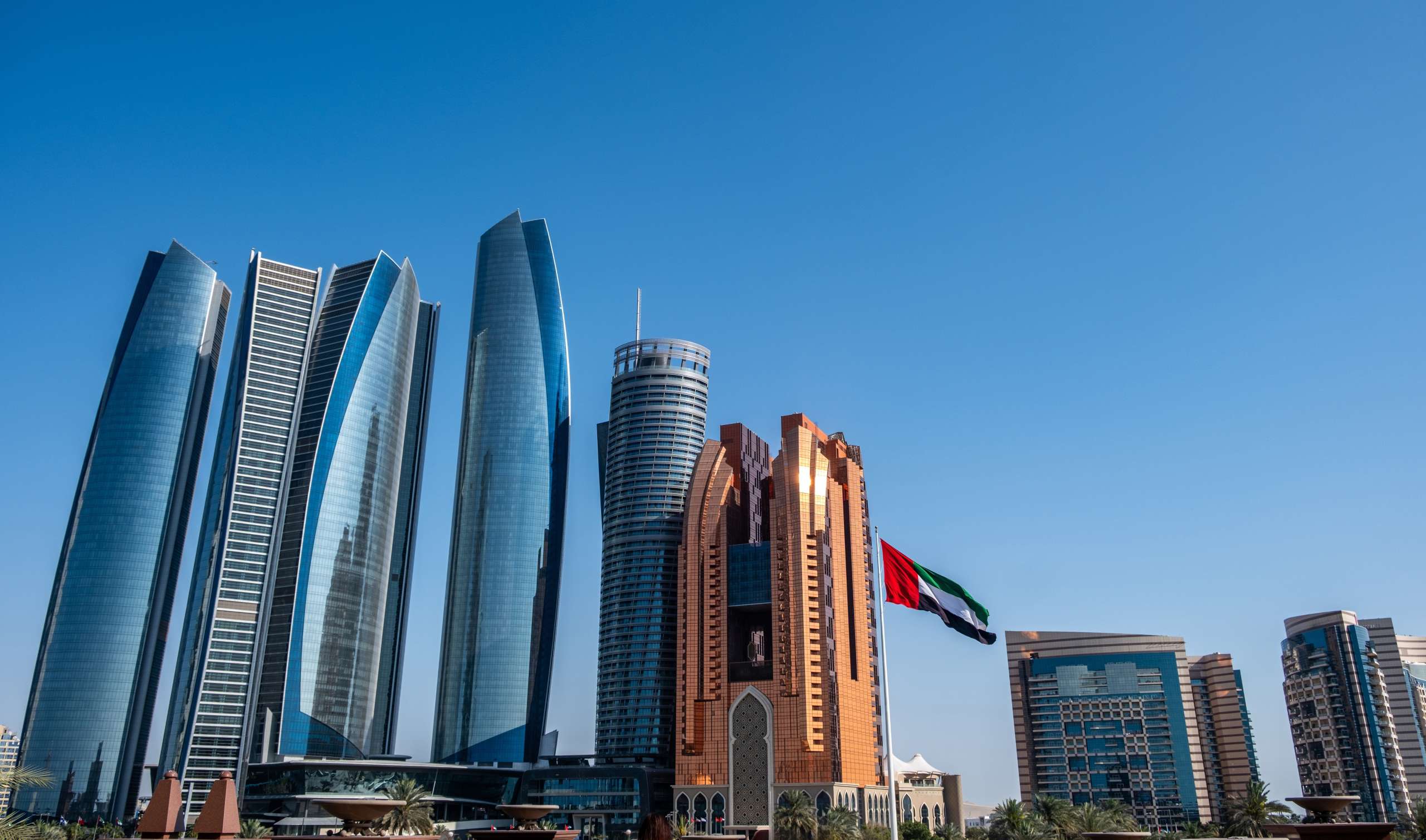
Property Fundamentals Pass the Mid-Year Test The first half of 2026 tested global property markets through regional security tensions, temporary repricing and changing financing conditions. What followed was a rapid recovery and a clearer investment picture. Capital is now moving towards markets supported by demographics, infrastructure and policy, rather than short-term speculation. The United Arab Emirates demonstrated strong resilience. Dubai recorded approximately AED 286 billion in property sales during H1 2026, the second-highest first-half result on record. Rental yields remain near 7%, while freehold ownership, tax-free rental income and Golden Visa eligibility continue to attract international investors. Saudi Arabia is emerging as a new foreign investment destination following the introduction of its non-Saudi property ownership law in January 2026. Riyadh offers gross yields of around 7% to 9%, while apartment rents have risen nearly 20% year-on-year. More than 780 multinational companies have also committed to establishing regional headquarters in the Kingdom. Malaysia and Japan Offer Different Strengths Malaysia remains one of ASEAN’s most accessible growth markets. Property transactions reached RM241.9 billion in 2025, while Johor attracted a record RM110 billion in approved investment. The upcoming Rapid Transit System Link between Johor Bahru and Singapore is strengthening interest near station locations, where selected units have already appreciated 18% to 20%. Prime transit-linked properties in the Klang Valley continue to offer yields of approximately 4% to 5%. Japan provides a more defensive opportunity. The average price of a new condominium in Tokyo’s 23 wards reached ¥137.8 million, up 18.5%, while supply fell to its lowest level since 1973. High occupancy, transparent ownership rules and a weaker yen continue to support demand. Outlook The strongest property opportunities in the second half of 2026 are likely to be found in markets where policy reform, infrastructure investment and genuine demand support long-term returns. The UAE and Saudi Arabia offer stronger yields, Malaysia provides accessible growth, while Japan remains a stable portfolio anchor. Download to see insights from other country marketsDownload

30 Jul, 2026
Vietnam Property Market Outlook 2026: Infrastructure Corridors Lead the Next Growth Cycle
Vietnam’s Housing Market Enters a Selective Reset Vietnam’s residential market entered August 2026 in a period of consolidation. Prices remain relatively firm, but transaction activity is slower as buyers become more selective and borrowing costs stay elevated. During Q2 2026, developers launched approximately 12,000 primary condominiums across the enlarged Ho Chi Minh City market and more than 4,000 units in Hanoi. However, luxury absorption remained below 30% in Ho Chi Minh City, while Hanoi’s take-up rate eased to around 20%. Inner-city primary prices reached approximately USD 5,400 to USD 9,500 per square metre. Pressure was more visible in the secondary market, where prices declined 5% to 8% in Ho Chi Minh City and by as much as 12% in parts of Hanoi. Floating mortgage rates of 13% to 16% are encouraging some owners to lower asking prices. However, the market has not experienced widespread distress, while the new land-price framework is helping maintain a floor under development costs and headline prices. Infrastructure Redirects Property Demand Vietnam has approximately 234 major infrastructure projects worth VND 3.4 quadrillion underway. These investments are shifting demand from crowded central districts towards better-connected suburban and regional corridors. In the south, growth is concentrating around the Ho Chi Minh City and Dong Nai corridor, supported by Long Thanh International Airport, new ring roads, expressways and Metro Line 1. Northern demand is moving towards Hanoi’s gateway districts and neighbouring Hung Yen and Bac Ninh. Da Nang is also showing stronger primary-market activity, supported by limited prime coastal supply. Outlook Vietnam’s next property cycle is expected to favour patience and careful asset selection rather than short-term speculation. With average gross rental yields near 3.85%, investment returns will depend increasingly on infrastructure-led capital appreciation. Legally clear projects with strong connectivity and genuine end-user demand should remain best positioned, particularly for buyers with sufficient holding power and a multi-year investment horizon. Download to see insights from other country marketsDownload

Bangkok Retail Market Enters a New Phase Bangkok’s retail property market is evolving as developers place greater emphasis on transit-oriented locations, experiential concepts and asset repositioning. Total retail supply reached 9.27 million square metres in Q1 2026, recording only a marginal 0.12% quarter-on-quarter decline. This reflects a relatively stable market despite wider economic uncertainty and a fresh pipeline of new space. Retail development is becoming increasingly divided between neighbourhood-focused community malls and larger shopping centres connected to mass-transit networks. Another 300,000 square metres of retail space is scheduled for completion during 2026, increasing competition among existing and upcoming projects. Occupancy Improves as Tenant Demand Shifts Bangkok’s overall retail occupancy rate rose to 89% in Q1 2026, compared with 85% a year earlier and around 84% throughout much of 2024. Demand remains strongest among luxury brands, food and beverage operators, wellness providers and experience-led tenants. Higher-performing malls are allocating more space to leisure, lifestyle services and community activities that encourage repeat visits. CBD shopping mall rents averaged 2,852 baht per square metre per month, above the northern fringe at 2,230 bahtand the eastern fringe at 2,300 baht. Community malls remained more affordable, with average CBD rents of 1,755 baht per square metre, compared with 1,200 baht in the northern fringe and 1,250 baht in the eastern fringe. Outlook Competition may place pressure on average occupancy as consumers become more selective about where they spend their time and money. Projects combining strong transit access, distinctive experiences and a clear market identity are expected to perform best. Retail centres that respond to changing consumer habits through wellness, dining, entertainment and community-focused concepts should remain better positioned as new supply enters the Bangkok market. Download to see insights from other country marketsDownload
Ready to get started?
Get in touch now.