

Negotiator ∙ United
YEOH YING HAO

Negotiator ∙ United
YEOH YING HAO
About YEOH YING HAO
Leveraging market knowledge and negotiation skills to deliver exceptional results. Your real estate success is my priority. Ready to make your real estate dreams a reality? Let's chat. Your dream home awaits.
1 year at IQI
Contact YEOH YING HAO
YEOH YING HAO Social Links
No social links available.
My Listings
No listings available at the moment.
Our newly launched projects
Discover the real estate properties in and around Kuala Lumpur, Malaysia. Buy apartment units, landed houses, bungalows, commercial office space, shop lots, and sub-sales with 100% confidence at IQI Global.
 Located in Kubang Semang
Northern TechValley @BKE
Mukim 14, Kubang Semang, 14400 Seberang Perai, Penang, Malaysia
Starting from RM 14,495,520
Listed on January 23, 2026
 Varied built-up sizes
Taman IKS Bukit Minyak
Jalan IKS Bukit Minyak Utama, Taman IKS Bukit Minyak, 14100 Simpang Ampat, Penang, Malaysia.
Starting from RM 1,203,800
Listed on January 23, 2026
 Located in Simpang Ampat
Regalway Industrial Hub (Industrial)
Regalway Industrial Hub, Off Jalan Bukit Panchor, Bukit Panchor, 14100 Simpang Ampat, Penang, Malaysia.
Starting from RM 5,015,000
Listed on January 23, 2026
 Spacious land area
Taman Jasa Ria (Garden Villa)
Jalan Permatang Pasir, Taman Jasa Ria, 14000 Bukit Mertajam, Penang, Malaysia
Starting from RM 1,118,800
Listed on January 23, 2026
 Larger built-up area
Taman Jasa Intan (Garden Superlink)
Jalan Jasa Intan, Taman Jasa Intan, 14000 Bukit Mertajam, Penang, Malaysia
Starting from RM 818,000
Listed on January 23, 2026
 Located in Nibong Tebal
Taman Fajar Permai (Sunrise Terrace)
Jalan Fajar, Taman Fajar Permai, 14300 Nibong Tebal, Penang, Malaysia.
Starting from RM 550,000
Listed on January 23, 2026
Mortgage Calculator
Calculate your estimated month repayment and plan your monthly expenses well.
The mortgage calculator is intended for reference only. Actual amount may vary.
Monthly Payment
Send me the mortgage calculator result

Home Loan Eligibility Calculator
Calculate your potential loan amount and assess your home buying affordability.

Rental Yield
Calculate the potential rental yield and evaluate a property's investment performance.

Down Payment Saving Plan
Create a structured savings plan and determine how much to save monthly for your down payment plan.

Malaysian Property Transaction Fees Calculator
Estimate the total transaction fees and budget accurately for your Malaysian property purchase.
IQI blog & news
Articles specifically curated for your daily digest of local and global real estate news.
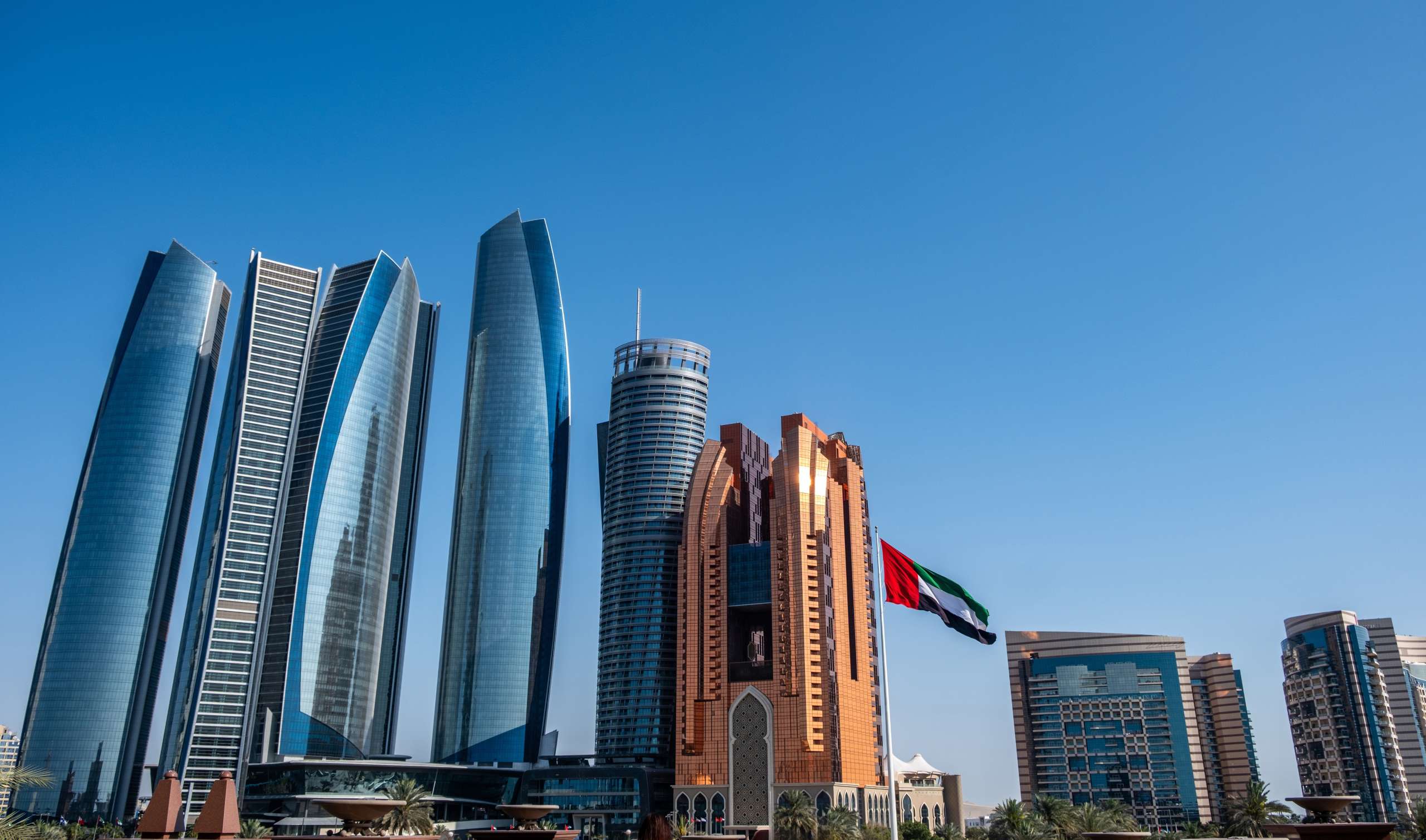
Property Fundamentals Pass the Mid-Year Test The first half of 2026 tested global property markets through regional security tensions, temporary repricing and changing financing conditions. What followed was a rapid recovery and a clearer investment picture. Capital is now moving towards markets supported by demographics, infrastructure and policy, rather than short-term speculation. The United Arab Emirates demonstrated strong resilience. Dubai recorded approximately AED 286 billion in property sales during H1 2026, the second-highest first-half result on record. Rental yields remain near 7%, while freehold ownership, tax-free rental income and Golden Visa eligibility continue to attract international investors. Saudi Arabia is emerging as a new foreign investment destination following the introduction of its non-Saudi property ownership law in January 2026. Riyadh offers gross yields of around 7% to 9%, while apartment rents have risen nearly 20% year-on-year. More than 780 multinational companies have also committed to establishing regional headquarters in the Kingdom. Malaysia and Japan Offer Different Strengths Malaysia remains one of ASEAN’s most accessible growth markets. Property transactions reached RM241.9 billion in 2025, while Johor attracted a record RM110 billion in approved investment. The upcoming Rapid Transit System Link between Johor Bahru and Singapore is strengthening interest near station locations, where selected units have already appreciated 18% to 20%. Prime transit-linked properties in the Klang Valley continue to offer yields of approximately 4% to 5%. Japan provides a more defensive opportunity. The average price of a new condominium in Tokyo’s 23 wards reached ¥137.8 million, up 18.5%, while supply fell to its lowest level since 1973. High occupancy, transparent ownership rules and a weaker yen continue to support demand. Outlook The strongest property opportunities in the second half of 2026 are likely to be found in markets where policy reform, infrastructure investment and genuine demand support long-term returns. The UAE and Saudi Arabia offer stronger yields, Malaysia provides accessible growth, while Japan remains a stable portfolio anchor. Download to see insights from other country marketsDownload

30 Jul, 2026
Vietnam Property Market Outlook 2026: Infrastructure Corridors Lead the Next Growth Cycle
Vietnam’s Housing Market Enters a Selective Reset Vietnam’s residential market entered August 2026 in a period of consolidation. Prices remain relatively firm, but transaction activity is slower as buyers become more selective and borrowing costs stay elevated. During Q2 2026, developers launched approximately 12,000 primary condominiums across the enlarged Ho Chi Minh City market and more than 4,000 units in Hanoi. However, luxury absorption remained below 30% in Ho Chi Minh City, while Hanoi’s take-up rate eased to around 20%. Inner-city primary prices reached approximately USD 5,400 to USD 9,500 per square metre. Pressure was more visible in the secondary market, where prices declined 5% to 8% in Ho Chi Minh City and by as much as 12% in parts of Hanoi. Floating mortgage rates of 13% to 16% are encouraging some owners to lower asking prices. However, the market has not experienced widespread distress, while the new land-price framework is helping maintain a floor under development costs and headline prices. Infrastructure Redirects Property Demand Vietnam has approximately 234 major infrastructure projects worth VND 3.4 quadrillion underway. These investments are shifting demand from crowded central districts towards better-connected suburban and regional corridors. In the south, growth is concentrating around the Ho Chi Minh City and Dong Nai corridor, supported by Long Thanh International Airport, new ring roads, expressways and Metro Line 1. Northern demand is moving towards Hanoi’s gateway districts and neighbouring Hung Yen and Bac Ninh. Da Nang is also showing stronger primary-market activity, supported by limited prime coastal supply. Outlook Vietnam’s next property cycle is expected to favour patience and careful asset selection rather than short-term speculation. With average gross rental yields near 3.85%, investment returns will depend increasingly on infrastructure-led capital appreciation. Legally clear projects with strong connectivity and genuine end-user demand should remain best positioned, particularly for buyers with sufficient holding power and a multi-year investment horizon. Download to see insights from other country marketsDownload

Bangkok Retail Market Enters a New Phase Bangkok’s retail property market is evolving as developers place greater emphasis on transit-oriented locations, experiential concepts and asset repositioning. Total retail supply reached 9.27 million square metres in Q1 2026, recording only a marginal 0.12% quarter-on-quarter decline. This reflects a relatively stable market despite wider economic uncertainty and a fresh pipeline of new space. Retail development is becoming increasingly divided between neighbourhood-focused community malls and larger shopping centres connected to mass-transit networks. Another 300,000 square metres of retail space is scheduled for completion during 2026, increasing competition among existing and upcoming projects. Occupancy Improves as Tenant Demand Shifts Bangkok’s overall retail occupancy rate rose to 89% in Q1 2026, compared with 85% a year earlier and around 84% throughout much of 2024. Demand remains strongest among luxury brands, food and beverage operators, wellness providers and experience-led tenants. Higher-performing malls are allocating more space to leisure, lifestyle services and community activities that encourage repeat visits. CBD shopping mall rents averaged 2,852 baht per square metre per month, above the northern fringe at 2,230 bahtand the eastern fringe at 2,300 baht. Community malls remained more affordable, with average CBD rents of 1,755 baht per square metre, compared with 1,200 baht in the northern fringe and 1,250 baht in the eastern fringe. Outlook Competition may place pressure on average occupancy as consumers become more selective about where they spend their time and money. Projects combining strong transit access, distinctive experiences and a clear market identity are expected to perform best. Retail centres that respond to changing consumer habits through wellness, dining, entertainment and community-focused concepts should remain better positioned as new supply enters the Bangkok market. Download to see insights from other country marketsDownload

Vision 2030 Continues to Drive Market Momentum Saudi Arabia’s real estate market maintained strong momentum in June 2026, supported by Vision 2030, major infrastructure investment and continued population growth. Demand remains healthy across the residential, commercial, hospitality and logistics sectors, particularly in Riyadh, Jeddah and Dammam. Large government-backed developments, including NEOM, Diriyah Gate, The Red Sea and Qiddiya, continue to attract domestic and international capital. These projects are also creating long-term demand for housing, offices, hospitality assets and supporting infrastructure. Residential and Office Sectors Lead Growth Residential property remains the market’s largest segment, accounting for an estimated 45% of investment activity. Demand is being supported by homeownership programmes, improved mortgage accessibility and rising urbanisation. Commercial property represents around 25% of investment, while hospitality accounts for 15%. Industrial assets contribute approximately 10%, with mixed-use projects making up the remaining 5%. Office leasing activity is strengthening as corporations expand and multinational companies establish regional headquarters in Riyadh. Industrial and logistics properties are also benefiting from e-commerce growth and increased supply chain investment. Among major cities, Riyadh recorded the highest investment activity index at 100, followed by Jeddah at 82 and Dammam at 65. Makkah and Madinah recorded indices of 58 and 50 respectively. Outlook Saudi Arabia’s property outlook for 2026 to 2028 remains positive. Prime residential locations are expected to record further price appreciation, while office demand should remain supported by regional headquarters expansion. Logistics and industrial developments may outperform as supply chains and e-commerce activity grow. Continued regulatory reforms and Vision 2030 projects are also expected to support higher foreign investment, transaction activity and stable rental growth over the medium term. Download to see insights from other country marketsDownload
Ready to get started?
Get in touch now.