

Negotiator ∙ Dreammakerz
Faiq Marzuki
REN50559
Negotiator ∙ Dreammakerz
Faiq Marzuki
REN50559
About Faiq Marzuki
Leveraging market knowledge and negotiation skills to deliver exceptional results. Your real estate success is my priority. Ready to make your real estate dreams a reality? Let's chat. Your dream home awaits.
1 years at IQI
Contact Faiq Marzuki
Faiq Marzuki Social Links
No social links available.
My Listings
No listings available at the moment.
Our newly launched projects
Discover the real estate properties in and around Kuantan, Malaysia. Buy apartment units, landed houses, bungalows, commercial office space, shop lots, and sub-sales with 100% confidence at IQI Global.
 Large land area
Northern TechValley @BKE
Mukim 14, Kubang Semang, 14400 Seberang Perai, Penang, Malaysia
Starting from RM 14,495,520
Listed on January 23, 2026
 Varied built-up sizes
Taman IKS Bukit Minyak
Jalan IKS Bukit Minyak Utama, Taman IKS Bukit Minyak, 14100 Simpang Ampat, Penang, Malaysia.
Starting from RM 1,203,800
Listed on January 23, 2026
 Industrial project type
Regalway Industrial Hub (Industrial)
Regalway Industrial Hub, Off Jalan Bukit Panchor, Bukit Panchor, 14100 Simpang Ampat, Penang, Malaysia.
Starting from RM 5,015,000
Listed on January 23, 2026
 Located in Bukit Mertajam
Taman Jasa Ria (Garden Villa)
Jalan Permatang Pasir, Taman Jasa Ria, 14000 Bukit Mertajam, Penang, Malaysia
Starting from RM 1,118,800
Listed on January 23, 2026
 Located in Bukit Mertajam
Taman Jasa Intan (Garden Superlink)
Jalan Jasa Intan, Taman Jasa Intan, 14000 Bukit Mertajam, Penang, Malaysia
Starting from RM 818,000
Listed on January 23, 2026
 Large land area
Taman Fajar Permai (Sunrise Terrace)
Jalan Fajar, Taman Fajar Permai, 14300 Nibong Tebal, Penang, Malaysia.
Starting from RM 550,000
Listed on January 23, 2026
Mortgage Calculator
Calculate your estimated month repayment and plan your monthly expenses well.
The mortgage calculator is intended for reference only. Actual amount may vary.
Monthly Payment
Send me the mortgage calculator result

Home Loan Eligibility Calculator
Calculate your potential loan amount and assess your home buying affordability.

Rental Yield
Calculate the potential rental yield and evaluate a property's investment performance.

Down Payment Saving Plan
Create a structured savings plan and determine how much to save monthly for your down payment plan.

Malaysian Property Transaction Fees Calculator
Estimate the total transaction fees and budget accurately for your Malaysian property purchase.
IQI blog & news
Articles specifically curated for your daily digest of local and global real estate news.
21 May, 2026
Discover Johor’s 7 Most Richest Neighborhoods: Where Malaysia’s Southern Elite Choose to Live
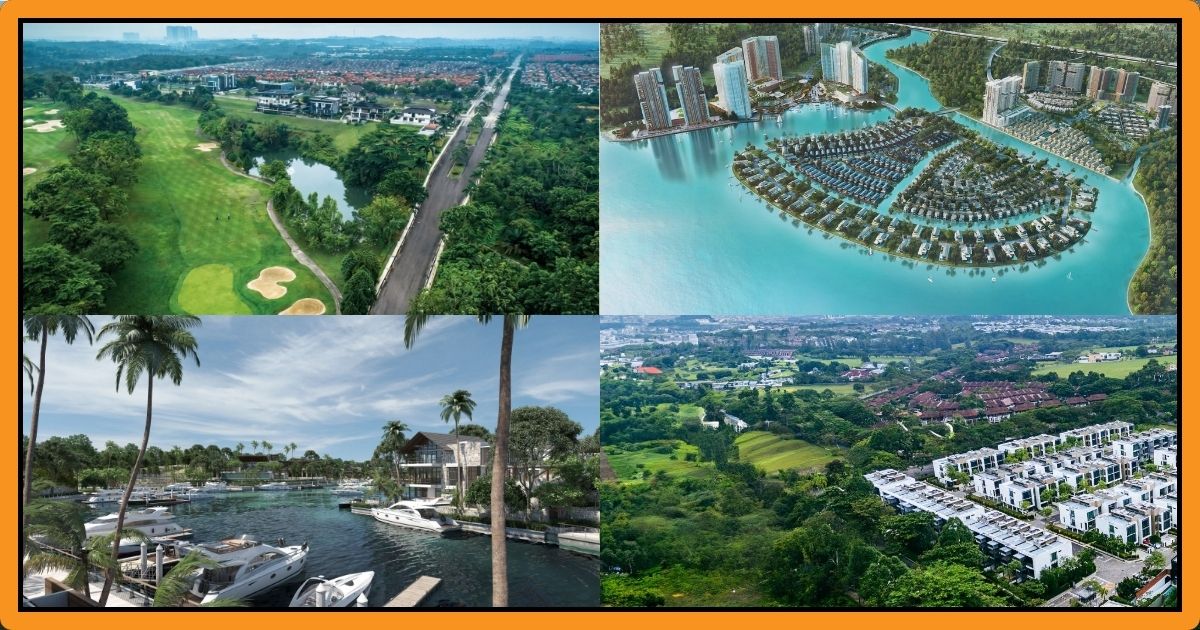
Johor is often overlooked in Malaysia's property conversation. When people talk about luxury real estate, the spotlight usually falls on Kuala Lumpur, with Selangor and Penang following close behind. But here's what savvy investors and lifestyle-conscious professionals already know. Johor is where the real estate game is changing. The state has evolved dramatically over the past decade. Infrastructure investments, strategic development projects, and an influx of successful entrepreneurs and expatriates have transformed Johor into a genuine contender for premium neighborhood status. The best part? You get significantly more space, more convenience, and more value for your money compared to other Malaysian states. This guide explores the seven most prestigious neighborhoods in Johor. Each offers something unique. From resort-style living in Senibong Cove to the established prestige of Impian Emas, from waterfront luxury at Puteri Harbour to the exclusive mountain living at East Ledang, Johor delivers diverse lifestyle options for different aspirations. Whether you're a young entrepreneur scaling your business, a family seeking premium suburban living, or an investor spotting emerging opportunities, this guide will help you understand where Johor's elite choose to build their homes. 1. Leisure Farm, Gelang Patah: The Quintessential Expat Haven Price Range: RM1,500,000 – RM29,000,000+ (Source: NST, Tatler Asia, PropertyGuru) What Makes Leisure Farm Special Leisure Farm isn't just a residential development. It's a lifestyle philosophy. Positioned as Johor's most representative "expat-rich" neighborhood, Leisure Farm embodies the concept of resort-living merged with suburban comfort. Spanning across sprawling greenery near Singapore, Leisure Farm attracts successful entrepreneurs, business owners who commute to Singapore, and families seeking space without sacrificing accessibility. The development features an 18-hole golf course, private horse stables, and direct highway access to Singapore via the Second Link. The Community Profile Residents here are typically high-net-worth individuals who value privacy combined with exclusive amenities. Many maintain business operations in Singapore, making the proximity invaluable. The demographic skews towards established professionals rather than first-time buyers. Why Investors Are Watching Leisure Farm's appreciation has been steady. The combination of scarcity, strategic location near Singapore, and strong expat demand creates a favorable investment environment. Unlike some developments that fluctuate with market trends, Leisure Farm maintains consistent appreciation due to limited land availability and proven demand. Nearby Attractions & Amenities Second Link Highway – Direct access to Singapore Golf Course – 18-hole championship course Equestrian Facilities – Private stables and riding amenities Forest City – Nearby integrated development Educity – International school proximity 2. Puteri Harbour, Iskandar Puteri: The Waterfront Prestige Address Price Range: RM800,000 – RM15,000,000+ (Source: PropertyGuru, UEM Sunrise, iProperty) Johor's Answer to Waterfront Living Puteri Harbour represents Johor's most iconic waterfront development. Known affectionately as "Johor Pearl," this high-end residential precinct combines genuine waterfront living with Marina Club accessibility and yacht berthing facilities. The development is sophisticated and cosmopolitan. It attracts international buyers, particularly from Singapore, as well as Malaysian professionals who appreciate waterfront aesthetics. The location near Puteri Harbour Marina, Sunway Big Box, and future Singapore connectivity makes it genuinely appealing for lifestyle and investment considerations. https://www.youtube.com/watch?v=MnEvdxBZzyw The Waterfront Advantage Unlike many "near-water" developments, Puteri Harbour delivers genuine waterfront positioning. Properties face the harbor directly, with yachting culture integrated into daily living. The international vibe is palpable – you'll encounter diverse cultures, dining experiences, and community activities reflecting global perspective. Investment Perspective Waterfront properties appreciate differently than inland equivalents. Limited supply of genuine waterfront plots, combined with high international demand, supports consistent value growth. Rental potential remains strong due to tourism and expatriate interest. Community Features Puteri Harbour Marina – Yacht berthing and watersports Dining & Entertainment – International restaurants and bars Shopping – Sunway Big Box and Medini shopping Transportation – Near Legoland and future CIQ facilities International Schools – Educity school access 3. East Ledang, Iskandar Puteri: Mountain Prestige Reimagined Price Range: RM2,000,000 – RM7,000,000+ (Source: iProperty, PropertyGuru, NusaJaya Bungalow) Johor's Premier Hill Neighborhood East Ledang represents Johor's answer to Bukit Tunku and Kenny Hills. Positioned on elevated terrain in Medini, this neighborhood combines mountain views with contemporary development standards. Residents describe East Ledang as "Bukit Tunku reimagined." The comparison is apt. Low-density development, generous plots, hilltop positioning providing commanding views, and proximity to quality amenities create comparable appeal. However, East Ledang offers better value and faster accessibility to Johor Bahru's commercial centers. Why It Attracts Premium Buyers The demographic here includes successful business owners, corporate executives, and families prioritizing both space and views. The 24-hour gated security, low-density planning (only 13 residential plots in some clusters), and established reputation attract serious buyers rather than speculative investors. https://www.youtube.com/watch?v=wFCI0GVHRTY The Neighborhood Character East Ledang residents tend to be established professionals who appreciate quality design and thoughtful community planning. The neighborhood hosts regular community events and maintains active homeowner engagement. It's luxury living with genuine community spirit. Nearby Amenities Puteri Harbour – Waterfront shopping and dining Educity – International schools hub AEON Bukit Indah – Retail and entertainment Sunway Big Box – Shopping complex Legoland – Family entertainment 4. Taman Molek, Johor Bahru: The Established Prestige District Price Range: RM900,000 – RM9,000,000+ (Source: PropertyGuru, The Edge Malaysia) Old Money Meets Modern Comfort Taman Molek is Johor's most established high-end residential neighborhood. Known as "Johor's old-money enclave," this area attracts business owners and professionals who've built success over decades. The neighborhood blends commercial convenience with residential prestige. Residents describe it as living in Johor Bahru's most sophisticated address while maintaining proximity to business centers, quality restaurants, and shopping facilities. Mid Valley Southkey and AEON Tebrau lie nearby, providing commercial integration without intrusion. Community Composition Taman Molek residents are typically high-income Malaysians – business owners, corporate leaders, and established professionals. Unlike newer developments attracting younger demographic, Taman Molek draws those already successful and seeking established community with proven appreciation. Investment Track Record Taman Molek properties have consistently appreciated. The combination of proven demand, established reputation, and limited new supply maintains steady value growth. Rental market remains strong due to expat demand and short-term visitor interest. Lifestyle Integration Mid Valley Southkey – Shopping and dining complex AEON Tebrau – Retail facilities nearby Austin Heights – Complementary residential area Hospital access – Quality healthcare facilities Business centers – Convenient for entrepreneurs 5. Horizon Hills, Iskandar Puteri: Luxury Golf Community Price Range: RM1,100,000 – RM16,000,000+ (Source: iProperty, Tatler Asia) The Golf Lifestyle Home Horizon Hills is Malaysia's most extensive gated golf community. Positioned in Medini, this development features an 18-hole championship golf course, creating lifestyle appeal beyond traditional residential. The gated community is exceptionally exclusive. With only 13 residential clusters and 18-hole golf course occupying the entire development, density remains remarkably low. Residents are primarily entrepreneurs and business owners who value privacy alongside golf access. https://www.youtube.com/watch?v=uRDMj2Znq8k Why Golf Communities Appeal Golf communities attract specific demographic – those who actively play or appreciate golf culture. Residents here are successful professionals who've made golf part of their lifestyle identity. The development's exclusivity appeals to those seeking true privacy combined with peer community. The Exclusivity Factor Horizon Hills is genuinely exclusive. Entry is selective, community is tight-knit, and appreciation potential remains strong due to scarcity and verified demand. The golf course membership itself becomes asset value. Community Amenities Championship Golf Course – 18-hole facility Gated Security – 24-hour security with selective access Club Facilities – Pro shop, restaurant, facilities AEON Bukit Indah – Shopping nearby Educity – International schools access 6. Senibong Cove, Masai: The Resort Lifestyle Address Price Range: RM400,000 – RM6,500,000+ (Source: PropertyGuru, Walker Corporation, Tatler Asia) Where Resort Living Meets Residential Reality Senibong Cove represents Johor's most unique value proposition. This waterfront development combines genuine beach access with resort-style amenities at price points significantly below comparable waterfront developments in KL or Penang. The development features low-density planning, waterfront positioning, and integrated resort amenities (spa, pools, dining). Residents enjoy perpetual vacation lifestyle without premium island pricing. The international community here includes expatriates, holiday home seekers, and those prioritizing beach access. The Waterfront Value Play Senibong Cove delivers genuine waterfront living – direct beach access, sea breezes, water activities – at pricing that makes sense for families and investors. You receive equivalent lifestyle to Batu Ferringhi or Gurney Drive, but at substantially lower entry point. Lifestyle Positioning Residents prioritize beach access and resort atmosphere. Many own vacation homes here alongside primary residences elsewhere. Rental income potential remains strong due to tourism proximity and international interest in Malaysian coastal properties. Unique Selling Points Direct Beach Access – Genuine waterfront living 3-Storey Villas – Spacious floor plans available Low-Density Development – More space than typical Resort Amenities – Spas, pools, water activities Tourism Proximity – Tourism infrastructure nearby 7. Impian Emas, Skudai: The Golden District Reimagined Price Range: RM700,000 – RM5,000,000+ (Source: The Star, PropertyGuru) Johor's Historic Prestige Neighborhood Impian Emas is Johor's oldest established prestige district. Since 1998, this freehold township has been THE address for Johor Bahru's elite. The development earned the nickname "Iskandar's Golden District" due to comprehensive planning and architectural standards. The neighborhood attracts successful Malaysian families, established business owners, and those seeking to establish legacies in Johor. Properties range from terrace houses to sprawling semi-detached villas, accommodating various family sizes while maintaining prestige standards. Why It Remains Prestigious Despite newer developments, Impian Emas maintains prestige through proven track record, established community, and consistent appreciation. This is where generational wealth sometimes establishes residency. The neighborhood has matured gracefully rather than trendy temporarity. Community Character Impian Emas residents are typically established professionally. Many have lived here since early 2000s, creating tight-knit community with deep roots. Children's generation sometimes inherits properties, demonstrating intergenerational confidence in the neighborhood. Surrounding Conveniences Paradigm Mall JB – Premium shopping AEON Bukit Indah – Retail facilities Johor Premium Outlets – Outlet shopping International Schools – Quality education access Golf Course – Recreation nearby Johor Property Market: Strategic Insights What Differentiates Johor Johor's property market differs fundamentally from KL, Selangor, and Penang in several key ways. Singapore Proximity Effect: Johor's proximity to Singapore creates unique demand. Singaporeans seeking space and value recognize Johor's advantages. This creates sustained demand independent of purely Malaysian market dynamics. Infrastructure Transformation: Recent infrastructure investments – highway improvements, new commercial developments, international school expansion – are reshaping Johor's appeal. The Johor Bahru-Singapore connectivity improvements signal future value growth. Value Positioning: Johor properties offer significantly more space for equivalent investment compared to other states. For families seeking spacious living combined with amenities, Johor delivers compelling value. Emerging Cosmopolitan Character: Developments like Puteri Harbour and Senibong Cove are creating genuinely international neighborhoods. This cosmopolitan aspect attracts diverse global professionals. Investment Considerations for Johor Appreciation Trajectory: Johor properties appreciate steadily rather than dramatically. This suits long-term investors seeking stable growth without market volatility. Recent developments show acceleration due to infrastructure improvements. Rental Potential: Some neighborhoods (Puteri Harbour, Senibong Cove, Taman Molek) demonstrate strong rental demand from expatriates and holiday seekers. Investors should evaluate specific neighborhood rental dynamics. Market Maturity: Unlike KL or Penang's mature markets, Johor still offers emerging opportunities. Early movers in well-selected neighborhoods benefit from development phase appreciation. Buyer Profile: Johor attracts different demographic than other states. Significant expatriate interest, Singapore commuter professionals, and families seeking value create distinct demand profile. Comparative Analysis: Finding Your Johor Neighborhood CategoryLocationWhy?Expat Lifestyle SeekersLeisure FarmEstablished expat community, golf facilities, Singapore proximity, resort amenities, proven rental demand.Waterfront Living Without Premium PricingSenibong CoveGenuine beach access, resort atmosphere, international community, competitive pricing, vacation rental potential.Established Prestige & Legacy BuildingImpian EmasHistoric prestige, proven appreciation, established community, generational significance, consistent demand.Golf & Exclusive LivingHorizon HillsTrue exclusivity, golf course, low-density community, selective membership, genuine privacy.Waterfront Cosmopolitan LivingPuteri HarbourIcon waterfront address, international atmosphere, marina access, shopping proximity, investment appreciation.Mountain Prestige & ViewsMountain Prestige & ViewsHilltop positioning, contemporary planning, established reputation, school access, balanced prestigeHigh-Income Professional StabilityTaman MolekEstablished old-money community, commercial integration, proven appreciation, business owner concentration, sophisticated neighborhood culture. Johor's Growing Appeal: Why Now? The Broader Context Johor property market has experienced significant evolution. What was once considered "secondary" to KL is increasingly recognized as sophisticated alternative offering genuine advantages. Several factors drive this shift: Singapore Connectivity: Improved highway infrastructure and planned future connectivity enhance convenience for Singapore-based professionals. Infrastructure Investment: New commercial developments, international schools, and retail expansion create amenity diversity. Value Positioning: Younger professionals recognize that Johor offers more space, better facilities, and superior value compared to equivalent KL pricing. Quality Development: Recent projects demonstrate architectural and planning sophistication comparable to other Malaysian premium developments. International Recognition: Tourism development and expatriate influx create cosmopolitan character attracting diverse global professionals. The Honest Perspective on Johor Living What Makes Johor Unique Johor works best for specific profiles. Those seeking cosmopolitan urban intensity might prefer KL. Those valuing island lifestyle might choose Penang. But those seeking space, value, growing infrastructure, and emerging cosmopolitan character find Johor compelling. The neighborhoods listed here aren't emerging from undeveloped territories. They're established, proven, and demonstrating consistent appreciation. However, Johor remains less saturated than KL or Penang, offering both better value and growth potential. The Investment Question Should you invest in Johor? That depends on your priorities: If you value: Space, value-for-money, infrastructure growth, emerging cosmopolitan character, and lifestyle flexibility – Johor offers compelling options. If you require: Immediate prestige recognition, island living, or pure urban intensity – you might look elsewhere. If you're: A long-term thinker who recognizes Johor's transformation and future trajectory – now is optimal timing. Already Explored Other Markets? Curious how Johor compares to Malaysia's other premium neighborhoods? Already explored Penang's 7 most prestigious neighborhoods? Johor offers comparable lifestyle options with superior value and space. Considering KL or Selangor? Johor provides worthwhile comparison, especially for families prioritizing space and value over pure urban intensity. Do You Think You'd Live in an Expensive Johor Neighborhood? Here's the honest question worth asking yourself. When you imagine your ideal home, what matters most? Is it the prestige of the address itself? The urban proximity and intensity? The cosmopolitan community? Beach or mountain access? Garden space and room to breathe? Investment potential and appreciation? Johor's neighborhoods deliver on different priorities. Leisure Farm appeals to those seeking expat lifestyle. Puteri Harbour attracts waterfront enthusiasts. East Ledang calls to those prioritizing views and space. Impian Emas resonates with those building legacies. The neighborhoods featured in this guide aren't budget options. They're genuinely expensive. But they're expensive at different price points for different reasons. So here's the real question: Among Johor's premium neighborhoods, which resonates with your vision of ideal living? The answer reveals what you truly value in a home. Because ultimately, the most expensive neighborhood isn't always the most expensive address. It's the one that genuinely reflects who you are and how you want to live. Ready to Explore Johor's Premium Neighborhoods? IQI Global understands Johor's market intimately. We're not just agents – we're guides through these neighborhoods, understanding community culture, investment potential, lifestyle benefits, and long-term value trajectories. Connect with us to: Schedule personalized neighborhood tours Understand specific property opportunities Evaluate investment potential aligned with your priorities Receive expert guidance on Johor market dynamics Explore properties in neighborhoods matching your vision [custom_blog_form] IQI Global. Your trusted partner in discovering your perfect Johor address. Related article: Beyond Kuala Lumpur: Discover Selangor’s 8 Most Richest Neighborhoods Discover Penang’s 7 Most Richest Neighborhoods: The Pearl of Malaysia’s Luxury Living Where Does KL’s Elite Live? Discover the 7 Most Richest Neighborhoods in Kuala Lumpur Six New Trump Towers Coming to India: Luxury Expansion After 2024 How do I achieve better work-life balance?

There is a quiet moment many real estate agents know too well. It usually happens after the excitement fades. Maybe three or four months in, when the calls slow down, the leads feel cold and your phone stays silent longer than you expected. No calls. No leads. No listings. Just you, your phone, and one uncomfortable question that many people in this industry quietly ask themselves, "Am I really made for this?" If you have ever sat with that feeling, then you need to hear what happened at the IQI Convention. Because two of Southeast Asia’s most talked about names walked onto that stage, and what they said was not about followers, fame or success. They spoke about what happens before people start noticing you. Their names are Bobby Saputra and Bryan Low. And their stories might just be the reminder you did not know you needed From Struggle to InfluenceWhy Struggle Is Often the Beginning of GrowthThe Man Behind the Mask: Bobby Saputra’s Journey From 300 Views to Massive Online ReachBryan Low’s Comeback After Losing 80,000 FollowersWhat Real Estate Agents Can Learn from Two of SEA’s Biggest Digital VoicesThree Questions That Can Help You Build a Stronger Personal BrandThe Lesson That Stays With You Why Struggle Is Often the Beginning of Growth Let’s be honest about something the industry does not say enough: most real estate agents struggle in silence. Behind every closing photo, award post and “just sold” caption, there are quiet months that no one talks about. Months with no leads. No replies. No confirmed viewings. No clear sign that your effort is working. And when you keep seeing other real estate agents moving ahead, it is easy to wonder whether you are falling behind. But here is the truth: Every strong personal brand, every trusted agent and every successful career has gone through a season where nobody was watching yet. The difference between those who stop and those who eventually stand on a stage is not always talent, connection or luck. Sometimes, it is simply the decision to keep showing up when the results are still invisible. Bobby Saputra started by posting videos to around 300 people, mostly friends and family. Bryan Low once lost 80,000 followers in a year and watched his digital presence fall apart. Neither of them had a guarantee that things would turn around. But they kept going. That is not a motivational cliché. That is an actual story. And it is the story IQI Global brought to its convention stage because the agents sitting in that room needed to hear it from people who had lived it. The Man Behind the Mask: Bobby Saputra’s Journey From 300 Views to Massive Online Reach If you have spent any time on social media in Southeast Asia, you have probably encountered Bobby Saputra, the self-proclaimed “Billionaire” of one of Indonesia’s wealthiest families, flaunting supercars, luxury watches, and an absurdly lavish lifestyle. But here is the twist: none of it is real. And that is exactly what makes his story so remarkable. Bobby Saputra is a character, a satirical persona created by Ben Sumadiwiria, a chef turned content creator who grew up in a working-class family in Germany. The character was born from Ben’s genuine curiosity about Indonesian wealth culture, and what started as a creative experiment became one of Southeast Asia’s most viral content franchises, amassing over 840 million YouTube views and nearly 1.5 million followers across platforms. View this post on Instagram A post shared by Ben Sumadiwiria (@supercoolben) The 300 View Beginning “I started with about 300 views,” Bobby shared on stage. “Mostly friends and family.” There was no instant viral moment. No algorithm miracle. Just a man with a phone, a story, and a commitment to post every single day through simple, short form food and lifestyle videos that he filmed, edited, and uploaded entirely by himself using nothing more than his phone and CapCut. “I spend less than two hours a day on this,” he told the audience. That was the system. Simple videos. Daily posting. No excuses. The One Rule That Changed Everything When asked about his content strategy, Bobby’s answer was disarmingly simple: one video, every day, without fail. Not when he felt inspired. Not when the lighting was perfect. Not when he had something groundbreaking to say. Every single day. “I post even when I think the video is bad,” he said. “Even when I do not feel like it. That is the promise I make to myself.” That discipline, repeated over three years, helped him grow from 300 views to reaching over 300 million people every month organically, without paid promotion. Values Over Virality @iqiglobal POV: You invited a billionaire’s son to speak at your event and he actually showed up. @Bobby Saputra x Juwai IQI International Convention 2026 #bobbyputra #juwaiiqi #JuwaiIQIInternationalConvention2026 ♬ suara asli - Lee_SeokGun??? What makes Bobby’s story powerful is not just the numbers. It is what he chooses not to do. Despite his huge reach, Bobby has turned down sponsorships from gambling, alcohol and tobacco brands. His reason? His Christian faith. His values come before his revenue, and he makes no apologies for it. “I treat everyone equally, regardless of their wealth,” he said. “That is who I am. That is what my audience trusts.” What Real Estate Agents Can Learn Bobby’s message to agents was clear: “Most real estate agents are not creating content,” he said. “That is your advantage. One good video that reaches 30,000 people will do more for your business than any AI generated marketing campaign.” For agents, content is no longer just about posting for attention. It is about building trust before the first call, message or viewing happens. Bobby’s burger chain, brand collaborations and loyal audience all came from content. More importantly, they came from one simple habit many people fail to maintain: showing up every day. Bryan Low’s Comeback After Losing 80,000 Followers Bryan Low’s story is different, but just as powerful. Today, he is known as a content creator, entrepreneur and personal branding figure with a strong digital presence. But one of the most powerful parts of his sharing at the IQI Convention was not about growth. It was about losing momentum. The Year He Lost 80,000 Followers Bryan shared that he once lost 80,000 followers after shifting his focus away from his personal brand. While he was busy building other people’s brands through agency work, he neglected his own presence. His content slowed down, his visibility dropped, and his audience began to disappear. For many people, that would feel like failure. Bryan treated it as feedback. He went back to learning, studied what people were watching, adapted to how platforms had changed, and most importantly, started again. For real estate agents, this lesson matters. It is easy to lose momentum when you stop posting, stop following up and stop showing your expertise. Personal branding is not something you build once and leave behind. It needs to be maintained. View this post on Instagram A post shared by Bryan Low (@bryanlowwww) The Injury That Forced Him to Start One of Bryan’s turning points came from an unexpected place: a knee injury. It forced him to slow down physically, but it also pushed him to create more openly. Instead of waiting for the perfect moment, he shared his recovery journey. It was honest, simple and human, and that was exactly why people connected with it. Why? Because people do not only relate to polished success. They also relate to real struggle. This is a strong reminder for agents. You do not always need to post perfect sales achievements. You can share lessons from failed viewings, buyer questions, market confusion, financing struggles, neighbourhood insights and your own growth journey. That type of content makes you feel human and people trust humans more than sales machines. From RM86 to RM111,000 Before his bigger success, Bryan also shared how he started with very limited resources and built results through self-learning. During the lockdown, he taught himself website building, online advertising, copywriting and product photography. With limited money, he had no choice but to learn by doing. That mindset helped him generate RM111,000 in sales from a single product, without a big team or strong starting advantage. You may not have a big marketing budget, a full content team or expensive equipment. But you can still learn how to record better videos, explain property topics clearly, write stronger captions and speak to your target audience. In today’s market, the agents who are willing to learn will always have an advantage over those who wait to be taught everything. View this post on Instagram A post shared by Juwai IQI (@juwaiiqi) Followers Are Not the Real Goal One of Bryan’s strongest messages was about the difference between followers and impact. A person can have many followers but no real business result. Another person can have a smaller but highly engaged audience that brings consistent leads, referrals and opportunities. For real estate agents, this is extremely important. You do not need to chase viral fame. You need to build trust with the right people. A small audience of serious buyers, sellers, landlords or investors is more valuable than a large audience that never takes action. The goal is not just to be seen. The goal is to be remembered, trusted and contacted when someone needs property advice. What Real Estate Agents Can Learn from Two of SEA’s Biggest Digital Voices It was not a coincidence that IQI Global invited Bobby Saputra and Bryan Low to speak at the IQI Convention. Both of them represent a truth many modern real estate agents need to hear: Success today is not built by waiting until you feel ready. It is built by showing up, becoming visible and earning trust before the deal ever happens. IQI is more than a real estate network. It is a platform for agents who want to build beyond transactions. A stronger reputation. A lasting real estate career. A personal brand that clients remember. A community that helps them grow when the journey feels uncertain. They did not build influence overnight. They built it through discipline, consistency and the willingness to show up when the results were still uncertain. For agents, their message was simple but powerful: Your personal brand is no longer optional. It is the trust your future clients build with you before they ever meet you. In Malaysia’s competitive real estate industry, buyers are not only choosing the agent with the most listings or the biggest marketing budget. They are choosing the agent they have seen before. The agent whose name feels familiar. The agent who has shown up often enough to earn trust before the first message is ever sent. That is the real power of personal branding for real estate agents. Bobby built that trust by posting consistently every day. Bryan built it by being honest enough to share his setbacks, including his knee injury recovery on TikTok. Neither of them waited for a full team, a big budget or a perfect strategy. They started with what they had, and they stayed visible long enough for people to believe in them. And for every agent reading this, the question is no longer whether content matters. The real question is: When your future clients search, scroll and compare agents online, will they find you, remember you and trust you enough to reach out? Three Questions That Can Help You Build a Stronger Personal Brand Bryan Low ended his session at IQI Convention by giving the audience something concrete: a three question framework for building a personal brand that actually works. Not a complicated strategy. Not expensive software. Just three questions that can help agents understand who they want to reach, what they want to be known for, and how to show up with purpose. Question 1: What do I want to have happen? Before creating content, agents need to know the outcome they want. Who is your target market? What specific outcome are you trying to create? Leads, listings, referrals, reputation in a specific neighbourhood? You cannot build a personal brand without knowing exactly who you are trying to reach and what you want them to do when they find you. For a real estate agent, this might look like: “I want first time homebuyers in Petaling Jaya to think of me first when they are ready to buy.” Question 2: What do I have to be known for? Next, decide how you want people to see you. Choose two or three reputation keywords that define how you want your audience to see you. Trustworthy. Knowledgeable. Relatable. Ambitious. Funny. Local expert. These are not just words. They shape the way people remember you and decide whether they can trust you. Bryan’s advice: Pick keywords that align with what actually drives sales in your market. Being “funny” may get attention, but being “trustworthy” is what makes someone call you about a RM800,000 property decision. Question 3: What do I have to do to be known for that? Once you know your audience and your reputation, your content becomes clearer. Every video, post or story should prove what you want to be known for. If you want to be seen as a trusted property advisor, your content should educate, guide and build confidence. Bobby’s addition to this framework is the one rule that ties it all together: Do it every day. Not when you feel ready. Not when the lighting is good. Every single day. Just Start You do not need a professional camera or a content team. Bobby Saputra built a massive reach empire with his phone and CapCut. Bryan rebuilt his influence while recovering from a knee injury. The only equipment you actually need is the willingness to begin and the discipline to keep going long after the beginning stops feeling exciting. In this industry, the agents who win are not always the most experienced. They are the most visible. The most trusted. The most consistently and authentically present. And that can be you. The Lesson That Stays With You Bobby Saputra and Bryan Low did not walk onto the IQI Convention stage because everything was easy for them. They stood there because they kept going through the part most people never see. The low views. The lost followers. The failed attempts. The quiet seasons where effort feels invisible. That is the part every real estate agent understands. Because before the awards, before the listings, before people start calling your name, there is always a season where you are building without applause. Their stories remind us that struggle is not always a sign that you are failing. Sometimes, it is the part of the journey that is shaping you into someone people can trust. In real estate, success is not built only by being seen. It is built by becoming someone worth believing in. So, if you are still at the beginning, still figuring it out, or still waiting for people to notice, do not treat that as failure. Treat it as the part of your story where you choose not to disappear. Because one day, the same effort that feels unseen today may become the reason people remember your name. Show up again tomorrow. Inspired by the live sessions at IQI Convention featuring Bobby Saputra and Bryan Low. IQI Global is one of Southeast Asia’s fastest growing real estate networks, empowering agents with tools, training, and community to build lasting careers in property. Your story does not have to start perfectly. It just has to start. If you are ready to build a real estate career with guidance, support and a community that believes in growth, IQI is where your next chapter can begin. [custom_blog_form] Continue Reading: Thinking of Becoming a Real Estate Agent in Malaysia? What Natasha Gideon’s 10-Year Journey Can Teach You A Guide to Becoming A Successful Real Estate Agent in Malaysia 10 Effective Real Estate Marketing Strategies in Malaysia (2026)
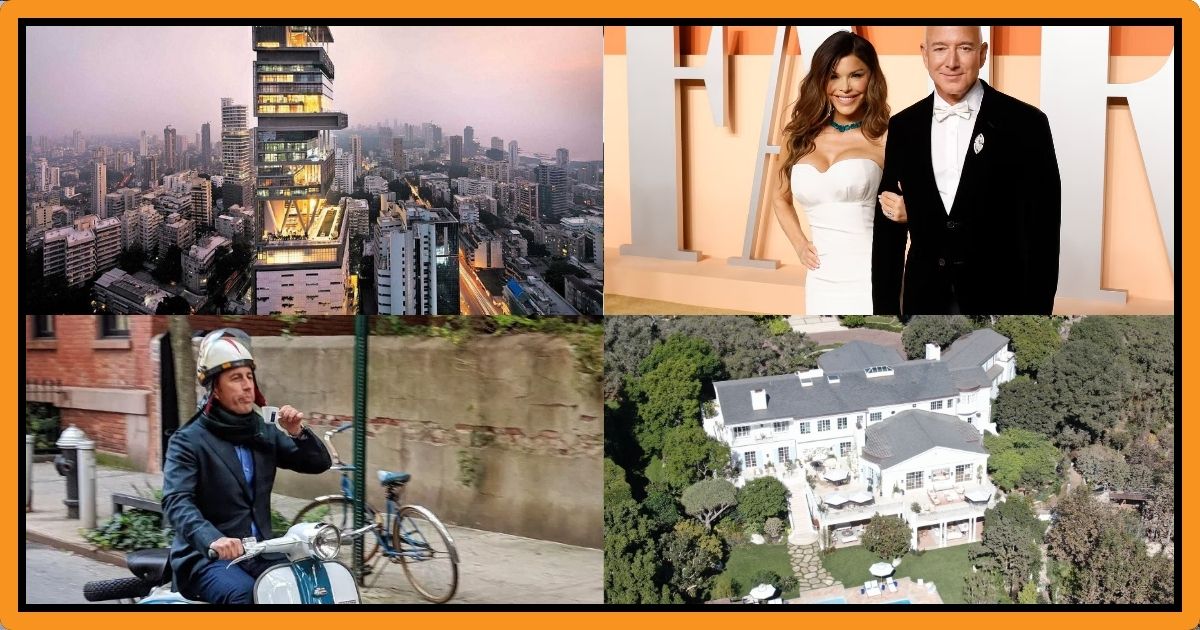
When it comes to luxury real estate, A-list celebrities don't just think big, they think astronomical. From sprawling mega-mansions overlooking the Pacific to palatial estates in the world's most exclusive neighborhoods, the homes of the world's biggest stars redefine the meaning of "luxury living." If you've ever wondered what it takes to own a celebrity-caliber property, or simply want to peek behind the gates of Hollywood's most jaw-dropping estates, you're in for a treat. Here's our definitive guide to the seven most expensive celebrity houses in the world and trust us, these price tags will make you reconsider what "home sweet home" actually means. 1. Mukesh Ambani's Antilia, Mumbai, India – $1+ Billion Image source from the internet This isn't just a house it's an architectural marvel. The 27-story skyscraper mansion rises 173 meters into the Mumbai skyline and boasts 600,000 square feet of living space. If that sounds excessive, wait until you hear about the amenities: a personal movie theater, a ballroom, a yoga studio, multiple swimming pools, and even a snow room (yes, you read that right an actual room to play in snow in tropical Mumbai). Image source from the internet The building requires a staff of 600 people just to maintain it. The annual electricity bill alone is rumored to be in the millions. Antilia isn't just expensive it's a statement of unimaginable wealth. Image source from the internet What This Tells Us About Luxury Real Estate: Ultra-luxury properties at this price point aren't about square footage they're about the experience, innovation, and exclusivity. Location, cutting-edge technology, and bespoke amenities are what command these astronomical prices. 2. Jeff Bezos' Sprawling Real Estate Portfolio – $500+ Million Image source from RIS Media, House Beautiful, NY Post, Realestate.au & Housivity While Amazon's founder doesn't own one single house that costs more than others on this list, Jeff Bezos' real estate portfolio collectively exceeds $500 million, making him one of the world's most prolific celebrity real estate investors. His crown jewel? A $165 million mansion in Beverly Hills a sprawling 12-acre estate complete with a tennis court, bowling alley, and infinity pool overlooking the city. But Bezos doesn't stop there. He owns: A $10 million ocean-view home in Washington state A $6.5 million penthouse in New York City Multiple properties in Miami and the Hamptons What's fascinating about Bezos' approach to real estate is that he views property not just as homes, but as investments and status symbols a masterclass in diversification for the ultra-wealthy. Image source from House Beautiful What This Tells Us About Luxury Real Estate: The wealthiest individuals don't put all their eggs in one basket. A diversified portfolio across multiple markets and property types provides both personal enjoyment and long-term wealth building. 3. Jerry Seinfeld's Real Estate Empire – $900 Million+ Portfolio Image source from Realtor.com Comedian Jerry Seinfeld has quietly become one of the most sophisticated real estate investors in the world, with a portfolio worth an estimated $900 million to $1 billion. His properties include: A $45 million penthouse in New York City (one of the most expensive apartments in Manhattan) A $32 million Hamptons estate A $15 million Malibu compound Multiple other properties across prime U.S. locations Image source from Realtor.com What makes Seinfeld's collection particularly noteworthy is his impeccable taste and strategic investment approach. He often purchases undervalued properties, renovates them with meticulous attention to detail, and sells them for substantial profits or keeps them as part of his ever-growing collection. Image from fandomwire.com & Realtor.com What This Tells Us About Luxury Real Estate: Strategic buying, quality renovation, and patience are just as important as capital in building a real estate empire. Premium locations in markets with strong appreciation potential yield the best returns. 4. Elon Musk's $500+ Million Property Collection Image source from Rethinking The Future Tech visionary Elon Musk has a love-hate relationship with real estate he famously said he'd sell most of his properties, yet continues to own multiple high-value estates worth $500+ million collectively. Some of his most notable properties include: A $70 million mega-mansion in Bel Air (formerly owned by a tech billionaire) Multiple homes in the Bel Air and Los Angeles area A $4.5 million mansion in Malibu, which he later listed for $3.5 million Image source from Rethinking The Future & Times Of India Interestingly, Musk has publicly stated he doesn't believe in hoarding real estate but his portfolio tells a different story. He often buys properties adjacent to his main residences to ensure privacy and expand his estates. Image from AD Middle East & Youtube What This Tells Us About Luxury Real Estate: Even billionaires recognize the value of prime real estate in prestigious locations. Privacy and exclusivity often justify the premium prices. 5. Tyler Perry's $330+ Million Real Estate Holdings Image source from loveproperty.com & homesandgaredens.com Entertainment mogul Tyler Perry has quietly built one of the most impressive real estate portfolios in Hollywood, worth an estimated $330+ million. https://www.youtube.com/watch?v=fCAuGbaybkY His crown jewels include: A 17,000+ square-foot mansion in Atlanta's most exclusive neighborhood (valued at $30+ million) A 20-acre estate in Malibu Multiple properties across Atlanta, Los Angeles, and New York Image source from loveproperty.com & homesandgaredens.com What's remarkable about Perry's approach is that he doesn't just own properties he invests in neighborhoods and communities. His Atlanta compound includes a sprawling media studio, guest homes, and space for entertainment and business operations. https://youtu.be/PTzI8_0Qu-M?si=J5fcJD9QhA5Hh9Ur What This Tells Us About Luxury Real Estate: Properties can serve multiple purposes residential, commercial, and investment simultaneously. The most successful real estate investors view their holdings as part of a broader business ecosystem. 6. Jennifer Lopez & Ben Affleck's Combined $340+ Million Portfolio Image source from Robb report, realtor.com & Fox Business Power couple Jennifer Lopez and Ben Affleck have built a formidable real estate empire together and separately, with combined holdings worth $340+ million. Notable properties include: Their $61 million Bel Air estate (purchased in 2023) a 12-bedroom, 24-bathroom masterpiece with a tennis court, wine cellar, and resort-style pools J.Lo's Beverly Hills mansion ($40+ million) Ben's Pacific Palisades home Multiple vacation properties across Miami, the Hamptons, and Mexico Image source from Robb report, realtor.com & Fox Business The couple's real estate strategy showcases how A-list celebrities use properties as both personal sanctuaries and wealth-building vehicles. Image source from CNN What This Tells Us About Luxury Real Estate: For entertainment's elite, real estate serves as a tangible way to anchor their wealth and create generational assets. Premium properties in established luxury markets appreciate significantly over time. 7. Oprah Winfrey's $560+ Million Real Estate Legacy Image source from Elle Decor, Re-thinking The Future Media empress Oprah Winfrey rounds out our list with one of the most diversified and impressive real estate portfolios in the world, valued at $560+ million. Her collection includes: A $100 million compound in Montecito, California (one of the most expensive homes ever sold) A $52.8 million estate in Montecito (purchased in 2019) A $12 million Chicago penthouse Vacation homes in Hawaii, Colorado, and elsewhere across the U.S. Image source from Elle Decor, Re-thinking The Future What sets Oprah's real estate strategy apart is her focus on lifestyle and legacy. Her properties aren't just about status they're curated sanctuaries designed for entertaining, hosting, and building community. https://www.youtube.com/watch?v=_x7kv2C5GlE What This Tells Us About Luxury Real Estate: True wealth is expressed through intentionality and purpose. The most successful individuals invest in properties that align with their lifestyle values and long-term vision. The "Selling Sunset" Effect: Why the Rich Buy What They Buy If you've watched Netflix's hit reality series "Selling Sunset," you've witnessed firsthand how the ultra-wealthy approach real estate and it's rarely about the traditional metrics like cost-per-square-foot or property condition. The show, which follows luxury real estate agents in Los Angeles, showcases multimillion-dollar properties that often seem wildly overpriced to the average buyer. A $40 million house with structural issues? A $30 million property in need of major renovation? Yet these homes sell and for asking price or higher. Why? Because Wealth Doesn't Buy Real Estate the Same Way Everyone Else Does The ultra-wealthy purchasing these homes in "Selling Sunset" and in real life aren't primarily motivated by: Square footage efficiency Cost-per-square-foot ratios Traditional ROI metrics Instead, they're buying for: 1. The View – A panoramic vista of Los Angeles, the Pacific Ocean, or city lights below can justify a $20+ million price premium. The view isn't just aesthetic; it's a status symbol and a daily luxury experience. 2. The Location – Exclusive neighborhoods like Bel Air, Hollywood Hills, and Brentwood command prices that defy traditional real estate logic. The address itself is the investment. Living on Mulholland Drive or in the Hollywood Hills signals membership in an elite club. 3. Future Investment Potential – While a property might seem overpriced today, savvy ultra-wealthy buyers recognize that prime Los Angeles real estate has historically appreciated 3-7% annually. In 20 years, a $50 million purchase could be worth $150+ million. 4. Privacy and Security – Gated estates on sprawling lots in exclusive enclaves command premiums that traditional appraisals can't capture. The ability to live away from public view is priceless to celebrities and billionaires. 5. Lifestyle and Status – Owning a "Selling Sunset" home isn't about shelter; it's about belonging to a rarefied echelon of society. It's about the story you can tell, the bragging rights, and the social capital. The "Selling Sunset" Lesson: Emotion Trumps Logic in Ultra-Luxury Real Estate In nearly every episode of "Selling Sunset," you'll see buyers fall in love with a property often irrationally. A $40 million mansion with dated interiors? "It has potential, and look at that view!" A $35 million home requiring $10 million in renovations? "But the location is unbeatable, and we're not worried about the cost." This emotional decision-making, combined with the tangible benefits of location and investment potential, explains why celebrity and ultra-wealthy real estate transactions rarely follow traditional real estate rules. The show brilliantly demonstrates that at this price point, real estate isn't about value, it's about legacy, status, privacy, and the intangible lifestyle premium that only certain addresses can provide. The Real Estate Lesson Behind These Astronomical Price Tags These seven celebrity homes represent far more than just expensive real estate they're masterclasses in wealth preservation, investment strategy, and lifestyle expression. Key Takeaways for Real Estate Investors: Location is Everything – All of these properties sit in the world's most coveted neighborhoods (Bel Air, Montecito, Mumbai's elite enclaves), where demand remains perpetually high. Amenities Matter – Ultra-luxury buyers don't just pay for square footage; they pay for unique, bespoke features and one-of-a-kind experiences. Diversification Wins – The wealthiest real estate investors don't put all their capital into a single property. A diversified portfolio across markets and property types provides stability and growth. Strategic Upgrades Drive Value – Properties that have been thoughtfully renovated and enhanced with premium finishes command exponentially higher prices. Privacy and Exclusivity Command Premiums – In the ultra-luxury market, the promise of privacy, security, and exclusivity justifies astronomical price tags. Real Estate is a Wealth-Building Tool – For billionaires and A-listers alike, real estate represents one of the safest, most tangible ways to build and preserve wealth across generations. Thinking About Your Own Real Estate Journey? While you may not be shopping for a $1 billion mansion anytime soon, the principles these celebrity properties embody apply to every real estate transaction whether you're a first-time homebuyer or an experienced investor. At IQI Global, we understand that real estate is more than just square footage and price tags. It's about finding the property that aligns with your lifestyle, maximizes your investment potential, and creates lasting value for your family or portfolio. Whether you're buying, selling, renting, or building a real estate investment strategy, our team of expert agents is here to guide you through every step of your journey. Ready to find your dream property or build your own real estate empire? Contact IQI Global today and let's start your real estate story. [custom_blog_form] Continue reading: 4 Essential Agent Fees When Selling a House in Malaysia 2026 Philippines Property Market 2026: Where Global Investors Should Look Explore 5 Unique Houses in Toronto with the Canadian Flare 3 Reasons Why You Will Definitely Want to Live in Petaling Jaya! | Real Estate 101 The Beginner’s Guide to Property Investment in Malaysia
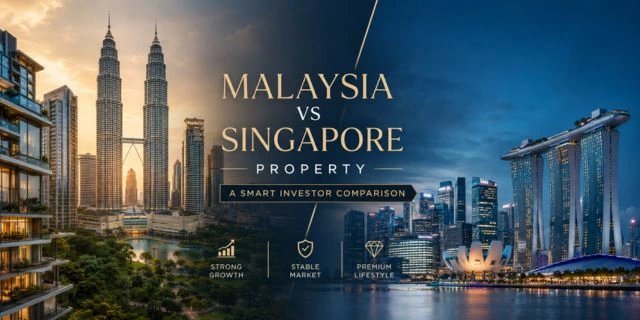
TL;DRKuala Lumpur property remains attractive because it offers lower entry prices, larger spaces, and stronger rental yield potential than Singapore. Singapore still wins on liquidity, currency strength and capital preservation. The smartest investors compare full costs, rental demand and resale risks before choosing either market. Singapore property has prestige, but the entry cost can make many investors pause. Kuala Lumpur, on the other hand, offers larger homes, lower prices, and stronger rental-yield potential without making buyers feel like they need to all-in on their asset just to enter the market. In this article, we will clearly compare the two markets, helping investors and you understand why KL still holds a prominent place on the regional property map. Key Takeaways KL property remains attractive because investors can access larger units, lower prices, and stronger rental yield potential than in Singapore. Singapore property remains stronger in terms of liquidity, currency safety, and long-term capital preservation, especially for investors who prioritize stability. Foreigners and Singaporeans can buy property in Malaysia, but they must account for state rules, minimum purchase thresholds, 8% stamp duty, and resale liquidity. Kuala Lumpur's rental yield can outperform Singapore's, especially outside the city center, where Numbeo data show KL at 5.71% versus Singapore at 2.74%. The best KL investment areas are not always the most glamorous. Areas with strong tenant demand, MRT or LRT access, and reasonable entry prices often perform better. What’s Inside This KL vs Singapore Property Guide1. Why do investors still choose KL property over Singapore?2. Is KL property cheaper than Singapore property in 2026?3. Which has better rental yield, KL or Singapore?4. Can foreigners and Singaporeans buy property in Malaysia?5. How does Singapore ABSD make Singapore property harder for foreign buyers?6. What are the best areas to invest in KL property?7. What risks should investors check before buying KL property?Frequently Asked Questions (FAQs) Estimated reading time: 18 minutes 1. Why do investors still choose KL property over Singapore? Investors still choose KL property because Kuala Lumpur offers more room, higher yield potential, and a lower entry point than Singapore. Singapore remains a powerful market for long-term wealth preservation, but KL often makes more sense for buyers who want rental income, affordability, and regional exposure. A simple way to understand it is this: Singapore property is often priced for safety and capital preservation, while KL property is often priced for income and space. If an investor wants a trophy asset in a stable city, Singapore is hard to ignore. If the same investor wants a larger condo, a higher rental yield, and a more flexible entry price, KL becomes very attractive. For example, PropCashflow compared what around SGD 500,000 can buy across Singapore and Malaysia. In Singapore, that amount may only get buyers into a small studio or act as a down payment for a much larger leveraged purchase. In Kuala Lumpur, the same capital, converted to about RM1.7 million, can place investors in the premium condo segment or even allow them to consider more than one rental asset. FactorSingaporeKuala LumpurTypical investor appealStability and capital preservationAffordability and rental incomeEntry priceHighLower than SingaporeRental yieldLowerHigher in many areasLiquidityStrongerDepends on location and buildingCurrency riskLower for SGD-based buyersHigher due to MYR exposureProperty size for the same budgetSmallerLarger The Kuala Lumpur property market also benefits from a broader tenant pool. Professionals, students, expats, families, digital nomads, and regional workers all support rental demand in different parts of the city. Areas like Mont Kiara, Bangsar South, Old Klang Road, Cheras, and KLCC cater to different renter groups, giving investors more ways to match a property with a real tenant base. That said, cheap does not always mean good. A lower price only becomes an investment advantage when the property can attract tenants, control costs, and exit at a realistic resale value. As the old investing reminder goes, “Price is what you pay; value is what you get.” For buyers comparing KL property investment opportunities, IQI Global’s Malaysia-based network can help connect investors with local market insights, new launches, and subsale opportunities across key neighborhoods in Kuala Lumpur. Approach us now! 2. Is KL property cheaper than Singapore property in 2026? KL property is significantly cheaper than Singapore property in terms of rent, purchase price, and overall cost of living. This is one of the biggest reasons regional investors continue to compare property in Malaysia vs Singapore before making a decision. According to Numbeo, the cost of living in Singapore, including rent, is 186.3% higher than in Kuala Lumpur, while rent prices are 377.2% higher. Numbeo also estimates that a person would need around RM37,222.60 in Singapore to maintain the same standard of living as in Kuala Lumpur, where RM13,000 is sufficient, assuming rent is included in both cities. Cost MetricKuala LumpurSingaporeDifference1-bedroom rent in city centreRM2,600.00RM10,942.51Singapore +320.9%1-bedroom rent outside city centreRM1,543.75RM8,212.65Singapore +432.0%3-bedroom rent in city centreRM4,942.86RM22,587.31Singapore +357.0%3-bedroom rent outside city centreRM2,811.76RM15,035.37Singapore +434.7%Source: Numbeo as of 17 May 2026 Property purchase prices show an even wider gap. Numbeo data show that Singapore’s price per square meter in the city center is 491.1% higher than in Kuala Lumpur. Outside the city center, Singapore is 1,011.4% higher than Kuala Lumpur. Property Purchase MetricKuala LumpurSingaporeDifferencePrice per sqm in city centreRM16,746.26RM98,993.69Singapore +491.1%Price per sqm outside centreRM5,932.22RM65,932.40Singapore +1,011.4%Source: Numbeo as of 17 May 2026 Global Property Guide also places Singapore among Asia’s most expensive residential markets, with Singapore at USD18,952 per sqm, while Kuala Lumpur luxury apartments are listed at USD2,628 per sqm as of April 2026. That gives investors a clearer picture of the breadth of the affordability gap across Asian cities. Let us give you an example: Ali has SGD 500,000 to invest. In Singapore, he may struggle to buy a meaningful private residential asset without taking on a larger loan and dealing with heavy buyer taxes. In KL, the same budget can open the door to a premium condo in selected locations, or a stronger rental-focused unit in a practical neighborhood. This is why Malaysia's property affordability remains one of KL’s biggest advantages. It allows investors to enter the market with more breathing room, rather than putting all their capital into a single expensive, low-yield asset. 3. Which has better rental yield, KL or Singapore? Kuala Lumpur generally offers a better rental yield than Singapore because property prices in KL are much lower relative to rents. Singapore rents are high, but property prices are even higher, which compresses yield. Gross rental yield simply means how much yearly rent a property earns before deducting costs. Think of it as the first health check of a rental property, not the final profit number. It tells you whether the rent is strong compared with the purchase price. According to Numbeo, Kuala Lumpur’s gross rental yield is 3.47% in the city center and 5.71% outside the center. Singapore records 2.57% in the city center and 2.74% outside the center. MarketGross Rental Yield, Outside CenterGross Rental Yield, Outside CentreKuala Lumpur3.47%5.71%Singapore2.57%2.74%Source: Numbeo as of 17 May 2026 PropCashflow also reports KL gross rental yields in many established rental areas ranging from around 5.0% to 7.5%, depending on location and property type. For example, Mont Kiara is listed at around 4.5% to 5.5%, Cheras at around 5.0% to 6.0%, and Old Klang Road at around 5.0% to 6.0%. KL AreaTypical Gross Yield SignalMain Tenant PoolCheras5.0% to 6.0%Young professionals, students, familiesOld Klang Road5.0% to 6.0%Mid-Valley workers, young professionalsMont Kiara4.5% to 5.5%Expat families, corporate tenantsBangsar4.0% to 5.0%Expats, professionals, digital nomadsKLCC3.5% to 4.5%Executives, corporate tenants Property Genie provides an even broader view of KL rental-yield areas, identifying Cheras, Setapak, Sentul, Bangsar South, Bukit Jalil, Kepong, Mont Kiara, KLCC, Sri Petaling, and Old Klang Road as key rental markets for 2026. Its data show that selected areas, such as Cheras, can reach an estimated gross yield of 5.5% to 9.5%, depending on the project and entry price. Here is the important part: rental yield in Kuala Lumpur depends heavily on the building, not just the area. Two condos in the same neighborhood can perform very differently. A well-managed building near transport, shops, and offices may rent quickly, while a tired building nearby may sit empty longer than leftover kuih raya after the office party. Investors should also remember that gross yield is not net profit. Maintenance fees, sinking fund contributions, repairs, vacancy, property taxes, loan interest, and furnishing costs can reduce the final return. A 6% gross yield may look beautiful on paper, but the real test is whether it still works after costs. 4. Can foreigners and Singaporeans buy property in Malaysia? Foreigners and Singaporeans can buy property in Malaysia, but they must comply with foreign ownership rules, state-level regulations, minimum purchase thresholds, and tax requirements. Singaporeans are generally treated as foreign buyers unless they hold Malaysian permanent resident status. Malaysia’s rules are not one-size-fits-all. Foreign property ownership in Malaysia depends on the state, property type, and price threshold. For example, Kuala Lumpur generally applies a RM1 million minimum purchase threshold for foreign residential buyers, while other states may have different rules or exemptions. ItemWhat Foreign Buyers Should KnowCan foreigners buy property in Malaysia?Yes, subject to state rules and minimum price thresholdsCan Singaporeans buy property in Malaysia?Yes, but they are treated as foreign buyers unless they hold Malaysian PR statusMinimum purchase priceCommonly RM1 million in key markets, but state rules varyState consentRequired for foreign ownershipStamp dutyFlat 8% for non-citizen residential transfers from 1 January 2026FinancingForeign buyers may receive lower loan margins than localsExit taxRPGT may apply when selling The Business Times reported that Malaysia doubled the flat stamp duty on residential property transfers involving non-citizens and foreign companies to 8% from 1 January 2026. On a RM1.5 million property, that means RM120,000 in stamp duty on the transfer alone, compared with about RM44,000 under the tiered rates for Malaysian citizens. This matters because the cost of property entry is not just the purchase price. A foreign buyer may also need to pay state consent fees, legal charges, valuation fees, registration fees, and financing-related costs. The Business Times cited expert comments that a foreign buyer’s total acquisition cost may run 8% to 11% above the headline price. Let us give you an example: Sarah from Singapore sees a KL condo priced at RM1.5 million. At first, it may look affordable compared with Singapore. But once she adds 8% stamp duty, legal fees, consent costs, and financing requirements, the real cash outlay becomes much higher. The property may still be a good buy, but only if the rental and resale plans support the full cost. Foreign buyer property rules in Malaysia should therefore be treated as part of the investment calculation, not a small technical detail. The smartest buyers ask three questions before buying: What is my real entry cost? Who will rent this unit? Who will buy it from me later? 5. How does Singapore ABSD make Singapore property harder for foreign buyers? Singapore ABSD makes Singapore property much harder for foreign buyers because the tax adds a very high upfront cost before the investor earns any rental income. This is one reason many foreign buyers compare Singapore property with Malaysia property before committing capital. ABSD means Additional Buyer’s Stamp Duty. It is an additional tax on top of the standard buyer's stamp duty. For foreign buyers, it can feel like paying for a second, invisible property before even collecting the first month's rent. According to PropertyNet, a foreigner buying a S$1 million Singapore residential property faces 60% ABSD, equal to S$600,000. After adding buyer stamp duty and legal fees, the total upfront cost can exceed S$647,000 before financing. Cost ComponentSingapore Foreign Buyer ExampleProperty priceS$1,000,000ABSD at 60%S$600,000Buyer’s Stamp Duty estimateAround S$44,000Legal feesAround S$3,000 to S$4,000Total upfront cost before financingAround S$647,000+Source: PropertyNet Singapore property tax and cooling measures are designed to protect the local housing market and manage demand. This makes sense from a policy angle, but it changes the return calculation for foreign investors. A buyer who starts with a 60% tax burden needs strong appreciation just to justify the entry cost. By comparison, Malaysia's foreign-buyer stamp duty at 8% is still painful but far lower than Singapore’s 60% ABSD for foreigners. PropertyNet estimates Malaysia’s total upfront costs for foreign buyers may rise to roughly 9% to 10% for most residential purchases after the 2026 change. This is why Singapore property is often better suited to investors who prioritize stability, prestige, and capital preservation. KL is more attractive for investors who care about rental income, space, and lower entry costs. Investor GoalBetter FitReasonCapital preservationSingaporeStrong currency, liquidity, and legal stabilityRental incomeKuala LumpurHigher yield potentialLower entry priceKuala LumpurMuch cheaper purchase price per sqmEasier resaleSingaporeDeeper buyer poolLarger homeKuala LumpurMore space for the same budgetLower foreign buyer taxKuala Lumpur8% Malaysia stamp duty vs 60% Singapore ABSD In short, Singapore is not weak. It is simply expensive to enter. KL is not automatically better either. It is more accessible, but investors must be sharper with location, tenant demand, and exit planning. 6. What are the best areas to invest in KL property? The best areas to invest in KL property depend on the investor’s goal. For rental yield, practical areas like Cheras, Setapak, Sentul, Old Klang Road, and Bangsar South often deserve attention. For expat demand and premium tenants, Mont Kiara, Bangsar, and KLCC remain important. PropertyGuru advises buyers to check whether visible neighborhood upgrades are backed by real financial data, such as rent, occupancy, and tenant demand. In simple terms, a new cafe is nice, but it does not automatically make your condo a strong investment. KL AreaBest ForInvestment SignalCherasMass-market rental demandStrong yield potential, especially near MRTSetapakStudents and working professionalsLower entry price and broader renter poolSentulCity-fringe valueAffordable entry with city accessBangsar SouthOffice-led rental demandProfessional tenant base from nearby officesOld Klang RoadMature rental marketCentral access without KLCC-level pricingMont KiaraExpat family rentalsInternational schools and corporate tenantsKLCCPremium tenantsHigh rent, but higher entry priceBukit JalilFamilies and lifestyle tenantsStable demand and lifestyle amenitiesSri PetalingResidential rental demandPractical layouts and improving connectivityKepongLocal tenant demandWide yield range, micro-location matters Cheras is one of KL’s strongest yield-led areas because it combines lower entry prices with great rental demand. MRT connectivity has also improved its appeal among young professionals and families. PropCashflow notes that properties within walking distance of MRT stations tend to show higher occupancy and better rental performance. Bangsar South works well for investors who want office-supported rental demand. Its tenant base includes professionals working in nearby commercial areas, making it more resilient than locations that depend only on lifestyle appeal. Property Genie estimates Bangsar South's gross yields at around 5.8% to 6.8% based on its 2026 rent and transaction signals. Mont Kiara remains one of the most established expat rental markets in Kuala Lumpur. Its strength comes from international schools, family-friendly condos, restaurants, services, and a long-standing expat ecosystem. However, investors must avoid overpaying, because a premium entry price can quickly reduce yield. KLCC remains strong for prestige and premium tenants, but it is not always the best yield play. High prices can compress returns, especially in trophy towers. Older, well-managed buildings may sometimes produce better yields than newer luxury buildings with expensive branding. Old Klang Road is a practical rental corridor because it offers central access, mature amenities, and a lower entry point than KLCC or Bangsar. PropCashflow highlights its connection to the Mid Valley and KL Eco City employment corridor, which helps support tenant demand. Because each KL neighborhood behaves differently, investors can work with IQI Global consultants to compare demand in the area, rental expectations, and suitable property options before making a decision. 7. What risks should investors check before buying KL property? Investors should check the full cost, tenant demand, resale liquidity, and building quality before buying a property in KL. The biggest mistake is assuming that a property is good just because it is cheaper than in Singapore. The Business Times warned that a “cheap” Malaysian condo could cost Singapore buyers more than expected once taxes, financing rules, and exit liquidity are factored in. This is the key lesson: currency conversion is not investment analysis. RiskWhat Investors Should CheckOverpayingCompare the actual transaction price, not only the brochure priceWeak rental yieldCheck achieved rents, not only asking rentsPoor building managementInspect lifts, security, facilities, and common areasHigh maintenance feesCalculate net yield after monthly costsResale difficultyCheck whether local buyers can afford your future resale priceCurrency riskConsider SGD/MYR or other currency exposureVacancy riskStress-test at least one month vacant per yearForeign buyer costInclude stamp duty, legal fees, state consent, and RPGTTenant mismatchMatch the unit type with the right renter group Resale liquidity is especially important. If locals are buying most properties in an area at RM400,000 to RM600,000, a foreign buyer entering at RM1 million or above must know who the future buyer will be. Otherwise, the property may look attractive at the point of entry but become hard to sell later. PropertyGuru recommends buyers stress-test their numbers by assuming one month of vacancy, realistic repairs, and rent slightly below the highest advertised asking price. This is practical advice because investments should work under normal conditions, not only under perfect ones. Let us give you an example: Daniel buys a condo because the brochure shows a 6% projected yield. But after one vacant month, with repairs, maintenance fees, and a slightly lower rent, his real return drops to around 4%. The property may still be decent, but it is no longer the easy win he imagined. Currency risk is another point. A Singapore-based investor earning in SGD but collecting rent in MYR must consider exchange-rate movement. A weaker ringgit can make buying cheaper, but it can also reduce returns when rental income is converted back into SGD. Building-level performance matters more than broad area hype. A well-managed condo in a normal area can outperform a poorly managed tower in a famous postcode. In KL, the boring building with clean lifts, good security, and steady tenants may beat the shiny project with a pool nobody maintains. For investors who want support beyond online research, IQI Global combines local agent knowledge, data-led property matching and real estate services across buying, selling, renting, property management and investment advisory. KL property remains relevant because it solves problems that Singapore property often cannot: affordability, space, and rental yield. Singapore still offers stronger liquidity and capital preservation, but KL gives investors a practical entry into Southeast Asia real estate. The wise move is not to chase the cheapest unit. It is to buy the right property, in the right building, at the right price, for the right tenant. Frequently Asked Questions (FAQs) a. Is KL property cheaper than Singapore property? Yes, KL property is much cheaper than Singapore property in terms of rent and purchase price. Numbeo data shows Singapore’s price per square meter outside the city center is more than 1,000% higher than Kuala Lumpur's. b. Is Malaysia better than Singapore for property investment? Malaysia is better for affordability and rental yield, while Singapore is better for liquidity, currency strength, and capital preservation. The better market depends on whether the investor wants income, stability, or long-term appreciation. c. Can foreigners buy property in Malaysia? Yes, foreigners can buy property in Malaysia, but state rules, minimum purchase prices, and consent requirements apply. Foreign buyers also need to consider Malaysia’s 8% foreign-buyer stamp duty, which takes effect from 1 January 2026. d. Can Singaporeans buy property in Malaysia? Yes, Singaporeans can buy property in Malaysia and are generally treated as foreign buyers unless they hold Malaysian permanent resident status. They should check state rules, financing terms, stamp duty, RPGT and resale demand before buying. e. Which has a better rental yield, KL or Singapore? KL generally has a better rental yield than Singapore. Numbeo data show KL's gross rental yields at 3.47% in the city center and 5.71% outside the center, compared with Singapore at 2.57% and 2.74%, respectively. f. What are the best areas to invest in KL property? Cheras, Setapak, Sentul, Bangsar South, Old Klang Road, Mont Kiara, KLCC, and Bukit Jalil are among the key investment areas in KL. The best choice depends on budget, tenant profile, yield target, and resale plan. g. What are the biggest risks of buying property in KL? The biggest risks are overpaying, weak resale demand, vacancy, poor building management, high maintenance fees, and currency movement. Investors should check actual rents, transaction prices, building conditions, and total costs for foreign buyers before buying. Explore KL property opportunities with IQI Global and connect with local experts who understand Malaysia’s market, rental demand, and foreign buyer journey. [custom_blog_form] Reference Chuah, B. K. (2026, May 13). That ‘cheap’ Malaysia condo could cost Singapore buyers far more than they think. The Business Times. Retrieved fromhttps://www.businesstimes.com.sg/international/asean/cheap-malaysia-condo-could-cost-singapore-buyers-far-more-they-think Fezili, F. (2026). Top 10 best areas in Kuala Lumpur for rental yield 2026 (Condominiums & landed houses). Property Genie. Retrieved fromhttps://www.propertygenie.com.my/insider-guide/top-10-areas-in-kuala-lumpur-for-rental-yield-2026-NjjUkLPJzYjTXYA3N825e7 Global Property Guide. (2026, April). Square meter/square foot prices in Asian cities. Retrieved from https://www.globalpropertyguide.com/asia/square-meter-prices Numbeo. (2026, May). Cost of living comparison between Kuala Lumpur and Singapore. Retrieved fromhttps://www.numbeo.com/cost-of-living/compare_cities.jsp?country1=Malaysia&city1=Kuala+Lumpur&country2=Singapore&city2=Singapore Numbeo. (2026, May). Property prices comparison between Kuala Lumpur and Singapore. Retrieved from https://www.numbeo.com/property-investment/compare_cities.jsp?country1=Malaysia&city1=Kuala+Lumpur&country2=Singapore&city2=Singapore PropertyNet. (2026, May 4). Cross-border property investment: Singapore vs Malaysia vs Thailand in 2026. Retrieved fromhttps://propertynet.sg/cross-border-property-investment-singapore-malaysia-thailand-2026/ PropCashflow. (2026, March 7). Kuala Lumpur property guide 2026: Best areas for investment. Retrieved fromhttps://propcashflow.my/blog/kuala-lumpur-property/ PropCashflow. (2026, April 7). Singapore vs Malaysia property investment: Side-by-side comparison (2026). Retrieved fromhttps://propcashflow.my/blog/singapore-vs-malaysia-property-investment-comparison/ Shah, M. (2026, April 29). How to track property rental yields and neighborhood uplift signals in Malaysia. PropertyGuru. Retrieved fromhttps://www.propertyguru.com.my/property-guides/malaysia-rental-yield-signals-what-buyers-must-check-pjx-79654
Ready to get started?
Get in touch now.