20+
Markets
Access opportunities across IQI's international network.

Greetings! I am JIQI. 👋
How may I assist you today? 😊
Please choose one of the following options:

JIQI can make mistakes. Always verify listings and prices with an IQI agent before making any property decisions.
For Property Investors
Connect with our investment team for yield-focused opportunities across subsale, auction, and new-launch projects.
Talk to the Investment TeamWhy Invest With IQI

We surface opportunities filtered by rental yield and capital growth potential, not just listing price.
Get a clear read on comparable sales, rental demand, and project track records before you commit.
Access vetted opportunities across IQI's network markets, not just your home country.
Markets
Access opportunities across IQI's international network.
Listing Types
Subsale, auction, and new-launch projects in one place.
Dedicated Advisor
A single point of contact for your whole portfolio.
Shortlisting
Filtered by yield and growth potential, not just price.
Your Options
Existing properties, ready to rent out or resell immediately. Best for near-term yield.
Bank-owned and court auction listings, often below market price. Best for capital growth.
Developer projects at launch pricing, with staged payment schemes. Best for long-term appreciation.
Where to Invest
| Area | Price per sq ft | Rental Yield |
|---|---|---|
| KLCC | RM1,000+* | ~4.9%* |
| Johor Bahru | RM500-800* | 5-7%* |
| Penang (Georgetown) | RM400-700* | 4-5.5%* |
| Melaka | RM300-500* | - |
Try It Yourself
Check the return on any opportunity before you commit.
Try It Yourself
Estimate the fees to budget for on your next purchase.
There's no fixed minimum. Your advisor will match opportunities to whatever budget you bring, from a single subsale unit to a multi-project portfolio.
Yes. Your advisor can walk you through financing options alongside each opportunity so you can compare the real, all-in return.
Yes, many of our investors buy remotely. Ask about our international desk if you're buying from outside Malaysia.
We filter by rental yield, capital growth potential, and your stated goals, not just listing price, before anything reaches your shortlist.
From the IQI Blog
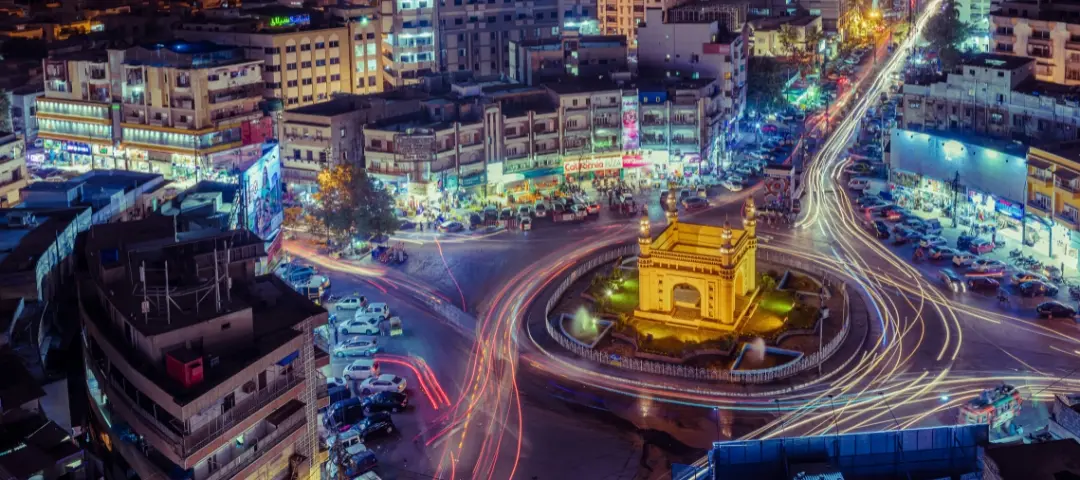 Pakistan Real Estate Market Insights 2026
TL;DRPakistan’s real estate market in 2026 offers strong residential demand and potentially higher returns from selected commercial properties. Annual property turnover is estimated at PKR 7.1 trillion, or 6.7% of GDP, while the national average gross apartment rental yield was 6.53% in Q3 2025. In Karachi, DHA detached houses yield about 3.36%–5.50%, compared with 8.00%–13.00% for Grade-A commercial properties along Shahrah-e-Faisal, making location and property type key factors for investors. A plot in Karachi, an apartment in Islamabad and a shop in Lahore can all sit under the Pakistan real estate label, but they behave like cousins at a wedding: related, not identical. Residential property follows household demand, affordability and rent; commercial property depends more on business demand, footfall and occupancy. This guide compares both sides of the market using concrete 2026 figures, not one-size-fits-all hype. Key Takeaways The Karachi property market recorded about 16.6% year-on-year house-price growth in June 2026. The national gross rental yield in Pakistan, on average, for apartments stood at 6.53% in Q3 2025. In February 2026, average house prices stood at approximately PKR 83.6 million in Islamabad, PKR 77.7 million in Karachi, and PKR 52.1 million in Lahore. In the Pakistan commercial real estate market, Grade-A commercial properties along Shahrah-e-Faisal can generate gross yields of 8.00% to 13.00%, compared with 3.36% to 5.50% for detached houses in DHA Karachi. Pakistan’s residential mortgage market was estimated at only about 0.5% of GDP in 2025, making limited access to financing a major constraint on the Pakistan housing market. Get Updated on Pakistan Market1. What makes Pakistan an attractive real estate Investment Destination?2. How is Pakistan's economy performing right now?3. What is happening in Pakistan's property market in 20264. How much can you earn from property investment in Pakistan?5. Where are the best places to invest in Pakistan right now?6. What do experts say about the market?7. Can foreigners buy property in Pakistan? What are the rules?8. Frequently Asked Questions (FAQs) 1. What makes Pakistan an attractive real estate Investment Destination? Pakistan’s main attraction is a large housing market, ongoing household formation, undersupplied urban housing, and commercial demand driven by expanding cities. The opportunity is not simply “property prices will rise.” Structural changes are driving residential demand and commercial activity and can last much longer than a speculative cycle. Global Property Guide reported a population of 241.5 million in the 2023 census and 38.34 million households, while its PMRC-based analysis estimated roughly 36.24 million residential units nationally. The same analysis calculated a basic shortage of about 2.10 million units under a one-household-per-unit methodology. That shortage should not be confused with every larger housing shortage headline in Pakistan. Milkiyat’s coverage of National Housing Policy 2025 cited an estimated shortage of around 13 million units, but also noted that the calculation method was not disclosed. The difference matters because one figure measures a basic unit shortfall while broader estimates can include affordability, quality and other housing deficiencies. Residential demand also has a strong overseas link. Dawn reported that Pakistan received US$41.6 billion in workers’ remittances in FY2025-26 and that households receiving foreign remittances accounted for about 29% of measured construction and home-improvement spending despite representing fewer than one in ten households. That creates a natural base for the Pakistan property market for overseas investors, particularly in new homes, apartments and managed residential projects. The commercial side benefits differently from urbanization in Pakistan's real estate trends. More occupied housing creates customers for shops, offices, services and mixed-use projects. Commercial property therefore works best where residential density becomes real occupancy, not merely where large numbers of plots have been sold on paper. For investors, that distinction is crucial. Residential property can benefit simply from a large pool of households needing somewhere to live. Retail, office and mixed-use assets need those households to live, work and spend within the catchment before commercial rents become sustainable. 2. How is Pakistan's economy performing right now? Pakistan’s economy provides a more stable backdrop than during its most volatile recent periods, but Pakistan real estate investment is still operating in a relatively expensive financing environment. That affects residential buyers who need mortgages and commercial investors who rely on leverage or compare property yields with financial returns. IQI Global listed the policy rate at 11.50%, inflation at 11.70%, foreign-exchange reserves at US$22.04 billion, and PKR/USD at 278.16. Economic indicatorReported figureResidential impactCommercial impactPolicy rate11.50%Mortgage affordability remains difficultDebt-funded acquisitions face a higher hurdle rateInflation11.70%Construction and household budgets remain sensitiveFit-out, replacement and operating costs matter moreForex reservesUS$22.04BGreater macro stability can help buyer confidenceStability helps long-horizon business planningPKR/USD278.16Foreign-currency buyers evaluate local prices differentlyOverseas capital can compare Pakistan yields with other markets Source: IQI Global The practical effect of the housing market rate environment is simple: a property can look affordable in cash terms while being much less affordable when financed. Global Property Guide estimated residential mortgages at roughly 0.5% of GDP in 2025, so formal mortgage lending remains small relative to the size of the property economy. For commercial property, higher borrowing costs raise the return an investor needs to justify using debt. IQI Global described KIBOR plus roughly 150–300 basis points as a factor limiting leveraged and speculative buying. This favors buyers with patient capital. In residential markets, that means focusing more on actual rental demand and delivery quality. In commercial markets, it means paying closer attention to rental yield, vacancy risk, and whether a business tenant can realistically support the asking rent. 3. What is happening in Pakistan's property market in 2026 The Pakistan real estate market outlook for 2026 is positive in some segments but highly uneven. Residential prices are rising in several markets, apartment demand is growing in major cities, and completed projects are attracting attention. Commercial opportunities are increasingly tied to occupied catchments, transit, retail activity, and mixed-use development rather than speculative land alone. Business Recorder reported that residential prices in major cities had risen by an estimated 10%–15% over the preceding weeks as investor demand strengthened. That was a short-period market estimate rather than a national price index, so it should not be treated as a guaranteed annual growth rate. a. How are residential prices and yields comparing by city? Global Property Guide’s February and Q3 datasets show why Pakistan property prices need to be compared city by city rather than through one national average. CityAvg. house price, Feb. 2026Avg. apartment price, Feb. 2026Avg. gross apartment yield, Q3 2025IslamabadPKR 83.6MPKR 25.5M7.01%KarachiPKR 77.7MPKR 27.0M6.50%LahorePKR 52.1MPKR 23.8M5.87%RawalpindiPKR 35.0MPKR 12.1M6.73% Source: Global Property Guide The table shows why Islamabad property market pricing cannot be read the same way as Lahore or Rawalpindi. Islamabad had the highest average house price among these cities, while its apartment yield average was also the strongest of the four in the Q3 2025 dataset. The Karachi property market offers another pattern. Apartment prices were the highest of the four cities in February 2026, while its commercial micro-markets show much wider income potential depending on property type. B. What is happening in commercial property? IQI Global 2026 Karachi analysis shows the spread clearly. Grade-A commercial property on Shahrah-e-Faisal was shown at 8.00%–13.00% gross rental yields, while residential yields ranged from 3.36%–5.50% for DHA detached houses, 4.00%–6.50% for Clifton luxury apartments and 4.50%–6.00% for Bahria Town Karachi villas. Karachi segmentProperty typeGross yield rangeShahrah-e-FaisalGrade-A commercial8.00%–13.00%Gulshan/JauharMid-rise homes6.50%–8.20%Scheme 33Suburban homes5.50%–7.20%CliftonLuxury apartments4.00%–6.50%Bahria Town KarachiVillas4.50%–6.00%DHA KarachiDetached houses3.36%–5.50% Source: IQI Global This does not mean Pakistan's commercial real estate market assets automatically beat homes. A commercial shop with weak footfall can sit empty longer than a well-priced apartment. The higher yield is compensation for factors such as vacancy, tenant concentration, and location risk. These properties look attractive, but they need your first step. Let us guide you on this Pakistan property-buying journey! Approach IQI Now! C. Why are high-rise and mixed-use projects gaining attention? Higher land values and denser cities make high-rise apartment developments in Pakistan a practical response to urban growth. Apartments also suit buyers who want security, amenities, and easier property management, especially when they live abroad. For commercial investors, mixed-use developments in Pakistan can concentrate residents, offices, and retail demand in one location. Their success still depends on real occupancy. A glossy ground-floor retail plan is not the same thing as customers walking past the door every afternoon. A current Grade A office space Pakistan occupancy figure for Islamabad or Lahore is not established here, so no office-occupancy percentage is presented. The commercial analysis therefore focuses on property types for which usable 2026 pricing, yield or market evidence is available. 4. How much can you earn from property investment in Pakistan? Returns from property investment come from two places: income while you own the property and any capital gain when you sell it. Residential and commercial property can provide both, but the balance is different. For residential investors, Global Property Guide recorded national apartment gross yields between 3.16% and 12.9% in Q3 2025, with a national average of 6.53%. For commercial investors, UnionDevelopers described 6%–10% gross yields as a typical benchmark for established commercial real estate locations. That range is broadly consistent with IQI Global’s stronger Karachi commercial examples, although individual properties can perform very differently. A useful calculation is straightforward. UnionDevelopers used a PKR 15 million purchase generating PKR 1.2 million in annual rent as an example of an 8% gross rental yield. PKR 1.2 million annual rent ÷ PKR 15 million purchase price = 8% gross yield. Gross yield is not your take-home return. Residential owners may face maintenance, vacancy, and management costs; commercial property owners may also face longer vacancy periods, fit-out issues, and tenant-specific expenses. Purchase taxes, transfer costs, and eventual selling costs further reduce total returns. Capital appreciation can materially change the picture. IQI Global put Clifton residential pricing at PKR 15.6 crore with 16% year-on-year appreciation. The same IQI Global snapshot showed net yields for DHA Phase 8 commercial property at 11%–13%. These numbers show why “Which is better, residential or commercial?” has no universal answer. Residential property typically offers a larger pool of occupiers and buyers, while well-located commercial assets can generate more income. The right comparison is net return after vacancy, expenses, taxes, and financing, not the biggest percentage in a sales brochure. 5. Where are the best places to invest in Pakistan right now? The best cities for real estate investment in Pakistan 2026 depend on whether the investor wants rental income, capital preservation, active value creation, or a longer development play. Islamabad, Karachi, Lahore, and Rawalpindi each offer a different mix. a. Islamabad: premium residential pricing and planned growth Islamabad suits investors who want exposure to apartments in Pakistan and established residential demand in a planned urban environment. Global Property Guide recorded an average house price of PKR 83.6 million and an apartment price of PKR 25.5 million in February 2026, with an average apartment gross yield of 7.01% in Q3 2025. For commercial property, Islamabad’s growth case is more closely tied to mixed-use development, offices, retail and the expansion of populated residential communities. Investors should distinguish a building with functioning tenants from an off-plan project whose future footfall exists only in a projection. B. Karachi: scale plus strong commercial yield pockets Karachi offers one of Pakistan's clearest residential-versus-commercial contrasts in the property market. Global Property Guide recorded average February 2026 prices of PKR 77.7 million for houses and PKR 27 million for apartments. On the retail real estate market and broader commercial side, yield depends heavily on the business corridor. IQI Global put Shahrah-e-Faisal Grade-A commercial at 8%–13% gross yield while several residential segments sat below that range. If you are interested in Karachi property, approach our team now for more information! Approach IQI Now! C. Lahore: deep residential demand and an active commercial market Lahore remains a major property market for homebuyers and investors alike. Global Property Guide recorded average February 2026 prices of PKR 52.1 million for houses and PKR 23.8 million for apartments. Commercial investors in Lahore need to look beyond the word “commercial” on a site plan. Retail property performance in Pakistan depends on actual nearby residents, road visibility, parking, utilities, and commercial-use approval. The same logic applies to offices: businesses pay for accessibility and usable space, not simply a prestigious project name. D. Rawalpindi: lower residential entry prices with urban-growth potential Rawalpindi had a lower average residential property entry point than Islamabad in Global Property Guide’s February 2026 dataset: PKR 35 million for houses and PKR 12.1 million for apartments. Its Q3 2025 average apartment gross yield was 6.73%. The commercial plots in Pakistan case depends on development becoming an occupied catchment. Road projects and new communities may improve accessibility, but a commercial asset still needs businesses and customers before theoretical appreciation turns into usable income. CityResidential caseCommercial caseBest suited toIslamabadPremium pricing, strong apartment yieldsMixed-use, retail and office demand as communities densifyStability and managed residential assetsKarachiLarge market with varied residential segmentsStrong yield pockets in established commercial corridorsIncome-focused investors comfortable with micro-market differencesLahoreBroad residential choice and apartment growthRetail, commercial plots and mixed-use opportunitiesInvestors seeking a deep local marketRawalpindiLower average entry prices than IslamabadGrowth linked to populated new corridorsBuyers balancing entry cost and longer-term expansion The practical lesson is that capital appreciation in Pakistan property decisions should start with the micro-market. A strong city cannot rescue a weak building, and a fashionable housing scheme cannot guarantee a profitable shop. 6. What do experts say about the market? Junaid Hamid, Head of lQl Karachi Pakistan Junaid Hamid, Head of IQI Karachi Pakistan, highlighted an 11.50% policy rate, 11.70% inflation, US$22.04 billion in foreign-exchange reserves and an exchange rate of PKR 278.16 per US dollar. For both residential property and commercial assets, He describes a market where macro stability has improved, but capital remains expensive. He also put the citywide gross residential yield at 6.67%, while Grade-A Shahrah-e-Faisal commercial property was shown at 8%–13%. The gap supports a value-led approach: compare actual income by asset type instead of assuming all Pakistan property offers the same return. Gohar Ali Khan of Business Recorder reported that Pakistan property prices in major cities rose by an estimated 10%–15% over the preceding weeks. That points to stronger sentiment, but a short-term jump should not be extrapolated into a multi-year forecast for either residential or commercial assets. Delivery quality is another recurring issue in Pakistan real estate investment. Aqib H Shah, Chief Commercial Officer of One Homes, said after completion of its Lahore residential project: “If it can be done in New York, London or Dubai, it can be done in Pakistan.” For investors, the takeaway is broader than luxury housing: developer execution matters as much for an apartment tower as for a retail or mixed-use project. The combined view is less exciting than a “prices only go up” headline, which is probably a good thing. Demand in Pakistan's residential real estate market is substantial, and commercial yields can be compelling in the right location, but financing costs, documentation, and project quality still separate investable assets from speculative ones. 7. Can foreigners buy property in Pakistan? What are the rules? Foreign nationals working or residing in Pakistan can buy or rent property, but foreign property ownership transactions in Pakistan require specific legal formalities involving the Board of Investment and the Trade Development Authority of Pakistan. That statement should not be stretched into “every foreigner can freely buy every property.” The exact approval path can vary, so anyone buying residential property should verify the title, transferability, project approval, taxes, and any applicable authority requirements before paying a deposit. A foreign buyer considering commercial property should perform the same ownership checks and also confirm lawful commercial land use. A shop, office, or commercial plot is not safe merely because it is marketed for business use. For either segment, a practical Pakistan property due diligence guide starts with six checks: ownership record, registry or title, project or land-use approval, NOC status where applicable, outstanding dues, and litigation or encumbrances. Developer delivery history matters particularly for off-plan residential towers and mixed-use commercial developments. Current rules for using a Roshan Digital Account real estate route are not established here, so no claim is made about whether a specific RDA structure can fund a residential or commercial purchase. Likewise, no current minimum investment is stated for a Pakistan long-term residency program. Foreign buyers should use a qualified property lawyer and tax adviser before completing a transaction. The same caution applies to overseas Pakistanis: familiarity with the country does not eliminate risks and returns related to title, approvals, payment records, or project delivery. Thinking about buying property in Pakistan? Leave your worries behind and let IQI guide you step by step toward owning your dream home! Approach IQI Now! Pakistan is not one property market but a collection of residential and commercial property micro-markets. The 2026 opportunity is strongest where real demand, legal clarity, infrastructure, and realistic yields overlap. Residential assets offer depth and housing-led demand; commercial assets can offer higher income in the right catchment. Investors should compare city, asset type, financing cost and exit liquidity before treating any headline return as a forecast. 8. Frequently Asked Questions (FAQs) a. What is the outlook for Pakistan's real estate market in 2026? The forecast for Pakistan's real estate market is constructive but uneven. Residential demand remains supported by housing needs and urban growth, while commercial returns depend more heavily on tenant demand and location. Business Recorder reported an estimated 10%–15% residential price increase over several weeks in major cities, but that short-period figure is not a nationwide annual forecast. b. What is Pakistan's average gross rental yield? Global Property Guide calculated a 6.53% national average rental yield for apartments in Pakistan in Q3 2025, with individual properties ranging from 3.16% to 12.9%. Commercial yields can be higher in strong business locations, but the range depends heavily on vacancy and tenant demand. c. Which city in Pakistan has the best residential rental yield? Among Karachi, Lahore, Islamabad and Rawalpindi, Global Property Guide recorded Islamabad’s Q3 2025 average apartment rental yield at 7.01%, compared with 6.73% in Rawalpindi, 6.50% in Karachi and 5.87% in Lahore. This comparison applies to apartments, not every residential or commercial asset in those cities. d. Which is better in Pakistan, residential or commercial property? Residential vs commercial property investment in Pakistan depends on the goal. Residential property generally suits investors who prioritize a broad occupier market and simpler resale, while well-positioned commercial assets can produce higher rental income but expose the owner to greater location, vacancy, and tenant risk. e. What are the best cities for property investment in Pakistan? Islamabad, Karachi, Lahore, and Rawalpindi offer different combinations of property prices, yields, and entry costs. Global Property Guide mentioned that average house prices ranged from PKR 35 million in Rawalpindi to PKR 83.6 million in Islamabad among these four cities. Commercial investors should then narrow the choice to actual business corridors and occupied catchments. f. Can foreigners buy property in Pakistan? Foreign nationals working or residing in Pakistan may buy or rent property, subject to legal formalities. Buyers should verify current requirements, title, approvals, transferability, and taxes before purchasing either residential or commercial real estate. g. What should investors check before buying property in Pakistan? Before investing in Pakistan real estate, verify ownership, title or registry records, NOC and planning approvals where applicable, land use, transferability, outstanding dues, tax position, and litigation. Commercial buyers should additionally test footfall and tenant demand; residential buyers should assess completion status, livability, and realistic rent. Explore residential and commercial opportunities in Pakistan with IQI Global and speak with a local property professional before making your next move. [custom_blog_form] References Delmendo, L. C. (2026, March). Pakistan's residential property market analysis 2026. Global Property Guide. Retrieved fromhttps://www.globalpropertyguide.com/asia/pakistan/price-history FinanceWire. (2026, October 4). One Homes completes One Canal Road in Lahore, a new benchmark for luxury real estate delivery in Pakistan. markets.businessinsider.com. Retrieved fromhttps://markets.businessinsider.com/news/currencies/one-homes-completes-one-canal-road-in-lahore-a-new-benchmark-for-luxury-real-estate-delivery-in-pakistan-1036595589 Hamid, J. (2026, August). Pakistan stability, reform and yield-drive growth. IQI Global. Retrieved fromhttps://iqiglobal.com/blog/wp-content/uploads/2026/07/Juwai-IQI-Newsletter-August-2026-15.pdf Hamid, J. (2026, October). Pakistan: Resilience in a high-rate market. IQI Global. Retrieved fromhttps://iqiglobal.com/blog/wp-content/uploads/2026/10/Juwai-IQI-Newsletter-October-2026-15.pdf Iqbal, A. (2026, June 9). Commercial real estate in Pakistan: A complete investor’s guide for 2026. UnionDevelopers. Retrieved fromhttps://www.uniondevelopers.com/blog/commercial-real-estate-in-pakistan/ Khan, A. H. (2026, October 4). Why Pakistan saves in plots. Dawn. Retrieved fromhttps://www.dawn.com/news/2033860 Khan, G. A. (2026, July 28). Property demand, prices surge across Pakistan’s major cities. Brecorder. Retrieved fromhttps://www.brecorder.com/news/40432214/property-demand-prices-surge-across-pakistans-major-cities Khan, M. (2026, October 6). Pakistan launches National Housing Policy 2025, first update in nearly 25 years. Milkiyat.com. Retrieved fromhttps://milkiyat.com/articles/pakistan-launches-national-housing-policy-2025-first-update-in-nearly-25-years One Homes. (2026, February 5). Pakistan property market predictions for 2026 and beyond. onehomes.com. Retrieved fromhttps://onehomes.com/blog/pakistan-property-market-predictions-for-2026-and-beyond One Homes. (2026, July 13). High ROI real estate zones in Pakistan (2026). onehomes.com. Retrieved fromhttps://onehomes.com/blog/best-high-roi-property-investment-areas-in-pakistan
Continue Reading
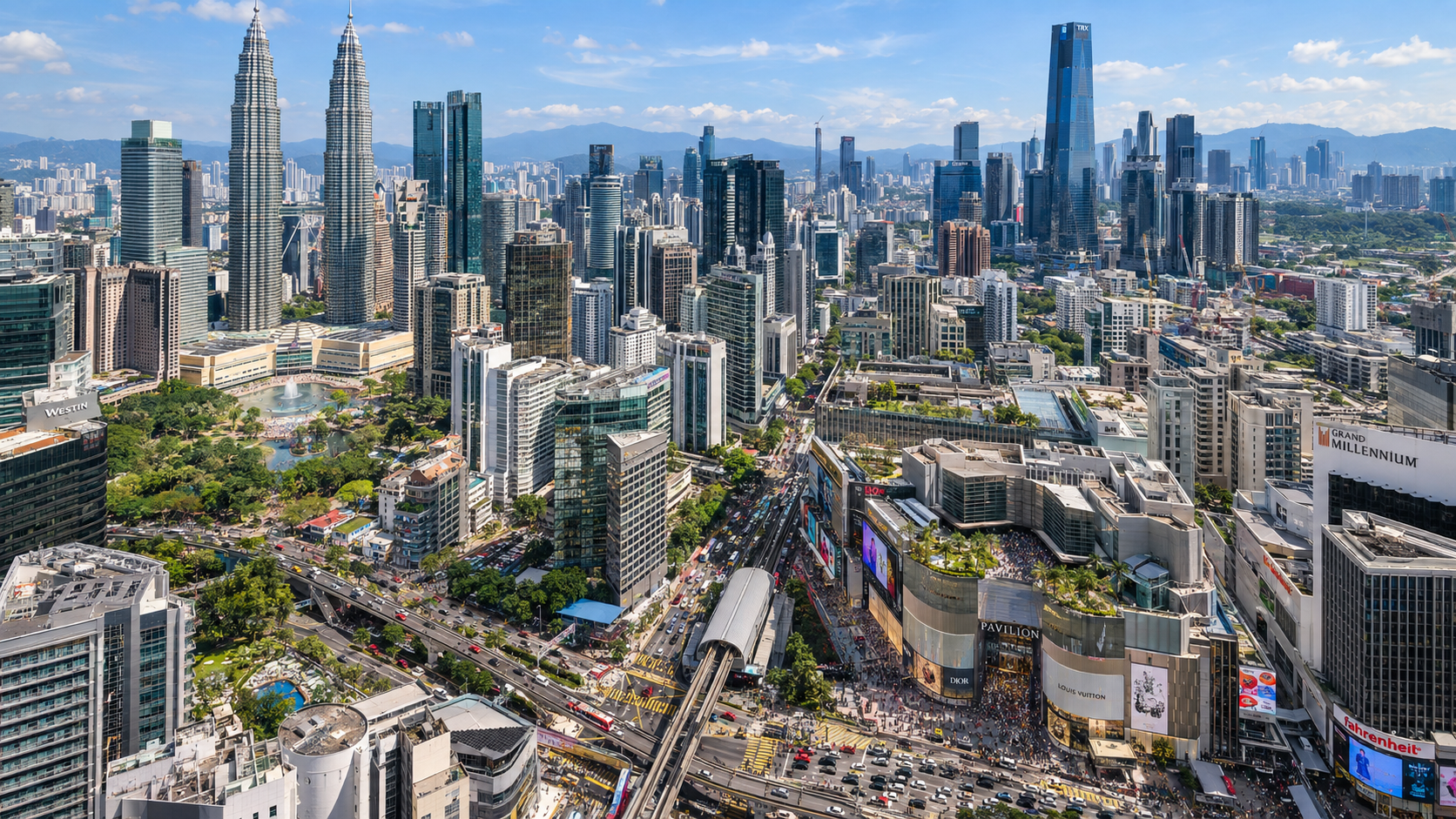 Why Kuala Lumpur’s Golden Triangle Matters More Than Ever in Visit Malaysia 2026
F1 is back in Malaysia this weekend and Visit Malaysia 2026 is in full swing. Meanwhile, the Kuala Lumpur Golden Triangle is where a lot of that visitor money lands. Hotels, malls, makan and a good lepak session after the race: the crowd spends on all of it here. So why does it matter more than ever? Because the Golden Triangle packs KLCC, Bukit Bintang and TRX into one connected district, so rising visitor numbers show up here first. That can support demand for selected property types. But tourism growth does not guarantee higher prices or rental returns. Entry price, supply, building rules and management still decide that. Already eyeing a unit near KLCC or TRX? Skip to the repayment calculator and check the monthly damage first. TL;DR The Kuala Lumpur Golden Triangle covers the city-centre zone around KLCC and Bukit Bintang, with TRX increasingly included. Tourism Malaysia reported 21.2 million international arrivals in H1 2026, up 2.5% year-on-year. VM2026 now runs to the end of 2027, still targeting 47 million international arrivals and RM329 billion in receipts. F1 is at Sepang from 2 to 4 October 2026, with race-week pop-ups at The Exchange TRX and Plaza PETRONAS. DE Rantau Nomad Pass: 3 to 12 months, renewable once, for remote workers earning above USD 24,000 (tech) or USD 60,000 (non-tech) a year. NAPIC H1 2026: KL deals rose 4.2% to 10,772, but their total value fell 8.7% to RM14.90 billion. In this guideTL;DRWhat Is the Kuala Lumpur Golden Triangle?Why Does Visit Malaysia 2026 Put the Golden Triangle in the Spotlight?F1 Is Back: What Does Race Week Mean for the Kuala Lumpur Golden Triangle?What Makes KL City Center, Bukit Bintang and TRX Different?How Well Connected Is the Golden Triangle?Where Does the DE Rantau Digital Nomad Visa Fit In?What Could VM2026 Mean for Property in the Kuala Lumpur Golden Triangle?What Does the Property Data Say About Central KL in 2026?Will the Golden Triangle Still Matter After VM2026?What Should You Check Before Buying in the Kuala Lumpur Golden Triangle?So, Does the Kuala Lumpur Golden Triangle Matter More in 2026?Frequently Asked Questions What Is the Kuala Lumpur Golden Triangle? The Kuala Lumpur Golden Triangle is the city's main commercial, shopping and tourism zone, centred on KLCC and Bukit Bintang. TRX next door is increasingly part of the picture. However, exact boundaries differ between planning, tourism and property sources. So treat it as a working label, not an official map. Easiest way to picture it? KLCC is the postcard, Bukit Bintang is the shopping-and-makan strip and TRX is the shiny new office quarter. Got MRT, got covered walkways, got malls in every direction. Here's how the three compare, though the table describes what each area does rather than ranking them. AreaMain roleWhat pulls the crowdProperty most exposedKuala Lumpur City CenterLandmark tourism and central business districtPETRONAS Twin Towers, Suria KLCC, KLCC Park, convention centre, Grade A officesHotels, serviced residences, rentals, officesBukit BintangShopping and leisureBig malls, Jalan Alor, nightlife, hotels, MRT and monorailHotels, rentals, retail, mixed-useTRXFinancial and lifestyle districtInternational financial centre, The Exchange TRX mall, TRX City Park, MRT interchangePremium residential, offices, hospitality, mixed-use Why Does Visit Malaysia 2026 Put the Golden Triangle in the Spotlight? Visit Malaysia 2026 (VM2026) is pushing more visitors into the country. When that happens, the places that can absorb crowds win. Central KL has hotels, malls, food streets, trains and event venues within walking distance. As a result, the Golden Triangle tends to feel tourism momentum first. VM2026 officially kicked off on 1 January 2026. Six months in, Tourism Malaysia reported 21.2 million international visitor arrivals, up 2.5% from 20.6 million a year earlier. In April, the government extended the campaign to the end of 2027, partly because the Middle East conflict disrupted flights. Still, the Economy Minister said the original targets stay: 47 million international arrivals and RM329 billion in tourism receipts. Quick note for number nerds: Tourism Malaysia's January launch release used 43 million, while later ministry statements use 47 million. Either way, the target isn't the point. Where the visitors spend is. Tourism money doesn't stop at the hotel lobby After all, visitors don't just check in and sleep. They jalan-jalan, shop, makan at Jalan Alor, grab a Grab and tapau bubble tea back to the room. The Department of Statistics Malaysia (DOSM) puts numbers to this. Tourism industries generated RM323.0 billion in value added in 2025, or 15.9% of GDP. Retail trade made up 50.6% of that, followed by food and beverage at 16.4%. Accommodation, by contrast, was only 9.3%. One caveat, though: this measures tourism-related industries, which also serve locals. It is not money spent by tourists alone. Kuala Lumpur also punches above its weight. DOSM's state data shows KL recorded RM16.9 billion in domestic tourism receipts in 2025, the highest of any state. It also led shopping receipts, at RM7.9 billion. F1 Is Back: What Does Race Week Mean for the Kuala Lumpur Golden Triangle? Formula 1 returns to Malaysia from 2 to 4 October 2026. Sepang International Circuit hosts the Formula 1 Gulf Air Bahrain Grand Prix, Malaysia's first F1 race since 2017. The track is in Sepang, not the city. But race week is already spilling into central KL. Formula 1 and the FIA confirmed the move on 26 July, after the Middle East conflict pushed the Bahrain race off its April date. Bahrain keeps the title and funds the event, so Malaysia isn't paying the usual hosting fee. Lights out is on Sunday, 4 October, at 3pm Malaysia time. Meanwhile, MyKad holders could buy three-day general admission passes from RM200. The spillover could still be big. Analysts quoted by the New Straits Times put potential economic activity at up to RM1.3 billion, across hotels, F&B, transport and retail. Hotels near the circuit, for example, were fully booked within hours of the announcement. In the city, meanwhile, the Malaysian Association of Hotels' KL chapter said bookings were filling up, though at an uneven pace. Race week inside the Golden Triangle View this post on Instagram A post shared by Car Places Malaysia (@carplacesmy) Race week has also landed in the malls. The Exchange TRX is running a "Lights Out Kuala Lumpur" F1 pop-up until 4 October. Over at KLCC, Plaza PETRONAS hosts a Mercedes-AMG PETRONAS F1 car display and racing simulator from 1 to 4 October, after a Twin Towers light show on 30 September. China's Golden Week holidays also fall in the same week, so expect Bukit Bintang to feel extra busy. Should F1 week change your property plans? Short answer: tak payah rush. A three-day race doesn't change a building's long-term rent. Instead, race week shows how much event demand the Golden Triangle can absorb, and which buildings sit closest to that flow. Also, don't bank on a sequel. One industry figure quoted by The Star called a permanent F1 return "very remote", given the hosting costs. F1 week lasts three days. Your home loan can last 35 years. Event buzz fades fast. Your purchase price, the unit's real rent and the building's rules stay. An IQI agent can pull recent transacted prices and rental comps for KLCC, Bukit Bintang and TRX first. Free, and no pressure. Talk to a local IQI agent → Or browse now: subsale homes and new launches. What Makes KL City Center, Bukit Bintang and TRX Different? Each corner of the Kuala Lumpur Golden Triangle pulls a different crowd. That matters when you decide what to buy and who you'll rent to. KLCC: the landmark and business anchor KLCC combines the PETRONAS Twin Towers, Suria KLCC, KLCC Park and the Kuala Lumpur Convention Centre with Grade A offices and five-star hotels. So it pulls holidaymakers and business travellers at the same time. The mall numbers also look solid. KLCCP Stapled Group's retail segment, led by Suria KLCC, held 98% occupancy in Q1 2026, with footfall up 13% year-on-year. Then, in Q2, retail revenue rose 4.2% to RM143.7 million as eight new tenants moved in, including three flagship stores. Just remember that footfall counts locals too, so it's commercial context rather than proof of tourist-only demand. Bukit Bintang: shopping, makan and nightlife Bukit Bintang is KL's most visible shopping and leisure strip. Pavilion Kuala Lumpur, Lot 10 and Sungei Wang sit a short walk from Jalan Alor. Add bars, hawker stalls and budget-to-atas hotels, and you get a full day out. Bring your shopping kaki. In fact, Tourism Malaysia counts Bukit Bintang and KLCC among its premier shopping zones. In September 2026, it also lined up an Autumn Music and Cultural Festival with Sungei Wang Plaza. The flip side? Bukit Bintang also has plenty of serviced residences chasing the same short-stay guests. Location alone won't make your unit stand out. TRX: the newer financial and lifestyle quarter The Tun Razak Exchange (TRX) is a 70-acre district billed as Malaysia's international financial centre. It mixes Grade A offices, The Exchange TRX mall, residences, TRX City Park and KL's only MRT interchange. Momentum is strong. TRX City said on 1 September 2026 that more than 85% of its office supply is committed. Menara Ethos, its 10th building, will also add about 808,000 sq ft of offices, with main construction due to start in December 2026. About 30,000 people already work in the district, according to TRX City. So that's a steady weekday crowd for cafés, gyms and nearby rentals. Office momentum, though, is not the same as residential returns. How Well Connected Is the Golden Triangle? Very. Its real strength is how easily people move between the three areas, on foot and by rail, without touching a car. A covered, air-conditioned walkway of about 1.7 km links KLCC and Bukit Bintang, according to the Kuala Lumpur Convention Centre. So you can walk from Suria KLCC to Pavilion without melting in the heat or getting stuck in the jam. Rail coverage is dense too: KLCC LRT station on the Kelana Jaya Line Persiaran KLCC and Conlay MRT stations on the Putrajaya Line Bukit Bintang MRT station on the Kajang Line, plus the Bukit Bintang monorail stop The Tun Razak Exchange MRT interchange, where the Kajang and Putrajaya Lines meet Why should investors care? Because easy movement stretches visitor dwell time and widens each mall's catchment, meaning the crowd that can realistically walk in. It also makes car-free living realistic for tenants. That doesn't automatically mean higher prices. But walkability is a rental feature, not just a tourist perk. Where Does the DE Rantau Digital Nomad Visa Fit In? Malaysia's DE Rantau Nomad Pass, run by the Malaysia Digital Economy Corporation (MDEC), lets eligible foreign remote workers live here for 3 to 12 months. The pass can then be renewed for another 12 months. So for the Golden Triangle, it brings a tenant who stays for months, not nights. Here are the basics, based on MDEC's official FAQ and the government's digital services portal: DE Rantau Nomad PassDetails (as of September 2026)Run byMDEC, with the Immigration Department of MalaysiaPass typeProfessional Visit Pass (Pas Lawatan Ikhtisas)Length of stay3 to 12 months, renewable for another 12 monthsIncome, tech and digital rolesAbove USD 24,000 a yearIncome, non-tech rolesAbove USD 60,000 a yearWho qualifiesRemote employees of non-Malaysian companies, or digital freelancers with qualifying contractsMDEC feeRM1,000 per main applicant and RM500 per dependant, plus SST and Immigration pass feesProcessing timeAbout 4 to 8 weeks The non-tech category opened in June 2024, covering roles such as founders, finance managers and legal counsel. Fees and rules do change, though, so check MDEC's DE Rantau page before applying. What do digital nomads look for in a rental? Mostly, they want furnished units near an MRT station, with fast Wi-Fi, a proper work desk and strong aircond. A fancy lobby matters less than a reliable internet line. The programme also points pass holders to "nomad-ready" living and working spaces, called DE Rantau Hubs. For owners, that's a clear hint of what this tenant expects. Keep it in proportion, though. Nomads are one tenant segment, and Mont Kiara and Bangsar South compete for them too. For the national view, see how VM2026, DE Rantau and short-term rentals are reshaping property investment. If you're an expat looking for a detailed guide on the DE Rantau application process, check out this video review from an expat who went through it step-by-step: https://www.youtube.com/watch?v=NEvL_KM-1WM https://www.youtube.com/watch?v=c0sgWKe_3NY Please note that both videos are from three years ago, so be sure to check the official government website for the latest updates. As a real estate agency, we love sharing helpful tips, but we aren't qualified to provide official visa or immigration advice. What Could VM2026 Mean for Property in the Kuala Lumpur Golden Triangle? Higher visitor activity does not automatically lift property values. Instead, it can strengthen demand drivers for selected property types. Those include hotels, serviced residences, furnished rentals, retail and some offices. Still, how much one unit benefits depends on its price, nearby supply, building rules and management. At IQI, we've tried to size the opportunity. In January 2026, Juwai IQI Co-Founder and Group CEO Kashif Ansari estimated that VM2026 "could channel roughly RM22 billion directly into property-related activity". He based that on government data showing accommodation takes about 18% of tourism spending, and on the earlier 43 million target. The estimate spans hotels, serviced apartments and short-term rentals. However, it is not a forecast of your rental yield. So what does that demand look like on the ground? Below are some in-demand Airbnb stays and hotel rooms in the Kuala Lumpur Golden Triangle. Use them as a benchmark for what visitors book, and for the competition any new short-stay unit will face. Image of Robertson Residence KL, Image source: Klook View of Petronas Twin Tower from Sky Suites KLCC by Staylar, Image from Kuala Lumpur Hotels Dorsett KL building, Image from Klook Tropicana Residence KL, Image from Tropicana Corporation Berhad The Manor Signature Rooftop Infinity pool, Image from booking.com Serviced residences and rentals: short, mid or long stay? The same unit can chase very different tenants. So choose your lane before you buy, because each one needs a different set-up. Stay typeTypical guestWhat winsWhat to watchShort stay (a few nights)Tourists, F1 and concert crowds, weekend shoppersLocation, photos, reviews, smooth check-inBuilding short-stay rules, seasonality, platform and cleaning feesMid stay (1 to 12 months)DE Rantau nomads, project staff, relocating professionalsFurnishing, Wi-Fi, work desk, MRT accessEmpty weeks between tenants, wear on furnishingsLong stay (12 months or more)Office workers, couples, expat familiesPrice, commute, parking, maintenanceLower headline rent, tenant screening Thinking of going the Airbnb route? First, check the rules in our guide to starting a short-term rental in Malaysia. Hotels and business events Hotels feel VM2026 and events like F1 most directly. Business travel also adds a second engine. According to DOSM, health and MICE services (meetings, incentives, conventions and exhibitions) made up 13.1% of tourism value added in 2025. Still, it's not all smooth sailing. In May, Kenanga Research cautioned that Middle East tensions and pricier flights could dampen VM2026 tailwinds. Retail, F&B and offices Tourist footfall helps shops and restaurants, but prime rents and operating costs are high. In fact, a unit on the main walking route and one tucked round the corner can perform very differently. Offices are a different game. TRX and KLCC office demand comes from companies, banks and regional hubs, while business visitors simply add to the weekday crowd. Buying in the Kuala Lumpur Golden Triangle? Check the monthly repayment first Golden Triangle prices can climb fast, so run your numbers before any viewing. Plug a realistic price, margin of finance and tenure into the calculator below. Estimates for guidance only. Actual figures depend on the bank's assessment, current rates, and your full financial profile. Then add the one-off costs. Our property transaction fees calculator helps you estimate what you'll pay on top of the price. What Does the Property Data Say About Central KL in 2026? The latest official numbers point to a steady but selective KL market. More deals are closing, but their total value is down. Meanwhile, prices are inching up and rents vary a lot by building. Here's what the National Property Information Centre (NAPIC) reported for H1 2026: Kuala Lumpur indicatorH1 2026Change vs H1 2025All property transactions10,772Up 4.2%Total transaction valueRM14.90 billionDown 8.7%Residential transactions6,618, worth RM6.11 billionUp 2.4% in volume, up 2.3% in valueNew residential launches1,610 units, 334 sold20.7% sales rateAverage KL house price (Q2 2026, preliminary)RM825,282Up from RM803,500; KL House Price Index up 2.7% Rents show the same pick-and-choose pattern. For example, NAPIC's H1 2026 rental data has 1 Persiaran KLCC @ Quadro Residence at RM8,000 to RM8,500 a month. That's up 6.06%, for a gross yield of 4.9%. One building is not the market. Still, it shows prime KLCC stock has takers at the top end. Supply is the other side of the coin. KL had 4,181 unsold completed serviced apartments at the end of Q1 2026, as our NAPIC Q1 2026 analysis shows. So check what's unsold near any building you're eyeing. For resale trends, see our look at KL subsale prices breaking RM1 million in Q1 2026. The verdict on central KL in 2026? Steady lah, but selective. Will the Golden Triangle Still Matter After VM2026? Yes, if you judge the Kuala Lumpur Golden Triangle on what stays after the banners come down. Campaigns and race weekends end. But rail lines, covered walkways, offices and malls don't. F1 datang, F1 pergi. The MRT stays. Meanwhile, the campaign itself now runs to the end of 2027. TRX's Menara Ethos moves into construction, and KLCC keeps adding flagship stores. So think in two layers. Events bring short bursts of demand, while the long-term case rests on jobs, transport, retail depth and repeat visitors. What Should You Check Before Buying in the Kuala Lumpur Golden Triangle? Use this as your pre-viewing checklist. Buy the numbers, not the hype. FactorWhat to checkWhy it mattersEntry priceRecent transacted price per sq ft, not just the asking priceHigh demand won't fix overpayingTenant typeShort, mid or long stay, and who actually rents thereDifferent buildings suit different tenantsBuilding rulesJMB or MC by-laws on short-term staysSome buildings restrict Airbnb-style staysSupplyUnsold units and upcoming launches nearbyMore supply means more competition for tenantsMonthly costsMaintenance fee, sinking fund, utility tariffsThey eat into your net yield every monthManagement qualityLifts, security, cleanliness, repair speedTenants notice, and online reviews show itTransportWalking time to MRT or LRT, covered linksCar-free tenants pay for convenienceExit liquidityHow often units in the building change handsMatters when you want to sellForeign buyer rulesState consent, minimum price thresholds, stamp dutyNon-citizens face extra costs and limitsFinancingLoan eligibility, margin of finance, debt service ratio (DSR)Your cash flow must survive quiet months Want to go deeper? Read up on condo management fees and the real cost of buying a house in Malaysia. Buying from overseas? Then see how MM2H compares for international buyers. So, Does the Kuala Lumpur Golden Triangle Matter More in 2026? Yes. VM2026 and F1 week shine a brighter light on the part of KL where tourism, retail, business, hotels and transport already overlap. But its property story should be judged on long-term fundamentals, not one campaign or one race weekend. The Golden Triangle rewards homework, not hype. Buying your first city unit or adding to a portfolio? An IQI agent shortlists units that fit your budget, compares transacted prices and rental comps, and checks building rules before you sign. IQI is one of Malaysia's largest property networks, with 30,000+ professionals across 20+ countries. Speak to a local IQI agent before you decide. Disclaimer: This article is for general information only, not financial, legal, tax or investment advice. We checked the figures and rules quoted on 30 September 2026, but they can change. Estimates, including IQI's own, are not guarantees of returns. So before you act, confirm the latest regulations and requirements with the relevant government authority and a qualified professional. We share this guide to help you make an informed decision. IQI Global does not endorse the brands or events mentioned and is not liable for decisions based on this article. Frequently Asked Questions What is the Kuala Lumpur Golden Triangle? It is Kuala Lumpur's main commercial, shopping and tourism zone, generally centred on KLCC and Bukit Bintang, with TRX increasingly seen as part of it. Boundaries vary between planning, tourism and property sources, so it works best as a descriptive label, not an official map. Which areas are part of the Kuala Lumpur Golden Triangle? KLCC and Bukit Bintang form the established core. KLCC brings the PETRONAS Twin Towers, Suria KLCC and the convention centre, while Bukit Bintang brings the big malls, Jalan Alor and nightlife. TRX, next to Bukit Bintang, is increasingly linked to both. Why does the Kuala Lumpur Golden Triangle matter to Visit Malaysia 2026? It packs hotels, malls, food streets, attractions, business venues and rail links into one walkable area, so rising visitor numbers show up there fast. Retail made up 50.6% of tourism industries' value added in 2025, and KL led all states in domestic tourism receipts. How many international visitors did Malaysia receive in H1 2026? Tourism Malaysia reported 21.2 million international visitor arrivals from January to June 2026, up 2.5% from 20.6 million a year earlier. Growth has been steady rather than explosive, partly because the Middle East conflict disrupted some flight routes. Which property types could benefit most from tourism growth? Hotels, serviced residences, furnished rentals, retail and some commercial property are more exposed to visitor and business activity than ordinary owner-occupied homes. Even so, results differ by building, so check transacted prices, supply, management fees and short-stay rules before buying. Eyeing a unit near KL City Center, Bukit Bintang or TRX? Don't let F1 fever or kiasu-ness decide for you. Leave your details and a local IQI agent will pull transacted prices, rental comps and building rules for your shortlist. [custom_blog_form] Continue reading: Penang Turf Club: From Racing Legacy to Future Land Prospects RM 140 Billion Bandar Malaysia: Is This KL’s Next Growth Corridor? Buying Property in Klang Valley: The Complete 2026 Guide Sources: Tourism Malaysia: VM2026 officially begins (January 2026) Tourism Malaysia: H1 2026 international visitor arrivals (August 2026) Free Malaysia Today: Visit Malaysia campaign extended to 2027 (21 April 2026) DOSM: Tourism Satellite Account 2025 DOSM: Domestic Tourism Survey by State 2025 Formula 1: Malaysia confirmed as 2026 Bahrain Grand Prix host (26 July 2026) New Straits Times: F1 return puts RM1.3bil economic prize in sight (27 September 2026) KLCCP Stapled Group Q1 2026 results via Bernama (May 2026) TRX City: Menara Ethos press release (1 September 2026) MDEC: DE Rantau Nomad Pass FAQ (version 9) Ministry of Digital: DE Rantau eligibility expanded (7 June 2024) NAPIC: Property Market Report H1 2026
Continue Reading
 New Housing Developments in Johor 2026: 8 New Property Projects & Buyer’s Guide
Version: CN A five-minute train ride to Singapore. Billions in new investment. And a long list of new launches, all promising to be "near the RTS".For anyone looking at Johor property investment or buying property in Johor, not every launch offers the same value. Here is what has changed in 2026, where buyers are looking, and how to compare new houses in Johor before you commit. Table of ContentsWhy Johor Property Investment Is Getting Attention in 2026Johor Property Market 2026 SnapshotBest Areas for New Housing Developments in JohorLatest New Property Projects in Johor (2026 Comparison)Things to Consider Before Buying Property in JohorConclusionFAQs Why Johor Property Investment Is Getting Attention in 2026 Johor property investment is being driven by three things at once: a new rail link to Singapore, a special economic zone bringing new jobs, and home prices that remain far below Singapore's.Lifestyle plays a part too. Many Malaysians working in Singapore want to live closer to family in Johor, and more Singaporeans are looking at Johor for a second home. RTS Link: Why Property Near the RTS Link in Johor Is in Demand The Johor Bahru–Singapore RTS Link is a 4 km rail line between Bukit Chagar in Johor Bahru and Woodlands North in Singapore, where it connects to the Thomson-East Coast MRT Line. RTS Link at a glanceDetails (as of September 2026)RouteBukit Chagar (JB) ↔ Woodlands North (Singapore)Journey timeAbout 5 minutes station to station; media test ridesin August 2026 took 6–8 minutesStatusAll Malaysian-side station and rail works complete;final integration testing under wayPassenger serviceTargeted for January 2027 (the project team hasindicated 1 January 2027); the official date will beannounced jointly by Malaysia and SingaporeCapacityUp to 10,000 passengers per hour in each directionImmigrationCo-located CIQ: clear both countries' checks once,at the departure stationFareNot confirmed yet; an indicative range of aboutS$5–S$7 has been reported What it means for property? Homes within walking distance of Bukit Chagar, or with a reliable shuttle, are likely to see the strongest interest from cross-border tenants. That covers much of JBCC, Wadi Hana, Taman Pelangi and parts of Stulang. NAPIC already records rents of RM2,500 to RM3,500 a month at Wadihana Condominium, next to the RTS station. Driving across will also cost more. From 1 January 2027, Singapore's Vehicle Entry Permit fee for foreign cars rises from S$35 to S$50 a day, and the 10 free days a year are removed. This gives daily commuters another reason to choose a home they can reach by train. One caution: some of the "RTS premium" may already be priced into new launches nearby.Compare prices with completed projects in the same area before you commit. Our guide to developments near the CIQ and RTS Link is a good starting point. JS-SEZ: New Investment and Jobs The Johor-Singapore Special Economic Zone (JS-SEZ) was signed in January 2025. It covers nine flagship areas, including Johor Bahru city centre, Iskandar Puteri, Pasir Gudang, Senai-Skudai, Desaru and the Forest City Special Financial Zone. Investment: Johor recorded RM59.4 billion in approved investment in the first half of 2026, second only to Selangor (MIDA). Incentives: qualifying companies can apply for a special 5% corporate tax rate, and eligible knowledge workers for a 15% flat personal income tax rate. Next milestone: the JS-SEZ master plan and investment blueprint are completed and Cabinet-approved, with a launch expected in Q4 2026 What it means for property: New jobs in data centres, manufacturing, logistics and services create housing demand near where people work, not only near the Causeway.Areas such as Iskandar Puteri, Pasir Gudang and Kulai-Senai stand to benefit.Keep timing in mind. Approved investment usually takes 18 to 24 months to turn into factories and hiring, so the housing effect builds gradually. Read more on earning in SGD with the JS-SEZ. E-ART and Other Infrastructure Elevated Autonomous Rapid Transit (E-ART): a proposed elevated, driverless transit system for greater Johor Bahru. Cabinet approved the roughly RM10 billion project in May 2026. It will be built as a public-private partnership, and concession terms were still being negotiated as of July 2026. Planned corridors: Skudai, Tebrau and Iskandar Puteri, with Bukit Chagar as the main interchange with the RTS Link. Timeline: the Transport Ministry expects completion about four years after the contract is awarded, so any "E-ART station" in a brochure is still years away. Gerbang Nusajaya Interchange: opened in December 2025, giving Iskandar Puteri direct access to the Second Link. UEM Sunrise estimates about 15 minutes to the Tuas checkpoint. Around Bukit Chagar: a RM60 million pedestrian bridge to JB Sentral and extra feeder buses have been announced to support the RTS. Johor Property Market 2026 Snapshot The Johor property market in 2026 is still growing in value, but fewer homes are changing hands and high-rise supply keeps building up. These are NAPIC's official figures for the first half of 2026. Indicator (Johor)Latest figureWhat it tells buyersResidential transactions, H1202617,871 units worth RM9.10billionStill the state's busiestproperty segmentChange from H1 2025Volume down 15.1%; valuedown 7.7%Fewer deals are closingAll House Price Index, Q22026 (preliminary)Up 3.6% year on year;average house priceRM489,881Prices still rising, but slowerthan the 9.0% of a yearearlierNew residential launches,H1 20266,697 units, 36.5% soldPlenty of choice, and buyersare more selectiveUnsold completed homes,H1 20264,222 units (3,705 in H22025)Some areas face morecompetitionUnsold servicedapartments and SOHO, H1202610,329 completed plus 10,986under constructionHigh-rise buyers mustchoose carefully Source: NAPIC, Southern Region Property Market Report H1 2026. The message is clear: landed property in Johor is holding up well, while serviced apartments face heavy competition for buyers and tenants. Location still makes the difference. NAPIC recorded rent increases of 11% to 12% at well-connected serviced apartments near Johor Bahru's city centre in the same period. For a closer look, see our NAPIC Q1 2026 analysis and our Johor property market forecast for 2027. Best Areas for New Housing Developments in Johor The best area depends on your purpose: JBCC suits Singapore commuters and renters, Iskandar Puteri and Gelang Patah suit families wanting landed homes, and Pasir Gudang or Kulai suit budget buyers and local workers. AreaBest forTypical new-launchproductMain driverJBCC & BukitChagarSingaporecommuters, rentalinvestorsServiced apartments,SOHO, brandedresidencesRTS Link, CIQIskandar Puteri &MediniFamilies, foreignbuyers in MediniLanded townships,condosJS-SEZ, EduCity,Second LinkTebrau & MountAustinLocal upgraders,young familiesMid-market condos,terracesMature amenitiesGelang Patah &GerbangNusajayaSecond Linkcommuters, familiesFreehold terracesNew interchange,tech parksPasir Gudang,Masai, Kulai,SenaiBudget buyers, localworkersAffordable terracesIndustry, datacentres Johor Bahru City Centre and Bukit Chagar Why buyers choose it: it is the closest area to the RTS Link and the Causeway CIQ, ideal for people who work in Singapore. Nearby facilities: JB Sentral, City Square, Komtar JBCC, hospitals, international schools and a wide choice of food. Property opportunities: mostly serviced apartments, SOHO and branded residences, many on commercial land. Investment potential: the strongest cross-border rental demand in Johor, but also themost competition, the highest prices per square foot and heavy peak-hour traffic. Iskandar Puteri and Medini Why buyers choose it: a master-planned city with more space, greenery and newer townships. Nearby facilities: EduCity universities, Legoland Malaysia, Kota Iskandar (the state administrative centre), Puteri Harbour and major hospitals. Property opportunities: landed homes in townships such as Eco Botanic, Horizon Hills and Gerbang Nusajaya, plus condos in Medini. Medini also allows foreigners to buy selected new strata units below the usual RM1 million minimum. Investment potential: steady family and own-stay demand, supported by JS-SEZ investment. High-rise supply in parts of Medini is still being absorbed. Tebrau and Mount Austin Why buyers choose it: a mature, convenient area where most daily needs are already in place. Nearby facilities: AEON Tebrau City, IKEA, Toppen, Mid Valley Southkey, schools and private hospitals. Property opportunities: mid-market condos and landed phases, often priced below JBCC. Investment potential: stable local demand and a proposed E-ART Tebrau corridor. Growth tends to be steady rather than fast. Gelang Patah and Gerbang Nusajaya Why buyers choose it: fast access to Singapore's Tuas checkpoint through the Second Link, with larger landed homes for the price. Nearby facilities: Nusajaya Tech Park, the Southern Industrial and Logistics Clusters (SILC), EduCity and the Forest City Special Financial Zone further west. Property opportunities: freehold double-storey terraces in gated communities. Investment potential: demand from families and from workers at nearby industrial parks. The trade-off is a longer drive to JBCC and the RTS. Other Growth Areas: Pasir Gudang, Masai, Kulai and Senai Pasir Gudang and Masai: an industrial hub and JS-SEZ flagship area with some of Johor's most affordable new landed homes, many under RM500,000. Kulai and Senai: home to Senai International Airport and data-centre hubs such as Sedenak Tech Valley. Prices are among the lowest in greater Johor Bahru, suited to buyers who work locally. Still deciding where to start? Browse the latest your monthly instalment with our Johor new launches on IQI, estimate mortgage calculator, or have a quick chat with an IQI consultant who knows the area. No pressure, just clearer options. Latest New Property Projects in Johor (2026 Comparison) These eight new property projects in Johor cover city-centre condos near the RTS Link and landed homes in growing townships, with starting prices from about RM380,000 to RM649,000.The table is sorted by starting price. Full details for each new property launch in Johor 2026 follow below. ProjectLocationProperty TypeStarting Price*Key HighlightsSunway MajesticJBCCFreehold SOHO apartment~RM380,000About 3 km toBukit Chagar RTS;integrated with aSunway retail hubM Grand MinoriTaman Pelangi,JBFreeholdservicedresidence~RM437,000About 3 km to RTS;Mah Sing'spremium M GrandseriesThe Asteriaz @Kebun TehKebun Teh, JBLeaseholdservicedapartment~RM474,900Shuttle to CIQ andRTS; 1+1 and 3bedroom layoutsAllamanda 5 & 6@ Meridin EastPasir GudangFreehold 2storey terrace~RM491,000Landed homeunder RM500,000in an establishedtownshipSkypark Kepler@ LidoWaterfrontBoulevardJB waterfrontFreeholdbrandedservicedresidence~RM522,000Banyan Groupmanaged; seaviews facingSingaporeCausewayzSquare @ JBCCCIQ zone,JBCCFreeholdservicedapartment~RM590,000About 600 m toCIQ; dual-keyoptionsSenadi HillsGerbangNusajaya,Iskandar PuteriFreehold 2storey terrace~RM623,900Gated community;about 15 minutesto Tuas via SecondLinkOasis ResidenceWadi Hana,JBCCFreeholdservicedapartment~RM649,000Walking distanceto Bukit ChagarRTS; loft and skyvilla units *Starting prices are developer or reported launch prices as of September 2026 and vary by phase, tower and campaign. 1. Sunway Majestic CriteriaDescriptionDeveloperSunway PropertyLocationJohor Bahru City Centre, next to the upcomingSunway Commercial SquareTypeFreehold SOHO apartment; 1–3 bedrooms; 473–688 sq ft; 1,012 unitsPricingFrom about RM380,000Official Websitehttps://sunwayproperty.com/sunway-majestic/ a. Who is suitable for this property? First-time buyers and young professionals who want a freehold city-centre home under RM500,000. Also suits own-stay commuters who don't mind a short ride to the RTS. b. Nearby connectivity: About 3 km from Bukit Chagar RTS station, close to CIQ, City Square and JB Sentral. c. Key Selling Points: JBCC's first SOHO development, with flexible layouts for living and working. Part of an integrated plan with retail and dining. Backed by Sunway's long township track record. d. Value check: SOHO units sit on commercial land. Ask about utility rates, maintenance fees and loan margins before booking. 2. M Grand Minori CriteriaDescriptionDeveloperMah Sing GroupLocationJalan Kuning, Taman Pelangi, Johor BahruTypeFreehold serviced residence; Phase 1 has 843 unitsin Tower A (403–835 sq ft) and 890 units in Tower BPricingFrom about RM437,000 for Tower A (launched fromRM390,000 in 2025)Est. completionTower A July 2030; Tower B October 2030Official websitehttps://www.mahsing.com.my/projects/m-grand-minori/ a.Who is suitable for this property? Malaysians working in Singapore and first-time buyers. Malaysian first-time buyers may qualify for full stamp duty exemption on units up to RM500,000 until 31 December 2027. Investors must be comfortable waiting until 2030 for completion. b. Nearby connectivity: About 3 km from Bukit Chagar RTS station, with quick access to Jalan Tebrau and the city centre. c. Key Selling Points: Set in Taman Pelangi, a mature neighbourhood with established food, shops and schools. Japanese-inspired design, part of Mah Sing's premium M Grand series. Retail units within the development add daily convenience. d. Value check: Completion is about three years after the RTS opens. Compare prices with completed serviced apartments nearby. 3. The Asteriaz @ Kebun Teh CriteriaDescriptionDeveloperEXSIM GroupLocationJalan Kebun Teh, Johor BahruTypeLeasehold serviced apartment on commercial land;1 tower, 44 storeys, 848 units; 560 sq ft (1+1bedroom) and 915 sq ft (3 bedrooms)PricingFrom RM474,900 (IQI listing)Est. completionAbout 2029IQI Listinghttps://iqiglobal.com/project/johor-bahru-johor/new-project-located-in-kebun-tehOfficial Websitehttps://theasteriaz-exsimjohor.com/ a. Who is suitable for this property? Budget-conscious commuters who are fine with a shuttle rather than a walk, and families wanting a 3-bedroom unit in the city. b. Nearby connectivity: about a 10-minute drive to CIQ, with a complimentary developer shuttle to CIQ and Bukit Chagar RTS. KSL City Mall is about 2 km away. c. Key Selling Points: GreenRE-certified building with EV-ready car parks. Two simple layouts that suit singles, couples and families. Developer furnishing packages on selected units. d. Value check: Leasehold tenure and a commercial title can affect resale and financing. Confirm the lease length and shuttle arrangements in writing. 4. Allamanda 5 & 6 @ Meridin East CriteriaDescriptionDeveloperMah Sing GroupLocationMeridin East, Pasir GudangTypeFreehold 2-storey terrace; 18 x 65 ft; 1,676 sq ftPricingFrom about RM491,000Official Websitehttps://www.mahsing.com.my/projects/ a. Who is suitable for this property? Young families and first-time landed buyers, and people working in Pasir Gudang, Masai or Plentong. b. Nearby connectivity: The Pasir Gudang Highway and Eastern Dispersal Link lead to JB city; the area is close to Pasir Gudang's industrial zones. c. Key Selling Points: A landed home under RM500,000, which is increasingly rare in greater Johor Bahru. Located in Meridin East, the largest integrated township in Pasir Gudang. Landed homes are Johor's best-performing segment in 2026. d. Value check: This is a local-demand market, not an RTS play. Check your daily drive to work at peak hours. 5. Skypark Kepler @ Lido Waterfront Boulevard CriteriaDescriptionDeveloperTropicana Corporation, with Banyan Group asmanagerLocationPersiaran Abu Bakar Sultan, Johor BahruwaterfrontTypeFreehold branded serviced residence; two 54storey towers; 1,596 units; 463–807 sq ft (1–3bedrooms)PricingFrom RM522,000 (developer listing, September2026)Est. completion2029; about 26% complete in H1 2026 (NAPIC)Official Websitehttps://skyparkkepler.com.my/ a. Who is suitable for this property? Investors who want professionally managed rentals, and buyers who value lifestyle and views over walking distance to the RTS. b.Nearby connectivity: Less than 5 km, or about a 7–10 minute drive, to Bukit Chagar RTS c. Key Selling Points: Johor Bahru's first branded residence, managed by Singapore's Banyan Group, with a rental programme for owners. Sea views across the Johor Strait toward Singapore. The first phase of Tropicana's 163-acre Lido Waterfront Boulevard, planned with a 2.5 km coastal boardwalk and park. d. Value check: A maintenance fee of about 55 sen per sq ft was reported at preview. Weigh the branded premium against nearby non-branded projects 6. Causewayz Square @ JBCC CriteriaDescriptionDeveloperEXSIM GroupLocationLumba Kuda, CIQ zone, Johor Bahru City CentreTypeFreehold serviced apartments on commercial land;four towers (Axis, Brixton, Coven and Dover);studio to 3-bedroom and dual-key units of 366–850sq ftPricingFrom about RM590,000 (Axis tower; prices vary bytower and release)Est. completionAbout 60 months from the developer's licence approvalOfficial Websitehttps://exsimnewproject.com/causewayz-square-jbcc/ a. Who is suitable for this property? Daily Singapore commuters and investors targeting cross-border tenants. b. Nearby connectivity: Walking distance to JB Sentral, Komtar JBCC and City Square; a short walk to Bukit Chagar RTS station. c. Key Selling Points: About 600 m from CIQ, with a proposed covered link bridge. Dual-key layouts give flexibility to live in one part and rent out the other. Retail podium on site; freehold tenure in the CIQ zone. d. Value check: If you plan short-stay rentals, check the building's strata rules and local council rules first. Foreign buyers should confirm any special price threshold with their lawyer. 7. Senadi Hills CriteriaDescriptionDeveloperUEM SunriseLocationGerbang Nusajaya, Iskandar PuteriTypeFreehold 2-storey terrace; 2,088–2,314 sq ftPricingRM623,900 to RM966,000Official Websitehttps://www.uemsunrise.com/property/region/iskandar-puteri/project/senadi-hills a. Who is suitable for this property? Families upgrading to a landed home, and people who commute to western Singapore through the Second Link. b. Nearby connectivity: The Gerbang Nusajaya Interchange, opened in December 2025, gives direct access to the Second Link, about 15 minutes to Tuas. Nusajaya Tech Park and EduCity are nearby. c. Key Selling Points: Gated and guarded community with park facilities, designed for families. Built by the master developer of Iskandar Puteri. Large built-ups for the price compared with landed homes closer to the city. d. Value check: This is an Iskandar Puteri new launch for own-stay. The RTS is a long drive away, so don't pay for "RTS access" here. 8. Oasis Residence CriteriaDescriptionDeveloperCTC Development MalaysiaLocationJalan Senyum, Kampung Wadi Hana, JBCC (Zone A financial district)TypeFreehold serviced apartment; 36 storeys; about 612units; 2–4 bedrooms, dual-key, loft and sky villa unitsPricingFrom about RM649,000Est. completionAbout 2028Official Websitehttps://www.ctcdevelopment.com.my/oasis-residence a. Who is suitable for this property? Commuters who want to walk to the RTS, upgraders, and buyers looking for a layout that stands out in the rental market. b. Nearby connectivity: Walk to the RTS Link; close to JB Sentral and the planned E-ART interchange at Bukit Chagar. c. Key Selling Points: Walking distance to Bukit Chagar RTS station. Unusual formats: 5.4–5.6 m loft units and sky villas with private gardens. Freehold tenure in the city centre. d. Value check: It sits at the premium end for JBCC. Compare price per sq ft with nearby completed projects before deciding. Things to Consider Before Buying Property in Johor Johor can be a good place to buy property for the right buyer and the right project, but in 2026 it is no longer a market where anything near the Causeway rises in value.Prices are still climbing, investment is flowing in and the RTS Link is close to opening. At the same time, high-rise supply is heavy and fewer deals are closing. Returns are never guaranteed. 1. Who May Benefit? Malaysians working in Singapore who earn in Singapore dollars and want a home they can reach quickly by train. Families looking for landed homes in established townships at prices well below comparable homes in Singapore. Local workers in growing JS-SEZ industries such as data centres, logistics and manufacturing. Long-term investors who can hold through construction and a competitive rental market. 2. Factors to Evaluate First Supply around the project: how many similar units are already completed or under construction nearby? Completion timing: many new launches complete between 2028 and 2030, well after the RTS opens. Holding costs: maintenance fees, quit rent, assessment and possible vacancy periods. Exchange rate: if you earn in SGD and borrow in ringgit, currency moves can help or hurt. Exit plan: Real Property Gains Tax applies if you sell within the first few years. 3. Why Proper Consultation Matters? New-launch brochures show the best view. A good consultant shows you the rest: recent transacted prices, actual rents, the supply pipeline and the fine print in the SPA.Compare at least two or three projects, check transacted prices on NAPIC, and get a second opinion before paying a booking fee. Our step-by-step guide to buying a house covers each stage. Step-by-Step Guide to Buying a House Conclusion Johor is entering a new phase. The RTS Link will change how people move between Johor Bahru and Singapore, and the JS-SEZ is bringing jobs well beyond the city centre.But infrastructure alone does not make every new housing development in Johor a good buy. The projects that hold their value will be the ones with the right title, a realistic price, a genuine pool of residents or tenants, and a developer who delivers.Take your time, compare carefully, and match the property to your purpose, whether that is a first home, a family upgrade or a long-term investment. FAQs 1. What are the latest new housing developments in Johor? Top picks for 2026 include Sunway Majestic, M Grand Minori, The Asteriaz, Causewayz Square, Oasis Residence and Skypark Kepler, all in or near JB city centre. For landed homes, look at Senadi Hills in Iskandar Puteri and Allamanda 5 & 6 in Pasir Gudang. Prices start from about RM380,000. 2. When will the RTS Link start operating? The RTS Link is targeted to open in January 2027. The line is now in final testing. Malaysia and Singapore will announce the exact date and fare together. The ride from Bukit Chagar to Woodlands North takes about five minutes. 3. Which area in Johor has the highest property demand? It depends on what you want. JB city centre and Bukit Chagar have the strongest rental demand from Singapore commuters. For landed homes, Iskandar Puteri, Tebrau and Mount Austin stay popular. Johor house prices rose 3.6% in Q2 2026. 4. How much does a house in Johor cost in 2026? The average house in Johor costs about RM489,881 (NAPIC, Q2 2026). New homes start from about RM380,000 for a city-centre SOHO, RM491,000 for a terrace in Pasir Gudang and RM624,000 for a terrace in Iskandar Puteri. Prime units can go above RM1 million. 5. Can Singaporeans buy property in Johor? Yes, but there are rules. Most areas have a minimum price of RM1 million, except selected new units in zones like Medini. Foreigners need state approval and pay 8% stamp duty. They cannot buy Bumiputera lots, Malay reserve land or low-cost homes. Ready to get your property details and guidance? Approach us now and explore your property investment with better and clearer options today. [custom_blog_form] Continue reading: Johor Property Market Forecast 2027: What the JS-SEZ and RTS Link Actually Change Top 10 Developments that Near Johor–Singapore CIQ/RTS Link First-Time Home Buyer Guide Malaysia 2026: From Savings to Keys References 1. National Property Information Centre (NAPIC). (2026, September). SOUTHERN REGION PROPERTY MARKET REPORT First Half 2026. https://napic.jpph.gov.my/storage/app/media//3penerbitan/Shahrul/Bahagian%20Pasaran%20Harta%20Tanah/Southern%20Region%20Wilayah%20Selatan/Q2%202026/Southern%20Region%20H1%202026.pdf 2. Ministry of Transport, Singapore. (2025, June 30). Singapore and Malaysia Commemorate the Unveiling of the First Johor Bahru – Singapore RTS Link Train. https://www.mot.gov.sg/news-resources/newsroom/singapore-and-malaysia-commemorate-the-unveiling-of-the--first-johor-bahru---singapore-rts-link-train/ 3. Ministry of Transport Malaysia, via Bernama. (2026, April 3). RTS Link on track for Jan 2027 opening; costs stable despite global energy crisis. https://www.malaymail.com/news/malaysia/2026/04/03/rts-link-on-track-for-jan-2027-opening-costs-stable-despite-global-energy-crisis/214956 4. Ministry of Transport Malaysia, via Bernama. (2026, August 18). Malaysia and Singapore to announce RTS Link fare soon, Loke says talks moving smoothly. https://www.malaymail.com/news/malaysia/2026/08/18/malaysia-and-singapore-to-announce-rts-link-fare-soon-loke-says-talks-moving-smoothly/231784 5. Malaysian Investment Development Authority (MIDA). (2026, August). Malaysia Secures RM218.5 Billion in Approved Investments In 1h 2026, With Domestic Investment in Manufacturing Up 23%. https://www.mida.gov.my/media-release/malaysia-secures-rm218-5-billion-in-approved-investments-in-1h-2026-with-domestic-investment-in-manufacturing-up-23/ 6.Ministry of Finance and Johor State Government, via Bernama. (2025, January 8). Finance Ministry, state govt unveil JS-SEZ incentive package to attract high-value investments into Johor. https://www.malaymail.com/news/malaysia/2025/01/08/finance-ministry-state-govt-unveil-js-sez-incentive-package-to-attract-high-value-investments-into-johor/162439 7.Ministry of Economy, via The Edge Malaysia. (2026, July 1). JS-SEZ blueprint completed; launch delayed until after Johor polls, says economy minister. https://theedgemalaysia.com/node/808990 8. Ministry of Transport Malaysia, via The Star. (2026, May 17). Cabinet approves RM10bil E-ART project to ease Johor Baru traffic. https://www.thestar.com.my/news/nation/2026/05/17/cabinet-approves-rm10bil-e-art-project-to-ease-johor-baru-traffic 9. UEM Sunrise. (2025, December 11). UEM Sunrise Opens Gerbang Nusajaya Interchange, Strengthens JS-SEZ Connectivity in Iskandar Puteri. https://www.uemsunrise.com/corporate/media-centre/uem-sunrise-opens-gerbang-nusajaya-interchange-strengthens-js-sez-connectivity-in-iskandar-puteri
Continue Reading
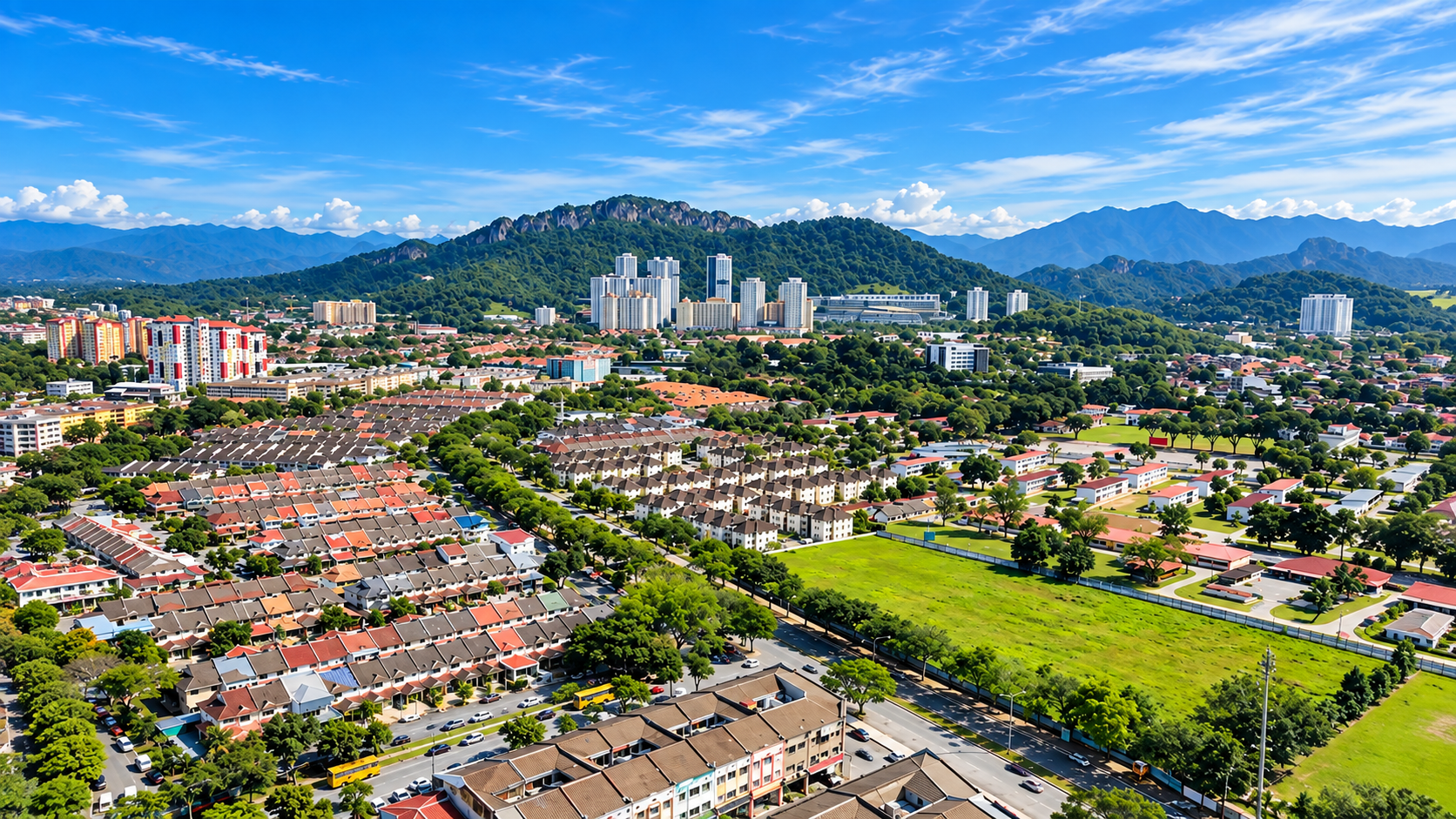 Why Setapak Is One of Kuala Lumpur’s Most Student-Friendly Neighbourhoods
Some neighbourhoods grow around a shopping mall. Others grow around a train line. Setapak's rhythm is set by something different: a 171-acre university campus on Jalan Genting Kelang. TAR UMT's Kuala Lumpur campus page states a student population of approximately 32,000. That is a lot of people who need somewhere to sleep, eat, study and catch a train. So is Setapak student accommodation a sensible investment? The honest answer: the neighbourhood gives you a strong starting point. The individual property decides the result. Key Takeaways Why students choose Setapak: TAR UMT's flagship KL campus, two nearby LRT stations, and a spread of housing and daily services. An active market: Mukim Setapak recorded 1,101 residential transactions in H1 2026, up 8.4% year on year and about 17% of KL's total (NAPIC). Lower entry prices than KL overall: the median condo/apartment price was RM409,000 in Q2 2026, against RM510,000 across Kuala Lumpur. Rents and yields: NAPIC recorded a median condo rent midpoint of RM1,900 a month, with gross yields of 4.1% to 5.0% for the middle half of schemes. Advertised rents on PropMall.my sit slightly higher, at a RM2,000 median. Gross is not net: in our worked example, a 6.0% gross yield falls to 4.0% after one vacant month and RM6,000 of costs, before loan payments. Why is Setapak student-friendly?Setapak's student appeal starts with TAR UMT and the surrounding housing and everyday services. For investors, the key question is whether a particular property meets students' budgets and daily travel needs. Campus proximity can support demand, but rent, access, condition and competing supply still shape the letting outcome. What's InsideKey TakeawaysWhy Setapak Has Such a Large Student PopulationWhere Do Setapak's Students Actually Live?What Makes Setapak Suitable for Student Rentals?Does Student Demand Make Setapak Attractive to Property Investors?What Does the Rental Data Tell Us?What Kind of Setapak Property Works Better for Student Rental?Student Rental Is Not Passive Income: What Investors Should Watch Out For8. Is Setapak Worth Considering for Student Accommodation Investment in 2026?Frequently Asked Questions Why Setapak Has Such a Large Student Population a. TAR UMT anchors the student community Tunku Abdul Rahman University of Management and Technology (TAR UMT) has been in Setapak since the 1970s. Its KL campus is the university's flagship, with five branch campuses elsewhere in Malaysia. A quick clarification, because it trips people up: TAR UMT is not UTAR. UTAR is a separate university. This article focuses on TAR UMT's Setapak campus. TAR UMT describes its KL campus as having approximately 32,000 students, located between two LRT stations (TAR UMT, n.d.). Treat that as the university's published figure, not a verified 2026 census. b. On-campus and off-campus accommodation serve different needs TAR UMT's Department of Student Affairs describes hostel capacity for 2,000 students (TAR UMT Department of Student Affairs, n.d.). Everyone else commutes, lives with family, or rents nearby. Here is where many investor pitches go wrong. You cannot subtract hostel beds from enrolment and call the difference "unmet rental demand". Some students live at home in the Klang Valley. Others already have a room. Enrolment tells you the size of the community, not the size of the rental gap. Where Do Setapak's Students Actually Live? a. Compare housing clusters by access, not just address "Near TAR UMT" covers a lot of ground. A unit that looks close on a map can sit behind a highway, a steep hill or a long detour to the nearest gate. Students weigh the actual route to class far more than the postcode. So should you. The areas below are worth comparing. The rent and yield figures come from NAPIC's H1 2026 data; they are not a ranking of where most students live. Area or developmentProperty type in NAPIC dataRent, H1 2026 (RM/month)Gross yieldVerified campus accessInvestor considerationTaman Bunga RayaSingle- and double-storey terracesRM1,500 to RM1,700 (single-storey)3.7% (single-storey), 2.3% (double-storey)About 500 m on foot via Jalan Malinja 2, roughly 7 min walk. Checked on Google Maps, 29 Sep 2026.Older landed stock; check condition and letting rulesDanau Kota, off Jalan Genting Klang (e.g. Parcel A5 @ PV21)Serviced apartmentRM1,350 to RM1,5504.0%By car, 2.8 km via Jalan Genting Kelang, 8–9 min. By bus, route 250, about 18 min door to door including walking. Checked on Google Maps, 29 Sep 2026.NAPIC classifies serviced apartments as commercial; check title, charges and billingPlatinum Hill and Platinum Lake PV condos (11 schemes)CondominiumRM1,200 to RM2,9003.2% to 5.6%By car, 3.1 km via Jalan Genting Kelang, 9–10 min. By bus, route 250, about 22 min door to door including walking. Checked on Google Maps, 29 Sep 2026.Wide spread between schemes; compare block by blockWangsa Maju, adjacent (e.g. Wangsa Metroview)Apartment/condominiumRM1,400 to RM1,7004.1%By car, 3.3–3.5 km via Jalan 1/27a, 9–10 min. On foot, 2.0 km, about 28 min. By bus, routes 250 and T250, about 33 min. Checked on Google Maps, 29 Sep 2026.A different area with its own tenant mix; do not treat as Setapak Source: NAPIC, Jadual Harga dan Sewa WP Kuala Lumpur H1 2026, Tables 1.3 and 1.7. Rents are Jan to Jun 2026 ranges; yields are NAPIC's average gross yield per scheme. b. Room rental and whole-unit rental suit different arrangements Student housing around Setapak usually comes in three forms: Shared room: two or more tenants in one bedroom. Lowest cost per person, least privacy. Private room: one tenant per bedroom, shared kitchen and bathrooms. Entire unit: one tenancy for the whole home, often taken by a group of friends. Listing platform SPEEDHOME describes rooms as the most popular choice among TAR UMT students, while whole units tend to go to working tenants who commute by LRT (SPEEDHOME, 2026). Neither model always earns more, as Sections 4 and 5 show. Considering a property near TAR UMT? Ask IQI to help compare campus access, recent rental evidence and ownership costs for your shortlist. What Makes Setapak Suitable for Student Rentals? Think of a student's week as a loop: home, class, food, groceries, study, home again. The shorter and cheaper that loop, the more attractive the neighborhood. a. Proximity to universities TAR UMT is the main education anchor. Distance matters, but straight-line distance can mislead. A condo that looks 800 metres away on a map may be a 20-minute walk if the only footpath loops around a main road. Measure door to campus gate, using the route students actually take. b. Public transport and the last part of the journey TAR UMT says its KL campus sits between two LRT stations. These are generally identified as Wangsa Maju and Taman Melati on the LRT Kelana Jaya Line. Rail access helps students reach the rest of the Klang Valley, including KL City Center. The weak spot is usually the last stretch between station and front door. Factor in waiting time, the walk from the stop, and whether the path is sheltered and well lit. Not every Setapak development is walkable to rail or campus. c. Food and daily living costs Students are budget-conscious, and Setapak's mix of kopitiams, mamak stalls, food courts and mall outlets gives them plenty of options at different price points. For investors, this matters indirectly. When daily living costs stay manageable, students have more room in their budget for rent. d. Shopping and everyday amenities Setapak Central, formerly KL Festival City, sits along Jalan Genting Klang in Danau Kota and has long been popular with students and families from nearby colleges. Wangsa Walk Mall is also close to campus. Beyond malls, check what students use weekly: laundry, pharmacies, grocery stores and quiet study spaces within a practical walk. e. A variety of rental properties Setapak's housing ranges from low-cost flats and older terraces to newer condominiums, including many PV-branded developments by Platinum Victory. Condos and apartments made up 582 of Mukim Setapak's 1,101 residential deals in H1 2026 (NAPIC, 2026a). That variety is useful, but it complicates comparisons. Compare like with like: a furnished private room in a new condo is not the same product as a shared room in a 30-year-old flat. Does Student Demand Make Setapak Attractive to Property Investors? This is the question most readers came for. The neighbourhood gives you a steady flow of potential tenants. Whether that flow reaches your unit is a separate question. Is Setapak suitable for student-rental investment?Setapak is worth researching for student rentals, but a large university population does not guarantee occupancy or returns. Compare achieved rents, purchase costs, the route to campus, tenant turnover and building rules. Assess each property using a realistic allowance for vacancy, repairs and management. a. A recurring tenant pool still needs property-level evidence Universities run on intake cycles. New students arrive, graduates leave, and a fresh group starts searching. That creates a recurring tenant pool, not a guaranteed one. Three things separate a busy listing from a profitable one: Competing supply. PropertyGuru showed 973 condos listed for rent in Setapak in August 2026, and Mudah showed 962 apartments and condos in September 2026. Your unit competes with all of them. Inquiries versus signed tenancies. Twenty WhatsApp messages do not equal one signed agreement. Retention. Students who renew for a second year save you a re-letting cycle. b. Room rental versus whole-unit rental Letting by the room can look more lucrative on paper. It also asks far more of the owner. Here is how the two models compare: FactorRoom rentalWhole-unit rentalIncome potentialCan be higher in total, if rooms stay filledOne rent figure, simpler to forecastVacancy exposurePartial: one empty room reduces incomeAll or nothing: an empty unit earns zeroFurnishingUsually fully furnished per roomVaries from basic to fully furnishedUtilitiesOften owner-managed or split, harder to controlUsually paid by tenants directlyManagement effortHigh: multiple tenancies, disputes, turnoverLower: one agreement, one relationshipBuilding rulesCheck whether room letting is permittedStandard letting, still check house rules Always check the building's house rules before planning room letting. Some management bodies restrict it, and alterations such as partitions may need approval. c. Entry price and operating costs shape the result Setapak's entry prices are lower than Kuala Lumpur's overall. In H1 2026, 55% of Mukim Setapak's condo deals were priced between RM200,001 and RM500,000, compared with 44% across KL (NAPIC, 2026a). But rent is only half the story. The other half is everything you pay to own and run the unit: Purchase price, plus legal fees and stamp duty Furnishing for student tenants Maintenance charges and sinking fund Repairs and replacement items Management fees, if you outsource Vacant months between tenancies Before comparing units, understand the full cost of buying a property and estimate property transaction fees for your price range. If you are financing the purchase, the monthly instalment is usually your biggest recurring cost. Try a price near Setapak's RM409,000 condo median to see where you stand. Estimates for guidance only. Actual figures depend on the bank's assessment, current rates, and your full financial profile. Near campus is a start. The numbers decide the rest. An IQI property specialist can compare Setapak units on route to campus, recent rental evidence and full ownership costs, so you shortlist on evidence rather than on a map pin. Speak with an IQI property specialist → Speak with an IQI property specialist → What Does the Rental Data Tell Us? This section uses NAPIC's H1 2026 data, the official property statistics published by the National Property Information Centre under JPPH. How to read these figures: NAPIC reports by "Mukim Setapak", an administrative area wider than Setapak town. It includes Wangsa Maju, Setiawangsa, Melawati and parts of Sentul. Treat the numbers as the wider area's context, not proof of how one student rental will perform. a. How active is Setapak's property market? Indicator, H1 2026Mukim SetapakWP Kuala LumpurResidential transactions1,1016,618Change vs H1 2025+8.4%+2.4%Residential transaction valueRM531.8 millionRM6,106.6 millionCondo/apartment transactions5823,384Condo/apartment change vs H1 2025+17.3%+10.6%Median condo/apartment price, Q2 2026RM409,000 (n = 74)RM510,000 (n = 523) Source: NAPIC, Jadual Transaksi WP Kuala Lumpur H1 2026, Tables 1.5 to 1.8; NAPIC, Jadual Harga Kediaman Sukuan Tahunan Q2 2026, Table 1.0. Percentages calculated by IQI Global. Mukim Setapak accounted for about 17% of KL's residential transactions in H1 2026. Both Setapak and KL recorded fewer deals than in H2 2025, so compare like-for-like halves. For investors, an active resale market matters. It makes price evidence easier to find, and it matters again when you eventually sell. b. What rents and yields did NAPIC record? NAPIC's rental tables cover 52 condo and apartment schemes in Mukim Setapak. These are rents from NAPIC's sample, not advertised asking rents, and they cover whole units only. Condo/apartment rentals, Mukim SetapakH1 2026Rents recorded (lowest to highest)RM1,000 to RM3,500 a monthMedian rent (scheme midpoint)RM1,900 a monthMedian rent per sq ftRM1.70 a monthGross yield, middle half of schemes4.1% to 5.0% (median 4.5%)Gross yield, lowest to highest scheme1.9% to 7.2%Schemes with rents reported as stable vs H2 202546 of 52Median rent change vs H1 2025 (51 schemes in both periods)+3.2% Source: NAPIC, Jadual Harga dan Sewa WP Kuala Lumpur H1 2026 (Table 1.3) and H1 2025. Midpoints, per sq ft figures, percentiles and year-on-year changes calculated by IQI Global. Serviced apartments are excluded because NAPIC classifies them as commercial. Two readings stand out. First, most rents held steady, which suggests a settled market rather than a boom. Second, the yield spread is wide, so the scheme you pick matters more than the neighbourhood average. One caution on the year-on-year figure: NAPIC's sample can change between periods. A big swing in one scheme may reflect a different unit mix rather than a real rent move. For serviced apartments, NAPIC recorded a median rent midpoint of RM1,750 and a median gross yield of 4.0% across 13 schemes. c. How do advertised rents compare? NAPIC's figures come from its own rental sample. Portal listings show what landlords are asking, which is useful for spotting the gap between hope and reality. A snapshot of 206 whole-unit Setapak listings on PropMall.my showed a median asking rent of RM2,000 a month and an average of RM1,984. Asking rents ranged from RM600 to RM4,000. Whole-unit listingsListingsAverage asking rent (RM/month)Median asking rent (RM/month)2 bedrooms23RM1,707RM1,6003 bedrooms154RM1,966RM1,9254 bedrooms or more23RM2,628RM2,500Condominium164RM2,066n/aApartment28RM1,761n/a Source: PropMall.my Setapak rental listings, observed [date], n = 206 whole units (single rooms excluded). Asking rents, not signed tenancies. Groups with fewer than 20 listings (1-bedroom/studio, serviced residence/SOHO, flats) are not shown because the samples are too small. Two things stand out. First, three-bedroom units make up 154 of the 206 listings, about three in four. If you buy a three-bedder, that is the crowd you compete with. Second, the asking median of RM2,000 sits only about 5% above NAPIC's RM1,900 median. The samples are not identical, but the gap suggests Setapak landlords are not wildly overpricing. Advertised rents work out to about RM2.17 per sq ft on average, against NAPIC's RM1.70 median. That wider gap may reflect smaller or newer units being listed, so treat per sq ft comparisons with care. d. What about room rents? NAPIC does not track room rentals, and the listing sources disagree. That alone tells you room rents depend heavily on the room, the building and what is included. PropMall.my: 14 single-room listings averaged RM791 a month, ranging from RM550 to RM1,130. SPEEDHOME (June 2026): single rooms at around RM350 to RM500, and master bedrooms at RM800 to RM1,200 (SPEEDHOME, 2026). Here is how that plays out for a three-bedroom unit, against PropMall's RM1,925 median asking rent for a whole three-bedder: Three-bedroom scenario (asking rents)Total per monthWhole unit, PropMall medianRM1,925Three rooms at PropMall's RM791 room averageabout RM2,373One master and two single rooms, SPEEDHOME rangesRM1,500 to RM2,200 On PropMall's figures, room letting asks roughly 23% more than a whole-unit tenancy. On SPEEDHOME's, it asks about the same or less. Either way, the premium is thin once you add furnishing, owner-paid utilities, more vacancy risk and more management time. Room letting can pay, but only if you run it well and the building allows it. e. What the data cannot tell you No public source currently publishes rental enquiries, time to let, tenant demographics or the split between room and whole-unit demand in Setapak. Ask for property-level evidence, such as recent tenancy agreements, before you rely on any rent figure. f. Gross yield does not equal cash flow Gross rental yield compares annual rent with the purchase price before expenses. Cash flow reflects rent collected after operating costs and loan payments. A property can have a positive gross yield while producing negative cash flow if vacancy, costs or financing payments are high. Here is how quickly the numbers move. Illustrative example only. These are not Setapak market estimates, an IQI forecast or a financing quotation. ItemAssumption or calculationPurchase priceRM400,000Scheduled monthly whole-unit rentRM2,000Annual scheduled rentRM24,000Gross scheduled yieldRM24,000 / RM400,000 = 6.0%One month of vacancyminus RM2,000Rent collected (no arrears)RM22,000Illustrative annual operating costsminus RM6,000Operating income before financing and taxRM16,000Operating yield on purchase priceRM16,000 / RM400,000 = 4.0% The round numbers keep the maths simple. Note that a 6.0% gross yield sits above NAPIC's typical 4.1% to 5.0% range for Setapak condos, so real starting points are often lower. The RM6,000 is an assumed total, not a local cost benchmark. Loan payments, tax, acquisition costs and initial furnishing are all excluded. Add a second vacant month and operating income drops to RM14,000, or 3.5%. Every empty month costs half a percentage point in this example. For a real assessment, get the building's actual charges and understand condominium management fees before you commit. What Kind of Setapak Property Works Better for Student Rental? a. Layout, furnishings and practical access Students shop for a lifestyle, not just a bedroom count. The units that let well tend to get the basics right: Bedrooms that fit a bed, desk and wardrobe without a squeeze Enough bathrooms for the number of occupants Reliable internet, ideally fibre-ready Good ventilation and natural light A practical route to campus or the LRT For reference, the median condo in NAPIC's Setapak rental tables is around 1,090 sq ft. Three-bedroom units dominate the rental listings, so a well-laid-out three-bedder has to stand out from a crowded field. Match the layout to real tenant needs, not assumptions. b. Building condition, security features and management Parents often help choose student accommodation, and they notice different things. Access cards, guarded entrances, lighting and tidy common areas all count. Describe what you can observe. Avoid calling any building "safe" or "crime-free"; inspect, don't assume. A well-run management body also protects your investment. Ask for recent maintenance records, house rules and any planned major repairs. Setapak student-rental inspection checklist Walk or ride the actual route to the TAR UMT gate and nearest LRT Check layout, bathrooms, internet readiness and ventilation Inspect condition, furnishings and likely replacement costs Confirm maintenance charges, sinking fund and any special levies Read the house rules on room letting and alterations Compare the scheme's NAPIC rent and yield with the asking price Count competing listings in the same and nearby buildings Ask for evidence of signed rents, not just asking rents Only once a unit passes this checklist is it worth shortlisting. Proximity to a university is not, by itself, a reason to buy. Student Rental Is Not Passive Income: What Investors Should Watch Out For a. Turnover, vacancy and wear and tear Student tenancies tend to follow the academic calendar. When a group graduates, you may need to re-let several rooms at once, while nearly 1,000 other listings compete for the same tenants. Furniture takes a beating too. Budget for regular replacements, touch-up painting and occasional arrears, not just the monthly charges. b. Tenancy arrangements and building rules Use a written tenancy agreement for every arrangement, whether by room or by unit. Be clear on deposits, utilities, house rules and notice periods. Building rules vary. Get the current house rules in writing before you plan partitions, room letting or occupancy levels. 8. Is Setapak Worth Considering for Student Accommodation Investment in 2026? For the right investor, yes, Setapak deserves a place on the shortlist. The university anchor, rail access, entry prices below the KL median and steady rents in NAPIC's H1 2026 data give it genuine fundamentals. It suits investors who are prepared to compare properties on evidence, budget for turnover, and manage tenants actively or pay someone to do it. It is less suited to anyone expecting hands-off income. With typical gross yields of 4.1% to 5.0%, a high purchase price, heavy charges or long vacancies can quickly erase the margin. Start with the unit, not the neighbourhood name. Review the Malaysian home-buying process if this will be your first investment property. Frequently Asked Questions Is Setapak a good place for students? Setapak offers a university-centred setting worth considering. Suitability depends on the specific accommodation, budget, route to campus and daily needs. Check the property and commute rather than relying on the neighbourhood name. Why do university students live in Setapak? TAR UMT's flagship KL campus is the main education anchor in Setapak. Housing near campus can shorten daily travel, and two LRT stations serve the area. How many students rent locally needs current residence or leasing evidence. Is Setapak good for rental investment? It can be, where the property's price, rental evidence and operating costs fit your objectives. NAPIC's H1 2026 data shows gross yields of 4.1% to 5.0% for the middle half of condo schemes, before costs. Vacancy, competing supply, financing and management also matter. What properties are suitable for student rental? Look for practical layouts, reliable internet, study space, good condition, access and a sensible total monthly cost for tenants. Confirm the letting arrangement is allowed under the building's rules. Bedroom count alone is not enough. Does a large student population guarantee full occupancy? No. Students have different budgets and living arrangements, and PropertyGuru showed nearly 1,000 condo listings for rent in Setapak in August 2026. Current leasing outcomes, access and the unit's condition tell you more than enrolment alone. Looking at Setapak for student-rental investment? Speak with an IQI property specialist about your budget, preferred rental model and management needs, and compare suitable properties using current evidence. Leave your details below. [custom_blog_form] Continue Reading: Property Investing Strategies in Malaysia Kuala Lumpur Market Insights: Economy, Jobs and Real Estate Understanding Condo Management Fees Reference and citation: National Property Information Centre (NAPIC), JPPH. (2026a). Jadual Transaksi WP Kuala Lumpur H1 2026, Tables 1.5 to 1.8. Retrieved from https://napic.jpph.gov.my/detail-penerbitan?id=3729 National Property Information Centre (NAPIC), JPPH. (2026b). Jadual Harga dan Sewa WP Kuala Lumpur H1 2026, Tables 1.1, 1.3, 1.6 and 1.7. Retrieved from https://napic.jpph.gov.my/detail-penerbitan?id=3727 National Property Information Centre (NAPIC), JPPH. (2026c). Jadual Harga Kediaman Sukuan Tahunan Q2 2026, Table 1.0. Retrieved from https://napic.jpph.gov.my/detail-penerbitan?id=3807 National Property Information Centre (NAPIC), JPPH. (2025). Jadual Harga dan Sewa WPKL H1 2025. Retrieved from https://napic.jpph.gov.my/detail-penerbitan?id=3321 Tunku Abdul Rahman University of Management and Technology. (n.d.). TAR UMT Kuala Lumpur Campus. Retrieved September 28, 2026, from https://www.tarc.edu.my/kl/ Tunku Abdul Rahman University of Management and Technology, Department of Student Affairs. (n.d.). Accommodation. Retrieved September 28, 2026, from https://tarc.edu.my/dsa/contentsub.jsp?cat_id=1210BF6A-BE89-49AC-B823-DC729888CB71&fmenuid=DCF6BB08-61CA-4FB4-9057-18913B3987C4 SPEEDHOME. (2026, June). Rumah sewa Setapak. Retrieved from https://speedhome.com/blog/rumah-sewa-setapak/ PropMall.my. (2026). Setapak rental listings, observed [date]. Retrieved from [search URL] PropertyGuru Malaysia. (2026, August). Condo for rent in Setapak. Retrieved from https://www.propertyguru.com.my/condo-for-rent/in-setapak-op878 Mudah.my. (2026, September). Apartment and condominium for rent, Setapak. Retrieved from https://www.mudah.my/kuala-lumpur-setapak/apartment-condominium-for-rent
Continue Reading
Fill in the form and one of our investment advisors will reach out within 24 hours to discuss your budget, goals, and the best opportunities available right now.
What happens next?
Get matched with a dedicated buyer agent who guides you from budget to keys.
Start your career as an IQI Real Estate Negotiator, with training and support.
Our international desk handles the cross-border details for you.
Juwai.com, Juwai.asia, IQI, and Juwai IQI are trademarks of Juwai IQI group. All rights are reserved.
© IQI Global 2026
This site is protected by reCAPTCHA and the Google Privacy Policy and Terms of Service apply.
Your privacy matters!
We use cookies. See our Cookie Policy.
Got questions? 😊 I'm JIQI, happy to help!

