

Negotiator ∙ Top Gun
Reo Castro Farrillon

Negotiator ∙ Top Gun
Reo Castro Farrillon
About Reo Castro Farrillon
Leveraging market knowledge and negotiation skills to deliver exceptional results. Your real estate success is my priority. Ready to make your real estate dreams a reality? Let's chat. Your dream home awaits.
6 years at IQI
Contact Reo Castro Farrillon
Reo Castro Farrillon Social Links
No social links available.
My Listings
No listings available at the moment.
Mortgage Calculator
Calculate your estimated month repayment and plan your monthly expenses well.
The mortgage calculator is intended for reference only. Actual amount may vary.
Monthly Payment
Send me the mortgage calculator result

Home Loan Eligibility Calculator
Calculate your potential loan amount and assess your home buying affordability.

Rental Yield
Calculate the potential rental yield and evaluate a property's investment performance.

Down Payment Saving Plan
Create a structured savings plan and determine how much to save monthly for your down payment plan.

Malaysian Property Transaction Fees Calculator
Estimate the total transaction fees and budget accurately for your Malaysian property purchase.
IQI blog & news
Articles specifically curated for your daily digest of local and global real estate news.

Version: BM, CN IQI, the global real estate agency network with more than 65,000 agents and offices in over 35 countries, has launched two new offices in Indonesia's lifestyle paradises of Bali and Lombok. Announced in August 2026, the launch is delivered with local partner Homes in Asia and deepens a footprint IQI has been building since it opened its first Bali office in 2024. Both islands have moved well past their reputation as holiday destinations. They are now long-term homes for expatriates, remote workers and investors. Juwai IQI Co-Founder and Group CEO Kashif Ansari said the ambition runs deeper than selling Indonesian property to foreigners. "Both destinations are attracting increasing international attention, but our vision goes beyond bringing foreign buyers into the market. We want to establish a strong local presence, work alongside Indonesian developers and property professionals, and contribute our international network, technology and expertise to the continued development of the local real estate sector. Our new offices will serve as a bridge between Indonesia and the international property market, helping quality Indonesian projects reach buyers and investors around the world. Kashif Ansari, Co-Founder and Group CEO, Juwai IQI On the choice of partner, Ansari pointed to a relationship that already existed. "As our local partner, we have chosen Homes in Asia because the principals have been part of IQI for years. We know they have the industry experience and local expertise they need to succeed." Why Bali and Lombok? Nearly 7 million foreign tourists arrived in Bali and about half as many total visitors landed in Lombok in 2025. But these islands have transformed from just tourist hot spots into popular long-term homes for expats from around the world. Foreign demand for property has exploded since Covid. In 2021, about 110,000 foreigners were resident in Bali alone, and we believe the number has more than tripled since then. The source markets explain the strategy. No single country dominates beyond Australia, and the top ten spans four continents. RankSource marketShare of Bali's foreign arrivals1Australia34.1%2China12.9%3India12.1%4South Korea7.7%5United Kingdom6.9%6Russia6.1%7United States5.9%8Malaysia5.4%9France4.7%10Singapore4.2% Source: Airport arrivals, IQI, bali.live, Kantor Imigrasi Kelas. Malaysia sits eighth, ahead of France and Singapore. It is exactly the kind of cross-border flow the network was built to serve, and the same logic behind IQI's Philippines expansion earlier this year. Juwai IQI Co-Founder and Group Managing Director Daniel Ho explained the power of IQI's international network. By combining the local presence and expertise of IQI Bali and IQI Lombok with the IQI network's global reach and technology, we can build a much stronger two-way bridge between Indonesia and property markets around the world. We also offer scale. Our global reach and our technological platforms make it easy for buyers from all over the world to discover and purchase property in Bali and Lombok. And our agent super app will help ensure our agents are productive and effective. That is the same playbook IQI Indonesia has run from Jakarta, where the team has since moved into exclusive project marketing agreements with Indonesian developers. Local Expertise, Global Scale Taco Heidinga will serve as Director and Regional Head at Homes in Asia, overseeing IQI Bali and IQI Lombok, while Liv Heidinga-Baggen will also serve as Director. Homes in Asia has spent the past two years establishing its position in the Bali and Lombok property markets, particularly among European investors. Heidinga said joining IQI creates an opportunity to take that foundation further. “We’ve closed some record-breaking transactions, but our vision with IQI Bali and IQI Lombok is much bigger than simply selling Indonesian property internationally.” We are building a long-term business. We want to create opportunities locally, work closely with developers and property professionals, develop local talent, and bring IQI’s technology, training, and international expertise into the Indonesian market. Taco Heidinga, Director and Regional Head, Homes in Asia Together, Taco and Liv bring around three and a half decades of international property experience. Liv also brings experience from the arts and luxury sectors, including Versace and Sotheby’s Auctions. Liv Heidinga-Baggen said IQI’s network gives local developers much broader international exposure. A developer in Bali or Lombok can instantly gain exposure to buyers across multiple international markets through our network.” Liv Heidinga-Baggen, Director, Homes in Asia The team will work with developers to introduce projects to buyers across Europe, Asia, the GCC and other international markets. Through IQI, the Bali and Lombok offices also gain access to international buyers, property professionals, marketing infrastructure, training and technology, including the Atlas SuperApp. Heidinga-Baggen said the objective is to combine these global capabilities with strong local relationships. “Our goal is to combine those global capabilities with strong local knowledge and relationships to build something that creates long-term value for buyers, developers, property professionals and the wider market.” The launch of IQI Bali and IQI Lombok strengthens IQI’s Southeast Asian footprint while creating a stronger two-way connection between Indonesian property opportunities and global markets. Excited about investing in Bali or Lombok property? Get expert advice from our professional real estate negotiators and discover the right opportunities with local insights and global expertise! [custom_blog_form] Continue reading: IQI Accelerates Its India Expansion with the Launch of IQI Chennai Juwai IQI Strengthens ASEAN Presence with the Launch of Juwai Cambodia IQI Breaks New Ground in Europe with IQI Germany
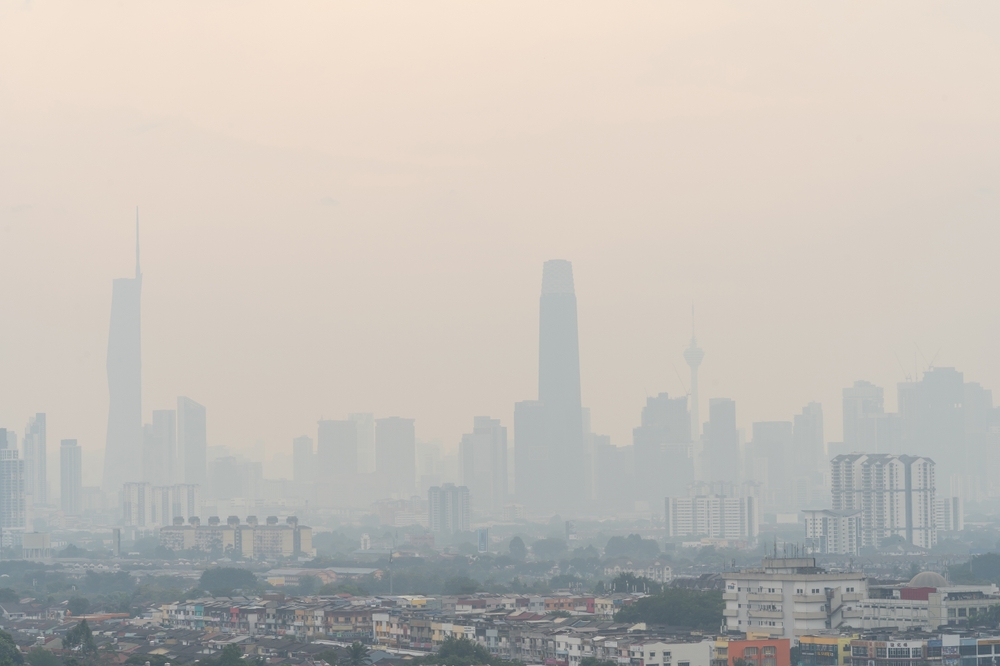
Haze season is here again and this time, the smoke is not just outside your window. It is already inside your living room. Look outside today and you will probably see it: that flat grey wash where the skyline used to be. Dozens of Department of Environment monitoring stations across Malaysia have been sitting in the "Unhealthy" band for days now, and Johor's stations. Larkin, Pasir Gudang, Batu Pahat, Segamat, Tangkak are usually among the first on the Peninsula to climb when the smoke arrives. Most haze advice tells you the same two things. Wear a mask. Stay indoors. But here is the part nobody mentions: staying indoors only works if indoors is actually clean. And in most Malaysian homes, it is not. So instead of asking which mask to buy, ask a better question one that is actually about your property: How well does my home hold air out? That is something you can inspect, and something you can fix. Here is your checklist1. Seal the Envelope First (The Step Everyone Skips)2. Your Aircon Is Not an Air Purifier3. Size Your Air Purifier Properly (Most People Get This Wrong)4. Build One Clean Room5. Stop Adding Particles Indoors6. Small Routine Changes, Real Difference7. Check the Numbers, Not the ViewWhat About Air-Purifying Plants?Buying or Renting This Season? Use the HazeFAQ 1. Seal the Envelope First (The Step Everyone Skips) This is the highest-impact, lowest-cost thing you can do and almost nobody does it. Think about it this way: running an air purifier in a leaky house is like running your aircon with the front door wide open. You are paying to filter air that keeps getting replaced. Walk through your home and check these, in order of how badly they usually leak: The gap under your main door — Terrace and landed homes very often have a gap wide enough to see daylight through. A stick-on door sweep costs under RM30 at any hardware shop. Biggest win in most homes. Grille doors and air wells — Many households leave the main door open with the grille door shut for ventilation. During haze, that is simply an open window. Window seals — Rubber gaskets on casement and sliding windows harden and shrink over the years. Run your hand along the frame. If you feel air moving, foam weatherstripping tape solves it in an afternoon. Louvre windows — Common in older Johor homes and bathrooms. They do not seal, by design. Treat those rooms as semi-outdoor and do not waste a purifier on them. Aircon pipe penetrations — That hole drilled through your wall for the refrigerant and drain pipes? Often left with crumbling putty, or nothing at all. Check every unit in the house. Exhaust fans — Kitchen and bathroom fans without backdraft dampers let air flow both ways when switched off. Total cost to fix most of these: under RM200. Total time: one weekend. 2. Your Aircon Is Not an Air Purifier Let us clear up the biggest misconception first. Many homeowners assume that running the aircon cleans the air. It does not but the reason why is actually reassuring. The standard wall-mounted split unit in most Malaysian homes recirculates indoor air. It does not pull air in from outside. That is genuinely good news during haze: switching on your aircon is not dragging smoke into your bedroom. But the mesh filter behind the front panel? That is designed to catch dust and protect the coil. Against PM2.5 the fine particulate that makes haze harmful it does very little. What to do: Keep the aircon running and windows shut during high-API hours. Recirculation works in your favour. Wash the mesh filters more often than usual. They clog faster during haze and your cooling suffers. Got a ducted or centralised system with a fresh-air intake? Find out how to switch it to recirculate. Ask your building management. In a newer development with MVHR or fresh-air ventilation? Ask what filter grade is fitted, and when it was last changed. The simple version: your aircon gives you a sealed, cool, recirculating room. A purifier is what actually removes the particles. You want both working together. 3. Size Your Air Purifier Properly (Most People Get This Wrong) Here is why so many people believe purifiers "do not work": they bought one that was far too small for the room, ran it for a week, and gave up. The number that matters is CADR - Clean Air Delivery Rate, measured in m³/h. Ignore the "suitable for up to X sq ft" claim printed on the box. Those figures are calculated on generous assumptions and rarely deliver the five air changes per hour you actually want during haze. A workable rule for Malaysian ceiling heights (around 2.7m): CADR needed ≈ room area in m² × 13 SpaceApprox. sizeTarget CADRSmall bedroom12 m² (130 sq ft)~160 m³/hMaster bedroom18 m² (195 sq ft)~240 m³/hLiving + dining, open plan35 m² (375 sq ft)~460 m³/hWhole open-plan condo70 m² (750 sq ft)~900 m³/h Before you check out that shopping cart: Look for True HEPA, ideally H13 or above. "HEPA-type", "HEPA-like" and "99% filtration" with no particle size stated are marketing terms, not specifications. Open-plan layouts count as one room. Most newer Malaysian condos have a combined living-dining-kitchen. You cannot size for the sofa corner alone. Check filter price and local availability first. Replacement filters for grey-import models can cost a third of the machine and take weeks to ship. Ask the seller before you buy, not after. Running cost is lower than you think. A typical unit draws 30–60W on medium, roughly RM5 to RM15 a month running continuously, depending on your tariff band. Check current TNB tarrif here Noise matters. A purifier too loud to sleep next to is a purifier that gets switched off at 11pm. 4. Build One Clean Room Trying to filter your entire home is expensive, and it usually fails. The strategy that actually works and this is what building scientists recommend is simple: pick one room and make it excellent. The master bedroom is the natural choice. You spend eight hours a night there, it is small enough to filter properly, and it is easy to seal. Keep the door closed Run a correctly sized purifier together with the aircon Seal that room's window gaps and aircon penetration properly, even if you skip the rest of the house Got young children or elderly parents at home? Their room comes first, not yours One properly sealed, properly filtered room beats four half-measures every time. 5. Stop Adding Particles Indoors During a haze episode, your indoor PM2.5 baseline is already elevated. Anything you burn or fry inside stacks right on top of it. Wok cooking and deep frying — Significant fine particulate. Hood on high, and consider simpler cooking on the worst days if your kitchen is open-plan. Incense, joss sticks and joss paper — Burn outdoors and away from windows and air intakes where you can. Worth noting that late August through September often overlaps with prayer periods when household burning increases. Mosquito coils — A major indoor PM source. Switch to a plug-in vaporiser or a net during haze weeks. Scented candles and diffusers — These do not clean anything. Fragrance masks the smell of smoke while the particles stay exactly where they were. 6. Small Routine Changes, Real Difference Things you can start doing today, at zero cost: Bring the laundry indoors. Clothes dried on the balcony or in the drying yard come back smelling of smoke and carrying deposited particulate. Mop, do not sweep. Sweeping lifts settled particles back into the air. Damp mopping and a HEPA vacuum remove them. Shoes off at the door. Already standard in most Malaysian homes it matters more than usual right now. Wipe down window sills, grilles and gate rails. This is where deposition is heaviest. Change your car cabin filter. Not a home item, but same logic and most people have never replaced theirs. 7. Check the Numbers, Not the View Here is something most people get wrong: visibility is a poor guide to air quality. Humidity, lighting and time of day all change how hazy the air looks compared to how much PM2.5 is actually in it. Some of the worst readings come on days that look deceptively clear. Use the real data instead: APIMS / MyEQMS portal — the Department of Environment's hourly readings, station by station. Check the station nearest you, not the state average. DOE APIMS portal MyIPU app — the same DOE data on your phone, updated hourly. The API bands: ReadingCategory0–50Good51–100Moderate101–200Unhealthy201–300Very Unhealthy300+Hazardous Schools close at 200. One important detail: the API is calculated on a 24-hour running average of the dominant pollutant. That means it lags. When conditions worsen sharply in the afternoon, the number has not caught up yet — and after rain clears the air, the reading stays high for a while. Read the trend, not just today's figure. For health guidance during high-API days, follow the Ministry of Health's advisories. What About Air-Purifying Plants? Every haze season, the same list makes the rounds on WhatsApp. Snake plant. Peace lily. Spider plant. "NASA-approved air purifying plants." We are going to be direct here, because it matters: houseplants do essentially nothing against haze. The study everyone quotes is a NASA experiment from 1989. It measured the removal of volatile organic compounds inside small sealed laboratory chambers not fine particulate, and nothing like a real room. When later researchers scaled those findings to actual buildings, they calculated you would need somewhere between 10 and 1,000 plants per square metre to match the air exchange one open window already provides. Haze is PM2.5. Plants do not filter it. There is a second reason to be careful in our climate: Malaysian indoor humidity is already high. Cluster a lot of plants and damp soil indoors and you may push it higher trading one indoor air problem for a mold problem. Keep your plants. They are good for the room and good for you. Just do not count them as air quality equipment. Read the research made by NASA about Plant Buying or Renting This Season? Use the Haze Here is an angle most buyers never think of: haze season is one of the best times to view a property. Why? Because the building's weaknesses are on full display. Check during the viewing: Gap under the main door and around the frame Window type and seal condition intact casements and sliders beat louvres Whether aircon wall penetrations are properly sealed Ceiling height and layout high ceilings and open-plan mean more volume to filter Orientation and exposure to prevailing wind Condo: does the building have a fresh-air system? What filtration grade? How often does management change it? Landed: air well design, rear kitchen enclosure, and how the house was meant to ventilate Ask the agent or management: Has this unit or block had haze-related complaints before? Which DOE station is nearest, and what does it typically read in August and September? Any peatland or known open-burning hotspots nearby? Johor's DOE has focused enforcement patrols on peatland areas including Muar, and industrial zones around Pengerang and Pasir Gudang. And here is the bonus: a well-sealed home is cheaper to cool, quieter, and easier to keep clean. Haze performance is really just a visible symptom of overall build quality which makes it a surprisingly good proxy for how carefully the unit was put together. FAQ Does closing all the windows really help during haze? Yes, substantially but only if the rest of the home is reasonably sealed. Closed windows in a house with a big gap under the main door still let air in steadily. Seal the leaks first, then closing windows does real work. Is it safe to run the aircon during haze? Yes. Standard wall-mounted split units recirculate indoor air rather than drawing it from outside, so running them does not bring smoke in. Just wash the filters more often. If you have a centralised system with a fresh-air intake, switch it to recirculate. How much does an air purifier cost to run in Malaysia? Most household units draw 30–60W on medium. Running continuously, that is roughly RM10 to RM25 a month depending on your tariff band. Filter replacement is usually the bigger recurring cost check filter prices and local availability before buying the machine. Do air-purifying plants work against haze? No. The research behind that claim tested VOC removal in sealed lab chambers, not fine particulate in real rooms, and it does not scale to household conditions. Haze is PM2.5, which plants do not filter. If I can only afford one purifier, which room? The bedroom of the most vulnerable person in the household young children, elderly parents, or anyone with asthma or a respiratory condition. Otherwise, the master bedroom, where you spend the most continuous hours. Condo or landed which handles haze better? Neither wins automatically. Condos are smaller and easier to seal and filter, but building-level fresh-air systems can work against you if unfiltered. Landed homes have more volume and more openings, but you control every one of them. Build quality matters more than property type. The Bottom Line Haze in Malaysia is seasonal and reasonably predictable. It follows the Southwest Monsoon window, and July to September is the reliable peak. That predictability is an advantage. It means haze readiness belongs on your annual home maintenance calendar right next to servicing the aircon and checking the water tank instead of being treated as an emergency every single year. Start with the seals. They cost the least and do the most. Add one correctly sized purifier for a room you can genuinely keep clean. Skip the plants. Watch the API numbers, not the view outside your window. And if you are house-hunting this season? Use the conditions to your advantage. How a home handles haze tells you a great deal about how it was built. Looking for a home that is built properly not just priced attractively? Speak to one of our real estate professionals about what to look for in your area. [custom_blog_form] Continue reading: Comprehensive Guide to Rent a House as a University Student Make Your Home Smarter! Must-Have Home Appliances to Buy During 11.11 Sale 7 Security Tips to Make Your Home Safe and Secure Finding Your Dream Property: The Simplified Guide to Buying Land in Malaysia Sale and Leaseback Agreement: How It Works and When to Use It

On 22 August 2026, IQI Youth Connect 2026 brought young Malaysians together at IQI Headquarters in Millerz Square, Kuala Lumpur, for a full day focused on one question: how can the next generation stay relevant as AI changes the way people work, create, and build businesses? Powered by Juwai IQI under the IQI Youth initiative, the event centered on artificial intelligence, content marketing, and entrepreneurship, with practical sessions designed for young Malaysians aged 18 to 35. 1. What Was IQI Youth Connect 2026 About? IQI Youth Connect 2026 was designed as a practical learning and networking platform for young Malaysians who want to build skills for an increasingly digital economy. Instead of relying on motivational speeches alone, the program featured live demonstrations, keynote sessions, panel discussions, and practical frameworks that participants could apply to their careers, businesses, and personal brands. The event focused on three closely connected areas: AI skills, content marketing, and modern entrepreneurship. Together, these themes reflected how career development is changing as technology gives individuals new ways to work, create content, build audiences, and explore business opportunities. 2. How Did Youth Connect Prepare Young Malaysians for the AI Era? The core message behind Youth Connect was simple: young people should not only understand AI skills but also learn how to use AI effectively in real-world work. Daniel Ho, Co-Founder and Managing Director of IQI Global, opened the program with a keynote on why the next generation needs to move quickly as technology reshapes industries and career paths. Throughout the day, participants were exposed to future-ready skills such as AI-assisted content creation, digital audience growth, productivity systems, personal branding and entrepreneurship. The program also encouraged participants to see AI as more than a tool for generating text or ideas. Sessions explored how AI can be integrated into everyday workflows, helping young professionals organize tasks, create content, and improve individual productivity. 3. What Did Participants Learn at Youth Connect 2026? The program combined practical workshops with real-world examples from practitioners working across AI, content creation, marketing, and entrepreneurship. a. AI and Content Growth Aaron Siow, Group Vice President at IQI, led a live session titled 2,000 Followers in 30 Days: The Claude System You Can Copy. The session demonstrated how AI tools such as Claude could be incorporated into a repeatable content and audience-growth system, giving participants a clearer view of how AI can support content planning and execution. Participants were also provided with practical materials including an AI prompt library, content creation blueprints, and a 21-day growth framework. b. Agentic AI and the Future of Work Dave Chong, CEO of DJC AI Sdn Bhd and Group Vice President at IQI, introduced participants to agentic AI in his session, "One Person, One AI Team: How Agentic AI Changes the Way We Work." The session explored multi-agent workflows and how AI systems can support individuals across connected tasks and processes. The focus was on using technology to increase output and build smarter ways of working rather than simply automating isolated tasks. c. Personal Branding and Entrepreneurship Bryan Low, Co-Founder of Content Creation Academy, led the anchor keynote on personal branding, drawing from his experience building an audience of more than 1.55 million followers and generating over 150 million views across digital platforms. His session explored how young professionals can position themselves online, grow an audience, and understand different content monetization models. As the creator economy continues to give individuals more ways to build visibility and income online, the session encouraged participants to view a personal brand as a long-term career asset rather than just a social media presence. 4. Who Shared Their Insights at IQI Youth Connect 2026? Youth Connect brought together leaders, creators, marketers and technology practitioners who offered different perspectives on career development in an AI-driven environment. Alongside Daniel Ho, Bryan Low, Dave Chong and Aaron Siow, the event featured LeAnn Lai (second from left), a full-time freelancer and content creator who has trained more than 300 entrepreneurs and built a community of over 150,000 followers. Hannah Teh (Third from left), Social Media Team Lead at IQI Global, shared perspectives from campaigns that have reached more than 2.3 million viewers, while Jasmine Yap (first from left), Digital Marketing Manager and Content Creator at IQI Global, moderated discussions around audience engagement and digital growth. Together, the speaker lineup gave participants exposure to different sides of digital entrepreneurship, from AI systems and content creation to audience growth and personal positioning. 5. Why Was Networking an Important Part of Youth Connect? Youth Connect was not built only around what happened on stage. Networking opportunities were also an important part of the program. Participants had time to connect during lunch, an interactive AI trivia session, and the closing networking and high tea session. These sessions created opportunities for attendees to meet mentors, agency leaders, and other young people who were also exploring new career and business paths. For young professionals and aspiring entrepreneurs, these conversations can be just as valuable as the sessions themselves. New ideas often become more useful when there is someone to challenge them, improve them, or help turn them into action. 6. How Is IQI Youth Supporting Future Malaysian Leaders? Through IQI Youth, Juwai IQI is building a platform to help young Malaysians strengthen their skills, expand their networks, and better understand how technology is reshaping careers and entrepreneurship. Youth Connect reflected this approach by combining AI, marketing, entrepreneurship, content creation, and networking into a single program. Rather than treating these areas separately, the event showed how they increasingly work together in the modern economy. For youth leadership development, that combination matters. Technical knowledge alone is not enough. Young people also need confidence, communication skills, adaptability, digital visibility, and the ability to turn ideas into opportunities. By bringing these elements together, IQI Youth Connect created a space where participants could learn from practitioners, experiment with new tools, and connect with others who are also preparing for the next stage of work and business. IQI Youth Connect 2026 delivered a clear message to young Malaysians: preparing for the future means more than learning to use AI. It means combining technology with creativity, entrepreneurship, personal branding, and strong networks. Through practical sessions and direct access to industry practitioners, IQI Youth Connect gave participants a platform to start building those skills now. Ready to build your future with IQI? Join a global community that values growth, innovation and opportunity, and discover how IQI can help you turn ambition into real career success. [custom_blog_recruit_form] Continue Reading Petaling Jaya Flood Risk and Property Values What Buyers Should Know West Asia Conflict May Raise Malaysia Construction Costs by RM1.1 Billion in 2026 Malaysia’s Data Centre Boom: Will It Affect Housing Supply and Property Prices?

Buying your first home should feel exciting. But once you start comparing prices, loans and monthly commitments, the decision can get real very quickly. Do you buy the RM400,000 home you can comfortably afford now, or wait for the RM700,000 home you really want? Starting small sounds safer, but it is not always the better move. Buy too much and you may stretch your finances for years. Buy too little and you could end up selling and moving again sooner than planned. Your first home should not just be affordable. It should make sense for the next stage of your life. If you are still figuring out how the buying process works, start with our complete guide to buying a house in Malaysia and come back here when you are down to a shortlist. Key Takeaways Buy the best home you can comfortably afford, not the maximum amount the bank approves. A RM400,000 home needs about RM40,000 upfront, while a RM700,000 home may require around RM88,000 once stamp duty is included. Staying at or below RM500,000 keeps the full stamp duty exemption and the higher RM7,000 tax relief band. Selling within 5 years can trigger 15% to 30% RPGT on your gain, so upgrading too quickly may cancel out the savings of buying a starter home. Nearly 7 in 10 Malaysian subsale purchases in H1 2026 were priced at RM500,000 or below. Your first home should pass six tests: afford it, hold it, live in it, rent it, resell it, and still have savings left. Table of contentsWhat is a starter home, and what does it really cost?The RM500,000 cliff nobody mentionsWhen a cheap first home becomes an expensive mistakeThe First-Home 6-Test1. Can I afford it? Not qualify for it, afford it.2. Can I hold it for at least five years?3. Can I actually live in it?4. Would somebody rent it?5. Would somebody buy it?6. Will I still have savings the day after I collect the keys?What Malaysian first-time buyers get in 2026So which should you buy first?FAQs Starter home vs dream home at a glance FactorStarter homeDream homeCash needed upfrontLowerHigherMonthly instalmentLowerHigherStamp duty (first-time buyer, up to RM500k)Usually RM0Usually payable in fullSpace and future-proofingLimitedBetterFinancial flexibilityHigherLowerChance you upgrade againHigherLowerBest suited toUncertain career or life stageSettled plans for 10 years or moreMain riskOutgrowing it too fastBecoming house-poor What is a starter home, and what does it really cost? A starter home is your first property that meets your needs now, without needing to be your forever home. It could be a two-bedroom condo near an MRT station, an older subsale terrace, a serviced apartment near work, or even a government affordable housing unit. What defines a starter home is not its size. It is whether it gets you onto the property ladder at a price you can manage. So, if you are considering a RM450,000 home, you are not necessarily settling. You are buying in one of the most active parts of the market, which can also matter when it is time to resell. Which brings us to the money. The gap between a starter home and a dream home is never just the price tag on the listing. RM400,000 vs RM700,000: what actually changes Two buyers, same salary, same savings. One buys at RM400,000, the other at RM700,000. Both take a 90% loan over 35 years, at rates in line with the packages in our monthly housing loan rates roundup. Here is what the difference really looks like. RM400,000 starter homeRM700,000 dream home10% down paymentRM40,000RM70,000Loan amountRM360,000RM630,000Stamp duty (first-time buyer)RM0 (exempt)About RM18,150Rough cash at the counterRM40,000RM88,150Monthly instalmentAbout RM1,594About RM2,789Loan interest tax reliefUp to RM7,000 a yearUp to RM5,000 a year Illustrative only. Calculated at 4.00% per annum over 35 years, excluding legal fees, valuation, MRTA and disbursements. Bank Negara has held the OPR at 2.75% since July 2025, so actual packages currently sit in a similar band. The instalment gap is about RM1,195 every month for 35 years. The upfront gap is roughly RM48,000 before you have bought a single piece of furniture. That RM233,000 difference in lifetime interest is also why paying your home loan down faster matters more on the larger loan than most buyers realise. Run your own version rather than trusting a table: Now the real question is not, “Will the bank approve RM700,000?” It is, “Will I still be comfortable paying RM2,789 when unexpected expenses hit or interest rates move?” If the gap between the two homes is manageable, stretching can make sense. If it wipes out your emergency buffer, the dream home may become a financial burden instead. And if the deposit is the main issue, buying smaller is not your only option. Malaysia also has low or zero down payment routes and the First Home Mortgage Guarantee Programme for eligible buyers. The RM500,000 cliff nobody mentions For first-time buyers in Malaysia, RM500,000 is an important cut-off point. Under Budget 2026, Malaysian citizens buying their first home at RM500,000 or below can enjoy full stamp duty exemption on both the transfer and loan agreement for SPAs signed from 1 January 2026 to 31 December 2027. Go above RM500,000 and that exemption no longer applies. The available tax relief also drops from RM7,000 to RM5,000. For the full breakdown, see our guides to the Budget 2026 stamp duty extension and the i-MILIKI exemption. RM500,000 homeRM550,000 homeDown payment (10%)RM50,000RM55,000Transfer duty (MOT)RM0RM10,500Loan agreement dutyRM0RM2,475Extra cash you needBaselineAbout RM17,975 moreAnnual loan interest reliefUp to RM7,000Up to RM5,000 A RM50,000 price increase can actually cost closer to RM68,000 once you factor in the lost stamp duty exemption and higher deposit. That is why homes just above RM500,000 can be more expensive than they first appear. If your budget is close to this threshold, it should play a major role in your shortlist. Our guide to the real cost of buying a house in Malaysia covers the other costs buyers often overlook. When a cheap first home becomes an expensive mistake Buying small is not automatically buying smart. A one-bedroom condo may suit you at 28, but if your life changes quickly, you could outgrow it within a few years. And selling early comes with real costs: RPGT: 30% of the chargeable gain within the first 3 years, 20% in year 4, 15% in year 5, and 0% from year 6. See our guide to property taxes in Malaysia. Agency fees: Usually around 2% to 3% of the sale price, plus service tax. Our selling cost guide explains the full breakdown. Buying again: You may face new legal fees, valuation fees, stamp duty and moving costs when upgrading. Your first-home stamp duty exemption also cannot be used again. Malaysian citizens do have a once-in-a-lifetime RPGT exemption for the disposal of a private residence, but using it just to escape a poorly chosen first home may not be the best use of it. The point is simple: do not buy the cheapest home just because you can. Ask yourself whether you could realistically stay there for five years. If not, the bargain may cost more than you expect. Check whether the numbers still make sense if you need to sell within five years. Factor in legal fees, valuation, agent commission and RPGT before calling it a stepping stone. See what home price your salary can comfortably afford → The First-Home 6-Test Forget the starter versus dream framing for a moment. Put every property you shortlist through these six questions instead. A first home worth buying passes all six. 1. Can I afford it? Not qualify for it, afford it. Bank approval only tells you how much the bank is willing to lend. It does not account for your family commitments, future plans or everyday expenses. Your instalment should still leave room to save every month, handle unexpected costs and absorb possible rate changes. If terms like DSR, LTV and CCRIS are unfamiliar, our guide to financial terms every home buyer should know explains what banks actually look at. 2. Can I hold it for at least five years? Your first home does not need to last forever. It does need to outlast your next life change. Map your likely career, relationship and family plans against the property, not against your current self. 3. Can I actually live in it? Layout beats square footage. A well-planned 800 sq ft with real storage and a usable second room works harder than a badly carved 950 sq ft. Visit at night. Visit on a weekday morning. Check the lift ratio and the carpark. Check the title too, because leasehold and freehold behave differently when you eventually resell. 4. Would somebody rent it? If you get posted to Penang in year three, can this unit find a tenant at a rate that covers most of the instalment? Transport access, employment nodes and reasonable maintenance fees decide that answer long before your renovation does. 5. Would somebody buy it? Buy for yourself, but think about the next buyer too. Homes in the RM250,001 to RM500,000 range attract one of the largest buyer pools in Malaysia, especially when they are well located. A unique unit in a weak location can be much harder to resell. Check current subsale listings to see what is actually moving, and if you are buying around KL, our Klang Valley buying guide breaks down the key submarkets. 6. Will I still have savings the day after I collect the keys? Getting the keys should not wipe out your savings. Costs like sinking fund, assessment, quit rent, insurance, furnishing and unexpected repairs can add up fast. If you are left with almost no emergency buffer, the home may be stretching your budget too far. Our guide to hidden fees first-home buyers miss covers the extra costs to plan for. Afford it. Hold it. Live in it. Rent it. Resell it. Still save after buying it. If a home fails two or more of these tests, it may be the wrong first home. What Malaysian first-time buyers get in 2026 First-time buyers in Malaysia have several advantages in 2026, especially for homes priced RM500,000 and below. Juwai IQI Co-Founder and Group CEO Kashif Ansari called first-home buyers the “real winners” of Budget 2026, highlighting the savings available through stamp duty exemptions. Full stamp duty exemption: First homes up to RM500,000 qualify for full exemption on the MOT and loan agreement for SPAs signed by 31 December 2027. A RM500,000 home can save roughly RM11,250. See the details here. Loan interest tax relief: Claim up to RM7,000 a year for homes up to RM500,000, or RM5,000 for homes above RM500,000 up to RM750,000, for three consecutive years. EPF housing withdrawal: Eligible buyers can use funds from Akaun Sejahtera to support their purchase. Financing support: Schemes such as the Housing Credit Guarantee Scheme can help gig workers, self-employed buyers and others without conventional payslips. See our first home schemes guide. With the OPR at 2.75%, financing conditions have also remained relatively stable in 2026. These incentives should not decide which home you buy, but they should be part of the calculation when comparing your options. So which should you buy first? For most first-time buyers in Malaysia, do not stretch to the limit of your loan approval just to buy a dream home. Your first property should keep you financially stable while helping you build towards the next stage. But buying the cheapest home is not always smarter either. A starter home only works if it fits your needs and gives you room to grow. The better approach is simple: buy the best home you can comfortably afford, not the most expensive one the bank approves. For many buyers in 2026, that could mean a well-located home at or below RM500,000 that keeps your available incentives, passes the six tests, and can realistically be held for five years or more. Once you are ready, our step-by-step guide to buying a house in Malaysia takes you from offer to keys. Your first home does not need to be your dream home. It just needs to be the right first move. FAQs Is it better to buy a small house first? For many Malaysian first-time buyers, yes, especially if it keeps costs manageable and qualifies for the RM500,000 stamp duty exemption. Just make sure the home can suit you for several years and has good resale or rental demand. Should your first home be your dream home? Usually not. Your first home should be affordable, flexible and leave room for savings as your career and family plans change. Stretching for a dream home only makes sense if the higher instalment still fits comfortably within your budget. How long should I keep my first home in Malaysia? There is no fixed rule, but holding for at least five years is usually more cost-efficient. Selling earlier can mean RPGT of 15% to 30% on the chargeable gain, plus agency, legal and other transaction costs. Why does RM500,000 matter so much for first-time buyers? RM500,000 is the cut-off for two key first-home benefits. Buyers at or below this price can get full stamp duty exemption on the transfer and loan agreement, plus up to RM7,000 a year in loan interest tax relief. Going above RM500,000 can increase your upfront cost by nearly RM18,000. Can I use my EPF to buy my first house? Yes. Eligible members can use Akaun Sejahtera savings to help finance a home purchase, subject to EPF conditions. Since the 2024 restructuring, only 15% of contributions go into Akaun Sejahtera, so check your available balance before planning around it. Is a condominium a good first home in Malaysia? Yes, it can be. Condos often offer lower entry prices, good security and convenient locations, but check the maintenance fees, sinking fund, management quality and rental competition before buying. A cheap unit can become expensive if ongoing fees are too high. Should I buy a starter home or keep renting and saving? Buy if the home fits your needs, keeps your finances comfortable and has good long-term potential. Keep renting if buying would drain your savings or you are likely to outgrow the property within a few years. What is the biggest mistake Malaysian first-time buyers make? Confusing the maximum loan they qualify for with the amount they can comfortably repay. A bank assesses your documented income and commitments. It does not know your real life. Your instalment should leave room for savings, emergencies and everything else you want to do for the next 30 years. Continue Reading: Nobody Told Me My RM500k House Would Actually Cost RM700k Renting Forever or Buying a House? A Comprehensive Guide on Buying Property in Malaysia 5 Signs You Are Ready to Buy Your First Home How I Bought My First House as a Single Mother 5 Facts to Know Before Hiring a Real Estate Agent Sources: Lembaga Hasil Dalam Negeri Malaysia, Real Property Gains Tax (RPGT) Rates, Schedule 5 RPGTA 1976. Lembaga Hasil Dalam Negeri Malaysia, individual tax reliefs, first residential property loan interest. Ministry of Finance Malaysia, Budget 2026, stamp duty exemption for first home ownership. Kumpulan Wang Simpanan Pekerja (EPF), Buy House Withdrawal, Akaun Sejahtera. Bank Negara Malaysia, Monetary Policy Statement, 9 July 2026. Board of Valuers, Appraisers, Estate Agents and Property Managers (BOVAEP), scale of estate agency fees. New Straits Times, Juwai IQI Q2 2026 subsale market data, 18 August 2026. The Sun, Juwai IQI Budget 2026 commentary, 14 October 2025.
Ready to get started?
Get in touch now.