

Negotiator ∙ Elite
SUZANA BINTI

Negotiator ∙ Elite
SUZANA BINTI

About SUZANA BINTI
Leveraging market knowledge and negotiation skills to deliver exceptional results. Your real estate success is my priority. Ready to make your real estate dreams a reality? Let's chat. Your dream home awaits.
1 year at IQI
Contact SUZANA BINTI
SUZANA BINTI Social Links
No social links available.
My Listings
No listings available at the moment.
Our newly launched projects
Discover the real estate properties in and around Sandakan, Malaysia. Buy apartment units, landed houses, bungalows, commercial office space, shop lots, and sub-sales with 100% confidence at IQI Global.
 Located in Kubang Semang
Northern TechValley @BKE
Mukim 14, Kubang Semang, 14400 Seberang Perai, Penang, Malaysia
Starting from ৳ 437,253,012
Listed on January 23, 2026
 Varied built-up sizes
Taman IKS Bukit Minyak
Jalan IKS Bukit Minyak Utama, Taman IKS Bukit Minyak, 14100 Simpang Ampat, Penang, Malaysia.
Starting from ৳ 36,312,266
Listed on January 23, 2026
 Industrial project type
Regalway Industrial Hub (Industrial)
Regalway Industrial Hub, Off Jalan Bukit Panchor, Bukit Panchor, 14100 Simpang Ampat, Penang, Malaysia.
Starting from ৳ 151,275,971
Listed on January 23, 2026
 Spacious land area
Taman Jasa Ria (Garden Villa)
Jalan Permatang Pasir, Taman Jasa Ria, 14000 Bukit Mertajam, Penang, Malaysia
Starting from ৳ 33,748,266
Listed on January 23, 2026
 Larger built-up area
Taman Jasa Intan (Garden Superlink)
Jalan Jasa Intan, Taman Jasa Intan, 14000 Bukit Mertajam, Penang, Malaysia
Starting from ৳ 24,674,725
Listed on January 23, 2026
 Large land area
Taman Fajar Permai (Sunrise Terrace)
Jalan Fajar, Taman Fajar Permai, 14300 Nibong Tebal, Penang, Malaysia.
Starting from ৳ 16,590,585
Listed on January 23, 2026
Mortgage Calculator
Calculate your estimated month repayment and plan your monthly expenses well.
The mortgage calculator is intended for reference only. Actual amount may vary.
Monthly Payment
Send me the mortgage calculator result

Home Loan Eligibility Calculator
Calculate your potential loan amount and assess your home buying affordability.

Rental Yield
Calculate the potential rental yield and evaluate a property's investment performance.

Down Payment Saving Plan
Create a structured savings plan and determine how much to save monthly for your down payment plan.

Malaysian Property Transaction Fees Calculator
Estimate the total transaction fees and budget accurately for your Malaysian property purchase.
IQI blog & news
Articles specifically curated for your daily digest of local and global real estate news.

Your house has been listed for weeks, maybe even months. Viewings are coming in, but no one is making an offer. Here is the reality. The average subsale property in Malaysia takes 3 to 6 months to find a buyer. Some take over a year. The longer your house stays unsold, the more buyers may start to wonder whether there is something wrong with the price, condition, or location. The good news is that you can improve your chances of selling sooner. Whether you are relocating, upgrading, or ready to cash out, these 10 practical tips can help you attract serious buyers, shorten the selling process, and secure a price closer to your expectations. Key Takeaways Price your home based on recent transactions in the area, not personal expectations. Improve first impressions by decluttering, repainting, fixing defects and using professional photos. Hire a registered REN or REA and prepare all property, loan and payment documents early. Check your RPGT position and choose the right time to sell before listing. Increase exposure by listing on multiple platforms and offering flexible evening or weekend viewings. Table of contentsHow to Price Your House Right and Negotiate Like a ProHow to Prepare, Photograph and Market Your House to Attract More BuyersHow to Choose the Right Agent, Manage Viewings and Prepare Your DocumentsWhat Sellers Should Know About RPGT, Costs and TimingFAQs How to Price Your House Right and Negotiate Like a Pro Pricing is the most important decision you will make when selling your home. Set the price too high, and even professional photos, proper staging and a good agent may struggle to attract serious buyers. Properties priced within 5% of their true market value sell significantly faster than overpriced ones. Step 1: Price with Data, Not Emotion Most sellers set their price based on what they originally paid, how much they spent on renovations or what their neighbour claims to have sold for. Buyers look at it differently. They compare your home with similar properties currently available and decide quickly whether the price makes sense. To set a realistic asking price: Check recent transacted prices, not just asking prices, for similar homes in your area. You can refer to NAPIC's data or review the latest Malaysian subsale price trends for context on where the market is heading. Get a professional valuation. A licensed valuer can provide a formal estimate based on your property type, condition and location. Ask your property agent for a Comparative Market Analysis (CMA). This compares your home with nearby properties that were recently sold or are currently listed. Avoid setting a high price simply to create room for negotiation. An overpriced property rarely attracts more bargaining. It usually attracts fewer enquiries, stays on the market longer and makes buyers wonder what is wrong with it. Local Expert Insight The number one reason a property sits unsold in Malaysia is not location or condition. It is price. Sellers who rely on emotion instead of data almost always end up accepting less than they would have if they had priced it right from the start. Kashif Ansari, Co-Founder and Group CEO, Juwai IQI Step 2: Negotiate Strategically, Not Emotionally In Malaysia, buyers typically offer 5% to 10% below the asking price as a starting position. Knowing this helps you plan your negotiation range while keeping your target selling price in mind. Use these principles during negotiations: Respond to every offer. Even a low offer shows that the buyer is interested. Instead of rejecting it immediately, make a counteroffer and keep the conversation moving. Know your minimum price. Decide the lowest amount you are willing to accept before negotiations begin. Include your outstanding loan balance and interest, RPGT, agent commission and legal fees in the calculation. Offer non-price incentives. Rather than reducing the price further, consider including air conditioners, kitchen cabinets, curtains or other fixtures. These items may feel valuable to the buyer without costing you as much as a larger price reduction. Secure the earnest deposit quickly. Once both parties agree on the price and terms, sign the Letter of Offer and collect the earnest deposit, which is commonly around 2% to 3% of the selling price. After the offer is accepted, your property agent and lawyer will manage the Sale and Purchase Agreement, financing documents and ownership transfer. The process from an accepted offer to completion commonly takes around 3 to 4 months. If you are selling to upgrade, our complete guide to buying a house in Malaysia covers the buyer side of the process. How to Prepare, Photograph and Market Your House to Attract More Buyers A property listing can lose buyer interest before anyone schedules a viewing. The most common reasons are poor presentation, unattractive photos and limited marketing exposure. Improve these three areas, and your house will already stand out from many other listings in Malaysia. Step 3: Prepare Your House Before Taking Photos You do not need a full renovation. You need the house to feel clean, bright, and move-in ready. First impressions happen online before the buyer ever steps through your door. Focus on these affordable, high-impact improvements: Declutter every room. Remove unnecessary furniture, personal photos and bulky items that make the space feel smaller. Repaint in neutral colours. White, off-white or light grey can make rooms look cleaner, brighter and easier for buyers to imagine as their own. Repair visible defects. Fix leaking taps, cracked tiles, stained ceilings, broken switches and other obvious problems. Buyers may assume that visible defects are signs of larger maintenance issues. Deep clean the property. Pay close attention to floors, windows, bathrooms, kitchen surfaces and grout. A clean home feels better maintained and more valuable. Bring in more natural light. Open curtains and blinds before taking photos or conducting viewings. Replace dim bulbs where necessary to brighten darker rooms. Think of it this way: you are not decorating for yourself. You are preparing a product for market. Agent Observation: In the Malaysian market, the three things buyers notice first during a viewing are the smell, the bathroom condition, and whether the kitchen has been updated. A house can have a beautiful living room, but if the bathroom grout is mouldy or the kitchen cabinets are peeling, the buyer mentally writes it off within the first 60 seconds. A RM1,500 bathroom refresh and a fresh set of cabinet handles can shift a buyer's entire impression of the property. Step 4: Use Professional Property Photos Your listing photos are often the first thing buyers notice. Dark, blurry or poorly framed images can make a good property look less appealing and reduce the number of enquiries. A professional property photographer in Malaysia may charge around RM300 to RM800 per session, although some agents include photography in their service package. What makes professional photos different: Wide-angle lenses to show the room clearly without making it look distorted. Proper lighting to highlight the property’s strongest features. Better composition to make each space look balanced and inviting. Careful editing to improve brightness, colour and exposure without misleading buyers. You can also consider a short video walkthrough or virtual tour. These formats are especially useful for investors, overseas buyers or anyone who cannot attend a viewing easily. Market Insight: Many Malaysian buyers now shortlist properties online before arranging a viewing. They review photos, floor plans, location and rental potential before contacting an agent. Listings with clear visuals, complete information and video walkthroughs are more likely to attract serious enquiries, especially from out-of-state investors. Step 5: Write a Listing That Actually Sells Many property listings in Malaysia use the same vague phrases, such as “strategic location”, “well maintained” and “near amenities”. These descriptions do not tell buyers what makes your property worth viewing. A strong listing should answer three questions immediately: Where is the property, what does it offer and why should the buyer care? Include these key details: Headline: State the property type, location and strongest selling point.Example: Renovated 2-Storey Terrace in Bangsar South, Near LRT, 1,400 sq ft. Opening line: Lead with the most attractive feature.Example: Five minutes from Mid Valley, with a renovated kitchen and move-in-ready condition. Property details: Include the built-up size, land size, bedrooms, bathrooms, floor level, parking spaces and tenure (freehold or leasehold). Nearby amenities: Name specific schools, stations, malls or hospitals instead of simply saying “near amenities”. Price and terms: Clearly state the asking price, whether it is negotiable and any relevant sale conditions. The more useful information you provide upfront, the easier it is for serious buyers to shortlist your property and make an enquiry. Step 6: Market Your Property Across Multiple Platforms Listing your property on only one platform limits its reach. To sell faster, make sure your home appears wherever potential buyers are searching. Use a mix of these channels: Property portals: Ask an IQI agent to market your home across IQI’s property network and other relevant channels to reach more serious buyers. Social media: Share the listing on Facebook Marketplace, local property groups, Instagram and TikTok. Video content: Post short walkthroughs to help buyers understand the layout and condition quickly. Agent networks: Ask your agent to share the property with other agents through co-broking and WhatsApp groups. Greater exposure brings more enquiries and increases your chances of receiving an offer sooner. Ask your agent to show you exactly where and how your property is being marketed. Agent Observation: A major benefit of working with a large agency is access to its co-broke network. When an IQI agent shares your listing internally, thousands of other agents can match it with buyers in their own networks. This wider exposure can help your property reach the right buyer faster, including buyers from other branches or countries. How to Choose the Right Agent, Manage Viewings and Prepare Your Documents A good agent, smooth viewings and complete paperwork can significantly speed up your sale. When these areas are handled properly, there is less risk of delays, misunderstandings or buyers walking away. Step 7: Hire the Right Property Agent A good property agent does more than publish your listing. They help you set the right price, market the property, screen potential buyers, manage negotiations and coordinate the sale process. Look for these qualities: Valid registration: Confirm that the agent holds a valid REN REN (Real Estate Negotiator) or REA (Real Estate Agent) tag issued by BOVAEP. Ask to see their tag number. Local experience: Choose someone who understands recent transactions, buyer demand and competing listings in your area. Clear marketing plan: Ask which property platforms, social media channels, videos and agent networks they will use. Regular communication: Your agent should provide updates on enquiries, viewings and buyer feedback throughout the sale. How Much Does a Property Agent Charge? For residential property sales, agent fees are generally between 2% and 3% of the selling price, with applicable SST charged separately. For example, if your house sells for RM600,000 at a 3% commission: Agent fee: RM18,000 SST at 8%: RM1,440 Total: RM19,440 The fee may seem high, but the cheapest option is not always the best. A skilled agent who attracts serious buyers, negotiates effectively and completes the sale faster may help you achieve a better overall result than selling the property alone. Want to understand how commission splits actually work? Read our guide to property agent commission in Malaysia. Selling With an Agent vs. Selling on Your Own FactorWith a Registered AgentSelling on Your Own (FSBO)Average time to sell3 to 4 months6 to 12+ monthsCommission cost2% to 3% + 8% SSTRM0Marketing reachMultiple portals, agent network, co-brokeLimited to DIY listings and personal contactsBuyer screeningAgent filters serious vs. casual enquiriesYou handle all enquiries yourselfNegotiationProfessional, emotionally detachedEmotionally involved, harder to stay objectiveLegal coordinationAgent liaises with lawyers and bankYou coordinate everything yourselfBest forSellers who want speed and convenienceExperienced sellers with time and connections Local Expert Insight Sellers often ask me whether they should pay for an agent or try to sell on their own. My answer is always the same: your time has a cost. Every month your property sits unsold, you are paying mortgage interest, maintenance fees, and opportunity cost on the capital locked inside that house. A good agent does not just find a buyer. They find the right buyer, at the right price, in the shortest time possible. That is worth far more than 3%. Kashif Ansari, Co-Founder and Group CEO, Juwai IQI Step 8: Be Flexible and Strategic with Viewings The most serious buyers are the ones who can only view on evenings and weekends. f you restrict viewings to weekday afternoons, you may reduce your chances of reaching the right buyer. Keep the house clean and ready to show throughout the listing period. Let your agent lead the viewing so buyers feel comfortable asking questions. Understanding what first-time buyers wish they knew can help you anticipate their concerns. Keep pets away during viewings, especially if buyers have allergies or feel uneasy around animals. Inform the guardhouse in advance if the property is in a gated community. You can also consider an open house, where several buyers view the property within the same time slot. This can create more interest and encourage buyers to make an offer sooner. Step 9: Prepare Your Documents Before Listing Missing paperwork can delay the sale or cause a buyer to pull out. Prepare the key documents before you begin marketing the property. Title deed (individual title, strata title, or master title with deed of assignment). Copy of your IC (identity card). Latest quit rent and assessment receipts (to prove no arrears). Loan redemption statement from your bank, if you still have a mortgage. Request this early because banks can take 2 to 4 weeks to process. Existing SPA (Sale and Purchase Agreement) from when you bought the property. Renovation receipts (to reduce your RPGT chargeable gain). Maintenance fee statements (for strata properties, to show no outstanding charges). Utility bills (to confirm property address and account status). Having these documents sorted tells buyers and their lawyers you are a serious, organised seller. It builds confidence and speeds up the conveyancing process. Ready to sell your property? Connect with an IQI property expert for advice on pricing, marketing and reaching the right buyers, with no obligation to get started. Explore Property Opportunities What Sellers Should Know About RPGT, Costs and Timing Selling a house is not just about finding a buyer. You also need to understand the costs involved, the tax you may need to pay and how much you will actually receive after the sale. Step 10: Time Your Sale Around RPGT Real Property Gains Tax, or RPGT, is charged on the profit from selling a property. The rate depends on how long you have owned it, so choosing the right time to sell may help reduce your tax costs. RPGT Rates for Malaysian Citizens and Permanent Residents (2026) Holding PeriodRPGT RateWithin 3 years30%Year 420%Year 515%Year 6 onwards0% Source: Lembaga Hasil Dalam Negeri Malaysia (LHDN). Rates as of 2026 assessment year. Worked Example: How Waiting Six Months Could Save RM29,700 Ahmad, a Malaysian citizen, bought a condominium in Petaling Jaya for RM400,000 in September 2021. He plans to sell it for RM650,000 in March 2026, during his fifth year of ownership. Assuming he has RM30,000 in qualifying legal fees, agent fees and property improvement costs: Selling price: RM650,000 Less purchase price: RM400,000 Less allowable expenses: RM30,000 Gain before exemption: RM220,000 Individual exemption at 10%: RM22,000 Chargeable gain: RM198,000 RPGT at 15%: RM29,700 However, if Ahmad waits until after September 2026, when the property has been held for more than five years, his RPGT rate would generally fall to 0%. In this simplified example, waiting around six months could save him RM29,700. Sellers approaching the five-year ownership mark should check their exact acquisition and disposal dates before accepting an offer. Malaysian citizens also get a once-in-a-lifetime RPGT exemption on the sale of their private residence.This means if this is your primary home and you have never used this exemption before, your entire gain could be tax-free regardless of holding period. Consult LHDN or a tax professional to confirm eligibility. Full Cost Summary for Sellers Before you list, budget for these costs so there are no surprises at closing. Many sellers underestimate the total, so familiarise yourself with the hidden fees that catch most people off guard. Cost ItemTypical AmountAgent commission (calculate yours here)2% to 3% of selling price + 8% SSTLegal fees (seller's solicitor)Based on Solicitors' Remuneration Order (typically RM3,000 to RM8,000)RPGT0% to 30% of chargeable gain (depends on holding period)Loan early settlement / redemptionCheck with your bank (penalty may apply within lock-in period)Outstanding quit rent and assessmentMust be cleared before transferPre-sale repairs and stagingRM500 to RM5,000 (optional but recommended) For a detailed cost breakdown with more worked examples, see our complete guide to fees when selling property in Malaysia. FAQs Do I need to pay RPGT when selling my house? You may need to pay Real Property Gains Tax (RPGT) if you sell your property at a profit. Malaysian citizens and permanent residents generally pay 0% RPGT after holding the property for more than five years, while earlier sales may be taxed at 15% to 30%. A once-in-a-lifetime exemption may also apply when selling a private residence. Can I sell my house without an agent in Malaysia? Yes. You can sell your property directly as a For Sale By Owner, or FSBO. However, you must manage the marketing, buyer enquiries, negotiations and legal process yourself. Without an agent’s network and market experience, the sale may take longer and attract fewer qualified buyers. How much commission does a property agent charge in Malaysia? Property agents may charge up to 3% of the property’s selling price, subject to the agreed agency fee. An 8% service tax may also apply to the commission if the agency is SST-registered. What documents do I need to sell my house in Malaysia? You will generally need your property title, IC, original Sale and Purchase Agreement, latest quit rent and assessment receipts, loan redemption statement, utility bills and maintenance statements for strata properties. Keep receipts for qualifying property improvements, as they may help reduce your RPGT chargeable gain. Should I renovate my house before selling? Usually, a major renovation is unnecessary. Focus on affordable improvements such as repainting in neutral colours, repairing visible defects, decluttering and deep cleaning. These updates can improve first impressions and help attract buyers faster. What is the best time to sell a house in Malaysia? There is no single best month to sell a house in Malaysia. Market demand, pricing and your RPGT holding period matter more than the season. List when buyer demand is healthy, your property is ready and the timing supports your financial goals. Sell with a clearer plan and stronger market exposure. Submit your property details and let an IQI property specialist help you move from listing to closing with confidence. [custom_blog_form] Continue Reading: Stamp Duty Malaysia Increased in 2025! What You Need to Know Everything You Need to Know About the Memorandum of Transfer (MOT) Financial Terms Every Home Buyer in Malaysia Should Know How to Pay Off Your Home Loan Faster Sources: Board of Valuers, Appraisers, Estate Agents and Property Managers Malaysia (BOVAEP). Estate Agents (Commission) Guidelines. Lembaga Hasil Dalam Negeri Malaysia (LHDN). Real Property Gains Tax (RPGT) Act 1976, Rates for Assessment Year 2026. National Property Information Centre (NAPIC). Property Market Reports. Malaysian Institute of Estate Agents (MIEA). Fee Scale for Sale and Purchase of Land and Buildings.

Moving out of a rental in Malaysia is more than packing boxes and returning the keys. Missing a notice deadline, leaving unpaid utility bills or skipping the final inspection could cost you part, or all, of your rental deposit. Whether you are ending a long-term tenancy or checking out of an Airbnb, this Malaysia moving out checklist walks you through 15 essential steps, from giving notice and settling TNB bills to documenting the property's condition and getting your deposit back. Follow this guide to avoid common mistakes, reduce deposit disputes and move out with confidence. Key Takeaways Give written notice at least two months before moving out, or follow the notice period stated in your tenancy agreement. Settle all TNB, Air Selangor, Indah Water and internet bills before returning the keys Take dated photos of every room and compare them with your move-in condition report. Complete a joint inspection with your landlord and obtain a signed handover acknowledgement. Your deposit should usually be returned within 30 days, with no deductions for normal wear and tear. For Airbnb stays, follow the house rules, return all keys or access cards, remove rubbish and leave the unit in good condition. Table of contentsWhat is a move-out checklist?Why does this matter in Malaysia?15-step moving out checklist for Malaysian tenantsAirbnb checkout checklist MalaysiaHow much does moving out actually cost?What can your landlord deduct from your deposit?FAQs What is a move-out checklist? A move-out checklist is a step-by-step guide that helps tenants leave a rental property or short-term stay properly. It covers everything from giving notice and settling utility bills to cleaning the property, documenting its condition, and getting your security deposit back. In Malaysia, moving out involves a few extra steps that are unique to the local rental process. You may need to transfer or close your TNB (Tenaga Nasional) electricity account, settle your Air Selangor or other state water bills, and understand the common 2+1+0.5 deposit structure: two months' security deposit, one month's advance rental, and half a month's utility deposit. Without a proper checklist, it is easy to overlook a small but important task. Something as simple as an unpaid utility bill, missing meter reading, or lack of photo evidence can delay your deposit refund or result in unnecessary deductions. Why does this matter in Malaysia? Malaysia does not yet have a dedicated Residential Tenancy Act. As of 2026, the proposed RTA is still in final drafting. This means your signed tenancy agreement is your primary legal protection, not a national statute. Tenant rights come from the Contracts Act 1950, the Specific Relief Act 1950, and the Personal Data Protection Act 2010. If your landlord refuses to return your deposit, your main recourse is Small Claims Court (for claims up to RM5,000, no lawyer needed, RM10 filing fee) or the Consumer Claims Tribunal (up to RM25,000 for corporate landlords). In any dispute, documentation matters. Dated photos, meter readings, a signed inspection report and proof of key handover can support your case. This checklist helps you collect the evidence needed before you leave. The whole process to file the claim, the bureaucracy, then going to a tribunal, will take months and does not benefit owner or tenant. Knowing government agencies, it is never easy to get your money back. Datuk Chang Kim Loong, Secretary-General, National Housing Buyers Association (HBA), (source: Malay mail) The same principle applies to tenants: preventing a dispute is easier and cheaper than taking legal action. Follow the checklist below to protect your deposit and reduce the risk of needing to file a claim. Planning your next move? Read the 6 things to remember when renting out a room before signing your next tenancy agreement. 15-step moving out checklist for Malaysian tenants Step 1: Check your tenancy agreement notice period Start by checking the termination clause in your tenancy agreement. Most tenancy agreements in Malaysia require two months’ written notice, although monthly tenancies may only require one month, while longer agreements may require three. Late or verbal notice can put your deposit at risk. Always submit your notice in writing and keep proof that your landlord received it. Step 2: Send written notice to your landlord Send your notice in writing. A WhatsApp message may serve as documentary evidence, but a formal email or printed letter provides a clearer record. Include your name, rental address, intended move-out date and the relevant notice clause in your tenancy agreement. Keep a copy together with the delivery confirmation or read receipt. Step 3: Review your move-in condition report and photos Find your move-in inventory list and any photos taken when you first moved in. If you do not have formal records, check your phone gallery for older photos that may still show the unit's original condition. Your landlord may compare the property's move-out condition with how it looked at the start of the tenancy. Existing damage should not be charged to you. But without evidence, it may be difficult to prove. Step 4: Settle your TNB electricity account If the TNB account is under your name, close it or transfer it back to the landlord before moving out. To do this: Log in to myTNB or visit a Kedai Tenaga. Request an account closure or Change of Tenancy. Take a dated photo of the final meter reading. Settle the outstanding bill. Apply for a refund of your TNB deposit after any unpaid charges are deducted. Keep the deposit refund receipt with your tenancy file. The TNB deposit is separate from your rental security deposit and is refunded directly by TNB, not your landlord. Step 5: Settle your water account (Air Selangor / state provider) The same applies to your water account. In the Klang Valley, this is managed by Air Selangor, while Johor residents deal with SAJ. Other states have their own water providers. Take a dated photo of the final meter reading, request the final bill and settle any outstanding amount. If the account is under the landlord’s name, keep proof of payment to prevent the charge from being deducted from your utility deposit. Step 6: Close or transfer your internet and Astro Contact your internet provider, such as Unifi, Maxis or TIME, to terminate or relocate your service. Most providers require at least 30 days’ notice. Check your contract for early termination fees and return any rented equipment, including routers or set-top boxes, to avoid extra charges. Astro subscriptions must be cancelled or transferred separately. Step 7: Settle Indah Water sewerage charges Indah Water bills are easy to miss because they are not issued as often as electricity or water bills. Before moving out, check your Indah Water account and settle any outstanding sewerage charges. Keep the payment receipt as proof. If the bill remains unpaid, your landlord may deduct the amount from your utility deposit, depending on the terms of your tenancy agreement. Step 8: Cancel or redirect your mail Arrange mail forwarding with Pos Malaysia if you are expecting important letters after moving out. Remember to update your address with your bank, insurance provider, EPF and subscription services. It is a small step, but missing government letters, financial statements or account notices can create bigger problems later. Step 9: Deep clean the unit Cleaning costs are the single most common deposit deduction in Malaysian rentals. The goal is to return the unit to its move-in condition, allowing for normal wear and tear. Focus on the areas landlords are most likely to inspect: Kitchen: Clean the stove, hood, countertops, sink and cabinets. Bathrooms: Scrub the tiles, grout, toilet, shower screen and mirrors. Floors: Mop hard flooring and vacuum carpets. Windows: Wipe the glass and clean the window tracks. Air conditioners: Wash or replace the filters. If you rent a condo, this also helps avoid issues flagged during building management inspections. Ceiling fans: Remove dust from the blades. Professional move-out cleaning usually costs around RM150 to RM400, depending on the unit size and condition. If the property needs a deep clean, hiring a cleaner may cost less than the amount your landlord could deduct from your deposit. Sub-RM2,500 leases accounted for nearly nine out of 10 transactions in our data. It is the entry-level affordable tier of properties that accounts for the greatest number of leases." Kashif Ansari, Co-Founder and Group CEO, Juwai IQI (source: The Star, July 2025) Step 10: Repair minor damage (and leave the rest) Handle minor repairs before the final inspection. Fill small nail holes, replace blown light bulbs and tighten loose handles. These fixes cost very little but may lead to larger deposit deductions if left unattended. For more serious damage, be honest with your landlord instead of trying to hide it. Discuss the repair cost early and agree on a fair amount. In most cases, this is cheaper than letting the landlord arrange their own contractor after the inspection. Step 11: Take dated move-out photos (room by room) This is one of the most important steps in your move-out checklist. Before the joint inspection, take clear photos of every room, wall, floor, appliance, fixture and meter reading. Make sure the date and time are saved in the photo metadata. Capture wide shots of each room, then take close-ups of anything that could be disputed, such as stains, scuff marks, chipped tiles or appliance damage. If the issue was already there when you moved in, compare it with your original move-in photos. These photos can protect your rental deposit if a dispute arises. Without clear evidence, it may come down to your word against the landlord’s. Step 12: Do a joint inspection walkthrough with your landlord Arrange a joint inspection with your landlord on or before your move-out date. Walk through the property together, compare its condition with the inventory list and discuss any issues on the spot. If damage is identified, agree on a fair deduction and record it in writing before handing over the keys. If your landlord is unable or unwilling to attend, carry out your own inspection. Take clear photos of the entire property and send them by email or WhatsApp, requesting confirmation of receipt. This creates a documented record if any dispute arises later. Step 13: Hand over all keys and access cards Return every key, access card, parking pass and remote control provided at the start of the tenancy. Ask the landlord to sign a handover acknowledgement that lists each item returned and the date. Missing items may lead to replacement charges, often around RM50 to RM200 depending on whether it is a standard key or security access device. Check your tenancy agreement for the exact fee. Step 14: Provide your bank details for the deposit refund Provide your landlord with your bank name, account holder’s name and account number in writing. This gives them everything needed to process your rental deposit refund without delay. Check your tenancy agreement for the refund timeline. Many agreements state that the security deposit should be returned within 30 days after you move out, subject to any agreed deductions. The utility deposit may take longer because the final TNB and water bills can take one or two billing cycles to be issued. Step 15: Follow up on your deposit refund If 30 days have passed without a refund or an itemised list of deductions, follow up with your landlord in writing. Ask for a clear explanation and supporting receipts for any amount withheld. If the landlord still refuses to return your deposit without a valid reason, you may consider: Small Claims Court: For claims up to RM5,000, generally without a lawyer. Consumer Claims Tribunal: For eligible claims up to RM25,000, including certain disputes involving corporate landlords. Looking for your next rental or ready to buy? Moving out is a chance to rethink what you really need. An IQI property advisor can help you compare renting versus buying based on your budget, timeline, and goals. Free, no pressure. Explore Property Opportunities Airbnb checkout checklist Malaysia Short-term stays have a different set of rules. If you are checking out of an Airbnb, homestay, or serviced apartment in Malaysia, your checklist is shorter but just as important for avoiding damage charges. Read the host's checkout instructions. These appear in your Airbnb app under the Arrival Guide. Most hosts list specific tasks: strip the beds, start the dishwasher, take out rubbish, lock the doors. Check out by the stated time. Late checkout delays the cleaning crew and the next guest's check-in. If you need extra time, message the host in advance. Take out all rubbish. Separate recyclables if the building requires it. In Malaysian condos, take rubbish to the designated bin area on your floor, not the lobby. Return keys, access cards, and remotes. Follow the host's instruction for key return (lockbox, reception desk, or hand-off). Unreturned keys can result in a damage claim. Check for personal belongings. Look under beds, behind bathroom doors, and in drawers. Hosts are not obligated to post lost items back to you. Leave the unit as you found it. You do not need to deep clean, but leaving the place in a reasonable state protects you from a cleaning fee claim. Wash any dishes you used, wipe kitchen surfaces, and leave furniture where it was. Document the condition. Take a few quick photos of the unit before you leave. If the host files a damage claim, these are your defence. Airbnb's Resolution Centre requires evidence from both sides. Under Airbnb's voluntary Code of Conduct for Malaysia, hosts are expected to maintain safety standards and register guests under the Registration of Guests Act 1965. As a guest, your main obligation is to follow house rules and leave the property in good condition. Considering the rent-versus-buy question after your tenancy ends? Compare the real numbers in our renting forever or buying a house guide. How much does moving out actually cost? Most tenants focus on getting their security deposit back but overlook the costs of moving out. Planning ahead can help you avoid unexpected expenses and keep your moving budget under control. Here is a realistic breakdown of tenant-side move-out costs in Malaysia. Cost itemEstimated rangeNotesProfessional cleaningRM150 to RM400Standard unit. Deep clean for heavily soiled units costs more.Minor repairs (nail holes, bulbs)RM30 to RM100DIY putty and light bulbs.Key replacement (if lost)RM50 to RM200 per keySecurity fobs and access cards cost more than standard keys.Moving companyRM300 to RM1,500Depends on distance, volume, and floor access (no lift costs more).Early termination penaltyForfeiture of 2-month deposit + possible remaining rentOnly if you break the tenancy agreement before the term ends.TNB final billVariesSettled from your TNB deposit. Refund of excess returned to you.Internet early terminationRM0 to RM500+Depends on provider and remaining contract period. Rental vs Airbnb: move-out comparison FactorRental tenancyAirbnb / short-term stayNotice period1 to 3 months (per tenancy agreement)None (fixed checkout date)Deposit structure2 months security + 0.5 month utility + 1 month advanceNo deposit (damage covered by Airbnb's Resolution Centre)Utility settlementTenant settles TNB, water, Indah Water, internetIncluded in nightly rateCleaning expectationReturn unit to move-in conditionReasonable tidiness (host arranges professional cleaning)InspectionJoint walkthrough recommendedHost inspects after checkoutKey returnSigned handover acknowledgementPer host instructions (lockbox, reception)Dispute processSmall Claims Court (up to RM5,000)Airbnb Resolution CentreLegal frameworkContracts Act 1950, tenancy agreementAirbnb Terms of Service, Registration of Guests Act 1965 What can your landlord deduct from your deposit? This is the part every tenant should understand before handing back the keys. A landlord should not deduct money from your rental deposit for normal wear and tear, such as minor wall scuffs, faded paint or carpet wear caused by everyday use. Reasonable deductions may include: Damage beyond normal wear and tear, such as wall holes, broken fixtures or badly stained carpets Unpaid rent Outstanding utility bills, where allowed under the tenancy agreement Missing items listed in the original inventory Unreturned keys, access cards or remote controls Any deduction should come with a clear breakdown and supporting evidence, such as photos, receipts or repair invoices. A vague charge like “RM500 for general repairs” without explanation may be difficult to justify. If you disagree with a deduction, ask for the reason and evidence in writing. Where there is no proven breach of the tenancy agreement, you may consider filing a claim through the Small Claims Court for amounts up to RM5,000. Thinking about buying instead of renting next time? Start with the real cost of buying a house in Malaysia to see the full picture. Local Expert Insight Juwai IQI own rental data shows that Malaysia’s rental market has become more stable, with average rents across major price segments moving by no more than 1.5% year on year. Stable rental prices bring predictability. That is good for tenants, developers and property investors planning for the long term. Kashif Ansari, Co-Founder and Group CEO, Juwai IQI For tenants, this creates a better environment for fair deposit discussions. However, the most common disputes still come down to two issues: cleaning and undocumented damage. A professional move-out clean can cost less than the deduction a landlord may charge, while dated move-in and move-out photos remain the strongest proof when damage is disputed. The key takeaway is simple: leave the unit clean, document everything and agree on deductions in writing. FAQs How much notice must a tenant give before moving out in Malaysia? Most tenancy agreements in Malaysia require two months’ written notice before moving out, although monthly tenancies may require only one month. The exact notice period depends on the termination clause in your tenancy agreement, so always check your contract and submit the notice in writing. How long does a landlord have to return my deposit in Malaysia? Landlords in Malaysia usually return the security deposit within 30 days after move-out and key handover. Some agreements allow up to 60 days, while utility deposits may take longer due to final TNB and water bills. Can my landlord deduct for normal wear and tear? No. A landlord should not deduct for normal wear and tear, such as minor wall scuffs, faded paint or carpet wear from regular use. Deductions should only cover actual damage and must be supported by clear evidence, such as photos or receipts. How can I get my TNB deposit refunded after moving out? If the TNB account is under your name, close or transfer it through myTNB or at a Kedai Tenaga. TNB will refund the remaining deposit after deducting any unpaid final bill. This refund is separate from the rental deposit held by your landlord. What happens if my Airbnb host claims I damaged the property? The host may submit a claim through Airbnb’s Resolution Centre. You can respond with your own evidence, including photos taken before checkout. Airbnb will review information from both sides before deciding whether you are responsible. What can I do if my landlord refuses to return my deposit? First, request a written and itemised breakdown of any deductions. If the landlord cannot provide a valid reason, you may file a claim through the Small Claims Court for amounts up to RM5,000 or the Consumer Claims Tribunal for eligible claims up to RM25,000 Ready to invest in property with more confidence? Submit your enquiry today and our IQI property specialist will help you explore suitable investment options based on your goals, budget and market preference. [custom_blog_form] Continue Reading: Renting Forever or Buying a House? The Real Cost of Buying a House in Malaysia What First Homebuyers Wish They Knew Rights, Responsibilities, and Realities in Renting Do I Need to Pay Tax on Rental Income? Sources: Contracts Act 1950 (Malaysia) Specific Relief Act 1950, Section 7(2) Registration of Guests Act 1965 (Malaysia) Personal Data Protection Act 2010 (PDPA) Tenaga Nasional Berhad (TNB), Change of Tenancy process, myTNB portal Airbnb Responsible Hosting in Malaysia, Code of Conduct (2026)
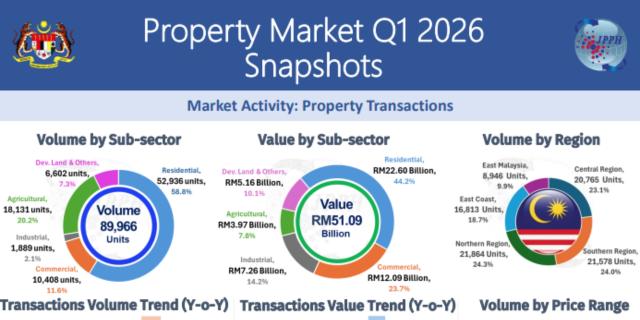
TL;DRThe NAPIC Q1 2026 data shows that Malaysia recorded 89,966 property transactions worth RM51.09 billion, while transaction volume fell 8% year-on-year and value slipped 0.6%. House prices still increased by 1.7%, but completed unsold residential units rose to 32,801. Meanwhile, the average subsale home price increased 4.8% to RM545,059, showing that established properties continued to attract demand despite a slower overall market. Malaysia’s property market entered 2026 with the sort of mixed signals that make buyers reach for coffee and a calculator. The NAPIC Q1 2026 data shows fewer transactions, slightly higher house prices, and more completed homes sitting unsold. That does not mean the market is crashing or booming. It means buyers must read beyond the headline and use the numbers to judge price, supply, financing, and negotiation power. Key Takeaway Malaysia recorded 89,966 property transactions worth RM51.09 billion in Q1 2026, with transaction volume falling 8% year-on-year. The Malaysian House Price Index reached 235.2 points, up 1.7% year-on-year, with the national average house price at RM507,533. Completed unsold residential stock reached 32,801 units, while the serviced apartment overhang increased to 19,263 units. The average subsale home price rose 4.8% to RM545,059, while Kuala Lumpur’s average crossed RM1 million. Around seven in ten subsale transactions involved homes priced at RM500,000 or below, showing that entry-level and middle-market buyers remained the main source of demand. What You Should Know About NAPIC Q1 2026 Report1. What Does the NAPIC Q1 2026 Report Say About Malaysia’s Property Market?2. Why Did Malaysian House Prices Rise While Property Transactions Fell?3. How Serious Is Malaysia’s Property Overhang in Q1 2026?4. How Is Malaysia’s Subsale Property Market Performing in 2026?5. Is It Better to Buy a Subsale Property or a New Launch in Malaysia in 2026?6. How Can Buyers Use NAPIC Data Before Purchasing a Property?7. What Should Malaysian Property Buyers Watch for During the Rest of 2026?8. Frequently Asked Questions (FAQs) Estimated reading time: 17 minutes 1. What Does the NAPIC Q1 2026 Report Say About Malaysia’s Property Market? Malaysia’s market remained stable in value but slower in activity. The total value of completed transactions barely changed from a year earlier, but fewer properties changed hands. At the same time, modest price growth and higher unsold stock created a more selective market for buyers, sellers and developers. a. How Many Property Transactions Were Recorded in Q1 2026? The National Property Information Center, under JPPH Malaysia, recorded 89,966 transactions worth RM51.09 billion during Q1 2026. Transaction volume fell 8% from Q1 2025, while total value declined only 0.6%. The difference between those two figures matters. A large fall in property transaction volume, combined with a small decline in value, means the average value per completed deal remained relatively firm. The market did not suffer a broad price collapse. Instead, fewer buyers and sellers successfully completed transactions. The residential property market remained the largest segment, accounting for 58.8% of all transactions. It recorded 52,936 deals worth RM22.60 billion during the quarter. Commercial property represented 11.6% of volume, followed by agricultural property at 20.2%, development land and other property at 7.3%, and industrial property at 2.1%. b. Which Price Bands Recorded the Most Activity? Homes priced at RM300,000 and below recorded 27,209 residential transactions, making this the most active residential price band. This shows that demand for affordable housing remained strong even as the overall market slowed. However, high activity does not mean every affordable project sells easily. Financing eligibility, location, unit design, and access to daily amenities still determine whether demand turns into an actual purchase. The Malaysian Reserve noted that the below-RM300,000 segment had strong activity but also carried substantial unsold stock. c. Malaysia Property Market Q1 2025 vs Q1 2026 MetricQ1 2025Q1 2026Market signalTotal property transactions97,73989,966Activity slowedTotal transaction valueRM51.40 billionRM51.09 billionValue remained relatively stableResidential completions9,329 units12,905 unitsMore completed supplies entered the marketResidential construction starts28,344 units8,243 unitsDevelopers became more cautiousNew residential launches12,498 units9,112 unitsLaunch volume declinedNew-launch sales rate10.8%11.5%Take-up improved slightly, but remained lowSources: NAPIC, Property Market Q1 2026 Snapshots & Property Market Q1 2025 Snapshots. The table shows a market with more completed homes but fewer new starts. Developers delivered projects already under construction while reducing immediate construction activity. This suggests greater caution over demand, financing, and future project costs. 2. Why Did Malaysian House Prices Rise While Property Transactions Fell? House prices rose because price movement and sales activity measure different things. The house price index tracks the prices of homes sold through completed transactions. It does not measure how quickly every listed property sold or how many sellers failed to find buyers. a. What Was the Malaysian House Price Index in Q1 2026? The Malaysian House Price Index, or MHPI, reached 235.2 points in Q1 2026. This represented 1.7% year-on-year growth and placed the national average house price at RM507,533. A 1.7% increase means average house prices remained firm, but it was not rapid growth. Sellers could still face longer waiting periods, especially when their asking price exceeded the prices of recent transactions in the same neighborhood. This is why buyers should separate price direction from market liquidity. A neighborhood may record stable prices while only a small number of homes sell. In that situation, a realistic seller may complete a deal, while an optimistic seller may keep waiting. b. Which Property Types Recorded the Strongest Growth? Terraced and semi-detached homes recorded the strongest year-on-year house price growth, with both increasing by 2.2%. High-rise property prices rose 1.3%, while detached house prices fell 0.7%. The results show that landed property prices generally outperformed high-rise and detached homes during the quarter. This does not mean every landed house is a good purchase. It means demand remained stronger for certain mainstream landed formats, especially where buyers could access established communities and infrastructure. c. What Does a Thinner Market Mean for Buyers? A market with fewer completed deals gives prepared buyers more negotiation power, particularly when a seller has been marketing a property for a long time. The strongest offer is not always the lowest offer. It is often the offer supported by approved financing, a realistic completion timeline, and clear transaction evidence. Consider two similar condominium units in the same development. One seller prices according to a recent completed transaction, while the other follows higher online asking prices. A buyer who compares actual transactions can identify which unit offers better market value without assuming every advertised discount is a bargain. 3. How Serious Is Malaysia’s Property Overhang in Q1 2026? Malaysia’s residential overhang became significantly larger in Q1 2026. Completed unsold residential units reached 32,801, while completed unsold serviced apartments reached 19,263. These figures create opportunities for negotiation, but they also warn buyers to examine resale demand carefully. a. How Many Completed Residential Units Were Unsold? Malaysia had 32,801 completed, unsold residential units valued at RM16.37 billion in Q1 2026. The number of units increased 7.6% from the preceding quarter, although their total value fell 7.7%. For comparison, in Q1 2025, the residential overhang stood at 23,515 units, valued at RM15 billion. The rise between the two snapshots shows that the completed supply accumulated faster than buyers absorbed it. The largest number of completed unsold residential units was recorded in Perak, at 4,063. Johor followed with 3,852 units, Selangor with 3,745 units, and Kuala Lumpur with 3,733 units. These state totals should not be used to label an entire market as weak. Property overhang is usually concentrated in particular projects, price bands, and property types. A well-connected home with realistic pricing can perform differently from an oversupplied project elsewhere in the same state. b. Why Is the Serviced Apartment Overhang Important? Completed unsold serviced apartments totaled 19,263 units, valued at RM16.52 billion. Johor accounted for 9,972 units, Kuala Lumpur for 4,181 units, and Selangor for 2,407 units. A large portion of this supply fell within the RM500,001 to RM1 million price band, accounting for 58.5% of completed unsold serviced apartments. Buyers comparing these units should examine monthly maintenance charges, occupancy, nearby supply, and past resale activity rather than focusing solely on promotional packages. Unsold categoryQ1 2026 unitsQ1 2026 valueWhat buyers should examineCompleted residential homes32,801RM16.37 billionProject-level demand, condition, and competing supplyCompleted serviced apartments19,263RM16.52 billionHolding costs, resale liquidity, and nearby competitionSource: NAPIC, Property Market Q1 2026 Snapshots. A high overhang can improve buyer negotiation power, especially when developers or owners want to reduce holding costs. It can also indicate that future resale may take longer. The correct response is not to avoid every overhang area. This investigation aims to determine why each unit remains unsold. 4. How Is Malaysia’s Subsale Property Market Performing in 2026? Malaysia’s subsale property market started 2026 more strongly than the broader house price index. The national average subsale home price increased 4.8% year-on-year to RM545,059, compared with the MHPI’s 1.7% increase. The subsale findings came from the IQI residential subsale report that analyzed more than 230,000 transactions recorded since 2018. Our report shows that buyers continued to pay for established locations, infrastructure, and connectivity even as overall national transaction activity slowed. a. Which Major Subsale Markets Recorded the Strongest Performance? Kuala Lumpur recorded the strongest growth among the major markets covered. Its average subsale house price reached RM1,024,793, a 15% year-on-year increase. Melaka’s average increased 10% to RM358,964. Selangor, Malaysia’s largest subsale market by transaction volume, remained broadly stable at an average price of RM559,935. Penang’s average declined 2%, while Negeri Sembilan declined 5% to RM340,207, making it the most affordable of the five markets tracked in our report. These results do not create a universal list of the best states for subsale property. Kuala Lumpur showed strong price growth, while Negeri Sembilan offered a lower average entry price. The better market depends on whether the buyer wants a home, rental income, future resale flexibility, or a lower purchase price. b. Which Price Segments Dominated Subsale Transactions? Nearly one-quarter of subsale purchases involved homes priced at RM250,000 or below, while roughly seven in ten involved properties below RM500,000. Homes above RM1 million accounted for 8% of transactions, and homes between RM750,000 and RM1 million accounted for 6%. As IQI Group CEO Kashif Ansari stated, “Affordable homes remain the engine of transaction volume.” The figures show that premium urban markets may attract attention, but affordable and middle-market buyers continue to generate most secondary-market activity. IndicatorOverall housing marketSubsale marketQ1 2026 price growthMHPI up 1.7%Average subsale price up 4.8%Average priceRM507,533RM545,059Strongest demand signalHomes at RM300,000 and belowAround 70% of transactions are below RM500,000Main buyer considerationSupply, financing, and local overhangComparable transactions, conditions, and established demandSources: NAPIC, Property Market Q1 2026 & Business Today The comparison shows why buyers should not treat the secondary property market as a smaller copy of the new-home market. Subsale homes have existing transaction records, physical conditions, and neighborhood demand that buyers can examine before making an offer. 5. Is It Better to Buy a Subsale Property or a New Launch in Malaysia in 2026? A subsale property is generally more suitable for buyers who value an established location, a completed unit, and visible transaction history. A new launch may be more suitable for buyers who prefer developer packages, newer facilities, and a longer period before completion. a. What Are the Main Advantages of Buying a Subsale Home? With a subsale home, buyers can inspect the actual property condition, review the surrounding neighborhood, and compare recent transactions before committing. This can reduce uncertainty about the finished product, although older homes may require repairs or renovation. Subsale buyers can also study existing resale demand. They can examine how frequently similar units change hands and whether the location attracts owner-occupiers, tenants, or both. This is especially important in a market where transaction volume has fallen. The seller’s situation can create room to negotiate. A financing-ready buyer may have an advantage when a property has been listed for a long period. However, the buyer should base the offer on local comparable transactions rather than a general national discount assumption. b. What Does the New-Launch Data Show? Developers launched 9,112 residential units in Q1 2026 and sold 1,052 units, giving a sales rate of 11.5%. Landed homes represented 61.1% of launched units, while high-rise homes represented 38.9%. Johor recorded the highest number of new residential launches, with 2,693 units. Selangor followed with 1,904 units and Negeri Sembilan with 1,512 units. The total launch volume was lower than the 12,498 units recorded in Q1 2025. c. Subsale vs New Launch: What Should Buyers Compare? Decision factorSubsale propertyNew launchProperty inspectionThe actual completed unit can be checkedBuyer relies on plans, show units, and developer deliveryNeighbourhoodThe existing environment can be assessedThe surrounding area may still be developingPrice evidenceRecently completed transactions may be availablePrice is mainly based on the developer’s launch structurePhysical conditionRepairs or renovation may be neededUnit is new when deliveredCompletionUsually available after the transaction processThe buyer may wait for the constructionNegotiation basisSeller urgency and comparable salesDeveloper packages and remaining inventoryResale assessmentExisting demand can be reviewedFuture resale demand is less certain The subsale vs new launch decision should start with the buyer’s budget, financing position, preferred location, move-in timeline, and intended holding period. There is no single winner for every buyer. IQI Global can help buyers compare subsale and new-launch options based on location, budget, and intended use. The final decision should still be supported by confirmation of financing, legal advice, and property-level due diligence. Contact us now! Approach IQI Now! 6. How Can Buyers Use NAPIC Data Before Purchasing a Property? Buyers should use NAPIC property data to understand the wider market, then narrow their research to the state, neighborhood, project, and property type they are considering. Check Transaction Volume, Not Only Price Growth The MHPI shows the direction of completed house prices, while transaction volume shows how active the market is. When prices rise, but transaction volume falls, buyers should expect more variation between properties that sell and those that remain listed. Compare the Property With the Active Price Bands NAPIC recorded the strongest overall residential activity at RM300,000 and below, while the IQI subsale report found that roughly seven in ten secondary-market transactions were below RM500,000. These figures help buyers understand broad demand, but they do not replace local comparisons. Review Overhang by Property Type and Location A buyer should ask whether a high property overhang comes from poor location, unsuitable layouts, high pricing, or too many similar units. High supply may improve negotiation opportunities, but it can also create competition when the owner wants to resell. Confirm Financing Before Viewing Seriously The housing loan approval rate fell to 39.2% during the first four months of 2026, compared with 41% in 2025 and 42% in 2024. This financing gap helps explain why buyer interest does not always become a completed transaction.A confirmed borrowing range gives buyers more control. It prevents them from spending weekends visiting homes that their bank will not finance. More importantly, property loan approval can make an offer more credible when negotiating with a motivated seller. Negotiate With Evidence Useful evidence includes recently completed transactions, the unit’s condition, nearby competing listings, project overhang, and the seller’s expected timeline. A buyer should use these facts to support a realistic property offer, rather than choosing a random discount and hoping it works. Check Available First-Time Buyer Support The full stamp duty exemption for Malaysian first-time buyers purchasing homes priced up to RM500,000 was extended through 31 December 2027. The Housing Credit Guarantee Scheme allocation was also increased to RM20 billion, with the measure expected to benefit 80,000 buyers.These measures may reduce barriers for eligible buyers, but first-time home buyer incentives do not make an unsuitable property affordable. Monthly repayments, maintenance costs, location, and long-term needs still matter. 7. What Should Malaysian Property Buyers Watch for During the Rest of 2026? The most important signals are loan approvals, unsold stock, launch activity, and construction costs. These indicators show whether demand is converting into transactions and whether developers are becoming more confident. The residential overhang in Q1 2026 was about 49% higher than in Q3 2024, according to The Malaysian Reserve. If financing remains difficult, completed unsold stock may take longer to clear. At the same time, residential construction starts fell from 28,344 units in Q1 2025 to 8,243 units in Q1 2026. Planned residential supply increased to 12,852 units, showing that developers had future projects in the pipeline but were cautious about beginning construction immediately. CIMB Securities senior analyst Kenny Mak Hoy Ken said tender costs for upcoming projects could increase by 5% to 15%, while launches could face delays as developers move projects into the second half of 2026. Affordable and mid-market homes, landed properties, integrated townships, selected Johor developments, and industrial assets were identified as relatively resilient property segments. These are market themes, not guaranteed winners. Buyers must still check individual pricing, financing, and demand. The NAPIC property market report Q1 2026 does not describe a boom or a crash. It describes a selective market. Prices held up, transactions slowed, and unsold stock grew, while the secondary property market recorded stronger price growth in several established areas. Buyers should focus on financing, local transaction evidence, property condition, and exit demand. In 2026, preparation is more valuable than guessing the next headline. 8. Frequently Asked Questions (FAQs) What does the NAPIC Q1 2026 report say about Malaysia’s property market? The Malaysian property market Q1 2026 remained stable in value but slower in volume. Malaysia recorded 89,966 property transactions worth RM51.09 billion. Transaction volume fell by 8%, transaction value declined by 0.6%, and the Malaysian House Price Index increased by 1.7%. What was the average house price in Malaysia in Q1 2026? The average house price in Malaysia was RM507,533 in Q1 2026. The Malaysian House Price Index stood at 235.2 points, representing year-on-year growth of 1.7%. This was modest growth rather than a rapid nationwide price increase. Why did property transaction volume fall while house prices increased? House prices and transaction volume measure different parts of the market. The price index tracks homes that completed transactions, while transaction volume counts how many deals closed. Prices can therefore rise when better-positioned homes sell, even if weaker or overpriced properties remain unsold. How many completed residential properties were unsold in Q1 2026? Malaysia recorded 32,801 completed unsold residential units worth RM16.37 billion in Q1 2026. The number of units increased 7.6% from the preceding quarter, while their total value declined 7.7%. Are subsale property prices increasing in Malaysia in 2026? Yes. The average subsale property price increased 4.8% year-on-year to RM545,059 in Q1 2026. Kuala Lumpur recorded particularly strong growth, with its average subsale price rising 15% to more than RM1.02 million. Is it a good time to buy a subsale property in Malaysia in 2026? It can be a suitable time for a financing-ready subsale buyer who finds a well-priced home with established demand. Transaction volume is lower, which may improve negotiation opportunities. Buyers should still compare recent transactions, inspect the property, and confirm financing before committing. Which is better in 2026, a subsale property or a new launch? A subsale property offers a completed unit, an established neighborhood, and clearer transaction evidence. A new launch may offer newer facilities and developer packages. The better choice depends on budget, financing, move-in timing, property condition, and the buyer’s intended holding period. Explore suitable subsale and new-launch properties with IQI Global, or speak with a local property professional before making your next move. [custom_blog_form] Continue Reading Financial Terms Every Home Buyer in Malaysia Should Know Before Buying a House Top 10 Cheapest Neighborhoods in Klang Valley (2026) MM2H Explained: Why Malaysia Is a Safe Haven for Property Investors in 2026 Reference Annuar, A. (2026, June 29). Property market to consolidate in 2026 as financing gap persists. The Malaysian Reserve. Retrieved fromhttps://themalaysianreserve.com/2026/06/29/property-market-to-consolidate-in-2026-as-financing-gap-persists/ Business Today. (2026, June 22). Residential sub-sale grew 4.8% in Q1 2026, KL now RM1 million housing market. Retrieved from https://www.businesstoday.com.my/2026/06/22/residential-sub-sale-grew-4-8-in-q1-2026-kl-now-rm1-million-housing-market/ Yaacob, H. (2026, May 15). Malaysia’s property market stays stable in 1Q2026 with transactions near 90,000 units worth RM51.9b, says JPPH. EdgeProp. Retrieved from https://www.edgeprop.my/content/1916127/malaysias-property-market-stays-stable-1q2026-transactions-near-90000-units-worth-rm519b-says-jpph Malay Mail. (2026, June 22). Malaysia’s subsale home prices climb 4.8pc to RM545,059, Kuala Lumpur breaks RM1m mark. Retrieved fromhttps://www.malaymail.com/news/malaysia/2026/06/22/malaysias-subsale-home-prices-climb-48pc-to-rm545059-kuala-lumpur-breaks-rm1m-mark/224728 National Property Information Centre. (2026). Property market Q1 2026 snapshots. Retrieved from https://napic.jpph.gov.my/storage/app/media/3-penerbitan/Shahrul/SnapShot/Q1%202026/Snapshot%20Q1%202026%20EN.pdf National Property Information Centre. (n.d.). Property market Q1 2025 snapshots. Retrieved from https://napic.jpph.gov.my/storage/app/media//3-penerbitan/Shahrul/SnapShot/Q1%202025/1.%20Property%20Market%20Q1%202025%20Snapshots.pdf Sharen Kaur. (2026, June 26). Malaysia’s property sector faces rising costs, delayed launches amid softer demand [WATCH]. New Straits Times. Retrieved from https://www.nst.com.my/property/2026/06/1473180/malaysias-property-sector-faces-rising-costs-delayed-launches-amid-softer Yaacob, H. (2026, May 15). Malaysia’s property market stays stable in 1Q2026 with transactions near 90,000 units worth RM51.9b, says JPPH. EdgeProp. Retrieved from https://www.edgeprop.my/content/1916127/malaysias-property-market-stays-stable-1q2026-transactions-near-90000-units-worth-rm519b-says-jpph

17 Jul, 2026
Youth Connect 2026: The Playbook Nobody Gave Gen Z
TL;DR Youth Connect 2026 is happening on 22 August at IQI HQ, Millerz Square, Kuala Lumpur. One day of keynotes, panels and workshops on AI, content marketing and entrepreneurship for Malaysians aged 18 to 35. Speakers include a 1M+ follower creator, an AI video CEO, and young Malaysians who built real income streams. Only 100 seats. Student tickets from RM30, public from RM50 (early bird). You walk away with an AI prompt library, a 90-day growth plan, and actual connections. Let's Be Honest: The Old Playbook Is Dead You did everything right. Got the scroll, got the cert, maybe even got the degree. And then you looked at the job market and thought: "Wait, that's it?" Starting salaries are flat. AI is eating entry-level roles for breakfast. The gig economy sounds like freedom but pays like a trap. Nobody told us the rules changed while we were still studying them. If that hits close to home, you're not dramatic. You're paying attention. That frustration is exactly why Youth Connect 2026 exists. What Even Is Youth Connect? Youth Connect is IQI's platform for young Malaysians who want to actually build something, not just scroll through motivational posts about it. On 22 August 2026, 100 people aged 18 to 35 are coming together at IQI HQ in KL for a full day of keynotes, live demos and real talk about three things that matter right now: AI, marketing and entrepreneurship. This is not a corporate seminar where someone reads off slides for four hours. It is built for the way our generation learns: fast, practical, no fluff. Why Should You Actually Care? Because right now there is a gap between knowing AI exists and knowing how to use it to get paid. Youth Connect bridges that gap in one day. Here is what is actually on the agenda: AI as Your Unfair Advantage Daniel Ho, Co-Founder of IQI Global, opens the day with a reality check: the next generation wins, but only if they move now. Not next year. Now. Then Dave Chong, CEO of DJC AI, shows you how AI video tech can clone your voice and face to create 100 versions of you marketing 24/7. Yes, for real. Content That Actually Grows Your Following Aaron Siow gained 2,000 followers in 30 days using a system, not luck. He is sharing the exact framework with a live Claude AI demo so you can replicate it. Bryan Low went from zero to 1 million+ followers and runs a 7-figure content business. His session on personal branding covers the one thing AI cannot fake: being human. Real Stories From People Our Age The panel features Le Ann Lai (150K+ followers, trained 300+ entrepreneurs), Hannah Teh (IQI's social media lead), and is moderated by Jasmine Yap. Three young Malaysians on using AI to get ahead in very different career paths. No rehearsed corporate stories. Just "here's what I did, here's what worked, here's what I'd skip." Thinking about building a real income stream, not just another side gig? IQI trains people your age to earn uncapped commission in real estate, with mentorship and tech tools from day one. See how it works → What You Actually Walk Away With This is the part most events skip. You leave hyped but empty-handed. Youth Connect is different. Every attendee gets: An AI prompt library you can use on Monday. A personal content formula based on the day's frameworks. A keynote summary so you don't have to scribble notes the whole time. A 90-day growth plan with actual steps, not just vibes. Plus the breakout sessions in the afternoon ("The Hunting Ground") are six tailored rooms exploring real earning potential. This is where it gets practical. The Real Flex: Who You'll Meet Here is the thing nobody talks about: the connections matter more than the content. 100 driven young Malaysians in one room. IQI mentors. Industry leaders. People who are actually building, not just tweeting about it. That network does not exist on LinkedIn. It exists in the room. Lunch, a networking high-tea, and the connect sessions are built into the day so you are not awkwardly hovering around the coffee machine hoping someone talks to you. Curious what a career with IQI actually looks like for someone in their 20s? Read Natasha's story: journalist turned team leader. How Much Does It Cost? Less than your average concert ticket. TicketPriceWith Promo CodeSeats LeftUniversity StudentsRM50RM30 (code: STUDENT155)60Public (18 to 35)RM100RM50 (code: EARLYBIRD, before 17 Aug)40 Lunch, goodies bag, the full resource pack, and the IQI Youth merch booth are all included. No hidden add-ons. Only 100 Seats. No Replays. No Recordings. Everyone Else Will Hear About This Secondhand. You Can Be in the Room. The frameworks, the AI demos, and the connections happen once, on 22 August. When 100 seats fill, they fill. Early bird pricing ends 17 August 2026.Grab Your Seat Before It's Gone → The Details Date: 22 August 2026 (Friday) Time: 8:30 AM to 5:20 PM (networking high-tea after) Venue: Level 26, Millerz Square, IQI HQ, Kuala Lumpur Parking: Available at Millerz Square. Get your stamp at the registration counter. Age: 18 to 35 (IC verification at registration) FAQ Is Youth Connect only for IQI agents? No. It is open to everyone: uni students, fresh grads, working adults, freelancers and career changers. You do not need any connection to IQI to attend. Do I need marketing or AI experience? Not at all. The sessions are built for people starting from zero. If you already know the basics, the advanced frameworks and live demos will push you further. Is lunch included? Yes. Lunch is included for all ticket holders. What do I actually take home? An AI prompt library, a personal content formula, a keynote summary of the full day, and a 90-day growth plan. All digital, all yours to keep. How do I get the student price? Select the University Students ticket (RM50) and apply the code STUDENT155 at checkout for RM30. You will need to declare your university and verify your age with your IC. How do I stay updated on future IQI Youth events? Join the IQI Youth WhatsApp community for first access to events, mentorship, networking and exclusive perks. Seats Are Filling. This Page Won't Wait For You. Your Feed Will Be Full of People Who Went. Don't Be the One Who Didn't. 22 August 2026. IQI HQ, KL. AI tools, proven marketing frameworks, real connections. RM30 for students. RM50 early bird for public. When seats are gone, they're gone. Register Now → Register Now → Not ready for the event but curious about building income with IQI? Explore career opportunities →
Ready to get started?
Get in touch now.